Search

Showing 10 of 7339 results

  • 0592

  • Events hero panel new

  • Festival expo ENZ space

  • Latin American famil 830

  • Former international student represents Aotearoa in Ecuador

    With his career as an agronomist under way, Juan Pablo came to New Zealand on an MFAT-administered scholarship in 1988, wanting to build on his agricultural qualifications. After taking English courses at Victoria University Wellington Te Herenga Waka, he completed a two-year Diploma in Rural Studies at Massey University Te Kunengaki Pūrehuroa.  

    His time in New Zealand had such a profound impact on his life that he returned home determined to establish lasting bonds between the two countries. And there is no doubt that his appointment reflects just how much he has achieved.  

    Juan Pablo says he had dreamed of coming to New Zealand long before he got here. He had read ‘Grass to Milk’, Campbell McMeekan’s 1960s account of New Zealand’s dairying management practices which was well-known among dairy farmers in Ecuador. “I read the book and decided this is the place I want to go.” 

    Learning from the best 

    Very few students travelled to New Zealand from Ecuador at that time, most went to the United States for further education, he says. “Many people asked me why I was going to New Zealand, and people still ask me about it today. I tell them I went because I wanted to learn from the best.” 

    Juan Pablo says he was inspired by his lecturers, especially the late Professor Colin Holmes, a respected researcher, mentor, and advocate of the dairy industry.  

    “I came from an education system where the teacher held all the knowledge, where it was always black or white. In New Zealand it was totally different because learning was inquiry-based. Critical thinking was the method of developing knowledge.” 

    He says his experience was transformative on both a personal and professional level.

    “The things I saw and learned, the New Zealand way of doing things, and the care and respect people had for each other had a powerful effect on me.” 

    Over the decades since Juan Pablo’s education experience in Aotearoa, he has built a highly-regarded career in Ecuador, founding and leading primary industry companies, accepting numerous board appointments, representing Ecuador in international free trade agreement negotiations, and being recognised with multiple honours for his contribution to the livestock and dairy sector. 

    Enduring ties to New Zealand 

    But he never forgot his ties to New Zealand, working tirelessly to strengthen the bilateral relationship and boost both business and education opportunities. He initially established a company to import agricultural products from New Zealand. When he later secured the role of General Manager of the Cattlemen’s Association, he passed on all his business contacts, and the organisation has been importing electric fencing components and seeds from New Zealand companies ever since.  

    “In 1988, we brought some cattle in from New Zealand for a breeding programme. Now many farms in Ecuador, including the ones I oversee, have cattle from New Zealand stock. And in the 1990s I helped to establish an education programme with Massey, which saw lecturers come to Ecuador to take short courses in dairy management.” 

    “When it comes to dairy farming, almost everything I know I learned in New Zealand - pasture management, milk production systems, electric fencing, animal welfare – and farmers have applied these practices successfully in Ecuador,” Juan Pablo says.  

    “New Zealand is top of mind for every farmer here. When you talk about New Zealand here, everybody knows about its reputation in agriculture. Going to New Zealand is on the wishlist for many people.”  

    Honoured to represent Aotearoa 

    Juan Pablo says he was deeply honoured to be asked to be New Zealand’s Honorary Consul in Ecuador, a role which is all about connections and creating opportunities which benefit both countries. 

    “I am very proud, and I’m happy because I now have the chance to advocate for Aotearoa,” he says. “The better the relationship with New Zealand, the better it is for Ecuador too. We must focus on what we have in common and make the most of it.” 

    He firmly believes international education is at the heart of relationship-building and collaboration between countries, even more than tourism and business. “You learn the values of a nation through education. Time spent studying in New Zealand will make you a better person.” 

    “International students will become New Zealand’s ambassadors to the world.” 

  • School scholarship 1

  • New Zealand and Japanese schools build stronger cultural connections

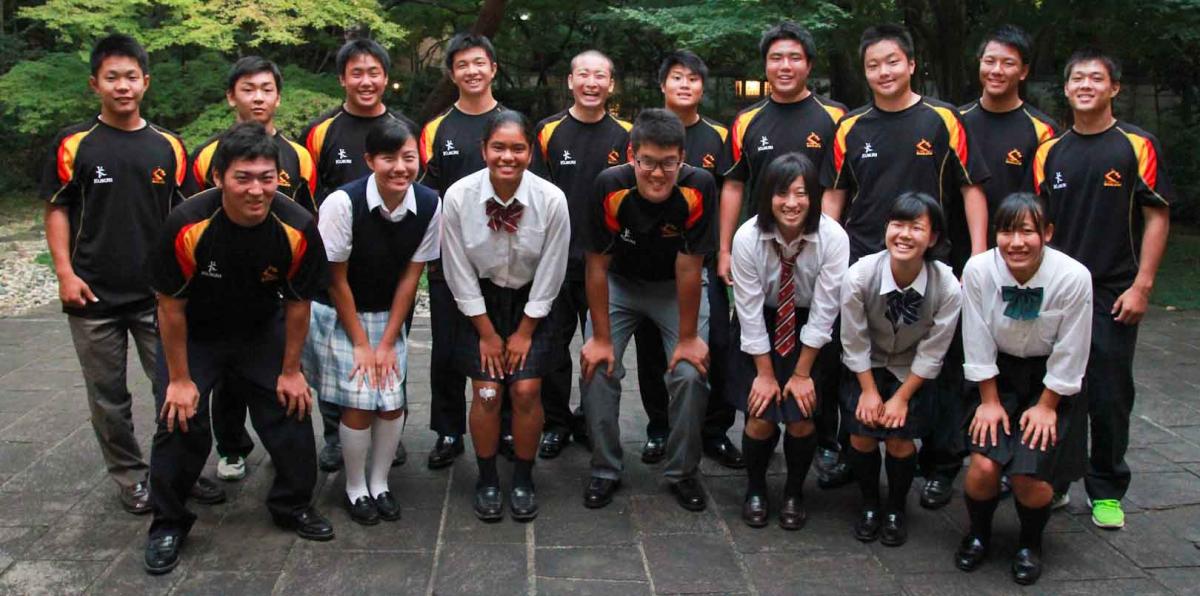
    High-school students in New Zealand and Japan are connecting on the big issues like indigenous culture, sustainability, and rugby, in an exciting joint-venture between Education New Zealand (ENZ) and the North Asia Centre of Asia-Pacific Excellence (NA CAPE).

    In collaboration with the Hokkaido Board of Education, seven schools from New Zealand’s North Island and seven from Japan’s Hokkaido prefecture have begun to open a digital dialogue at a time when valuable in-person interactions are limited.

    This initiative builds on the agreement signed in November 2020 between the Hokkaido Board of Education and ENZ. It further strengthens the existing partnership agreement between the New Zealand Embassy Tokyo and the Hokkaido Government by promoting collaborative opportunities in education through shared interests.

    International education plays an important internationalisation role as it brings a refreshing, global outlook to education at a local level. By building deep, reciprocal relationships with other countries, internationalisation also helps international education uncover opportunities for innovation.

    After online orientations for teachers, more than 270 students from three high schools in both countries met for the first time to introduce themselves, their school and city. Schools connected include: Taradale High School and Yubari High School; Papatoetoe High School and Sapporo Higashi High School; and Te Kura Kaupapa Motuhake o Tāwhiuau a Kura-ā-Iwi and Noboribetsu Akebi High School, which also connected with Unakami Primary school in Chiba.

    Sharing both economic and geographical similarities between countries, key themes for successive exchanges held in English include language and culture, indigenous culture, sustainability, primary industries, and rugby with a strategic goal of students starting student exchanges between schools in the future.

    The participation of Kura-ā-Iwi in the programme is of value to both countries seeking to deepen existing indigenous cultural connections. Hokkaido and New Zealand share many similar features, including the importance of agriculture and of indigenous peoples.

    Sharlene Brown, Senior Teacher at Te Kura Kaupapa Motuhake o Tāwhiuau expressed their support for the initiative.

    “As the first iwi designated character kura in the world, Te Kura Kaupapa Motuhake o Tāwhiuau is absolutely committed to global, indigenous education in particular Ainu language and culture.

    “This is therefore the guiding force behind our commitment to establish new relationships and exchanges with schools in Japan.”

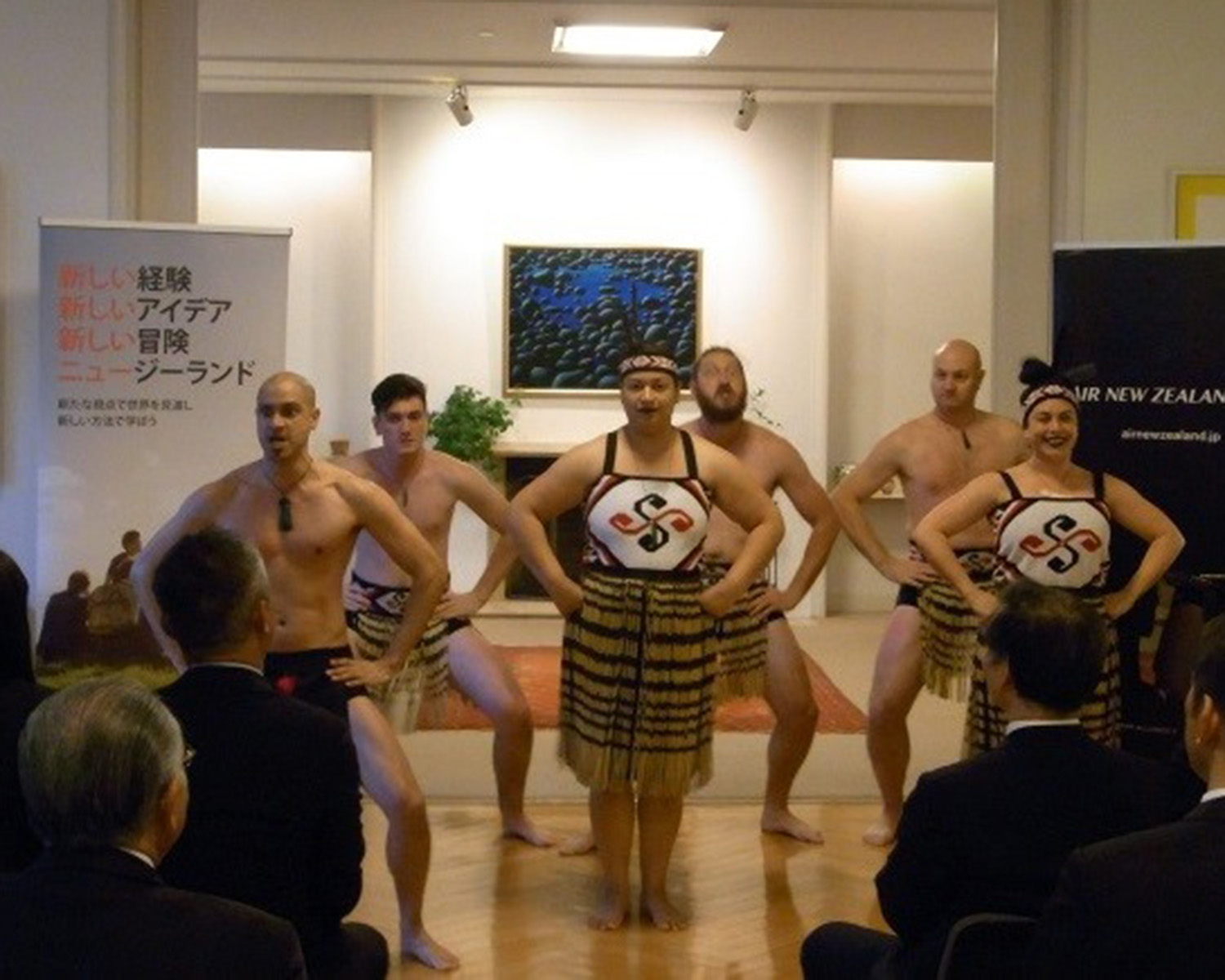
    Both NA CAPE and ENZ are focused on continued support of closer indigenous to indigenous connections between New Zealand and Japan. Hokkaido is the birthplace of Japan’s indigenous people, the Ainu. As Hokkaido continues to embrace its indigenous culture, this initiative presents a unique opportunity for richer, more meaningful exchanges by showcasing New Zealand’s Māori values. By connecting with other cultures around the world, students in New Zealand and Hokkaido gain a better understanding of indigenous people’s experience and can uncover similarities and fostering better appreciation of other cultures.

    ENZ Director of Education – Japan, Misa Kitaoka said from Tokyo that, despite the ongoing challenges of COVID, ENZ is committed to promoting connections between New Zealand and Hokkaido using innovative modes of virtual delivery.

    “New Zealand’s unique cultural values like kaitiakitanga - protection of people and place – are woven into the threads of our education system.

    We are very proud of the leadership Māori demonstrate in the indigenous education space, and are committed to furthering international indigenous connections for the benefit of all.”

    Following on from the success of this international initiative, the NA CAPE plans to support additional sessions, and connect New Zealand high-school language students and their teachers with their counterparts in Korea.

    North Asia CAPE (NA CAPE) is committed to building New Zealanders’ capacity to engage with the countries of North Asia. Find out more about the NA CAPE at www.northasiacape.org.nz

    Education New Zealand is the Crown Agency responsible for international education to benefit New Zealand socially, culturally and economically. Find out more at enz.govt.nz.

    Want to get involved in future exchanges? Get in touch with North Asia CAPE at nacape@auckland.ac.nz.

  • New Zealand and international secondary students to grow cultural competence skills together

    Qualitative research[1] from ENZ concluded that New Zealand businesses who employed staff with cross-cultural competencies found this contributed to a more energising workplace, which helped to foster creativity and innovation as well as other benefits.

    The employers agreed cross-cultural competence was a sought-after skill when hiring staff, leading ENZ to fund the programme for more high school students around the country.

    Grant McPherson, Education New Zealand’s Chief Executive says, “The insights from New Zealand businesses around the benefits of cross-cultural competencies within their teams have been one of the key reasons we’ve taken this initiative to help grow cultural competency, providing an alternative to international school exchange experience while borders are closed.”

    This work supports the third goal of the New Zealand International Education Strategy 2018-2030 to develop global citizens within New Zealand and aims to help both students and teachers develop their cross-cultural skills together with their global peers.

    ENZ and Massey University first partnered with the American Field Service (AFS) in July 2020 to launch a pilot of the NZGCC programme. The virtual programme delivers animated videos, quizzes, assignments and weekly live facilitated dialogue sessions for local and offshore learners to talk with each other online in real time.

    Following the success of the pilot, ENZ today announced a further $380,000 investment to subsidise the cost for 321 New Zealand and 486 international learners to develop cultural self-awareness, empathy for other cultures, emotional resilience and ways to build bridges in multicultural settings.

    18 online modules cover topics such as stereotypes, empathy, dealing with conflict and resilience, and will be delivered to international learners from India, China, Japan, Vietnam, Thailand, the Republic of Korea, Indonesia, Brazil, Mexico, Colombia, Peru and Chile.

    The newest students to benefit from the NZGCC programme are Whanganui Girls College, Cullinane College, Whanganui High School and Awatapu College pupils. Starting today, 23 Whanganui and Manawatu students will partake in a virtual learning exchange with 20 high school students in Tokyo, Japan, in a partnership with the Tokyo Board of Education.

    Whanganui Girls College principal Sharon Steer says the new programme will help students build their understanding of global cultures – critical ‘soft’ skills that will also prepare them for life after high school as they enter the workforce.

    “An important part of our curriculum is developing strong communication skills and setting our students up for success in the workplace. The NZGCC programme will add another dimension to our lessons by teaching our students how to develop meaningful relationships with one another despite language and cultural differences,” said Steer.

    “This allows our students to connect with peers in Japan and learn more about their culture without having to get on a plane when international travel remains limited.” 

    In addition to secondary school students, the NZGCC programme will support teachers in indigenous communities in Pacific Alliance countries, and people undertaking English language and teacher training in Indonesia, Vietnam and the Republic of Korea.

    Around 100 students from decile 1 to 5 schools across New Zealand will be offered NZGCC scholarships to participate in a virtual exchange with their peers in Asia.

    ENZ’s Chief Executive Grant McPherson said the programme’s expansion is a key part of diversifying education in new virtual forms fit for a globally connected world.

    “We’re pleased to continue our support for the NZGCC programme to bring New Zealand and international learners together in a virtual environment to gain the skills needed to live, work and learn globally.

    “As well as helping to develop the global citizens of tomorrow, this programme demonstrates the reciprocal benefits of international education, giving our rangatahi a chance to learn with high school students from around the world, and giving their offshore peers a chance to learn ‘with’ New Zealand and our unique way of thinking.”

    More information about the NZGCC can be found here:  https://www.globalup.com/

    ENDS

    [1] https://intellilab.enz.govt.nz/document/583-employer-perceptions-of-hiring-international-graduates

    Notes to editor:

    • Education New Zealand is the government agency responsible for building international education to benefit New Zealand socially, culturally and economically. For more information, visit enz.govt.nz
    • Developing Global Citizens is the third goal of the New Zealand International Education Strategy 2018-2030.
    • Education New Zealand has a focus on developing global citizens within New Zealand, so that more learners gain the knowledge they need to live, work and learn globally.
    • The Global Competency Certificate (GCC) is a research backed programme teaching cultural self-awareness, empathy for other cultures and ways to build bridges in multicultural settings. It is designed by American Field Scholars (AFS), a global non-profit internationally recognised as leaders in Global Citizenship.
    • In 2020, Education New Zealand partnered with Massey University and American Field Scholars to deliver a customised version of the GCC programme to New Zealand students and international students in New Zealand and abroad.
    • One Palmerston North student who completed last year’s pilot summarised the experience as ‘eye-opening’: “The main takeaway was the ability to see life from different perspectives to our own, to understand how different cultures, experiences and beliefs can impact others. Being part of this course has truly opened my eyes to some of these viewpoints and I’ve learned to embrace them with an open mind.”

    Media contact

    Hazel Dobbie, ENZ Director Communications
    Hazel.Dobbie@enz.govt.nz 021 579 917

  • UoA impact

  • 020 Studyinnewzealand Schools

What's in it for me?