Search
Showing 10 of 7357 results
-
Students ‘tell the story’ about international education
Tips:
-
Involve international and local students in your promotional events. Their personal experiences and insights help to ‘tell the story’ in an authentic way.
The two students spoke confidently to an audience that included Associate Minister for Tertiary Education, Skills and Employment Louise Upston, who launched the new strategy.
Yufei described how it felt to come to New Zealand, not knowing what it would be like or how he would be treated. He also spoke about his homestay family, and taking up soccer and surfing. Hannah described some of the benefits of having international students in her class, and what she has learned from them.
Education Tauranga Manager Anne Young, who organised the event, said she was delighted with the students’ contribution.
“Listening to Yufei brought home to everyone just how big a deal it is for a young student to come here from another country, and how important it is for us to look after them well,” Anne said.
“It was great to hear from Hannah too, about how much international students contribute to learning, in the classroom and outside.”
If you would like to find out more about the new education strategy for Tauranga, please email Anne Young at anne.young@educationtauranga.co.nz
-
-
Shared role expected to bring benefits in Southland
Southland Girls’ High School and Southland Boys’ High School have decided to maximise their international opportunities by appointing Carolyn Davies as Director of International Students for both schools.
“We have been in the International student market for over 23 years. What we find works well for us is having a full time International Director – that one port of call helps agents, students and parents,” says Yvonne Browning, Principal of Southland Girls’ High School.
“SGHS and SBHS are not in competition with each other and we see major benefits in sharing an International Director. There may be economies of scale to be achieved through joint promotions and marketing material, and by sharing systems and processes we will create better practice for both schools.”
Ian Baldwin, Rector of Southland Boys’ High School says their more than 20 years of experience in international education has taught them that it is important to develop mutually beneficial relationships with students and parents.
“We’ve had to become much more professional in our approach and commit real resource to building these relationships. I realised that we needed a person dedicated to the necessary 24/7 pastoral care of students along with agent-school and parent-school relationships,” says Ian.
Carolyn Davies is that person and she agrees with Ian about the dedication required to be a successful international director.
“International education is more than a job; it is part of your life – a passion. Many of the agents and school staff are like family and my parents now have many international children and grandchildren. I often have agents asking, ‘can I stay at mum and dads?’ If they don’t stay there, the first thing they do when they arrive is ring up and book in for a roast lamb dinner.
“When the opportunity arose for me to take up the DIS role at SBHS it was a natural fit. If you are going to talk to an agent about an opportunity you know the agent represent girls as well as boys – so it makes sense,” says Carolyn.
Carolyn says feedback from agents supports the decision by Ian and Yvonne to follow this path.
“The role will include agent liaison, coordination of accommodation placements for the students, marketing, holiday and weekend programmes and some new things like setting up an International Facebook page for SBHS,” says Carolyn.
SGHS currently has over 25 international students from Japan, China, Hong Kong, Thailand, Germany and Yvonne is excited to soon see some students coming from Chile and Korea.
SBHS has fewer students but is looking for growth.
“While our numbers are relatively low at 12 students, Carolyn and I fully expect a 50 percent increase within a year just through the obvious synergies,” says Ian.
Carolyn will continue to be based at Southland Girls’ but will now be the first point of contact for both schools.
-
October update from Immigration New Zealand
Update on student visa processing*
Since the borders reopened on 1 August 2022, we have received 7,710 student visa applications from international students outside New Zealand. We have decided 4,885 of these applications with over half of these decisions being made in less than 4 weeks and 95% being made within 7 weeks.
*Figures current as at 17 October 2022.
Submit your student visa application for early 2023 study now
Thank you to everyone who has followed our guidance around waiting to submit applications for a student visa for 2023 study. We now encourage students who are intending to begin their studies in New Zealand in early 2023 (up to the end of March) to submit their applications. If you have all your documents ready (including your offer of place and up to date financial evidence) then apply now to give enough time for your application to be processed before your intended travel date. Follow the checklists on the INZ website Student visa information | Immigration New Zealand for guidance on what to provide with your application.
Sending your passport to INZ
We have changed the rules for when you need to send us your passport. Now, if you are applying for a student visa you only need to send us a high-quality scan of your passport, you will not usually need to send your actual passport to be scanned at a Visa Application Centre (VAC) or an Immigration New Zealand office. This is a temporary measure to help with visa processing. Please note applicants may still receive an automated letter asking for a passport to be submitted. This is not required. We are updating the letter to address this issue.
More information: Sending your passport | Immigration New Zealand
Post-study work visa eligibility
Changes have been made to the Post-Study Work Visa eligibility requirements and visa conditions, to reflect the government decisions announced on 11 May 2022. For more information check the INZ website: New Post Study Work Visa requirements announced | Immigration New Zealand
- Overall Market October 2015 visa dashboard
-
Patrick Au: a champion for international students in New Zealand
Disclaimer: This story was originally published on New Look, which was also operated by Education New Zealand Manapou ki te Ao. It has been republished here to ensure wider access and visibility.
He has spent more than two decades working with international students and Asian migrants in primary and tertiary healthcare settings, understanding their mental health needs and advocating on their behalf.
Patrick is a registered psychiatric nurse and counsellor who migrated from Hong Kong in 1991, completed his Master’s in Education in 1999, and has worked tirelessly to support Asian communities in New Zealand. He is now stepping down from his role as Asian Mental Health Coordinator for the Auckland District Health Board to commit more time to private practice.
It was Patrick’s emerging reputation for specialty expertise which led to the International Education Association ISANA asking him in 2010 to prepare a presentation to international education providers about the mental health needs of international students. This was quickly followed by a contract with the Ministry of Education to present a series of workshops nationally.
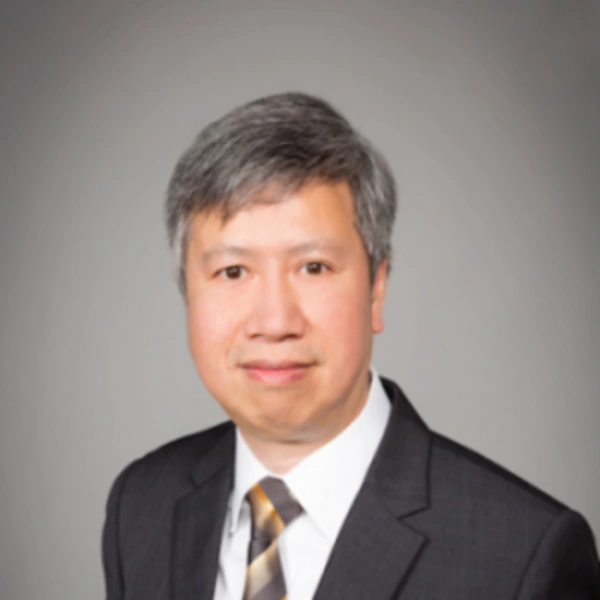
“I was overwhelmed by people calling me and asking me for advice,” Patrick says. “This is where I seriously started my work with international students.”
In more recent years, Patrick has been a key player in the Auckland Agencies Group, which brings together multiple organisations with the common goal of enhancing student wellbeing.
The issues which international students can face vary, depending on their age and stage of education. For younger school students it can be homesickness and lack of parental guidance. Older students also face settlement issues but can have the added pressure to succeed.
“People come here to study and so they need to be successful,” he says. “From an Asian perspective, we are a collectivist society. Your success is not just for yourself, the grades and glory are for your family too. If you are successful at your study you are acknowledged as a successful person, but what if you’re not able to finish your study? The pressure is on you.”
Prevention and awareness key to mental wellbeing
Patrick is a great believer in the importance of awareness and prevention when it comes to mental wellbeing and says New Zealand has made good progress with the availability of resources which students can access on campus, through workshops, and online. Support services are widely established, and the International Students Wellbeing Strategy ensures government agencies work together to support international students to feel safe, well, and welcome in New Zealand.
“Most Asian cultures believe the body and mind are not separated. So we need to address the root cause of problems in behaviourial terms - how to adapt to the new environment, how to get better sleep, how to cope with exam pressure, how to eat well, rather than talking about mental health. When they hear these two words they will withdraw from you,” he says.
“There is very limited mental health education in the students’ home countries, but with all the online resources available here students are researching the issues. There is much wider awareness, and sometimes it is friends who recognise issues and offer peer support in seeking help.”
Patrick knows that some students come up against cultural intolerance and misunderstanding but says that New Zealanders have come a long way since the early days of the international education sector in understanding the challenges which international students can face, but also the contribution they make to society here.
International students talented and motivated to contribute
“International students bring cultural diversity and increase cultural awareness among New Zealanders,” Patrick says. “The students who come here are quite talented and motivated to contribute. Once they have completed their education, they can contribute in many ways."
“International students bring cultural diversity and increase cultural awareness among New Zealanders” – Patrick Au, mental health expert and international student advocate
International students can be the bridge between their home country and New Zealand. If you want to do business in these countries, international students can play an important role as they often act as informal ambassadors for New Zealand and can open doors to business.
New Zealanders are also contributing to their success by creating a nurturing environment for them to complete their studies. Over the years we have seen lots of successful international students who have started working and contributing to the New Zealand economy after completing their education.
“If they have a positive experience, they are also instrumental in encouraging other students from their home country to come to New Zealand. I think it is a win-win situation.”
-
Tokyo Online School Forum
Education New Zealand Manapou ki te Ao signed a Memorandum of Understanding with the BoE in 2017 to promote educational and cultural exchange between Tokyo and New Zealand. The result has been a series of continuously successful exchanges between the two countries, including this latest forum.
For many students, this was their first time interacting with so many high school students from outside their own country, in a virtual forum.
Japanese neuroscientist Kenichiro Mogi, a visiting professor at Tokyo Institute of Technology, spoke about AI and the human brain, and the importance of eating well to maintain a healthy mindset. Following his lecture, students were given several topics to discuss in breakout sessions. They chose specific English words which they felt connected to the 17 SDGs, such as ‘humanity’, ‘compassion’, ‘education’, ‘resonance’ and ‘power’.
Students had a range of positive responses when asked what they had enjoyed most about the experience:
“The chance to connect with other students from across the world.” – Nandana
“I enjoyed listening and interacting with students from different countries. I also enjoyed learning about foods and ways to make food I’ve never seen before.” – Tammy
“Learning new things and what other people thought” – Eliza
“The speeches were very interesting, and the hosts were entertaining. I loved the information I learnt in this forum!” – Rio
“It was great to see such a large New Zealand presence at the Tokyo Forum, which supports the ‘Creating Global Citizens’ pillar of the New Zealand International Education Strategy,” says Misa Kitaoka, ENZ’s Director of Education – Japan.
“We look forward to bringing more opportunities to connect Japanese and New Zealand students through our shared commitment to progress towards UN SDGs.”
Other projects that ENZ and Tokyo BoE have been working on together include the development of an SDG lecture series, featured on their Tokyo English Channel.
Get a flavour of the event by checking out the promotional flyer here (Japanese language).
-
Meet our people
Āriana Ngārimu-Goldsmith | Advisor Māori
Hear from Āriana about our Māori name, what cultural capability looks like here, and why she loves what she does.
-
Māori perspective in internationalisation
Having seen how international education creates long-term relationships and influences worldviews, in 2018, the University of Otago has established Tūrangawaewae Pōkai Whenua.This is an indigenous exchange programme connecting Māori with indigenous communities in Australia, Canada and the US.
Jason Cushen, Director International at the University of Otago, said the programme uses a network of partner universities to connect Māori students with other indigenous communities.
“International education is a lifechanging experience for students but for indigenous students in particular it can be a unique opportunity to connect with indigenous peers around the world, to share experiences and customs, and discuss the role cultural identity plays in education.
Jason and Tuari Potiki, Director of the Office of Maori Development, will present at NZIEC outlining how the programme will operate, and its place within broader mobility and diversity initiatives at the University of Otago.
A similar programme is being developed in Auckland, thanks to a partnership between Study Auckland and the hapū of Ngāti Whātua Ōrākei. Together, they have created the Rukuhia Leadership Programme, a cultural immersion experience designed especially for international students.
Students spend a day on a marae participating in workshops that focus on leadership, values, the connection of people, place and environment, and they learn about the work Ngāti Whātua Ōrākei does in the community. They experience a pōwhiri, meet iwi leaders, and learn te reo Māori greetings and pronunciation, waiata and haka.
Henry Matthews, Head of International Education at Study Auckland says the pilot programme emphasises the appeal of a uniquely New Zealand study experience.
“The leaders of Ngāti Whātua Ōrākei incorporate their values of Manaakitanga, Kaitiakitanga, Whanaunagatanga and Tino Rangatiratanga into the programme, which provides students with a powerful sense of belonging, connection and empowerment.
“It is an unforgettable international student experience, and something that can be easily replicated across other parts of New Zealand.”
Find out more about the programme at NZIEC, where Henry will lead an interactive session where you can hear first-hand from international students about how they found the experience.
NZIEC 2018 will be held on Thursday 9 and Friday 10 August at Te Papa Tongarewa in Wellington.
Tūrangawaewae Pōkai Whenua: A Place to Stand, a World to Explore, 1.30-2.10pm, Thu 9 Aug
Rukuhia Leadership Programme: A partnership with hapūto create unforgettable international student experiences, 11-11.40am, Fri 10 Aug
-
CONNECT webinar series – A digital update
Richard Kyle, ENZ Business Development Manager, says the first CONNECT webinar later this month will provide an update on ENZ’s digital work programme.
It will cover what the different streams of work are, how they work and, most importantly, what education providers can do to make the most of them.
“The webinar will delve into how our tools can assist your institution to track and measure referrals. It will also be a chance to ask any burning questions or to clarify any aspects you or your institution may have,” says Richard.
“We’ll also talk about some new products we’re developing including an ENZ chatbot, an Outcome of Visa indicator, and ENZ global digital campaign plans for 2019.”
The webinar will be relevant to international staff as well as those who work in digital, marketing or admissions teams.
The webinar will run on Wednesday 24 October from 2.00-3.30pm.
Please note: This webinar is only open to representatives from New Zealand education institutions, government and regional partners.
Check out future editions of E-News for further CONNECT webinar updates.
-
Education in ASEAN 40 celebrations
Let them be part of an exciting project that's taking place this year to mark the 40th anniversary of New Zealand’s Dialogue Partnership with the Association of South East Asian Nations (ASEAN).
A cross-government leverage and legacy team, led by the Ministry of Foreign Affairs and Trade, is looking for stories and photos that will bring the ASEAN : New Zealand relationship to life, and perhaps be included in a timeline that will tell this story in a compelling and high impact way.
We all know what an important role education has played in this relationship, and some of you may have your own experiences of this to draw on. If so, we encourage you to share them with the team, as they may be suitable for inclusion in the timeline project.
Stories and pictures that demonstrate the significant impact education exchange has had on all involved - on both a personal and national level - are most sought after.
If you have memories or stories, and accompanying photos or other visual material that tell:
-
of events/activities involving students from SEA countries in New Zealand
-
a ‘where are they now?’ story showing the path a New Zealand-educated student from the SEA region has taken
-
of personal experiences of studying with students from ASEAN countries, particularly those where enduring friendships or research partnerships were formed.
In the first instance, please write a brief description of the story or “moment” using the three questions below as a guide, and email it to Mandi.vanWeede@mfat.govt.nz. Please note that not all stories will be able to be included in the timeline, and someone will be in touch if there is any follow up required.
What took place? Include a brief description of the event/activity/experience.
-
When did the activity/event/experience take place?
-
Are there any images or other visual material that will help illustrate your story?
-
How can you be contacted should someone from the team wish to follow up on your story?
Please include your name and contact details.
-