Search
Showing 10 of 7357 results
-
How NauMai NZ helps us improve the international student experience
Background
NauMai NZ provides a digital home for international students who have chosen to study in New Zealand, and provide real-world information, support and expert resources to better enhance their student experience.
Since its launch in mid 2019, NauMai NZ has had over 220,000 users and 300,000 separate user sessions with an average bounce rate of 16 percent (very positive by industry standards). The NauMai NZ database has grown to over 8,700 students.
Our challenge this year has been to ensure NauMai NZ remains fit for purpose in the face of the extraordinary events of the COVID-19 pandemic.
The COVID-19 response
The COVID-19 crisis upended our personal and professional lives. International students, far from home had to grapple with a raft of new challenges.
In response, a dedicated NauMai NZ COVID-19 page was launched eight months ago. Written in plain English, it is regularly reviewed and pulls together government information directly relevant to international students in New Zealand.
To ensure reach to the large Chinese student cohort in the country, this page was also translated into simplified Chinese.
An associated Stay well, stay connected page was launched at the same time to support student wellbeing during lockdown and beyond. It provides context for likely emotional responses, provides proactive solutions and links to expert support resources. To date, these pages have been viewed over 60,000 times.
Throughout this challenging year, other content has continued to be developed and delivered, including:
- Dating, relationships and sex
- Sexual healthcare in New Zealand
- Managing your money (including information on gambling and where to find help)
- Help from your embassy or consulate
- Being LGBTQIA+ in New Zealand
Coming soon! Summer in NZ activities
New pages will support those international students remaining in New Zealand over the summer.
These pages will highlight a range of activity and opportunities, including:
- recreation activity across the country
- links to summer programmes that have been developed for international students, and
- information to support wellbeing and connection
On Saturday 31 October, ENZ will deliver a virtual fair (‘Your Great Kiwi Summer’) for students, providing tasters on a range of summer opportunities and signposting out to further information.
Subject experts, fellow international students and alumni from our Prime Minister’s Scholarships programmes will present on the day.
Being online will ensure equity of access to students across the country. Students will be able to register for the fair via the new Summer in NZ NauMai NZ pages.
-
Educational publishing showcases New Zealand strengths
Over the last three years, ENZ has supported the offshore activities of educational publishers under the Educational Publishing Export Programme, managed by the Publishers Association of New Zealand (PANZ).
ENZ’s Business Development Manager, Adele Bryant, said New Zealand has a proud history of educational publishing, from Dame Marie Clay’s development of reading recovery to Dame Wendy Pye’s mission to teach the world to read.
“New Zealand educational publishing builds on the quality of New Zealand teachers, the progressive nature of our education system and our innovative and responsive publishing sector,” said Bryant.
“Our industry’s digital publishing capability is also capturing the attention of new markets in Asia.”
Earlier this month, a senior delegation from China’s Higher Education Press (HEP) visited New Zealand to meet four New Zealand publishers in Wellington. HEP is the largest publisher in China of university and college-level textbooks, and also publishes Chinese language learning resources. China’s publishing market is the second largest in the world.
The New Zealand publishers took the opportunity to showcase their capability: Lift Education’s multi-media CSI Literacy resources for 8-13 year olds, Cognition Education’s range of customised resources and New Zealand Council for Educational Research’s academic, testing and assessment services.
The President of PANZ, Melanie Laville-Moore, provided an overview of educational publishing in New Zealand while ENZ’s Adele Bryant set the scene with an introduction to the New Zealand educational system.
New Zealand publishers are making inroads into China led by companies like Wendy Pye Publishing. Wendy Pye’s Key Words, written by one of New Zealand’s favourite children’s writers, Joy Cowley, is now being used in Chinese schools to teach English.
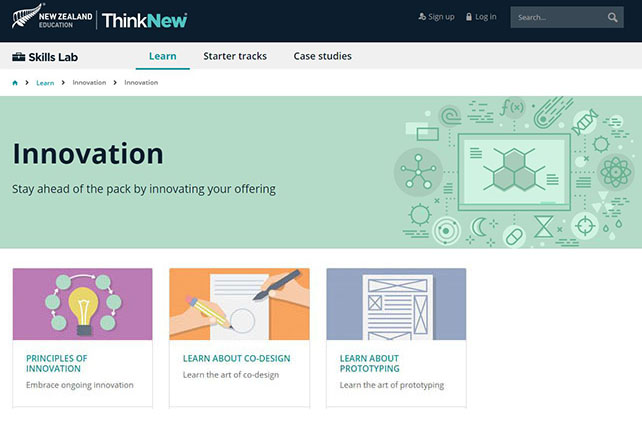
- Skills lab screen shot
- Singapore
- Agent Attendees Beijing Agent Seminar
- International Education Scanning Report February 2014
- IMG 9659
- Matt Penney 2 0
-
From the CE: 12 months on from the borders reopening
Kia ora tātou,
Twelve months ago, New Zealand’s borders reopened to international students. From a standing start the international education sector has, alongside Education New Zealand Manapou ki te Ao (ENZ) and our New Zealand Inc partners in government, worked enormously hard.
The first challenge was to get New Zealand back “on the map” as a high-quality international education destination. One of our ENZ teams tells me that we were involved in a minimum of 27 events including NAFSA, ANZA, EAIE, agent and student fairs over the last 12 months. There have been at least 11 senior ministerial and sector delegations covering China, India, Viet Nam, Japan, South Korea, US, Canada, Chile, Brazil, and Thailand. This is only the tip of the iceberg of all the effort expended by New Zealand providers, with our partner agents, providers and Government agencies – offshore and onshore.
And as students started to apply for their visas and arrive in New Zealand, we cannot underestimate the amount of effort that has been required to get the infrastructure that supports the sector up and running. Reviewing applications, delivering offers of place, processing visas, finding accommodation, pastoral care; the list goes on. Lots of unseen and unheralded effort that goes on behind the scenes to ensure international students receive a high-quality experience.
Yet this is just one part of what we do. Onshore and offshore, the sector has also supported the Prime Minister’s and Manaaki Scholarships, and worked closely with ENZ to explore opportunities to innovate and make the sector more resilient.
It isn’t easy and while we all know that there is more to do on all fronts, it is worth taking a moment to acknowledge just what has been achieved together.
Turning our attention to the next 12 months, in June the ENZ Board approved our business plan for this financial year (1 July 2023 to 30 June 2024). The plan has four clear priorities:
- Grow inbound student mobility for Aotearoa New Zealand
- Support sector capability development
- Build global connections
- Encourage and support innovation in the sector
Within these priorities, close to 75% of our discretionary budget is focused on the first one. This is completely aligned with Focus Area 1 of the New Zealand International Education Strategy, which is to help providers of international education to build back onshore offerings. We know there is more to do and over the next 12 months the priority is to build on the good start we have made and cement the recovery and rebuilding of the sector.
That’s not to say we aren’t investing in the other areas; we are. We will continue to build global connections. These connections go hand-in-hand with our first priority and in some countries, they are essential to achieving it.
We will also build on the lessons of the past 12 months around innovation. In the first week of August, we organised a series of events facilitated by Professor Martin Bean, a recognised leader in discussions around the future of education. His brief was to provoke and encourage discussion on what the future could look like and what it might take to get there. You can read more about his visit in our E-News story here.
And when it comes to building sector capability this week’s NEW ZEALAND INTERNATIONAL EDUCATION CONFERENCE KI TUA is an immediate opportunity to listen, learn, discuss, contribute, and network with specialists and colleagues. It will be great to be able to meet in person for the first time in close to three years and to celebrate the 30th time that we have joined together as a sector. I look forward to meeting and talking with many of you over the next few days.
Mauri tū, mauri ora, an active soul is a healthy soul.
Ngā mihi
Grant
-
Talking international education in Berlin
The get-together provided an opportunity to hear different views and perspectives on New Zealand, its education system and motivating factors for German students to study there.
It was also a chance for IEC Online to showcase its activities, particularly as education agents are a main recruitment channel for German students to New Zealand.
ENZ’s Senior Market Development Manager Ute Haug said New Zealand is a very popular English language study destination for German students.
“In Germany, New Zealand is seen as offering high quality and globally-recognised qualifications in a supportive, welcoming and safe learning environment – with the bonus of great lifestyle opportunities.”
Haug added that New Zealand’s appeal goes beyond tuition, and that international students are drawn here because of support networks in place too.
“Even childcare options can be motivating factors for students as we’ve seen with Sina. She will be undertaking her study at Massey with her baby and partner in tow, so she’s happy to know that she will be supported in this regard.”
In the discussion with Dr Mary English, whose family has hosted international students over the years, Haug said it became clear that it is not only international students who benefit from the New Zealand experience, but also Kiwi kids who gain insights into other cultures and learn about other parts of the world.
Germany is the largest source country for European international students to New Zealand and New Zealand’s seventh largest education market worldwide – some 3,300 German students studied in New Zealand in 2015.
IEC Online is one of Germany’s largest education agents sending German tertiary students to New Zealand. IEC cooperates with all the eight New Zealand universities and with five Institutes of Technology and Polytechnics (ITPs).