Search
Showing 10 of 7347 results
-
Graduate’s Kiwi know-how helps reduce water use in UAE desert
Rather than travelling to New Zealand and undertaking theoretical research with limited relevance back home, Wafa was able to carry out hands-on work addressing critical water management issues in her arid home country, while being supervised by New Zealand-based experts.
It was a personalised and practical kind of international education experience which Wafa is grateful for. “It allowed me to continue working, while at the same time learning and finding solutions to the water management issues facing the UAE.”
The education partnership grew out of a New Zealand G2G (Government to Government) relationship with the UAE which dates back to 2014. “The aim is to build the capacity of local people and find solutions to real problems through scholarships for study,” she says.
Already qualified with a Bachelor’s degree in ecology and environmental science and Master’s degree in water and environmental engineering, Wafa was working as an environmental scientist for Environment Agency - Abu Dhabi (EAD) when asked to be involved in the programme.
The region needs to find ways to manage the growing demand for groundwater in a hyper-arid, saline environment. Abu Dhabi, the capital of the UAE, has about 19 million planted trees in desert “forests”, a precious legacy of founding father Sheikh Zayed Al Nayhan. They provide a range of ecological benefits but are heavily dependent on groundwater irrigation.
With EAD given a government mandate in 2016 to protect groundwater reserves, water meters were introduced and areas of wastage identified. Wafa’s research was required to determine the exact water needs of the plants through the implementation of New Zealand technology, and experimentation with the use of treated sewage effluent, or “grey water”.
Distance learning partnership with Massey University
She worked with a team at New Zealand’s Plant & Food Research and her project was supervised by Principal Scientist Brent Clothier. The programme was managed by Lesley Kennedy of Wellington-based consultancy firm OnlyFromNZ.
“I travelled to New Zealand once or twice a year to meet Massey University requirements such as attending exams, presentations, or conferences. Likewise, Brent would come to the UAE with his team and help oversee the research.”
“It’s fit-for-purpose academic knowledge with real practical utility,” Dr Clothier says.
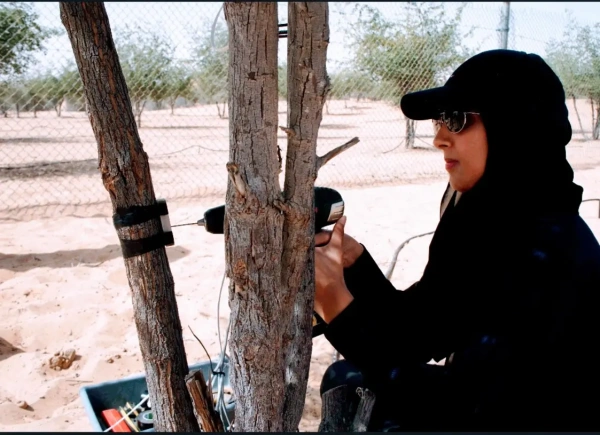
Wafa used Plant & Food Research’s heat pulse technology, which has been employed successfully in New Zealand and other parts of the world, but never in a region where temperatures can reach close to 50degC in summer. Once up and running, the technology provided readings every 30 minutes which allowed Wafa to calculate precisely the amount of water being absorbed by the plant.
“The data provided new and exciting information for us. We found that many of the trees had already adapted to the summer heat and did not take up as much water as we were providing through irrigation,” she says.
“By the end of the study we determined that we could save 35 - 70 percent of the water we have been supplying through irrigation.”
The technology was extended to other crops, and farmers are now provided with crop calculator software which provides guidance on the specific water needs of a tree, according to the month of the year, location, and soil type. “It’s a very important tool for growers in the UAE.”
“It’s good for countries to work together and find solutions to our challenges.”
Enduring relationship with New Zealand
Wafa is proud of the fact that her research is helping to solve a critical environmental issue in her country and knows that the collaboration with Massey through the NZ G2G partnership has been an integral part of her success. It has also paved the way for two other Emirati students to follow in her footsteps.
“I met other international students from the Middle East while at Massey and they were envious of me. They said I was very lucky because I was doing something for my country.”
She believes international education plays a key role in the exchange of information with other countries. “It’s good for countries to work together and find solutions to our challenges. If we are talking about the environment, we are all living in one world so it’s important that we work together to solve issues.”
But this academic partnership has not just produced practical results. It’s also seen a special bond develop between the New Zealand scientists and their Emirati students.
“I have built a long-lasting relationship with New Zealand,” Wafa says. “I know that I can always call my contacts in New Zealand to discuss an issue and they will be there for me.
“The relationship is much bigger than the life of the project and this is very important for me as a scientist and a researcher.”
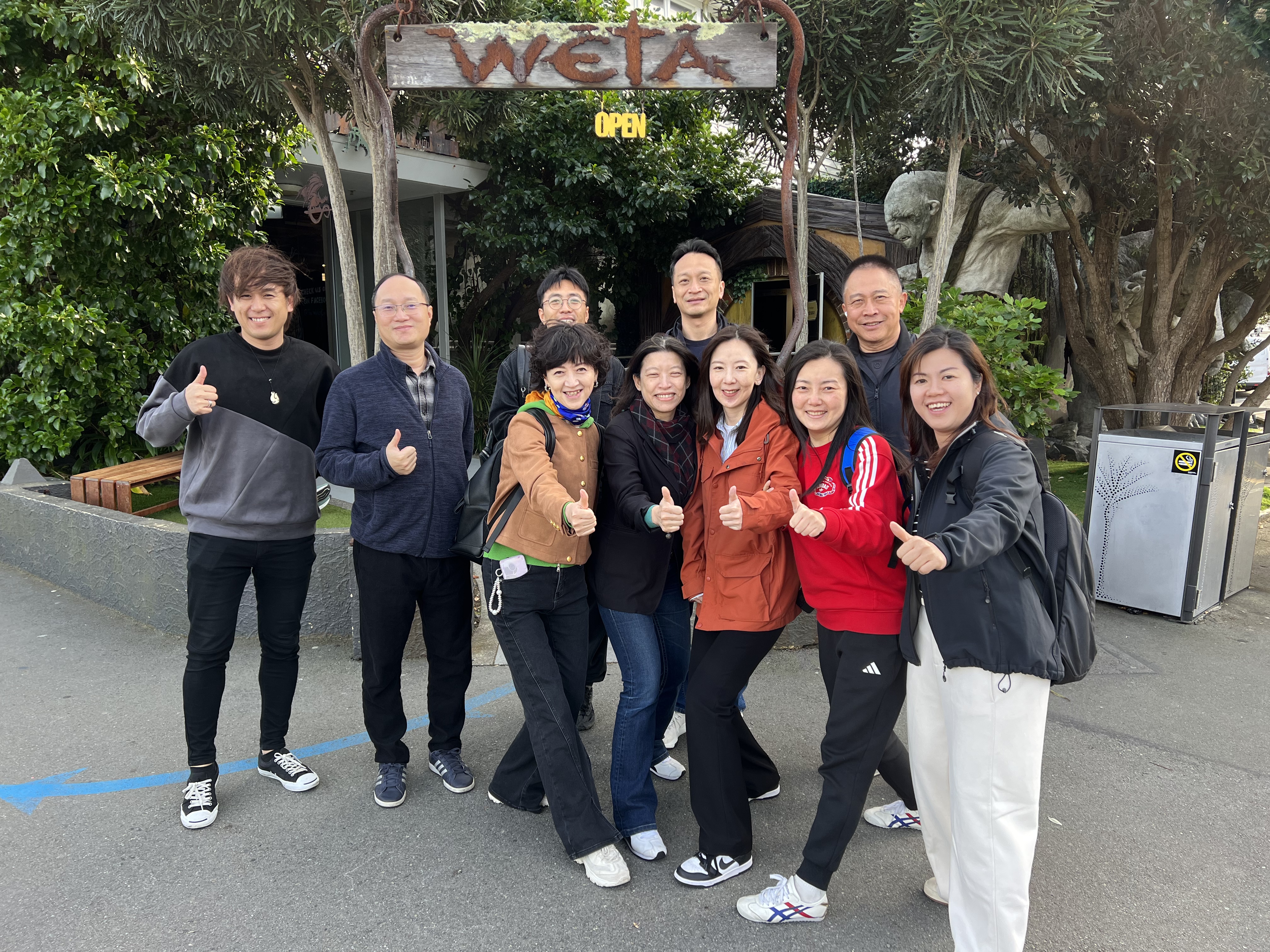
- Weta Workshop
-
New Zealand continues to protect and care for international students during lockdown
Providers, host families and supporting networks have been setting up additional support for international students to ensure they feel connected and safe.
Education New Zealand is pulling together some of the great things that have been taking place across the sector. Here are just a small number that we have heard about so far.
- Otago University has a dedicated information page for students, with students registering with Ask Otago. They can then request daily phone calls to check in and see how they are doing. University recreation centre staff are also offering virtual fitness classes.
- University of Auckland has been supporting the COVID-19 response by undertaking modelling work that informs the Prime Minister’s Chief Science Advisor and working directly with the Auckland District Health Board to help with testing capacity by using their facilities and people.
- Rotorua English Language Academy (RELA) is teaching online classes to 30 students from nine different countries. Many students are worried about their families back home so in addition to support during class time, staff make individual phone calls and arrange fun activities such as the recent Easter video competition on WhatsApp. Friday full-school assemblies and farewell speeches continue to lift students’ spirits with the RELA tradition of singing ‘Now is the Hour’ – managed by the school’s director playing on the piano at home while students sing over Zoom.
- Several Northland schools have been working closely with Study Northland to support the 150 international students in their care. The international students are being well supported by their schools and homestay families by keeping them busy and making them feel like an integral part of the family.
- SIEBA is doing an amazing job supporting the school sector. The small SIEBA team has been working around the clock to provide advice and guidance to schools, including publishing residential care emergency guidance to help schools navigate these tricky areas. On top of all that, SIEBA is raising key issues with the Ministry of Education and alerting government agencies to emerging challenges.
- Massey University’s international support staff are running virtual one-on-one support sessions which can be arranged by the students themselves. The university, like other universities, is making personal phone calls to all students to ensure they feel supported. Massey also has a range of wellbeing resources available and the recreation centres have taken their services online.
- Aspire2 International has launched a number of online learning solutions that have all gained NZQA accreditation. This means English, hospitality, IT and business students can transition from face-to-face to remote learning quickly in order to complete their qualifications.
We want to hear more about the great work the sector is doing to support international students within New Zealand both in enabling their learning but also supporting their wellbeing.
Please let us know what your organisation has been doing and we will look to share this wider. Send your stories to industryteam@enz.govt.nz.
-
Register for NZIEC 2019
Click here to register, or find out more at www.nziec.co.nz.
NZIEC 2019 centres on the theme of ‘Navigating our changing world’. As our education system is reshaped over the coming decade, as international competition continues to intensify, and learner behaviour and technology rapidly evolves, how can we create a distinctive, competitive and valuable education proposition?
We’ll explore some ideas with our keynote speakers Dr Lisa Coleman, Guy Ryan and Chris Gallavin.
 Dr Lisa Coleman
Dr Lisa Coleman is New York University’s Senior Vice President for Global Inclusion and Strategic Innovation, and Chief Diversity Officer, working to promote and build inclusion, diversity and equity initiatives. She previously held a similar role at Harvard University.
Dr Coleman has spent more than 20 years exploring global inclusion, diversity, innovation and technology. She sits on many national and international boards and is the recipient of numerous awards, recognitions, and honours for excellence in teaching and leadership.
Dr Coleman is known to be a dynamic speaker and we look forward to hearing her challenge our thinking on everything from unconscious bias to the benefits of workforce diversity.
 Guy Ryan
Guy is an Edmund Hillary Fellow, was awarded Young New Zealander of the Year in 2015, was a finalist for Most Inspiring Person in the NZ Innovator Awards and has served on boards and strategic groups for business and government. Guy has spoken internationally and at home to more than 25,000 people, including TEDx and World Forums.
As the founder and CEO of Inspiring Stories, Guy has built an impressive track record of programmes and partnerships, supporting more than 7,000 young New Zealanders to build their entrepreneurship and leadership capability.
 Chris Gallavin
Professor Chris Gallavin is Deputy Pro Vice-Chancellor of the College of Humanities and Social Sciences at Massey University. Before joining Massey, Chris was Dean of the Faculty of Law at the University of Canterbury.
As an internationally recognised thought leader on tertiary education, Chris has a Master’s in tertiary management and governance from Melbourne University and has published in the area of university reform.
In 2018, Chris became an Eisenhower Fellow for New Zealand. His project, ‘The Global University 2.0’ looked at reshaping tertiary education to solve the problems of humanity.
-
Tokyo teachers learn from New Zealand
The workshop was hosted by ENZ in collaboration with the Tokyo Metropolitan Board of Education, and facilitated by Dr Howard Youngs, Director of Auckland University of Technology (AUT) School of Education.
Misa Kitaoka, ENZ’s Senior Market Development Manager – Japan, said the interactive workshop on key values, social competencies and learning areas based on the New Zealand Curriculum, was a valuable experience for participating teachers.
“The most popular exercise among the teachers was the pepeha, where they introduced themselves by speaking in te reo Māori for the first time. The experience helped the teachers relate to and better understand their students who may not be native Japanese speakers.”
The workshop was particularly relevant to today’s Tokyo schools which are becoming increasingly diverse in terms of ethnicity and language, Misa said. This was particularly the case with the launch of the Tokyo Board of Education’s ‘Diverse Link Tokyo Edu’, a new learning initiative to promote inquiry-based learning with overseas institutions and organisations.
“I look forward to working with New Zealand providers to showcase the Kiwi classroom experience, and the way it highlights the uniqueness of the New Zealand curriculum, to complement our student recruitment work.”
Held in the last week of April, the workshop was also a way to acknowledge Japan’s new Reiwa era, which began on 1 May after Emperor Naruhito ascended the Chrysanthemum throne.
“Hosting an event around a new imperial era is of enormous significance in Japan, and Reiwa (which means beautiful harmony in Japanese) is said to reset the national mood,” Misa said.
Dr Youngs’ innovative workshop was featured in Japanese media, including Yomiuri Shimbun, one of Japan’s largest national newspapers.
Tokyo Metropolitan Board of Education’s Director of International Education, Ms Akiko Mori, said the workshop was a wonderful opportunity for Tokyo teachers to get a taste of the latest pedagogy from a New Zealand university through the board’s partnership with Education New Zealand.
“I have received great feedback from the participants and look forward to promoting more opportunities like this as part of the Diverse Link Tokyo Edu initiative,” she said.
Ms Mori will be speaking at the upcoming NZIEC to introduce new initiatives by the Tokyo Government to promote international education, global talent and leadership in Japan.
- Export Education Levy Annual Report 2016 17
- Lisa1
-
Global demand for English language learning: A market still shifting
Globally, more than one million students undertook English language study across the major destinations in 2024, generating around 7.6 million student weeks.
That’s a significant rebound from the pandemic years, but still well below 2019 levels, when the sector reached over 1.3 million students generating more than 10 million student weeks. The expectation was that 2024 would continue the strong momentum seen in 2022 and 2023. Instead, growth slowed.
As Ivana outlined, this wasn’t due to a drop in interest in learning English. Demand remains strong. What’s changed is the environment around it.
Across many of the major destinations, governments introduced tighter visa settings, enrolment caps and more restrictive policies. At the same time, students and families have been dealing with rising costs, weaker currencies and increased uncertainty. The result is a more constrained and more selective market. In 2024, global student numbers declined by around 6 percent and student weeks by 11 percent compared with the previous year.The presentation also highlighted that the shape of demand is changing.
Adult learners, once a core part of the sector, are declining across many destinations. In their place, younger learners are entering earlier, often for shorter stays. The average age of students’ first study abroad experience has dropped from around 15–16 years pre pandemic to closer to 12–13 today.
At the same time, traditional patterns of mobility are changing. More students are choosing shorter, more flexible experiences. Some are staying closer to home, supported by the growth of in country options and transnational education offers.
There’s also growing competition from newer destinations. Markets such as the Philippines and Dubai are expanding quickly, offering alternatives that can be closer to home or more affordable for students.
Taken together, these shifts point to a sector that is no longer simply rebounding, but actively reshaping. As Ivana noted during the session, the key driver is no longer just student demand, it is the interaction between demand, policy settings and economic conditions.
Download a copy of the report or view the presentation on our IntelliLab website.
Webinar on the global demand for English language provision | IntelliLab
- maienz bg
- image4