Search
Showing 10 of 7357 results
- 2021 240 Ministers attendance at ENZ Partners Workshop Week Monday 14 June 2021
- english nz logo
- 019A6225
- IMG 20250528 WA0013
- Manila Agents
- New Growth Outdoor Learning School
-
Meet the team: Marie Clark, Director Insights
Tell us about your role, the team you lead, and what your team does at ENZ for the international education sector.
I’m Marie, Director Insights for Education New Zealand Manapou ki te Ao. I lead the research and market analysis to provide insights that underpin ENZ’s work. This includes student experience, brand health, economic value, and New Zealander’s perceptions of international education.
We are a small team of five analysts and researchers but pack a lot of punch if I do say so myself. We are lucky enough to work with a range of teams across ENZ as well as the wider sector. Our findings are shared with our stakeholders and our education partners so that they can use this to make informed decisions about the future delivery of their international education products and services. Much of our work is on an annual basis, meaning that each year we are looking for any small changes that might turn into long-term term trends. For example:
-
in the international student experience survey, we want to look more at the people and connections and mental health. If we spot changes, providers may like to adjust their support for students.
-
through our perceptions work we want to understand, as international students return to New Zealand, if the way New Zealanders perceive the challenges and benefits of international students is changing. If we spot changes, we will work with providers to bring those benefit stories to the forefront.
Where were you working before joining the ENZ team?
I am a returning New Zealander, having spent the last 15 years in the United Kingdom, working in a range of insights, marketing, and communications roles in higher education. My most recent UK role was at Independent Higher Education, the representative and lobbying body for independent higher education, professional training and international pathway providers. Previously I worked for a policy communications consultancy, Hobsons, now QS Enrolment Solutions, and The PIE.
Tell us what the team has been working on since you joined and how the sector can access this?
I joined ENZ in October 2022 and since then have led the delivery of several key pieces of research and reports. Some recent highlights for me are releasing our insights on the 2013 – 2023 (part year) International Student Enrolment data, 2023 International Student Experience Survey and the 2023 New Zealanders Perceptions of International Students 2023.
We share all of our research, data and insights on ENZ's Intellilab and I would encourage anyone to sign up, if you haven't already. We also post links to past webinars that we have held in which we share our latest research and insights.
For those that are interested in being able to take a closer look at the data, we do share some data that has been officially released to Tableau Public.
What can the sector expect to see from the Insights team in the next 12 months?
Our team will be very busy over these next 12 months as we undertake a range of surveys and then following the fieldwork will be diving into the data and compiling insights reports, presentations and hosting webinars for the sector to take them through this. To name just a few taking place over the next two quarters, we will be working on the: International Student Experience Survey 2024, Brand Health 2024, a sector survey, agent survey, and the New Zealanders perception of International Education 2024 survey. Phew!
So, watch this space here on E-News, via our Sector Engagement Team, or Intellilab where we will share our insights with the sector. If anyone in the sector has a query about past or future research opportunities or wants to organise an insights session with your organisation or stakeholders, then feel free to reach out to me and my team – insights@enz.govt.nz.
Tell us what you like to do when you’re out of the office and not nose-deep in international education data...
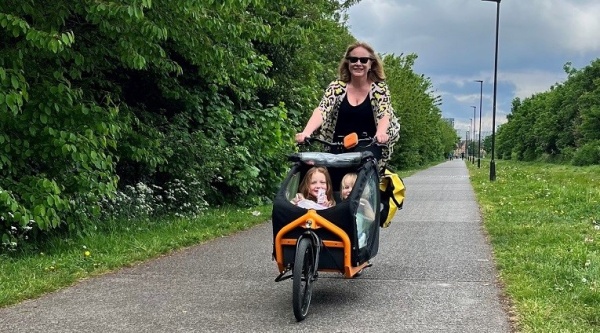
I am still enjoying settling back into New Zealand. It’s a period of both discovery and rediscovery. Weekends are spent catching up with old friends and spending plenty of time with family, adjusting my two young children to the kiwi lifestyle. I am a convert to cycling for transport and can be seen zooming all over Wellington, and sometimes further afield, on my electric cargo bike.
-
- Korerorero Screenshot
- NZIEC2024167of108 v2
- WellingtonStaff 52