Search
Showing 10 of 7357 results
- 445455 learn new every day campaign image web version 1024px
- Hugh Holland 2
- card 6
-
Māori perspective in internationalisation
Having seen how international education creates long-term relationships and influences worldviews, in 2018, the University of Otago has established Tūrangawaewae Pōkai Whenua.This is an indigenous exchange programme connecting Māori with indigenous communities in Australia, Canada and the US.
Jason Cushen, Director International at the University of Otago, said the programme uses a network of partner universities to connect Māori students with other indigenous communities.
“International education is a lifechanging experience for students but for indigenous students in particular it can be a unique opportunity to connect with indigenous peers around the world, to share experiences and customs, and discuss the role cultural identity plays in education.
Jason and Tuari Potiki, Director of the Office of Maori Development, will present at NZIEC outlining how the programme will operate, and its place within broader mobility and diversity initiatives at the University of Otago.
A similar programme is being developed in Auckland, thanks to a partnership between Study Auckland and the hapū of Ngāti Whātua Ōrākei. Together, they have created the Rukuhia Leadership Programme, a cultural immersion experience designed especially for international students.
Students spend a day on a marae participating in workshops that focus on leadership, values, the connection of people, place and environment, and they learn about the work Ngāti Whātua Ōrākei does in the community. They experience a pōwhiri, meet iwi leaders, and learn te reo Māori greetings and pronunciation, waiata and haka.
Henry Matthews, Head of International Education at Study Auckland says the pilot programme emphasises the appeal of a uniquely New Zealand study experience.
“The leaders of Ngāti Whātua Ōrākei incorporate their values of Manaakitanga, Kaitiakitanga, Whanaunagatanga and Tino Rangatiratanga into the programme, which provides students with a powerful sense of belonging, connection and empowerment.
“It is an unforgettable international student experience, and something that can be easily replicated across other parts of New Zealand.”
Find out more about the programme at NZIEC, where Henry will lead an interactive session where you can hear first-hand from international students about how they found the experience.
NZIEC 2018 will be held on Thursday 9 and Friday 10 August at Te Papa Tongarewa in Wellington.
Tūrangawaewae Pōkai Whenua: A Place to Stand, a World to Explore, 1.30-2.10pm, Thu 9 Aug
Rukuhia Leadership Programme: A partnership with hapūto create unforgettable international student experiences, 11-11.40am, Fri 10 Aug
- tokyo 2
-
ENZ promotes education in Thailand
The counsellors were broken into small groups and rotated between roundtable discussions with Education New Zealand, the US Embassy, British Council, and OCSC.
ENZ’s Marketing and Strategic Relations Manager – Thailand, Chortip Pramoolpol, said this intimate road show format was helpful in sharing key information with the market without overwhelming them.
“It was a great way for school counsellors and students to gain insights into New Zealand’s education system and learn the many benefits of studying there.
“It also means information about New Zealand will be distributed into schools and to students who otherwise wouldn’t have New Zealand on their study abroad radar.”

ENZ and RMUT representatives
The following day, ENZ met with the chairman and presidents of Rajamangala University of Technology (RMUT), a system of nine universities in Thailand. With RMUT’s link to industry and practical teaching styles, it is most similar to New Zealand ITPs.
ENZ’s South, Southeast Asia and Middle East Regional Director, John Laxon gave a crash course on the New Zealand ITP system, welcoming the possibility of future collaborations with RMUT in English language training, double-degree programmes and student exchanges.
To build on this knowledge, ENZ’s Thailand team have begun planning an education road show for all nine RMUT universities starting December.
- WellingtonStaff 5 cropped
-
Reminder: Step up to the World, Tū māia ki te ao, a forum on global citizenship education, 11-13 September
Educators, those who work in education and anyone with a keen interest in growing their understanding of Global Citizenship Education (GCED) are invited to attend this free forum. The forum aims to bring individuals and organisations together to share some of the wonderful work being done in the education sector to support global citizenship for learners, while also looking at how we can collaborate and champion each other's work in the future.
The forum will also support participants to:
- Understand GCED
- Explore ways to honour Te Tiriti o Waitangi through GCED
- Make links between key frameworks and strategies and the Aotearoa New Zealand context
- Explore the role of GCED in Asia-Pacific contexts and in international education
- Connect and share best practice with local and international experts and practitioners
You can register your interest for the event via this form here: https://forms.gle/NiBTqGxAzt9P2VrY8
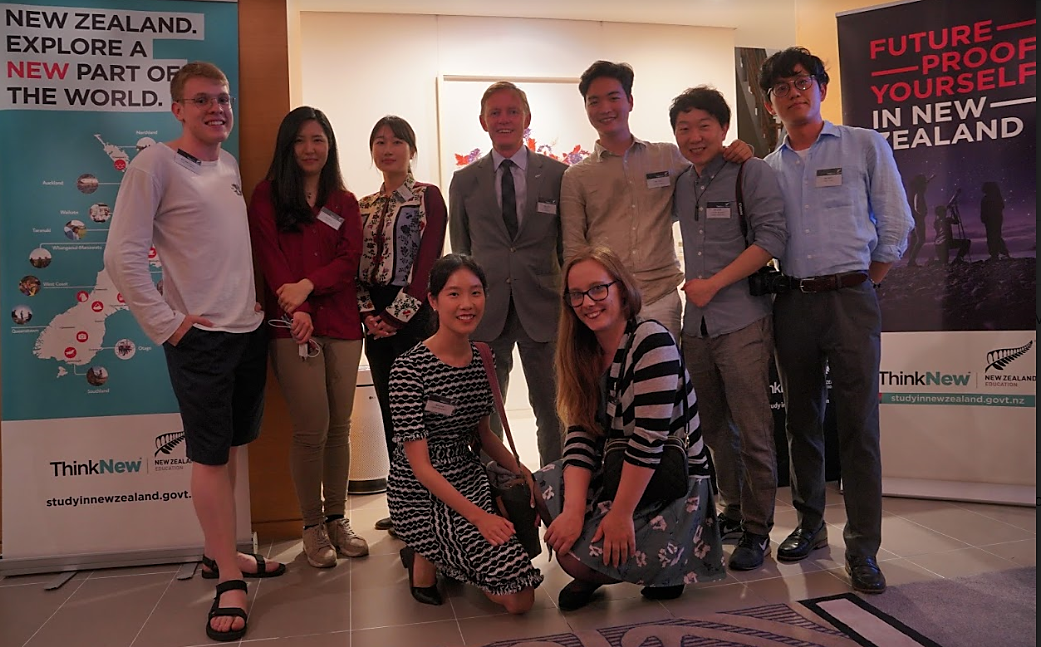
- New Zealand alumni mentor prospective students in Korea
-
CONNECT webinar series – A digital update
Richard Kyle, ENZ Business Development Manager, says the first CONNECT webinar later this month will provide an update on ENZ’s digital work programme.
It will cover what the different streams of work are, how they work and, most importantly, what education providers can do to make the most of them.
“The webinar will delve into how our tools can assist your institution to track and measure referrals. It will also be a chance to ask any burning questions or to clarify any aspects you or your institution may have,” says Richard.
“We’ll also talk about some new products we’re developing including an ENZ chatbot, an Outcome of Visa indicator, and ENZ global digital campaign plans for 2019.”
The webinar will be relevant to international staff as well as those who work in digital, marketing or admissions teams.
The webinar will run on Wednesday 24 October from 2.00-3.30pm.
Please note: This webinar is only open to representatives from New Zealand education institutions, government and regional partners.
Check out future editions of E-News for further CONNECT webinar updates.