Search

Showing 10 of 7347 results

  • Latest insights on international education

    “As we approach the end of 2022, we have an opportunity to take stock, and importantly look forward to next year, one in which we all hope to welcome increasing numbers of international students back to New Zealand,” says Marie Clark, Director Insights at Education New Zealand Manapou ki te Ao (ENZ). 

    “Despite the long period of border closure there has been only slightly altered demand for international study. Our annual brand tracker shows the New Zealand brand is holding a strong position globally.” 

    ENZ has been closely tracking the beginnings of recovery. As New Zealand's border reopens, the immediate priority is for international education providers to build back their onshore offerings and attract students back to Aotearoa. The content of this issue is focussed on toward data and analysis related to our initial observations of the sector's recovery. 

    The Insight Story - Issue 6 includes insights on: 

    • Student visa applications and Study with New Zealand web stats 
    • New Zealand's education brand health  
    • Agent perceptions about international education 
    • 2021 international student enrolments 
    • New Zealanders' perceptions of the value of international students 
    • and more…… 

    Visit IntelliLab to download The Insight Story here. 

  • ENZ seeks Expressions of Interest to grow the Thai schools’ sector

    In 2023, enrolments from Thailand were the fifth largest for New Zealand’s schools with most enrolments coming from students living in Bangkok. Education New Zealand Manapou ki te Ao (ENZ) is now looking to grow this market by collaborating with New Zealand schools and regional Thai education agents to build partnerships with schools in cities outside the capital city (referred to as ‘second tier’ cities).

    The initiative, called the Thailand Second Tier City Promotion is planned to run in 2025-2026. ENZ is currently seeking feedback from New Zealand schools to measure interest in participating in the promotion and is running a survey until Tuesday 30 October 2024 for interested schools. 

    Collaborative school clusters are invited to participate in the initiative which will form sister school partnerships with regional Thai schools. Each cluster should consist of at least three schools.

    Through these partnerships, a wide range of study options for Thai students and schools will be available. This may include short-term 4-week school immersion programmes, 1 to 2 terms or full year study programmes, teacher trainings, virtual interaction, online curriculum-based collaborative projects etc. 

    ENZ’s Acting General Manager - International, Mr Ben Burrowes, said that over the years New Zealand has built a very strong reputation as a high-quality education destination particularly amongst students from Bangkok. He says that this helped the market rebound significantly post-Covid. 

    “With the international education market in Bangkok now highly saturated, ENZ sees this promotion as a good opportunity to help schools reach an untapped market in regions across Thailand. 

    “Through working with high performing regional education agencies and in collaboration with New Zealand schools, our initiative aims to support the development of sister school partnerships in each province,” said Ben.  

    “This is a strategic move to raise the profile of New Zealand’s school sector and grow interests from a new pool of prospective students and their parents,” added Ben. 

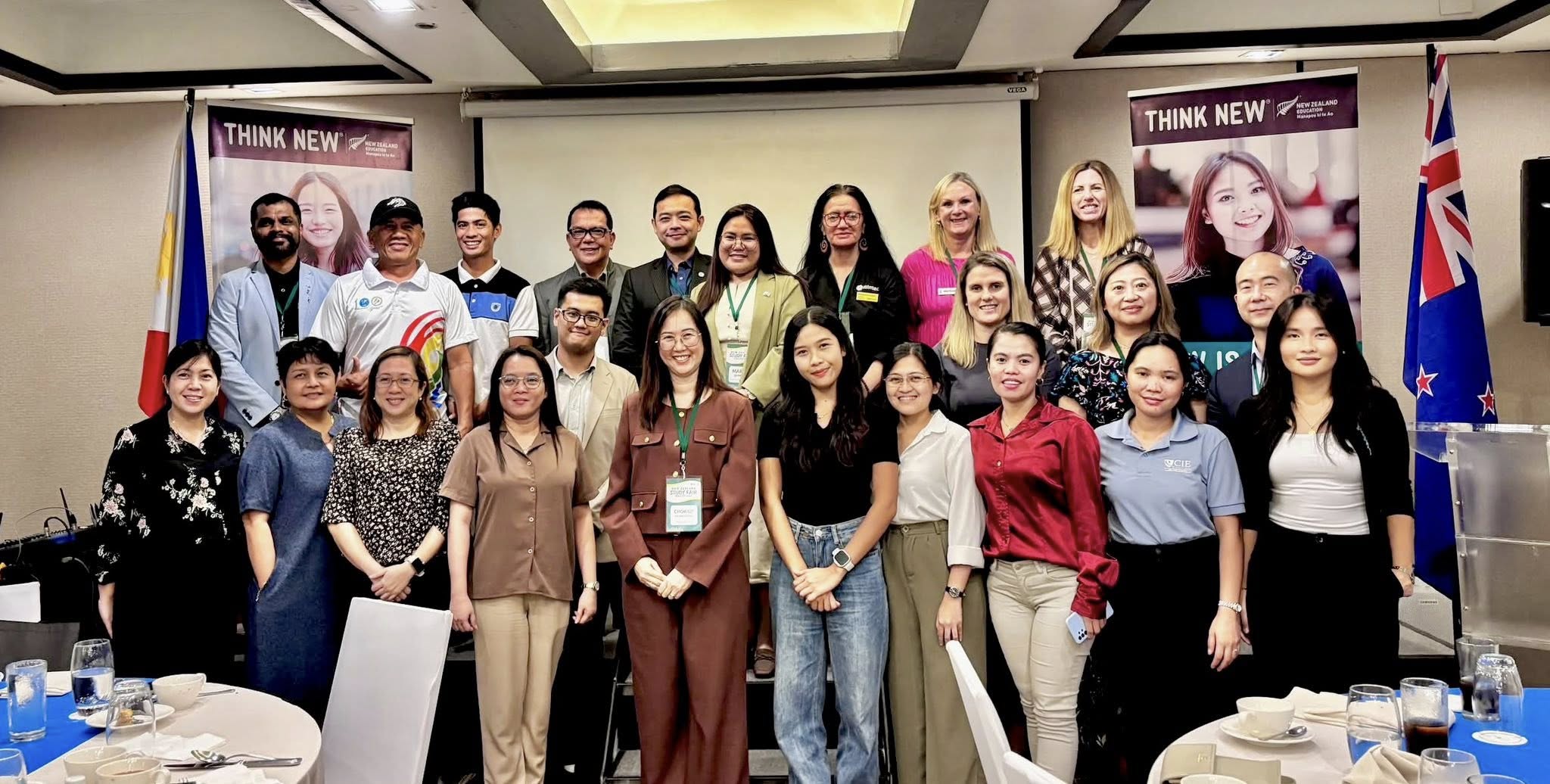
    If your school is interested in exploring this opportunity, please fill out this survey by Tuesday 30 October to help us match your interest with our upcoming initiative.  Additional information can be found in this document. If you have any questions, you can email these through to NZ’s Market Manager – Philippines & Thailand, Chortip Pramoolpol Chortip.Pramoolpol@enz.govt.nz.

  • Fifty years celebrated with Chile

    Cultural performances, together with a series of panel discussions on government initiatives, research connections, educational exchanges, and the experience of Chileans in New Zealand showcased the variety and depth of the relationships that have been developed over the past 50 years. 

    Speakers included both Ambassadors, as well as academics from all New Zealand’s universities, alongside alumni and government specialists. A number of distinguished guests were part of the large audience that attended throughout the day at Parliament Buildings in Wellington and online. 

    (l to r) Former Prime Minister Helen Clark and Javiera Visedo, Director of Engagement Latin America for ENZ, took part in a panel discussion on government initiatives.

    Lisa Futschek, ENZ’s General Manager International, chaired the panel discussion on educational exchanges.

    Videos of the event are available on the CAPE website here 

  • Around the world in five  

    Asia 

    Recruitment fairs resume at China schools 

    China is resuming in-person recruitment fairs for international universities, with international representatives invited to attend events in person again following the lifting of border restrictions. School education professionals highlight the importance of face-to-face interactions for Chinese families. 


    North America 

    Canada: Ontario colleges adopt new standards for programmes and supports for international students 

    Ontario's colleges have established a new set of standards of practice for international students, including guidelines for marketing and recruitment, education agents, and programme and service delivery, to ensure that international students have access to accurate information and support to succeed in their programmes. 


    South America 

    Brazilian outbound market booming in 2023, agents report 

    Brazilian agents are optimistic for the future with expectations for 2023 to be a record year in outbound travel. Strong demand for teen courses, higher-value sales, shifting requirements from parents, and emerging trends in products and destinations were noted at the ST Alphe Brazil 2023 conference.  


    Europe 

    Drastic policy changes ‘could damage’ UK sector 

    Stakeholders have expressed their concern that if the UK government implements significant policy changes related to post-study work and allowing students to bring their dependants, it could lead to a decrease in the number of international students in the country. 


    Africa 

    Regional framework for microcredentials to be developed 

    Southern African countries are developing a framework for the recognition of learning through micro credentials, with the aim of informing and guiding individual countries and institutions to develop their own country-specific frameworks. 

  • Beware of phone scam targeting visa holders in New Zealand

    The scam states the call is coming from 'The Immigration Bureau' saying there is a 'serious problem with your visa'. The call then prompts recipients to press different numbers for English or Chinese services. 

    Please be aware that this is not a genuine call from Immigration New Zealand. 

    If you or someone you know receives this call, do not engage any further and hang up the call.  

    New Zealand visa holders – including international students – receiving this call and needing reassurance on their current visa situation can call Immigration New Zealand’s Service Centre to discuss any visa matters directly. 

    Read this article to learn what to do if you, or someone you know are targeted by this phone scam. 

  • Opportunities to participate in two major education events in Middle East

    Global Higher Education Exhibition Oman (GHEDEX Oman) will take place in Muscat from 27 to 29 March 2022, supported by the Omani Ministry of Higher Education, Research and Innovation. Secondary and tertiary students, parents, young professionals and education professionals from across the Gulf Cooperation Council region will attend.

    Recent GHEDEX events have been held virtually due to the Covid-19 pandemic, but this year the event will have both face-to-face and virtual options. Alongside universities, GHEDEX 2022 is open to vocational training providers and EdTech companies.

    The International Conference & Exhibition for Education (ICEE) is scheduled to take place in Riyadh from 8 to11 May 2022, organised by the Saudi Ministry of Education. Five New Zealand universities participated alongside ENZ at the 2019 event, which was previously known as IECHE. This year, organisers have opened up participation to include English language schools, aviation training providers, vocational education institutions, and EdTech companies. 

    “This is the first time these events have taken place in person since the beginning of the Covid-19 pandemic, and we know building relationships face-to-face is important in the Gulf region,” says Amy Rutherford, ENZ’s Regional Director, Americas, Middle East and Europe.  

    “This is also the first time these events have invited other education sectors to participate as well as universities. There are significant opportunities for English language schools, aviation training providers, and vocational education institutions to attract students from Saudi Arabia, Oman and other GCC countries, as well as opportunities for EdTech companies in the region,” Amy said.

    ENZ will host a New Zealand pavilion and have on-the-ground representation at both events. If your organisation is interested in exploring opportunities in the region and would like to find out more about participation in these events – in-person, virtually, or represented by ENZ – please contact Bronwyn Shanks, ENZ’s Senior Advisor – Special Projects, Middle East and Europe, bronwyn.shanks@enz.govt.nz.

    NOTE: Recent changes to our border settings mean that New Zealanders attending these events will not need to book a space in Managed Isolation and Quarantine on their return to NZ.

  • NZIEC2023310of404 1 1

  • Massey student’s robotic gut capsule could be a game-changer

    Millions of people globally die every year from gut-related illnesses, and many more live a life of suffering, yet diagnostic tools remain quite rudimentary.  

    Arriving from Pakistan as an international student in 2018, armed with a BSc and MSc in Electrical Engineering, Rehan was excited to join the Microbiotics Lab at Massey University. There he accelerated early work on a micro capsule which could be swallowed and was able to collect samples of the microbiome in specific parts of the gut.  

    Unlike the poop in a jar method, the capsule’s targeted sampling provides a much more detailed analysis, allowing for earlier diagnosis of killer diseases such as cancer and diabetes and easier treatment of inflammatory conditions like Crohn’s and coeliac diseases.

    Early treatment of gut disease can save lives 

    Treating disease early reduces complications and saves lives. And with the capsule expected to be quite affordable to produce, developing countries could share in the benefits it would bring.  

    “It is a huge step forward. There are so many advantages and applications,” Rehan says. “The gut is still a bit of a mystery, but the micro-organisms that live there can tell us a lot about our health.” 

    While an endoscopy camera capsule can take images, it has limitations, and clinicians are excited by the prospect of having such a sophisticated but easy-to-use device to help with diagnosis, Rehan says.  

    Research project shows commercial promise 

    What started as a research-oriented project is showing commercial promise. And not just from doctors. Rehan has also had interest from the veterinary sector, and nutritionists keen to better understand nutritional absorption. 

    The next step is to hone the final details of the capsule design and apply for patents. Once he has ethical approval, he can begin testing in animals. He expects that to be within months. 

    Rehan is proud of what he has achieved since arriving in New Zealand with his young family three years ago. He says he could have gone to the UK or US, but chose New Zealand based on recommendations by friends already studying here, who described the research environment for international students as open and collaborative. He was also excited by the work being undertaken in microbiotics by his supervisor Ebu Avci and was keen to be involved. 

    Collaborative environment makes for impactful outcomes 

    “I’ve valued the network of like-minded people I’ve developed and know that I’ll have a supportive community to call on when I’m no longer in New Zealand,” he says. “The easy collaboration with other universities and organisations such as Callaghan Innovation and MacDiarmid Institute also makes the research and outcomes more impactful.” 

    Such is the life-saving potential of Rehan’s gut capsule, that he was selected to represent New Zealand last month at the International Falling Walls Lab competition in Berlin, Germany. The competition provides a platform for early-career innovators to present, in a three-minute pitch to a jury of experts from academia and business, how they might fix pressing global challenges. Rehan had to compete remotely and wasn’t the ultimate winner but says he it was a great opportunity to network and learn from other research developments going on around the world.   

    Rehan plans to spend next year writing his thesis before returning to Pakistan. Funded by his government to study internationally, he is conscious of the need to return home to share his skills and knowledge but has not ruled out returning to New Zealand to undertake further research in the future. 

  • Former international student represents Aotearoa in Ecuador

    With his career as an agronomist under way, Juan Pablo came to New Zealand on an MFAT-administered scholarship in 1988, wanting to build on his agricultural qualifications. After taking English courses at Victoria University Wellington Te Herenga Waka, he completed a two-year Diploma in Rural Studies at Massey University Te Kunengaki Pūrehuroa.  

    His time in New Zealand had such a profound impact on his life that he returned home determined to establish lasting bonds between the two countries. And there is no doubt that his appointment reflects just how much he has achieved.  

    Juan Pablo says he had dreamed of coming to New Zealand long before he got here. He had read ‘Grass to Milk’, Campbell McMeekan’s 1960s account of New Zealand’s dairying management practices which was well-known among dairy farmers in Ecuador. “I read the book and decided this is the place I want to go.” 

    Learning from the best 

    Very few students travelled to New Zealand from Ecuador at that time, most went to the United States for further education, he says. “Many people asked me why I was going to New Zealand, and people still ask me about it today. I tell them I went because I wanted to learn from the best.” 

    Juan Pablo says he was inspired by his lecturers, especially the late Professor Colin Holmes, a respected researcher, mentor, and advocate of the dairy industry.  

    “I came from an education system where the teacher held all the knowledge, where it was always black or white. In New Zealand it was totally different because learning was inquiry-based. Critical thinking was the method of developing knowledge.” 

    He says his experience was transformative on both a personal and professional level.

    “The things I saw and learned, the New Zealand way of doing things, and the care and respect people had for each other had a powerful effect on me.” 

    Over the decades since Juan Pablo’s education experience in Aotearoa, he has built a highly-regarded career in Ecuador, founding and leading primary industry companies, accepting numerous board appointments, representing Ecuador in international free trade agreement negotiations, and being recognised with multiple honours for his contribution to the livestock and dairy sector. 

    Enduring ties to New Zealand 

    But he never forgot his ties to New Zealand, working tirelessly to strengthen the bilateral relationship and boost both business and education opportunities. He initially established a company to import agricultural products from New Zealand. When he later secured the role of General Manager of the Cattlemen’s Association, he passed on all his business contacts, and the organisation has been importing electric fencing components and seeds from New Zealand companies ever since.  

    “In 1988, we brought some cattle in from New Zealand for a breeding programme. Now many farms in Ecuador, including the ones I oversee, have cattle from New Zealand stock. And in the 1990s I helped to establish an education programme with Massey, which saw lecturers come to Ecuador to take short courses in dairy management.” 

    “When it comes to dairy farming, almost everything I know I learned in New Zealand - pasture management, milk production systems, electric fencing, animal welfare – and farmers have applied these practices successfully in Ecuador,” Juan Pablo says.  

    “New Zealand is top of mind for every farmer here. When you talk about New Zealand here, everybody knows about its reputation in agriculture. Going to New Zealand is on the wishlist for many people.”  

    Honoured to represent Aotearoa 

    Juan Pablo says he was deeply honoured to be asked to be New Zealand’s Honorary Consul in Ecuador, a role which is all about connections and creating opportunities which benefit both countries. 

    “I am very proud, and I’m happy because I now have the chance to advocate for Aotearoa,” he says. “The better the relationship with New Zealand, the better it is for Ecuador too. We must focus on what we have in common and make the most of it.” 

    He firmly believes international education is at the heart of relationship-building and collaboration between countries, even more than tourism and business. “You learn the values of a nation through education. Time spent studying in New Zealand will make you a better person.” 

    “International students will become New Zealand’s ambassadors to the world.” 

  • Introducing Sharon-May McCrostie, ENZ’s new Director Sector Engagement

    Can you tell us about your professional background including the role you had prior to joining ENZ?

    After graduating from the University of Waikato with a Bachelor of Management Studies specialising in Japanese and International Business, I joined the primary export sector. I held a range of sales, marketing and business development roles in the seafood and horticultural sectors with a focus on Asian markets, including with ENZA (the NZ Apple and Pear Marketing Board) in Singapore. My first job was in Bluff, exporting live lobster!

    Prior to joining ENZ, I spent 20 years with New Zealand Trade and Enterprise in a range of roles supporting NZ exporters to realise their international growth ambitions. In my last role there, I was Customer Director where I led a team of customer managers supporting digital technology and services exporters across the central New Zealand region.

    What are your thoughts on your new role so far?

    I feel I have joined ENZ at the perfect time as the team here comes together to co-create next year’s business plan. Early in the role, I was catapulted into focus groups with sub-sectors to understand their priorities and ensure we focus on the right opportunities and challenges to enable the international education sector to flourish. Providers were generous in sharing insights and setting expectations for ENZ, providing important input into the business planning process.

    As we work through the process, I have been incredibly impressed with the knowledge of my team and the wider  ENZ team, and admire the depth of passion and ambition to ensure we make a difference to the sector.

    What do you see as the challenges and potential opportunities for our sector?

    The market for international learners is hyper competitive, and our main competitors are driving hard to win market share in the face of ongoing global uncertainty.  New Zealand has an excellent reputation for education, but we must be smarter and nimbler to maintain an edge over our competitors and attract quality learners to NZ. 

    We must continue to build brand awareness and enable agents and providers to provide a compelling case for choosing a NZ education. As the sector shifts from recovery to rebuild, it is an opportunity to think differently about how we partner with the sector to co-create a robust, resilient, and innovative sector that meets the needs of the future learner:  I am excited to be part of that conversation.

    Outside of work, what do you like to do?

    Wellington is blessed with rolling hills that embrace the harbour, and I love running its trails and taking in the soaring views. I also love to swim – mostly in a pool, with the occasional plunge in the ocean. Otherwise, I love to read, rummage through op shops for vintage china and linen, and hang out with my daughters who are my biggest teachers.


What's in it for me?