Search
Showing 10 of 7383 results
- PMSLA PUCSP Brazil
- logoPrint3
-
Update from Immigration New Zealand
Visa processing update
- From 01 January to 31 March 2025, student visas have been processed in 12 days (two and a half weeks) on average, compared to 24 days (five weeks) for the same period in 2024.
- Currently, international student visas are being decided in 10 days (two weeks) on average.
- The tertiary sector’s mid-year intake is almost upon us, and students need to apply for their visas now.
- Latest visa processing times can be found on the INZ website: Student visa wait times | Immigration New Zealand.
Reminders from Immigration New Zealand
The conditions of a student visa state that the visa holder must attend the programme of study at all times, at the place of study endorsed on the visa (unless there are genuine reasons for absences), and that they must make satisfactory progress in the programme of study.
Immigration New Zealand (INZ) receive a number of applications from students in New Zealand, who have poor attendance and/or progress, without any explanation of why.
If students do have poor attendance or progress, it is recommended that an explanation for this is provided up front with the application to avoid the need for INZ to request further information. This will prevent any delays in processing.
- All terminations of enrolment (ToE) must be submitted to INZ. This can be done through the INZ website: https://www.immigration.govt.nz/assist-migrants-and-students/assist-students/student-enrolment-termination
If you are refunding an international student’s fees, then the ToE form should be filled out, regardless of whether or not the student’s visa has been sighted by the provider.
- From 01 January to 31 March 2025, student visas have been processed in 12 days (two and a half weeks) on average, compared to 24 days (five weeks) for the same period in 2024.
-
ISANA - Enhancing international student experiences
The ISANA New Zealand Annual Conference held at AUT University in Tāmaki Makaurau last month provided the perfect forum to address the challenges of strengthening capability and ensuring sustainability as the sector addresses ways in which to grow international education.
A key feature of the conference was the presentation of a new online ‘Capability Toolkit’ - a collaboration between ISANA NZ and Education New Zealand Manapou ki te Ao (ENZ). Developed as a resource for education practitioners, the toolkit presents strategies, tools, tips, guidelines, case studies, scenarios and more to assist with every facet of engagement with international learners.
ENZ’s General Manager Sector Services, Sahinde Pala, said that the conference provided a great opportunity to reconnect face-to-face with professional colleagues.
“We all enjoyed the opportunity to exchange experiences and hear from frontline practitioners how the rebuild of the sector is going from their perspective. It was a great opportunity to connect with those relatively new to the sector and let them know the role of ENZ and the resources available to assist them in their role.”
“It was also encouraging to see our industry coming together to collectively focus on improving our services for students. The Capability Toolkit is an important, practical resource that will assist education practitioners provide even better support for our international learners.”
The Capability Toolkit provides links to resources in the following areas:
- Wraparound tailored support for international students
- Critical incident management for international students
- Innovative leadership in international education
- Intercultural competence in educational contexts
- Student experience information for agents.
ENZ is continuing to work with ISANA to further develop the Capability Toolkit and other content will be added over time. In the meantime, anyone who has not had a chance to look at the toolkit, can explore this further on ISANA NZ’s website here.
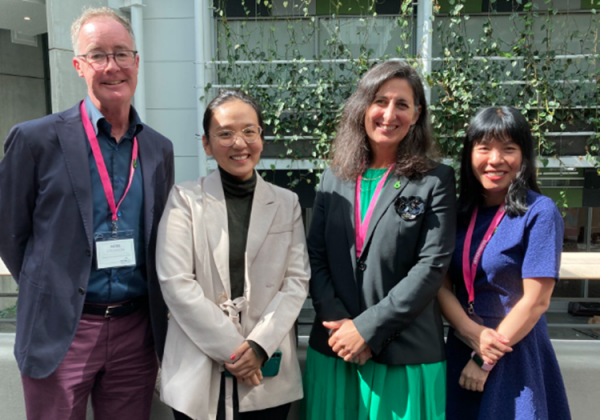
Vaelyn L, International Student Representative (second from left) with ENZ representatives at the ISANA conference Ross Crosson, Student Experience Manager, Sahinde Pala, General Manager Sector Services, and Faymie Li, Senior Advisor Student Experience
- Future proof images
-
Summer down under
With COVID-19 pandemic restrictions on international travel in force, many students are choosing to stay in New Zealand over summer rather than go home because in most cases, they will not be able to return for the start of the 2022 academic year.
ENZ’s Director of Student Experience and Global Citizens, Sahinde Pala, says it will be the second unexpected summer in New Zealand for many students.
“Those international students who are still here have shown amazing resilience. We know how hard it can be to be separated from loved ones at home for so long.
“But the early results from our research suggest they have remained remarkably positive about the overall New Zealand experience, despite the challenges.”
ENZ is supporting students again this summer with information and resources on health and wellbeing, exploring the country and building their work skills.
The Summer in New Zealand section of the NauMai NZ website for international students offers information, advice and links to expert resources. These include a webinar featuring careers expert Andrew Tui to give them practical tips on how to build their professional and personal skills.
“ENZ would like to acknowledge all the work the people in the international education sector are doing to support their students over the summer, and we invite you to share our resources with your networks.
“We wish everyone a summer in New Zealand that is safe and restful,” Ms Pala says.
-
Education sector delegation for Dubai Expo
The delegates from ENZ, the University of Otago, the University of Waikato, Victoria University of Wellington, Te Pūkenga - New Zealand Institute of Skills and Technology and private sector education technology companies ByteEd and ARA Journeys will be in Dubai between 22 and 25 January 2022.
Expo 2020 Dubai is a global trade fair currently being hosted by Dubai, in the United Arab Emirates. It was scheduled to get underway in 2020 but was postponed due to the COVID-19 pandemic.
ENZ Chief Executive Grant McPherson said the New Zealand Government’s recent announcement that it will relax border requirements for fully vaccinated New Zealanders and foreign nationals in stages next year was a clear signal of the country returning to more normal times.
“The prospect of more open borders in the coming year is a timely reminder of the opportunities that exist to build awareness of New Zealand’s unique education offering,” said Mr McPherson.
“The Expo is a great platform for New Zealand’s education sector to kick start this process at a global event.”
Mr McPherson said the involvement of two leading education technology companies was particularly pleasing as both were introducing leading-edge augmented reality (AR) products to the Expo audience.
ByteEd will be drawing on its web-based platform for teachers and students and introducing AR software to kits for STEM subjects – science, technology engineering and mathematics.
ARA Journeys will profile its award-winning games, which will stream into the New Zealand Pavilion from the company’s Auckland headquarters to offer the full interactive experience to visitors.
“Technology is a core building block for future education initiatives and a key element of the country’s international education strategy,” Mr McPherson said.
“The participation of ByteEd and ARA Journeys at this major international event is a reflection of the forward-looking strategies of both these companies.”
While in Dubai, the delegation aims to foster government and institutional connections and build relationships with agents and students.
The four-day programme, facilitated by ENZ, will centre on Expo 2020 Dubai’s International Day of Education on 24 January 2022. It will include a networking function, seminars and face-to-face meetings with key stakeholders hosted at the New Zealand Pavilion.
Find out more about Expo 2020 Dubai.
- Faith FP2
- 2025 NZ China Tripartite Fund Guidance and Call for Proposals
- PMSA 2016 17 rd 2 results