Search
Showing 10 of 7355 results
-
New Zealand tops English-speaking countries in Educating for the Future ranking
 There were just 1.6 points between top-ranked Finland (80.9), second place-getter Switzerland (80.3) and New Zealand on 79.3 points.
The overall ranking was a small drop for New Zealand, which ranked first out of 35 economies in the first EIU report which came out in September 2017. However, the 2018 ranking involves 50 economies and additional indicators on which countries were evaluated.
"This is a very good result for New Zealand," said ENZ Chief Executive Grant McPherson.
"New Zealand retains its position as the number one English-speaking country in the ranking as well as its top ranking in the Asia-Pacific region.
"Along with Finland, New Zealand is the only country that has been in the top 3 two years in a row."
The index evaluates the way that countries approach future-focused education to encompass problem-based learning, innovative teaching methods and broader themes of global citizenship.
It has a focus on young people aged 15 to 24 in 50 economies, and measures three pillars of education systems – policy approaches, teaching conditions and broader gauges of societal freedom and openness – as a means of preparing young people to meet the challenges of work and society in future.
You can read the full report here.
The top 10 country rankings were:
Rank
Economy
Score
1
Finland
80.9
2
Switzerland
80.3
3
New Zealand
79.3
4
Sweden
78.1
5
Canada
77.9
6
Netherlands
76
7 =
Germany
74.8
7 =
Singapore
74.8
9
France
74.2
10
UK
74.1
- card1
- India 2 resize v2
- 1716528816304
- Penguins
-
SIEBA launches Schools Global Citizenship Pilot Programme
A network of 20 schools will take part, receiving professional advice and support to create, introduce and embed global citizenship strategies and initiatives across their schools.
SIEBA’s recent report on international business recovery for schools highlighted global citizenship education as one of three key areas expected to underpin business recovery and the future of international education, both within New Zealand and globally. The other two areas are sustainability/climate action, and growth in school-to-university pathways.
Global citizenship programmes contribute to a better international student experience, build understanding and support for international education, and enrich the value proposition that schools offer both domestic and international students.
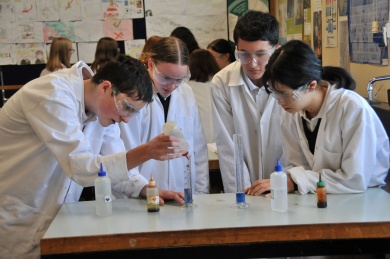
Image above: Japanese and Kiwi students discovering science together at Awatapu College in Palmerston North
“Global citizenship education (GCED) has the potential to bring local and international students together through a focus on global issues, and in development of global competencies. International students and parents are increasingly looking for schools that can demonstrably deliver GCED within the educational experience," the report says.
The pilot programme will be delivered in collaboration with the Centres of Asia-Pacific Excellence. The schools involved will draft Global Citizenship strategies linked to a range of programmes throughout the school, including learning content and teaching approaches, co-curricular programmes, professional learning and development, and student-led initiatives. They will examine how Te Tiriti o Waitangi and Te Ao Māori will underpin their global citizenship strategies. Schools will start local, this will be a multi-year journey, and the result will look different in every school.
Developing global citizens is also one of the overarching goals of the New Zealand International Education Strategy.
- media5
- I Am New Grid3
-
New Zealand commended for inclusivity and humanity at APAIE
A New Zealand delegation featuring all eight universities attended APAIE 2019 as part of a planned strategy to build New Zealand’s presence ahead of the 2021 conference which will be hosted in Auckland.
The 2019 conference, themed “Diversity and inclusivity in higher education”, attracted more than 2,500 delegates between 25-29 March.
Discussions centred around the role that international education could play to enable disparate cultures and communities to embrace diversity and difference.
This theme had particular resonance in the wake of the Christchurch terrorist attack, and New Zealand’s response earned high praise from University of Oxford-educated Her Majesty The Permaisuri (Queen Consort) of Johor, Raja Zarith Sofiah Binti Almarhum Sultan Idris. (Johor is a state in the south of the Malay Peninsula and shares maritime borders with Singapore and Indonesia.)
In her opening address of the conference, Raja Zarith Sofiah said: “While we at this conference speak about diversity and inclusivity as part of academic discussions and presentations, the New Zealand Prime Minister, Jacinda Ardern, and all New Zealanders, from students to biker groups, have shown what inclusivity truly means when it is more than just words and promises, but are acts of great kindness, acceptance and humanity.
“Indeed, the way that the schools and universities there showed their respect and empathy prove – beyond mere words – that the breadth and depth of diversity and inclusivity transcends all levels, giving everyone equal opportunities at being heard and being understood,” said Her Majesty.New Zealand’s 2021 conference theme is “Innovation for sustainable futures” and will focus on building links between APAIE and universities in the South Pacific region.
With 2,500 – 3,000 delegates and at least 300 exhibition booths, it is expected to be the largest international education event to be held in New Zealand to date. It will be held in Auckland at the New Zealand International Conference Centre (NZICC), which is currently under construction.
“Over the next couple of years, ENZ will work with the New Zealand sector to build our presence at the APAIE conference British Columbia in 2020, so that the 2021 conference delivers for our education providers and showcases the best of our international education sector to the world” said Grant McPherson, ENZ Chief Executive.
- IMG 20230530 085857