Search
Showing 10 of 7355 results
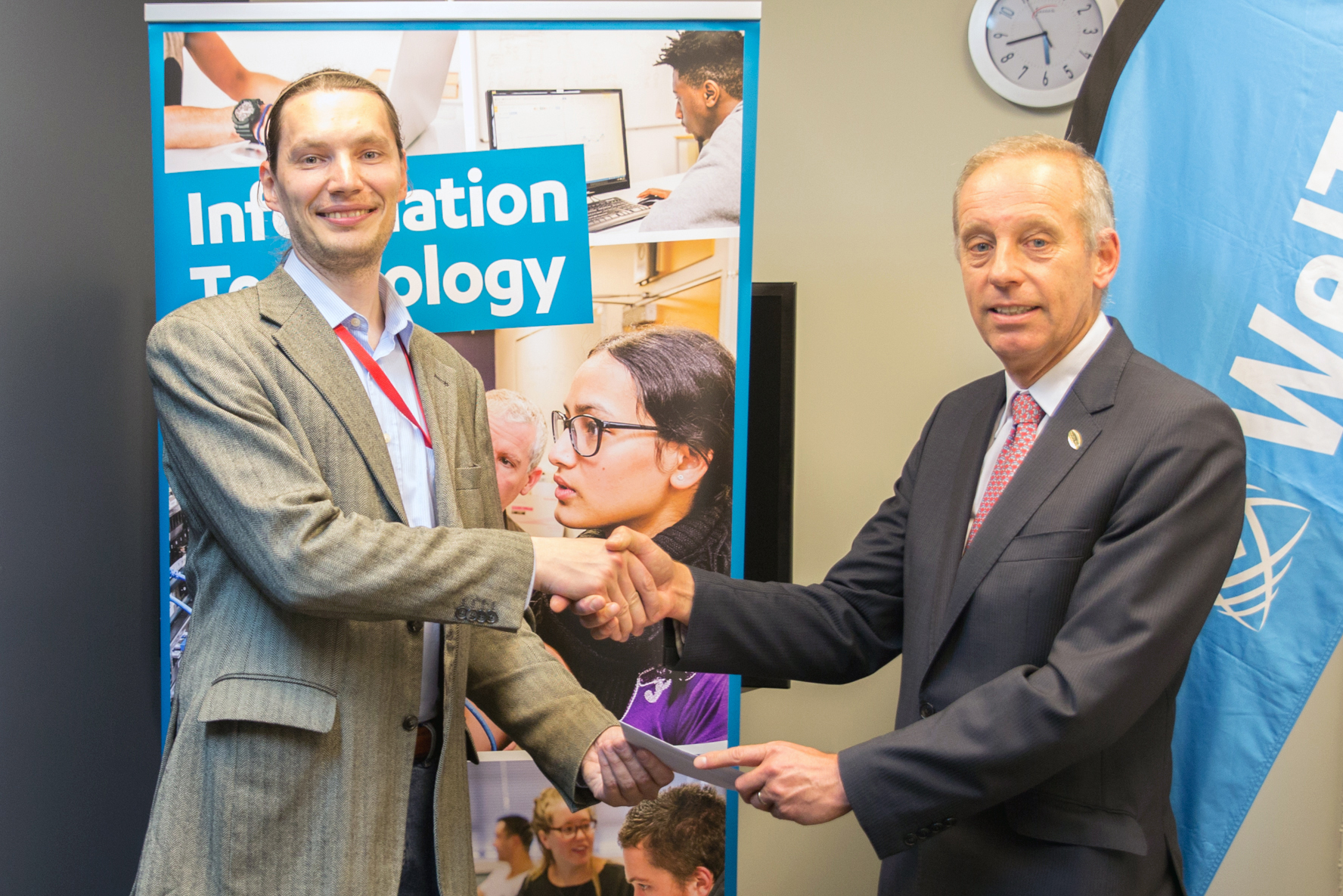
- Weltec IT Award recipients 1Edithero
-
Opportunities to participate in two major education events in Middle East
Global Higher Education Exhibition Oman (GHEDEX Oman) will take place in Muscat from 27 to 29 March 2022, supported by the Omani Ministry of Higher Education, Research and Innovation. Secondary and tertiary students, parents, young professionals and education professionals from across the Gulf Cooperation Council region will attend.
Recent GHEDEX events have been held virtually due to the Covid-19 pandemic, but this year the event will have both face-to-face and virtual options. Alongside universities, GHEDEX 2022 is open to vocational training providers and EdTech companies.
The International Conference & Exhibition for Education (ICEE) is scheduled to take place in Riyadh from 8 to11 May 2022, organised by the Saudi Ministry of Education. Five New Zealand universities participated alongside ENZ at the 2019 event, which was previously known as IECHE. This year, organisers have opened up participation to include English language schools, aviation training providers, vocational education institutions, and EdTech companies.
“This is the first time these events have taken place in person since the beginning of the Covid-19 pandemic, and we know building relationships face-to-face is important in the Gulf region,” says Amy Rutherford, ENZ’s Regional Director, Americas, Middle East and Europe.
“This is also the first time these events have invited other education sectors to participate as well as universities. There are significant opportunities for English language schools, aviation training providers, and vocational education institutions to attract students from Saudi Arabia, Oman and other GCC countries, as well as opportunities for EdTech companies in the region,” Amy said.
ENZ will host a New Zealand pavilion and have on-the-ground representation at both events. If your organisation is interested in exploring opportunities in the region and would like to find out more about participation in these events – in-person, virtually, or represented by ENZ – please contact Bronwyn Shanks, ENZ’s Senior Advisor – Special Projects, Middle East and Europe, bronwyn.shanks@enz.govt.nz.
NOTE: Recent changes to our border settings mean that New Zealanders attending these events will not need to book a space in Managed Isolation and Quarantine on their return to NZ.
-
Diversity and inclusion in North America
“Partnering with marginalised communities around us to confront harm in our past is something we all have to practise,” says course co-ordinator David Wick, Associate Professor, Middlebury Institute of International Studies.
"What was striking was that, from the first in-person meetings, everyone was willing to make personal connections to the content, share their own learning and vulnerabilities, and very curious as to how they can learn from one another to create better learning environments.”
Diversity Abroad, based in US, is the largest organisation focused on diversity, equity and inclusion in international education. ENZ works with Diversity Abroad on a range of initiatives, such as the annual Global Inclusion Conference, as well as partnering to deliver the specially designed course.
Attended by 18 people from NZ universities and ENZ, the three-month certificate course was fully online. Workshops, group discussion, videos, articles and assignments kept the participants highly engaged, and feedback on the course was very positive.
Dr. Anna Foster, Study Abroad and Exchange Manager at the University of Canterbury, says the programme provided a comprehensive exploration of Access, Inclusion, Diversity and Equity (AIDE) in relation to student mobility.
“The programme was really valuable in gaining a deeper understanding of AIDE as it relates to Education Abroad, particularly due to the focus on considering every aspect of the student mobility journey in an end-to-end approach from the perspective of diverse cohorts,” Anna says.
“This has certainly influenced our team approach on an ongoing basis - it has shaped many of the continuing conversations we have around our outreach and processes, and has also helped us consider how we can further partner with both external and internal partners to better support our students.
“I think all of the group also found the programme to be impactful from a self-reflection perspective, prompting some really useful reflection on the backgrounds, biases and perspectives that shape each of us and how we can use this awareness as leaders and in our work with students.”
Anna also appreciated the practical focus of the course, and says her team is now considering some of the barriers to outbound mobility for diverse and under-represented cohorts, and working on strategies to address these.
Sarah Sung, Study Abroad Manager at the University of Auckland, also found the programme very beneficial.
“The programme has given me opportunities to delve into every single aspect of our team’s work through AIDE lenses as well as reflect on our past initiatives relating to diversity and inclusion. I learned that to make diversity work, AIDE should not be seen as a stand-alone project or matter but be embedded in our everyday life and all work,” Sarah says.
Sarah says AIDE conversations will be part of regular team meetings, as well as being integrated into team members’ KPIs and performance reviews, and she is working on a plan to increase participation from under-represented students.
“This includes extensive work in identifying opportunities to collaborate with partners for diversity and inclusion goals, reviewing our scholarship, communications and co-curricular programming for diverse students and developing a system for data collection.”
Lewis Gibson, ENZ’s Field Director North America, also took part in the course and says feedback from the cohort participants demonstrates the need for further AIDE learning in the New Zealand international education sector.
“Hearing from colleagues about the personal and professional measures they are actively putting in place to support under-served inbound and outbound students, as a direct result of this programme, is inspirational,” he said.
For more information about the International Education Diversity & Inclusion Certificate, contact Lewis Gibson at Lewis.Gibson@enz.govt.nz
- Around the world in 27
- Delegation 2
- PMSA 2016 17 rd 2 results2
-
New Zealand’s EdTech at centre-stage of International Education
Export digital products and services have long been an important element of New Zealand’s international education sector, but they have largely flown under the public radar. Overnight, the needs of learners changed, and education providers found themselves in uncharted territory.
New Zealand companies with an established reputation delivering digital educational programmes quickly stepped up both the range and reach of their products. This, combined with Aotearoa’s reputation for creativity and innovation, and more than a little manaakitanga, has resulted in the phenomenal growth of some of our best-known EdTech brands over the past year.
Kami is helping Schools Globally
At digital online learning platform Kami, the goal is success for every student, regardless of ability, by providing inclusive and intuitive tools that support any learning style. They include text-to-speech, voice-typing, freehand drawing, and audio and video commenting.
Many of the schools which closed globally adopted Kami’s digital classroom technology. The company has grown from 8 million to 27 million users in 180 countries over the past year, adding one million new users in one week alone.
Code Avengers taps into the popularity of Gaming
Code Avengers takes a left-field approach to engaging learners by tapping into the popularity of gaming and uses those concepts to captivate students and build their digital capability. The platform was only founded in 2012 and is now being used in 15,000 schools in 14 countries.
“Our goal is to prepare teachers and students, from all backgrounds, for the current reality of the job market, and the jobs of tomorrow,” says Code Avengers CEO Hamish Day.
“We want to help give people confidence and an opportunity to learn the skills that industry tells us it needs.”Education Perfect are inspiring the next Generation of Changemakers
EdTech providers also have the power to engage students on social issues and challenge them to think critically. Key market player Education Perfect, which reaches more than one million students in 1800 schools globally, is finding new ways to inspire the next generation of changemakers.
It is building curriculum content to include issues such as social justice, sustainability, student health and wellbeing, and indigenous issues. It recently partnered with Australian animal rights organisation Voiceless to deliver modules focused on animal welfare, including the issues of dolphins living in captivity and the export of live animals.
EP Partnerships Director Anna Redmile says that joining forces with Voiceless allows teachers and students to have conversations which promote critical thinking and better understanding of the world they live in.
Education consultant and Voiceless adviser Dr Christina Jarvis agrees. "As we help children embrace an increasingly complicated future, such skills are paramount for developing engaged citizens.”
EdTech will continue to play a key role in New Zealand’s International Education Offering
The EdTech sector was estimated to contribute $300 million to the New Zealand economy in 2017, and those figures will have ballooned with the impact of Covid.
Looking to the future, educational technology will play an increasingly key role in the diversification of New Zealand’s international education offerings. And there is no shortage of amazing and pioneering companies ready to play their part.
-
Around the world in five
Asia
China urged to “go global” as NAFSA cohort returns
Chinese higher education institutions are encouraged to increase their global presence, as a significant number of Chinese universities attended the NAFSA conference in 2023. Despite geopolitical tensions, some American and European universities remain open to collaboration with Chinese institutions. Chinese HEIs are urged to diversify their portfolio and actively engage in international exchanges and cooperation.
North America
U.S. denied more than a third of student visa applications in FY2022
The USA denied 35% of student visa applications in 2022, resulting in an estimated $26.4 billion economic loss. Factors contributing to the increase include high demand, lack of non-immigrant intent, and a shift in source markets, with India surpassing China as the top source country.
South America
Brazil: Affordability will be key to unleashing demand for study abroad
The Brazilian economy is recovering, and there is a strong demand for study abroad among Brazilians. However, students and their families are facing financial challenges, making affordability a key factor in attracting Brazilian students. Scholarships, agent support, and work opportunities will be crucial in attracting Brazilian students in the coming years.
Europe
UK: operational shift in diversify drive mapped
90% of UK universities are diversifying international student recruitment, with changes in application processes, multiple rounds of applications, and the introduction of scholarships to adapt to the global market. Pre-CAS interviews, deposit requirements, and agent quality frameworks are proposed to maintain high recruitment standards and mitigate risks.Africa
Collaboration aims to help make Africa’s youth an asset
African universities unite under the Education Collaborative to transform higher education, focusing on shared curricula, student exchanges, and joint research. The goal is to make Africa's youth an asset, benefiting at least one million students by 2030. The initiative promotes leadership collaboration, incentivizing staff innovation, and embraces a dynamic approach to sustainability for transformative change.
- thumbnail
-
Rautaki Māori update - March 2022
The first wānanga explored what ‘global citizenship’ means from a Māori world view. The second wānanga discussed the Prime Minister’s Scholarship programme, how to grow Māori participation in it, and how to support rangatahi through creating programme connections with iwi and the Māori economy, so the programme provides greater value for Māori.
The sessions were attended by 22 participants from across iwi and sector interests, including from universities, other education providers and the Centres of Asia-Pacific Excellence.
Representatives from the newly formed Kāhui Kaupapa also attended – Māori alumni of the Prime Minister’s Scholarships for Asia and Latin America.
This work is long-term in nature. We aim to build partnerships with iwi, Māori and Māori providers of education services, to transform the understanding of international education and ensure the education system delivers with, and for Māori in the international context.