Search
Showing 10 of 7355 results
-
Miriama Kamo to headline NZIEC 2018
Miriama will preside over the 27th New Zealand International Education Conference and Expo to be held at Te Papa in Wellington on Thursday 9 and Friday 10 August.
“The NZIEC conference is always a calendar highlight,” says Miriama.
“It’s a conference that provides learning and networking opportunities – and a lot of fun. I’m so looking forward to seeing everyone again this year.
“I really enjoy NZIEC conferences. With over 600 delegates, you’d think it could feel impersonal but somehow this crowd pulls off the personal with aplomb.
“Always inspiring, always educative, always fun.”
If you didn’t attend conference last year, you’ll likely recognise Miriama from her role presenting TVNZ 1’s flagship current affairs programme Sunday. She also co-presents current affairs programme Marae, is a regular 1NEWS newsreader and is the host on TVNZ 1’s new lifestyle programme, Kiwi Living.
As a reporter for Sunday, Miriama won the prestigious Best Current Affairs Reporter gong at the Qantas Media Awards in 2005 for her investigation into alleged abuses at Porirua Hospital in the 1960s and 70s. She has also spent six years fronting TVNZ 2’s current affairs show 20/20.
Miriama emceed the 2016 and 2017 conferences in Auckland, and we’re delighted to be able to welcome her to the ‘World’s Coolest Little Capital’ later this year as we explore the theme of Inspiring Global Citizens.
Programme update
With just over a hundred sleeps to go, we’re working hard behind the scenes to deliver a fantastic NZIEC for the industry.
After being inundated with breakout presentation submissions, we’re in the final stages of confirming the conference programme and will be in touch with submitters over the coming weeks to advise them of the outcome of their submissions.
With breakout streams focused on global citizenship, student experience and wellbeing, digital innovation, markets and products, sharing our stories and contribution to New Zealand, the programme will highlight the diversity and expertise of New Zealand’s vibrant international education industry.
We’re also planning some changes to the conference format – stay tuned to e-news for updates on all our conference announcements.
Registration to open late May
Registration for NZIEC 2018 will open in late May. We expect this year’s event to sell out, so be sure to be in quick to confirm your place at the international education event of the year.
Find out more about NZIEC at www.nziec.co.nz
- AIEC
-
NZIEC 2017 reaches new heights
“Congratulations on a world class conference!! It was amazing and very well executed!”
“Much better compared to other international education conferences around the world I’ve been to.”
“Fantastic organisation. Really must congratulate all that put the event together. Great choice for keynote and other speakers. Smaller breakaway sessions with plenty of interesting topics. Great food and the jazz bar really allowed for good networking opportunities. Best NZIEC by a country mile.”
These are just some of the comments flooding into our inboxes following the largest conference we’ve ever run – and one of the largest of its kind in New Zealand.
Not only did we manage to garner record media coverage, we debated the Aussies, tried to avoid the Kraken of Doom, became New Zealand's top trending topic on Twitter, and even had a visit by the Royal Family!

Master of ceremonies, award-winning journalist Miriama Kamo, kept conference moving with humour and poise. A range of keynote speakers inspired, debated and informed, and a record number of breakout sessions provided new insights for improving the student experience, making a mark overseas, collaborating to win – and more.
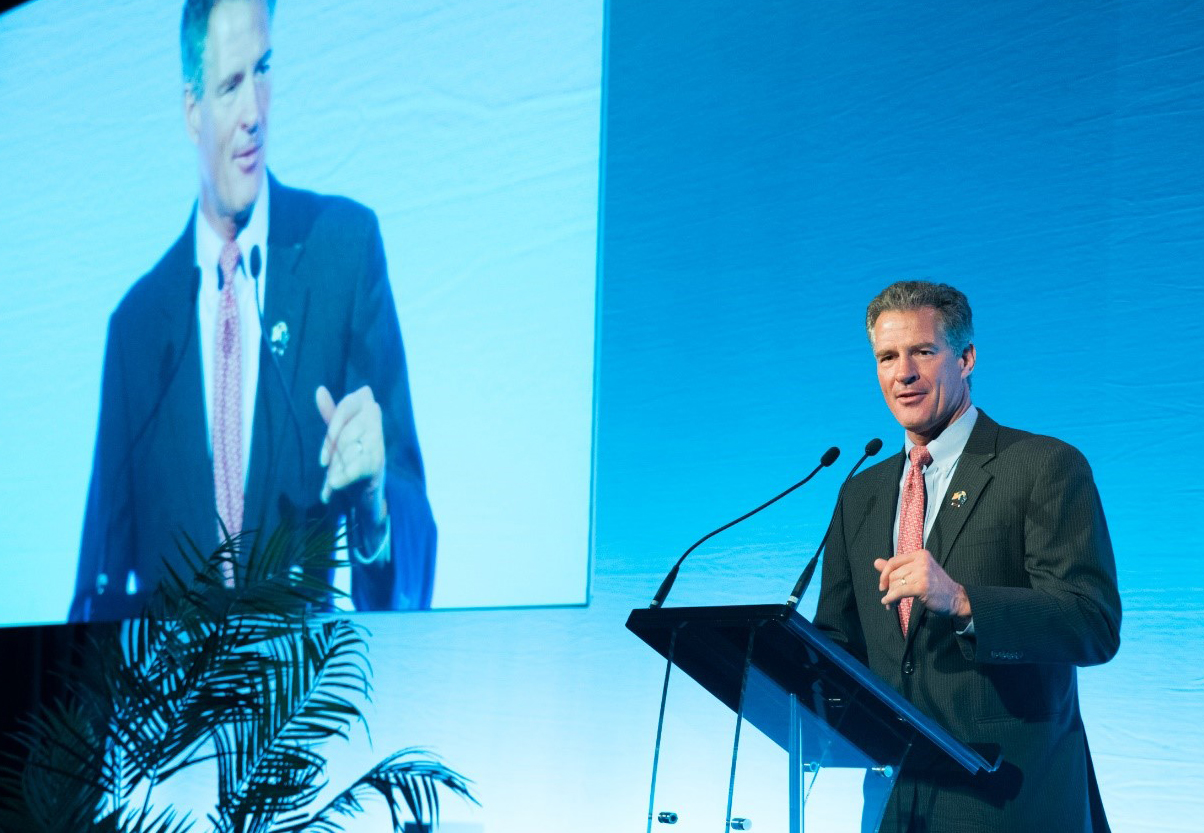
NZIEC Country of Honour host, U.S. Ambassador Scott Brown, spoke movingly of his childhood and the impact his teachers had on his life trajectory. And delegates took up the plentiful networking opportunities with gusto – many a korero was observed in the conference environs!

ENZ gratefully acknowledges all our conference partners and exhibitors, including Lead Partner BPO Intelligence, Premium Partner Vodafone New Zealand, Partners Southern Cross Travel Insurance, Ako Aotearoa, Endeavour Education Services Limited, IDP IELTS Australia, Media Partner The PIE News, Programme Partner ISANA New Zealand, and Country of Honour host, the Embassy of the United States of America. Thank you one and all.
If you missed the opportunity to connect with our partners or exhibitors at conference, you can do so through the NZIEC website.
Conference delegates can expect to receive a survey in their inboxes next week. As we seek to continually improve the NZIEC experience, we welcome all feedback and suggestions. If you have any suggestions for next year, please don’t hesitate to email Sam Mackay, ENZ Strategic Projects Manager, at sam.mackay@enz.govt.nz.
We look forward to seeing you in Wellington for NZIEC 2018!
- scott brown4
- Dinh Duong
- MoE Creative Inclusive Learning Environments 3 Cover 2 1 resize
-
ENZ roadshow heading to South America in 2025!
The South American region has significant potential to grow international student numbers to New Zealand. ENZ is excited to help facilitate this growth with a series of agent-facing events in Bogota, Colombia, São Paulo, Brazil, and Santiago, Chile.
Representatives from all New Zealand's education subsectors are invited to participate, with New Zealand Private Training Establishments (PTEs) and English Language Schools (ELS) particularly encouraged, seeing as both subsectors have been identified as having significant opportunities for growth in this region in ENZ's 2024/25 Business Plan.
The events offer New Zealand providers the opportunity to deliver presentations to local education agents, meet with them one-on-one, and network at a closing function.
ENZ's Director of Engagement for Latin America, Javiera Visedo, said that these seminars will offer a great opportunity for New Zealand institutions to reconnect with high performing South American education agents.
“In 2023, we had 3,124 students from Latin America studying in New Zealand which is a 68% increase from 2022 but a long way off pre-Covid levels,” said Javiera.
She added “in organising this series of events for early next year, we want to to keep facilitating the ongoing connection of New Zealand’s providers with key agents in the region, putting New Zealand front of mind as they assist students in their international study decision making processes".
Any education providers who are interested in receiving more information about the events and register to attend, can do so here - https://enzevents.eventsair.com/EduNZ/2025-south-america-roadshow/info.
- 853570 new zealand interactive classroom learning in health sciences university of otago dunedin 2026 web version 1920px
-
Letter from the CE: Updating ENZ's business model
Since its launch in August by Minister Chris Hipkins, ENZ has been reviewing our operational structure and approach to ensure they’re consistent with both the Strategy’s objectives as well as the Minister’s Letter of Expectations.
Our review has also been informed by industry surveys and discussions with staff.
We’re working to maximise international education’s benefit to New Zealand. We need to optimise current opportunities to build a sustainable future for the sector and to create new opportunities for growth.
Coming out of the review, we have established some new and revised roles at ENZ. We are recruiting (internally and externally) for the following senior positions – please go to ENZ’s Careers page for more information on the roles and how to apply:
-
General Manager Strategy, Insight and Planning – this senior leadership role will be responsible for all strategic projects related to future-focused thinking and implementation, business intelligence and insights, and ENZ planning and performance.
-
General Manager Industry and Students – this senior leadership role will be responsible for strengthening the connections between education providers and international students by bringing together ENZ’s international marketing, brand development, industry development and channels teams.
-
Director, Industry – this role will be responsible for leading and managing initiatives to build the capability and capacity of New Zealand’s international education industry.
-
Director, Greater China – this China-based role will be responsible for managing, leading and supporting ENZ’s China teams and leveraging opportunities with other NZ Inc agencies both in-market and New Zealand to promote New Zealand education.
With the approach of Christmas and New Zealand’s summer holiday period, we have decided to leave the application period open till 9am, Tuesday 22 January 2019.
This change process will be ongoing over the next few months and we will keep you informed throughout.
Grant McPherson
Chief Executive, Education New Zealand

-
- Wellington next