Search
Showing 10 of 7355 results
- Ninna Granucci Green Spot Technologies.jpg resize
- naumaiproject2
- Infograph
- grant 25
- Loay20meeting20with20Saudi20students
- File 0012
- IEGF Richard Allan 3
-
Letter from the CE: Impact of immigration changes
The announcements included some changes to residency requirements which have generated a lot of commentary including on the impact for international education – see Radio New Zealand, New Zealand Herald, Stuff, Newsroom.
The changes to residence under the Skilled Migrant category come into effect in August 2017. (Please note that the proposals for temporary migrant work settings are going out for consultation before a final decision is made.)
It is expected that the Skilled Migrant residency changes will have a short-term impact on international student recruitment, particularly for providers targeting students at below-degree-level qualifications, who are more likely to be affected by the changes.
The recent announcements do send a clear signal that permanent residence after three years of post-study work experience is not always a realistic expectation.
The quality education experience itself should be the prime driver for considering New Zealand as a study destination.
The new residence criteria includes remuneration thresholds. It is worth noting that, in the recently published Moving Places study by the Ministry of Education, more than half of the international students with postgraduate qualifications earned above the proposed threshold three years after completing their study.
In the longer term, we hope that the new remuneration thresholds will incentivise students to study in fields of study more closely aligned to skill shortages, thereby increasing the value for New Zealand as well as supporting better labour market outcomes.
Regulatory settings are under constant review, and Education New Zealand will continue to work closely with our partners across government in all of these areas.
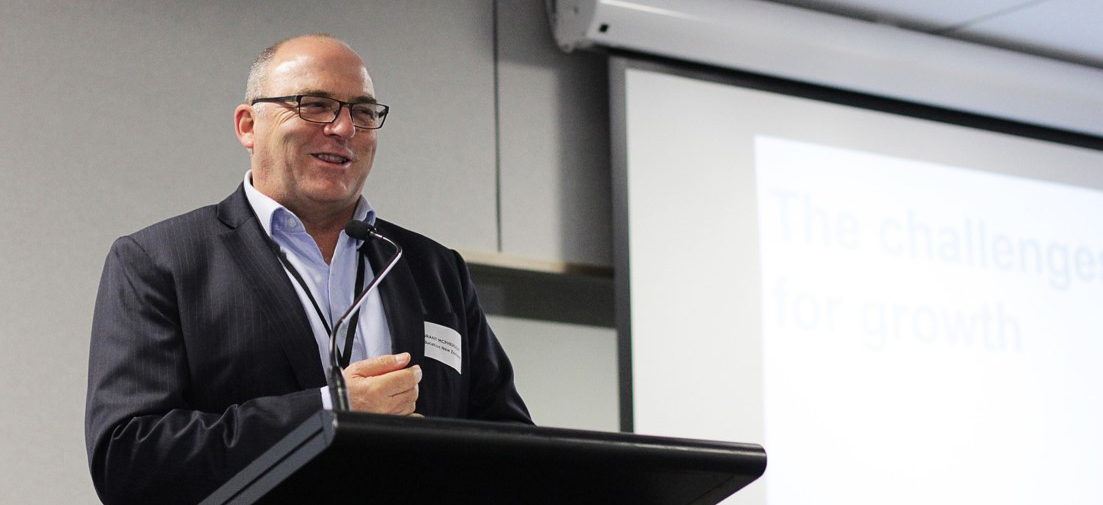
 Grant McPherson
Chief Executive, Education New Zealand
- Korea202
-
Indigenous internationalisation a hot topic across North America
The topic of Indigenous Internationalisation has been proving a popular one at international education events across North America recently. Education New Zealand Manapou ki te Ao (ENZ) Associate Director of Engagement, Natalie Lulia, was asked to share her thoughts alongside experts in panel discussions in both the United States and Canada in May and June. The invitations offered a good opportunity to showcase the important work that Aotearoa New Zealand is doing in indigenous-to-indigenous engagement and internationalisation and our unique approaches to international education.
It was at the 76th annual NAFSA Association of International Educators conference in New Orleans that Natalie was first invited to take part in a panel talk on the subject “What is indigenous-led internationalisation?”. Natalie was joined on the panel by Distinguished Professor Jacinta Ruru, Deputy Vice-Chancellor Māori at the University of Otago, and Paulette Tamati-Elliffe, Manager at Te Rūnanga o Ngāi Tahu.
The panel explored how indigenous and non-Western knowledge and worldviews are essential for intercultural learning through the experiences and work of Māori education experts. The panel provided examples of how indigenous ways of knowing and being can enhance intercultural learning and what Indigenous-led internationalisation looks like in practice.
The panel was moderated by DuBois Jennings, ENZ’s Director of Engagement North America, who noted that the session was extremely well attended.
“It was very inspiring listening to our panel of experts share their thoughts with a very attentive audience. It was so popular that people were standing at the back, which is indicative of how the global international education community values our expertise in this area,” said DuBois.
A te ao Māori approach to education was then the feature of Chief Executive for Te Whare Wānanga o Awanuiārangi, Professor Wiremu Doherty, who delivered a powerful keynote address at the British Columbia International Education Week Conference in Vancouver in June. Natalie joined Professor Doherty in a panel presentation on: ‘Talking Circle: Exploring the intersection between Internationalization, Indigenization, Decolonization and what it means to be Indigenous Serving.’ Also on the panel were Sarah Child and Kelly Shopland from North Island College in British Columbia, Canada who had recently returned from visiting Aotearoa New Zealand with a group of indigenous Canadian students in May.

ENZ’s Natalie Lulia participating in the panel discussion on ‘T Talking Circle: Exploring the intersection between Internationalization, Indigenization, Decolonization and what it means to be Indigenous Serving’ at the British Columbia International Education Week Conference in Vancouver in June.

Professor Wiremu Doherty, CE of Te Whare Wānanga o Awanuiārangi, delivers his keynote address on Māori education at the British Columbia International Education Week Conference in Vancouver in June.
Natalie said that it was an honour to have been invited to speak at both events, alongside experts who are the driving forces behind this work within iwi, universities, and government agencies in Aotearoa New Zealand.
“International educators around the world are showing increasing interest in the unique approach we take to international education here in Aotearoa New Zealand. We are seen as a country that is leading the way in indigenous-to-indigenous engagement and internationalisation.
“These opportunities are not just a chance to share our experiences, but importantly an opportunity to learn from each other. We can learn from indigenous educators, thought leaders and communities here too - this is important in building reciprocal and meaningful partnerships,” said Natalie.
Natalie added that “This is a key area that Aotearoa New Zealand can leverage to support student mobility, research collaboration and partnerships with institutions around the globe. ENZ will continue to work with our education partners, Māori and indigenous communities and use these platforms to share our expertise and ultimately grow indigenous international education for our country”.
Upcoming platforms to continue showcasing Aotearoa New Zealand’s approach to indigenous internationalisation will take place at the next Global Inclusion 2024 Annual Conference in Washington DC on 29 October to 1 November. Then in March 2025, the ENZ North America team will be leading a one-day symposium highlighting indigenous international education at the Forum on Education Abroad conference in Toronto, Canada.
If anyone is interested in connecting with the ENZ team in North America to have a chat about this topic or receive further information, please email northamerica@enz.govt.nz.