Search

Showing 10 of 7337 results

  • Study Auckland local agent forum

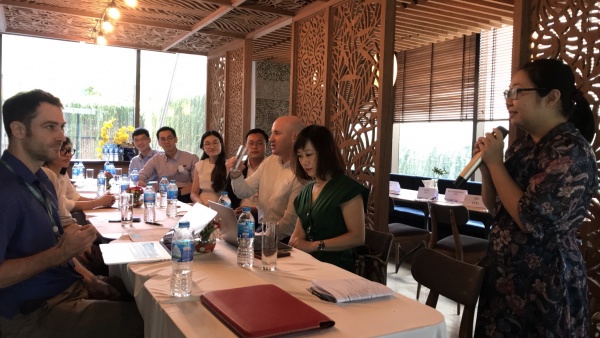
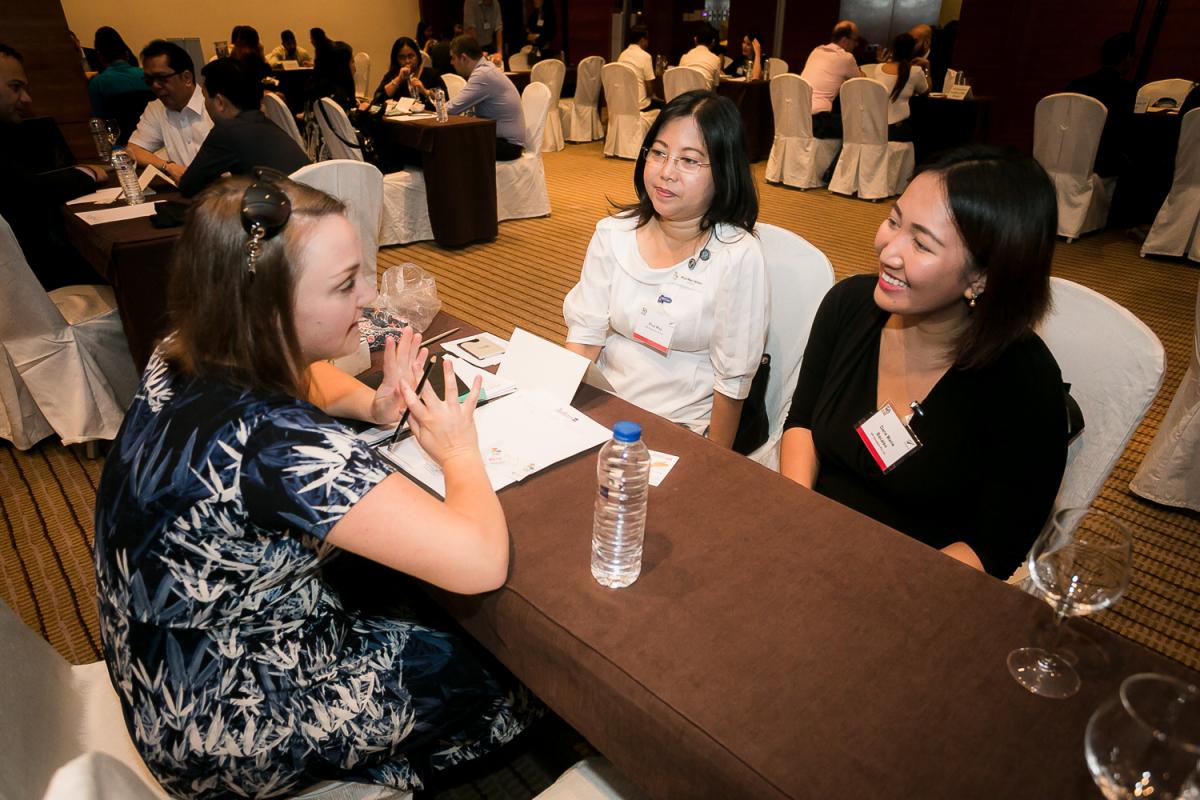
    Connections were made via a series of 15-minute meetings plus networking over lunch at the Hilton Auckland.

    “It was a great day and well organised,” said Lesley King, Director of International Students at Glen Eden Intermediate School. 

    “Meeting local agents is always worthwhile and hopefully we will gain some worthwhile partnerships.”

    After lunch, the agents received an update from Immigration New Zealand’s Education Sector Relationship Manager, Katy Aldcroft.

    The update covered Immigration Online and the Pathway Student Visa option.

    “Local agent forums have been part of Study Auckland’s work for many years, and highlight the important role onshore agents play in driving international education growth in the Auckland region,” said Study Auckland Manager, Nick Arnott.

    “The agents also really appreciated the Immigration New Zealand update and the lively Q&A session that followed.”

  • From the CE: The next phase

    One of the first projects to be discussed in the early days of lockdown, the Future Focus Programme, was launched last week.

    The programme has reallocated $1.2 million of our existing funding to provide our sector peak bodies with the support to reimagine international education in a post COVID-19 world. ENZ has already approved funding for two peak bodies.

    Initially, funding will assist peak bodies in developing an innovation plan with their sub-sector. Once planning is complete, funding may also be provided to support the introduction of innovation projects.

    ENZ’s Industry Team will work in close contact with the sector on the programme, and although it’s a little while away, I’m looking forward to seeing what creative initiatives come out of it.

    Since my last update, we have also stood up an internal group who will be charged with preparing and planning for ENZ’s role in any possible relaxation of border controls for international students.

    This group will work with other Government agencies and representatives from the international education community to develop an understanding of what the challenges are in reducing border restrictions and implementing strict quarantine requirements, as well as how the sector can prepare.

    We are aware that some international students are experiencing unusual hardship because of changes to their personal circumstances due to the global impacts of COVID-19. The Government has established a hardship grant fund for international students to address urgent, temporary needs, which ENZ will administer.

    The $1 million fund is designed to meet emergency, temporary needs, and must be both applied for and administered by either an education provider or a community group. You can find out more information on the ENZ website, International Student Hardship Grant Fund. Applications opened yesterday.

    I would like to finish with a whakataukī that has been in high rotation around ENZ.

    He waka eke noa (we’re all in this together).

    Ngā mihi,

    Grant McPherson

    Chief Executive

    Education New Zealand Manapou ki te Ao

  • Competition winners announced South and South East Asia

    The first competition was open to SSEA students from selected institutions currently pursuing undergraduate programmes in business, marketing and/or related disciplines. Students were asked to submit a 12 month marketing strategy that would promote New Zealand as an education destination in their own country.

    ENZ is pleased to announce that five entries – two from Viet Nam and one each from India, Indonesia and Malaysia have won all-expenses paid four-week internships in New Zealand. The interns will arrive in New Zealand between July and September.

    The winners and their hosting New Zealand institutions are:

    Viet Nam

    Pham Phuong Lan going to Academic Colleges Group

    Nguyen Hoai Thuong going to Palmerston North Girls High School

    India

    Armeet Narang going to Avondale College

    Indonesia

    Edo Dwi Prayogo going to the University of Auckland

    Malaysia

    Kong Kah Weng going to Choose New Zealand Education Alliance

    The second competition was targeted at secondary school students in South East Asia only, with the aim of prompting them to research what it would be like to live and learn in New Zealand. The students each submitted a 700-word essay demonstrating their take on the theme of ‘Think New: Think New Zealand’. ENZ received some outstanding entries across all four target markets. The winning essays (listed below) were all published in top-tier media publications.

    Malaysia

    Nur Afiqah Azizan - essay published in The New Straits Times (Learning Curve)

    Indonesia

    Siti Hajar Saskia Putri  - essay published in Hai! and CosmoGIRL! magazines

    Thailand

    Sirinut Talpraderm - essay published in The Bangkok Post (Student Weekly)

    Vietnam

    Nguyễn Thúy An - essay published on Kenh14.vn

    We’ll follow up with the students and their host institutions during their time in New Zealand and keep you posted as to their experiences.

  • Scholarships awarded to international students from Germany 

    Over the three-month campaign we received hundreds of applications, of which Ronja Härdtner’s was the strongest. A Master’s student in International Nature Conservation at Georg-August-University in Göttingen, Ronja will complete her degree at Lincoln University in New Zealand.  

    Thanks to everyone who helped ENZ representative Marina Wilmerstadt to surprise Ronja at her university. You can see her reaction to the big news here.

    Congratulations to Ronja for winning the Welcome to New Zealand scholarship, and to the other award winners who will be confirmed shortly. We can’t wait to welcome you all to Aotearoa New Zealand.

  • New Zealand-Viet Nam education ties deepen

    This is the first New Zealand Government scholarship programme offered exclusively to Vietnamese secondary school students.  

    A total of 36 New Zealand schools from nine regions are taking part in the scholarship initiative,” said ENZ Chief Executive Grant McPherson. 

    We expect the programme will build partnerships and profile for New Zealand education across Viet Nam 

    The way we’ve tailored the scholarships to involve multiple regions across New Zealand also reflects government commitment to ensuring the benefits of international education are shared widely.” 

    Among the 36 scholarships are 11 He Tohu Awhero (Ambition) scholarships supporting 30% of the tuition fees for the first year of study, and 25 He Tohu Hiranga (Excellence) scholarships supporting 50% of the tuition fees for the first year of study. One outstanding student recipient of the He Tohu Hiranga scholarship will be offered 100% of tuition fees for the first year of study.  

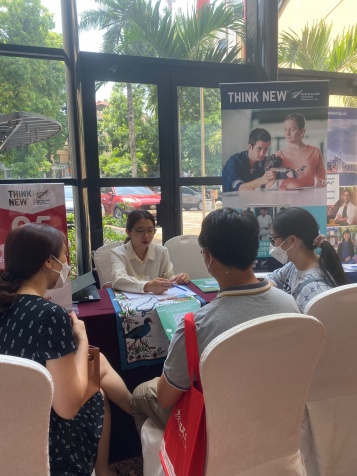
    Later this month, 35 of the New Zealand schools taking part in the initiative will visit schools in Ho Chi Minh City and Hanoi to promote the scholarship and explore further collaborations 

    Entries for the scholarships opened 1 March and the Vietnamese students will begin their study in Term 3, starting 22 July 2019.  

    Alongside the scholarship initiative, ENZ has also signed a Collaboration Arrangement with Ho Chi Minh City Department of Education and Training, the aim of which is to deepen the education relationship between New Zealand and Ho Chi Minh City, the largest city in Viet Nam with 13 million people in the metropolitan area.  

    As part of this MoU, we will be exploring a range of partnership opportunities which includes the opportunity for New Zealand teachers and students to have an international education experience in Viet Nam,” said Grant  

    New Zealanders have a lot to gain from exposure to other cultures – language learning, for example. These experiences also expose our students and teachers to new possibilities.” 

    The Collaborative Arrangement and scholarship programme are part of a broader work programme being driven by ENZ. 

    Vietnamese school students studying in New Zealand contribute an estimated NZD $21m to our economy (2017 figures released in 2018). 

  • New Zealand and Japanese schools build stronger cultural connections

    High-school students in New Zealand and Japan are connecting on the big issues like indigenous culture, sustainability, and rugby, in an exciting joint-venture between Education New Zealand (ENZ) and the North Asia Centre of Asia-Pacific Excellence (NA CAPE).

    In collaboration with the Hokkaido Board of Education, seven schools from New Zealand’s North Island and seven from Japan’s Hokkaido prefecture have begun to open a digital dialogue at a time when valuable in-person interactions are limited.

    This initiative builds on the agreement signed in November 2020 between the Hokkaido Board of Education and ENZ. It further strengthens the existing partnership agreement between the New Zealand Embassy Tokyo and the Hokkaido Government by promoting collaborative opportunities in education through shared interests.

    International education plays an important internationalisation role as it brings a refreshing, global outlook to education at a local level. By building deep, reciprocal relationships with other countries, internationalisation also helps international education uncover opportunities for innovation.

    After online orientations for teachers, more than 270 students from three high schools in both countries met for the first time to introduce themselves, their school and city. Schools connected include: Taradale High School and Yubari High School; Papatoetoe High School and Sapporo Higashi High School; and Te Kura Kaupapa Motuhake o Tāwhiuau a Kura-ā-Iwi and Noboribetsu Akebi High School, which also connected with Unakami Primary school in Chiba.

    Sharing both economic and geographical similarities between countries, key themes for successive exchanges held in English include language and culture, indigenous culture, sustainability, primary industries, and rugby with a strategic goal of students starting student exchanges between schools in the future.

    The participation of Kura-ā-Iwi in the programme is of value to both countries seeking to deepen existing indigenous cultural connections. Hokkaido and New Zealand share many similar features, including the importance of agriculture and of indigenous peoples.

    Sharlene Brown, Senior Teacher at Te Kura Kaupapa Motuhake o Tāwhiuau expressed their support for the initiative.

    “As the first iwi designated character kura in the world, Te Kura Kaupapa Motuhake o Tāwhiuau is absolutely committed to global, indigenous education in particular Ainu language and culture.

    “This is therefore the guiding force behind our commitment to establish new relationships and exchanges with schools in Japan.”

    Both NA CAPE and ENZ are focused on continued support of closer indigenous to indigenous connections between New Zealand and Japan. Hokkaido is the birthplace of Japan’s indigenous people, the Ainu. As Hokkaido continues to embrace its indigenous culture, this initiative presents a unique opportunity for richer, more meaningful exchanges by showcasing New Zealand’s Māori values. By connecting with other cultures around the world, students in New Zealand and Hokkaido gain a better understanding of indigenous people’s experience and can uncover similarities and fostering better appreciation of other cultures.

    ENZ Director of Education – Japan, Misa Kitaoka said from Tokyo that, despite the ongoing challenges of COVID, ENZ is committed to promoting connections between New Zealand and Hokkaido using innovative modes of virtual delivery.

    “New Zealand’s unique cultural values like kaitiakitanga - protection of people and place – are woven into the threads of our education system.

    We are very proud of the leadership Māori demonstrate in the indigenous education space, and are committed to furthering international indigenous connections for the benefit of all.”

    Following on from the success of this international initiative, the NA CAPE plans to support additional sessions, and connect New Zealand high-school language students and their teachers with their counterparts in Korea.

    North Asia CAPE (NA CAPE) is committed to building New Zealanders’ capacity to engage with the countries of North Asia. Find out more about the NA CAPE at www.northasiacape.org.nz

    Education New Zealand is the Crown Agency responsible for international education to benefit New Zealand socially, culturally and economically. Find out more at enz.govt.nz.

    Want to get involved in future exchanges? Get in touch with North Asia CAPE at nacape@auckland.ac.nz.

  • Update from Immigration New Zealand

    Update for international students: In-study work hours increasing from 3 November 

    From 3 November 2025, eligible international students will be able to work up to 25 hours per week during the semester - an increase from the current 20-hour limit. This change applies to all new student visas granted from that date, even if the application was submitted earlier. 

    If international students hold a student visa with a 20-hour work limit and want to take advantage of the new 25-hour allowance, they will need to apply for a variation of conditions (VOC) or a new student visa and pay the relevant fee 

    They can choose to apply now for the extra five hours or if their visa allows full-time work during summer vacation then they do not require the extra five hours and may choose to wait until later to apply for a variation. Some students will choose not to apply for a variation of conditions at all, and wait until their next student visa application  

    The process for applying for a variation of conditions depends on which system a visa was submitted through i.e. the old system or through enhanced Immigration Online. 

    For more information, visit Upcoming changes to student visa work rights: Immigration New Zealand

    If they’re unsure which system their visa was issued in or which form to use, they can contact us for support before applying: Contact us: Immigration New Zealand 

    Update for international students: Changing your education provider or lowering your level of study from 3 November 2025 

    If a student visa holder is planning to change education provider or lower their level of study (for example, from a degree to a diploma), they’ll need to apply for a new student visa - not just a variation of conditions. 

    Upcoming changes to student visa work rights: Immigration New Zealand

    This requirement ensures their visa accurately reflects the new study situation and complies with immigration requirements.  

    Before making any changes, students or their representatives should check the INZ website for guidance on how to apply for a new student visa on enhanced Immigration Online and ensure they apply in advance to avoid any disruption to their studies. 

    For more information, visit Study visas: Immigration New Zealand 

    Update for international students: Keep your visa photo filter free 

    We all like to look our best, but to avoid delays or declines, visa application photos must be a true, unedited likeness. That means students must abandon those filters and submit an accurate photo in order to avoid processing delays or declines. 

    Immigration New Zealand uses facial recognition, so filters, AI edits, or beauty enhancements interfere with identity checks. Photos must meet international biometric standards - natural skin tones, clear lighting, and no digital alterations. 

    Edited images including smoothing skin, changing eye size, reshaping facial features, or cropping your head onto a plain background will cause delays in processing and may lead to declined applications.  

    Key tips: 

    • Don’t use selfies - get someone to take your photo or use a professional. 
    • Tell photographers not to apply digital enhancements, like beauty filters or AI adjustments. 
    • Some photo apps or online tools may not be suitable for visa applications. 

    More information and examples of acceptable photos can be found on our website: Acceptable photos for a visa or NZeTA : Immigration New Zealand 

    Guardian visitor visa applications moving online from 3 November 

    From 3 November 2025, all Guardian Visitor Visa applications should be submitted on Immigration New Zealand’s enhanced Immigration Online system. This update is part of INZ’s broader digital transformation, aimed at improving the visa experience for families supporting international students. 

    While the information required remains the same, the application form may look a little different.  

    The enhanced system offers better application tracking and a more streamlined experience for applicants. Updated guidance and support materials are built into the form. 

    If you have an application in draft or submitted under the old application form, you will still be able to access or submit this application after 3 November 2025. We will notify you when the old application form is due to close.  

    For current visa holders, if your child is applying for a new student visa and you intend to apply for another Guardian Visitor Visa, both applications should be submitted through the enhanced system.  

    This change is particularly relevant for education providers, agents, and advisers supporting families of international students. Please share this update with your networks and encourage early preparation ahead of the transition. 

    Guardian Visitor Visa applications moving to enhanced Immigration Online: Immigration New Zealand

  • New Zealand Global Competence Certificate programme proves a hit

    What is New Zealand’s Global Competence Certificate programme?

    The customised cultural exchange programme, which started as a pilot partnership last year between New Zealand’s international education agency, Education New Zealand Manapou ki te Ao and AFS Intercultural Programs, Inc. has proved so successful it is now being extended and taken up by schools and tertiary institutions around the country, connecting them with students in Asia and Latin America.

    The “Kiwi way” has much to offer the world, and international education has much to offer New Zealanders at a time the world needs people with cross-cultural competencies. The New Zealand Global Competence Certificate, delivered through Massey University, develops cultural self-awareness, emotional resilience, and build bridges across cultures. It also piques the interest of students offshore in coming to New Zealand in better times.

    The programme delivers animated videos, quizzes, assignments, and weekly live facilitated dialogue sessions for learners to talk with each other online in real time and learn about life from perspectives other than their own.

    What have students been saying about the NZGCC programme?

    “Not only have I learned to become a better communicator, empathiser, and global citizen, but also how a group of like-minded individuals can come together to form something bigger,” says Jack Hittle, of Northland’s Springbank School.

    “I found the programme life-changing,” says Vaagisha Kanwar, a Year 11 student at Indus International School in Bangalore, India, who connected with the Northland students. “We learned about conflict, empathy, inequality, different communication styles, how different people adapt to new situations, and about suspending judgement. I know that I’ll use the skills we’ve learned for the rest of my life, not just when I travel abroad but also in daily life.”

    "You see the way a culture greets each other or the way they dress, but then there are things like relationships, gender roles, and health,” says Whanganui Girls College student Tilda Donson.

    What have educators been saying about the NZGCC programme?

    Whanganui Girls College Principal Sharon Steer is delighted with the NZGCC programme, which she says will help students build their understanding of global cultures, and other critical “soft” skills which will prepare them for life as they enter the workforce.

    “An important part of our curriculum is developing strong communication skills and setting our students up for success in the workplace. The NZGCC programme will add another dimension to our lessons by teaching our students how to develop meaningful relationships with one another despite language and cultural differences.”

    Educators say that with the borders closed, the programme now forms an important part of the reshaped international education experience.

    “It is so important that our students don’t miss out on the enriching life skills that are gained when we interact and connect with people from around the globe,” says Whangarei Girls High School International Director Amelia Morrison, who has students working with peers in India.

    "Global competence is mission-critical for our world," says AFS Intercultural Programs President and CEO Daniel Obst. “Educating more young people to become global citizens is crucial if we want to create a more just and peaceful world.”

    The expansion of the GCC programme reflects the diversification of education in new virtual forms fit for a globally connected world, says Education New Zealand Chief Executive Grant McPherson.

    “As well as helping to develop the global citizens of tomorrow, this programme demonstrates the reciprocal benefits of international education, giving our rangatahi a chance to learn with high school students from around the world, and giving their offshore peers a chance to learn ‘with’ New Zealand and our unique way of thinking.”

  • Brazil’s untapped potential

    Brazil is New Zealand’s largest source of international students in Latin America. Last year, almost 3,600 Brazilians studied in New Zealand and Ana Azevedo, ENZ’s Senior Market Development Manager for Brazil, says there is more room for growth. 

    For institutions seeking quality students and diversity, Brazil may be the answer. According to the Brazilian Educational and Language Travel Association, more than 300,000 Brazilians studied abroad in 2017, so there is huge untapped potential in this market to be explored,” said Ana. 

    As country of honour, Brazil featured in two NZIEC breakout sessions. 

    In From Zero to Hero: How to lead a successful education strategy in Latin America Professor Kerry Taylor from Massey University shared his experience in developing links with Brazilian universities, jumping from zero to 10 agreements in only three years. Taylor emphasised that “nothing substantial will come from one single visit” and highlighted the importance of a proposition that meets your partner institution’s needs, saying the best relations are mutually beneficial.”   

    The second session, Spotlight on Brazil: Finding your place in the sun, featured a panel of representatives from New Zealand secondary and tertiary institutions about their own success in the Brazilian market. Key recommendations included maintaining a consistent presence with the market, building and maintaining a personal relationship with local education agents and institutions and investing in digital marketing so Brazilian students can find you  Brazilians spend an average of three hours a day on social media platforms, mainly YouTube, Facebook and WhatsApp. 

    Delegates also  enjoyed delicious Brazilian appetizers, drinks and live Brazilian music at an energetic conference dinner. The Brazilian Ambassador to New Zealand, HE Mr Paulo Cesar de Camargo, also attended and spoke about bilateral relations between our countries in the education space.

    "Education is a very important aspect of the relationship between Brazil and New Zealand. As some 3,600 Brazilians choose New Zealand to study, we have also seen a growing interest in Kiwi students travelling to Brazil. This exchange builds foundations and pushes Brazil-New Zealand partnerships closer, and in future will create ties in various other fields.” 

    If you want to know more about the Brazilian market, check out the BELTA SEAL Market Survey 2018 here.  

     Brazil 4

    Brazil 2

  • Apply now for early 2025 study

    It’s the busiest time of year for student visa applications at Immigration New Zealand.

    If students are coming to New Zealand for early 2025 study, they need to apply for their student visa now. Otherwise, they might miss out.

    Students must submit all the information needed when they apply. Our Student Visa Information Sheets on the Immigration New Zealand website have more information on what to include with a student visa application. If applications are incomplete, it will take longer or may be declined.

    Apply now on the Immigration Zealand website.

What's in it for me?