Search
Showing 10 of 7355 results
-
From the CE: A transitional phase
First of all, a big thank you to everyone. Your insight and problem-solving on so many urgent matters, including student wellbeing and repatriation, has been invaluable.
I’d like to reflect quickly on how we’ve worked together so far. Our activities together represent just a beginning on the long road ahead. Within ENZ, we have:
- Created and administered the International Student Hardship Fund, which has allocated $1m to 105 providers and community organisations, assisting approximately 11,000 students.
- Created the Future Focused Programme and invested $1.2 million of reallocated government funds into the future of the industry to encourage innovation.
- Stood up cross-organisation teams within ENZ to focus on student wellbeing and support the repatriation of school-aged students.
- Communicated and engaged intensively with peak bodies, education providers, agents and in-market partners.
- Invested in NauMai NZ and increased our communications to students within New Zealand
- Continued to maintain visibility of New Zealand as a high quality study destination, and
- We’re continuing to work closely with other agencies, who have optimised policy settings to cushion the sector from the impacts of COVID-19 as far as possible.
Of course, a crucial step of the international education sector will be bringing in students.
International students remain a priority group in the government’s planning for any managed border entry agreements. We’re looking forward to welcoming international students into New Zealand again, but we need to make sure we do so in a way that is safe for everyone.
There are many details to be worked through, including practical quarantine and self-isolation arrangements, monitoring processes, and how the costs can be shared by those arriving.
As a result of this complexity, Minister of Education Chris Hipkins has advised our sector leaders that international students will not be returning to New Zealand in July and August this year. He hopes that we will be able to safely welcome small groups of students by the end of the year and begin building up towards 2021.
We need to have and retain public confidence in the managed border re-entry process, before we welcome cohorts of students to New Zealand.
Finally, our work towards a sector recovery strategy continues and I look forward to sharing more with you this July.
He waka eke noa (we’re all in this together).
Ngā mihi,
Grant McPherson
Chief Executive
Education New Zealand Manapou ki te Ao
-
The EAIE 2016 builds partnerships
The EAIE conference took place last month in Liverpool, with more than 5000 participants from over 80 countries in attendance. This included ENZ, which coordinated a branded New Zealand pavilion that showcased six universities and four Institutes of Technology and Polytechnics.
ENZ’s Regional Director Americas and Europe, Lisa Futschek, says that partnerships such as NMIT’s confirm how important EAIE is for New Zealand providers wanting to work with overseas institutions.
“Face-to-face relationship building is invaluable in this industry, allowing providers to discuss opportunities in a friendly but focussed environment,” she said.
“Each year EAIE brings together not just European, but global key industry players. It therefore provides a perfect platform for New Zealand industry to establish new and develop existing international partnerships.”
In light of its new partnership, NMIT will begin on-campus promotion of the exchange opportunity to Kiwi students in 2017.
The EAIE is not a student-facing event, similar to its North American counterpart, NAFSA (Association of International Educators) but an important business to business event on the annual international education calendar.

Left: Will Tregidga, International Development Manager from Nelson Marlborough Institute of Technology (NMIT) with Silke Bochow from Cologne Business School.
On the eve of the EAIE conference, ENZ hosted a New Zealand networking function, A Taste of New Zealand in the heart of Liverpool, for New Zealand institutions along with their existing and potential European partners. The New Zealand High Commissioner in London, Sir Lockwood Smith, officially opened the event, delighting guests with his passionate promotion of New Zealand as an international education destination. He shared with the crowd his pride at having introduced the world-leading integrated Qualifications Framework as Education Minister in the late 1980s.
Sir Lockwood brought the evening to a fitting close by leading Ngati Ranana Kapa Haka group in a spontaneous and rousing rendition of “Now is the Hour”.

Sir Lockwood Smith at A Taste of New Zealand in the heart of Liverpool
- enzra logo2
-
Around the world in five
Australia
Students express anger over visa fee hike
Students are expressing anger, sadness and disgust in response to the Australian Government’s announcement on Monday that say student visa application charges increase by 125 per cent to $A1600. Many are saying the rise in fees is unfair and excessive.
Canada
International students contributed $31 billion to Canadian economy in 2022
An updated analysis from Global Affairs Canada (GAC) estimates that the combined direct and indirect GDP contribution of all students expenditures in the country amounted to CDN$30.9 billion (US$23 billion) in 2022. That amounts to nearly a quarter of Canada’s service exports for the year, placing education among Canada’s top export sectors.
United Kingdom
Researchers fool university markers with AI-generated exam papers
Researchers at the University of Reading fooled their own professors by secretly submitting AI-generated exam answers that went undetected and got better grades than real students. The university’s markers – who were not told about the project – flagged only one of the 33 entries, with the remaining AI answers receiving higher than average grades than the students.
China
Exam scandals spark fears for overseas student recruitment
China has become embroiled in a fresh cheating scandal involving the international exams used for admissions to universities overseas after a large number of test-takers reported having their scores in the United States Advanced Placement (AP) exam cancelled because of alleged misconduct.
Bangladesh
Bangladesh “rising market” that could be key to diversifying – report
An improving economy in Bangladesh with more families choosing to invest in education has seen the country rapidly emerging as a “significant market in the global education sector”, a Sinorbis and ETS report said.
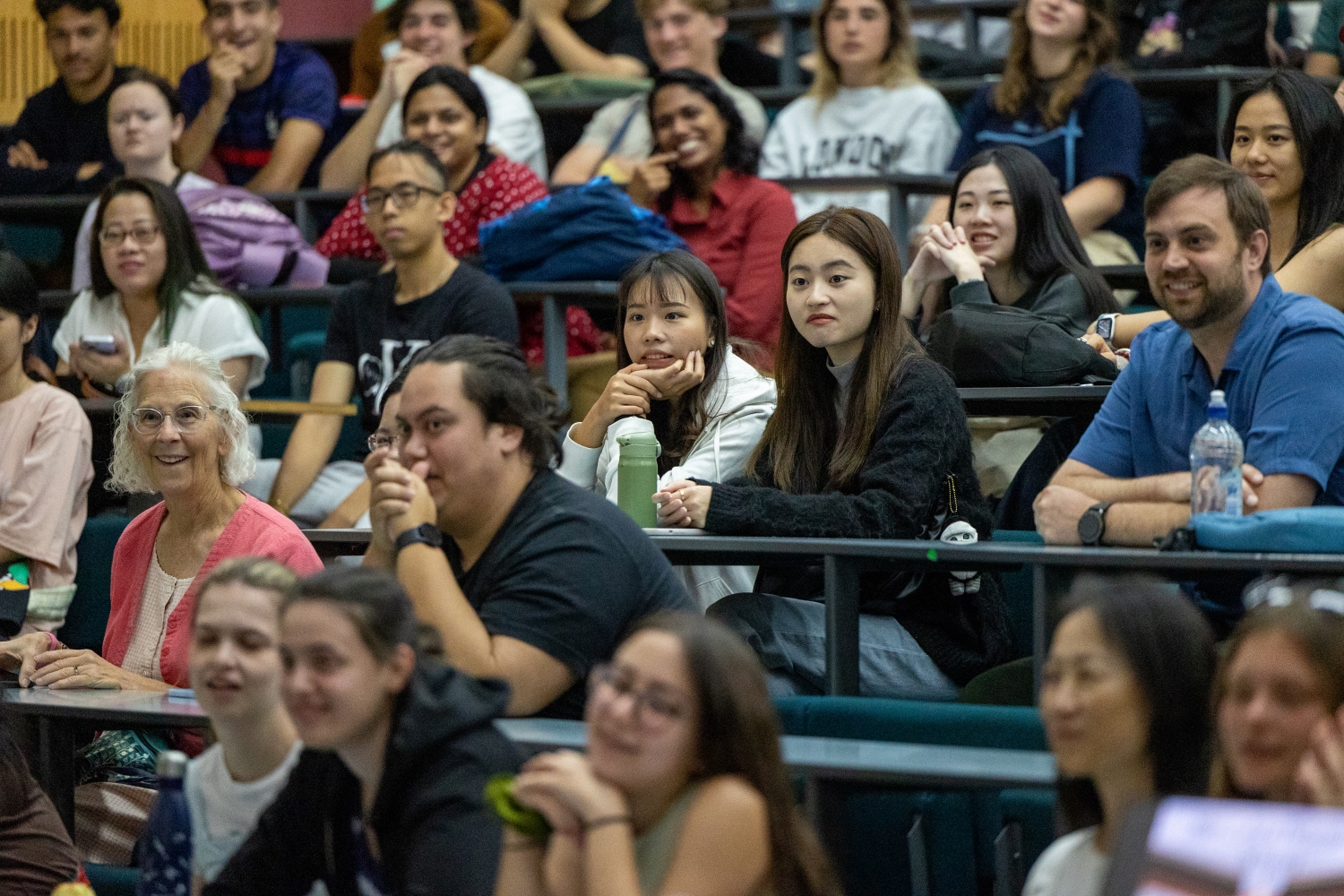
- The University of Waikato Orientation 2024 Photo by Lance Chapman Photos 4 4
- China.vocational.forum
-
The future of international student recruitment from China
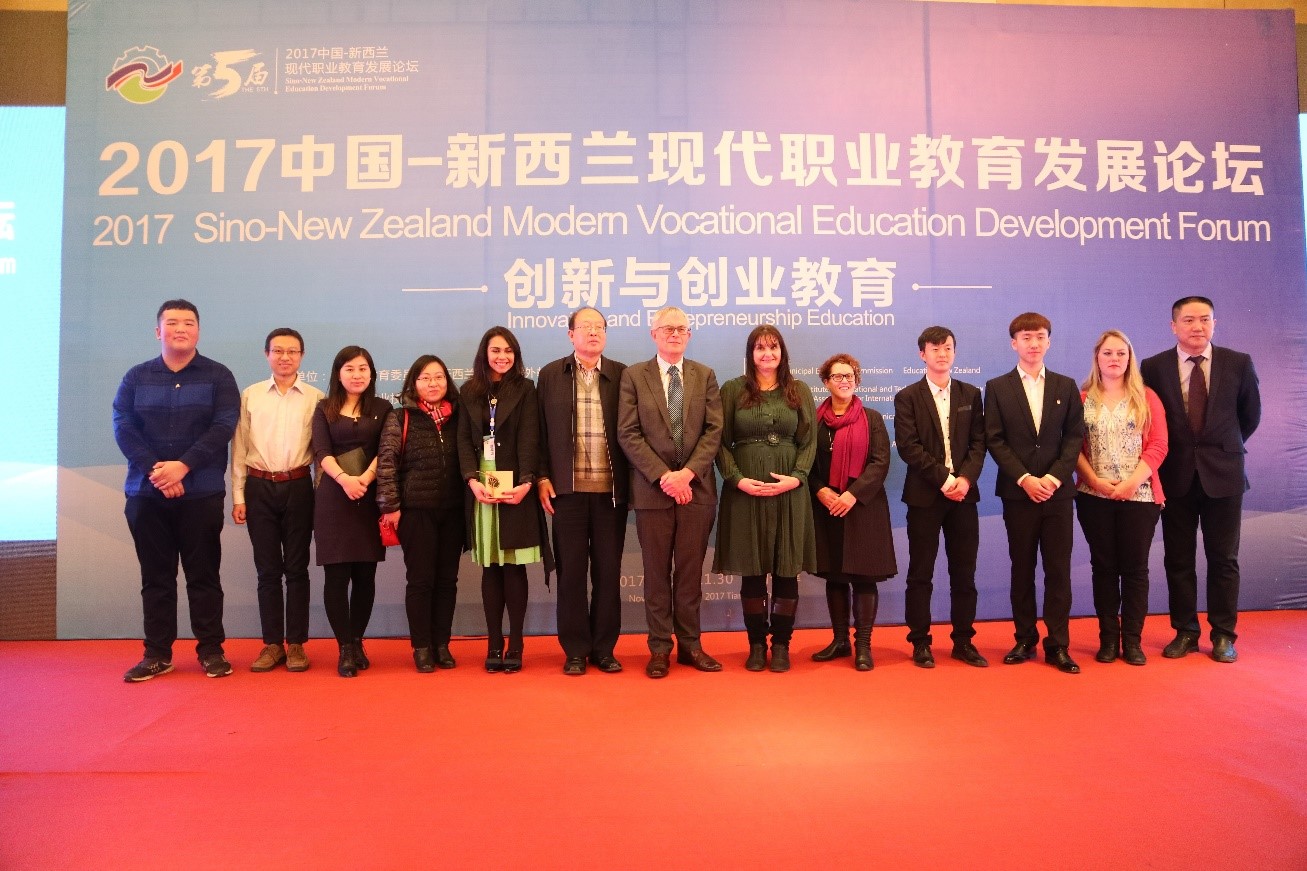
Speaking as one of the NZIEC’s keynote speakers, President Zhou Chenggang explained that there is an emerging trend of parents with younger children wanting to give them the advantage of an international education and New Zealand should harness this opportunity.
Mr Zhou said Chinese parents make careful, rational decisions about where their younger children should study, planning one to two years in advance. With the current world climate, he suggested that New Zealand institutions should highlight not only the high quality education their children will receive, but also the fact that New Zealand is a safe and welcoming country.
Mr Zhou also said New Zealand should highlight our vocational offerings, which were less well known in China and having more choices would also appeal to Chinese parents.
According to Mr Zhou, having clear, straight-forward application processes and building relationships with more Chinese colleges will benefit.
“China will keep encouraging our kids to learn from the West. So many institutions in China are eager to work with colleges but don’t know where to go or who to talk to.”
More than 38,000 Chinese students studied in New Zealand in 2016. This was a 13% increase in total enrolments from 2015.
-
Fifty years celebrated with Chile
Cultural performances, together with a series of panel discussions on government initiatives, research connections, educational exchanges, and the experience of Chileans in New Zealand showcased the variety and depth of the relationships that have been developed over the past 50 years.
Speakers included both Ambassadors, as well as academics from all New Zealand’s universities, alongside alumni and government specialists. A number of distinguished guests were part of the large audience that attended throughout the day at Parliament Buildings in Wellington and online.
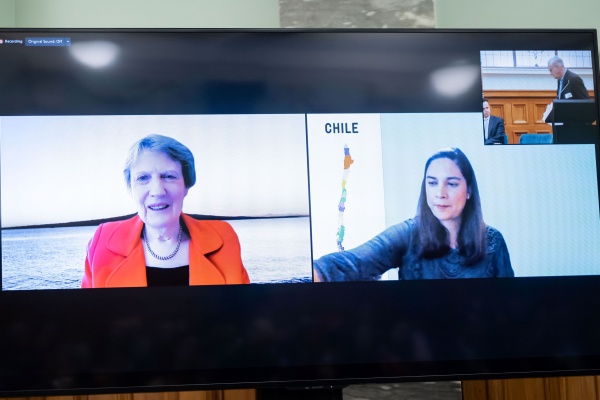
(l to r) Former Prime Minister Helen Clark and Javiera Visedo, Director of Engagement Latin America for ENZ, took part in a panel discussion on government initiatives.

Lisa Futschek, ENZ’s General Manager International, chaired the panel discussion on educational exchanges.
Videos of the event are available on the CAPE website here.
- brazil market update 4
-
AUT signs arts and culture partnership with Indonesia
The New Zealand Arts & Culture Development Programme has been created by AUT to help MoEC cultivate a sense of belonging, identity and celebration of the diversity of culture and arts unique to Indonesia for future generations.
The MoEC has selected 50 active arts and culture workers, expected to be future leaders in their fields, across a range of different sectors, including: history, museum & gallery, dance, theatre, music, literacy, film and visual art.
Professor Nigel Hemmington, Dean – Faculty of Culture and Society, Pro Vice-Chancellor International, said the programme would build stronger ties between AUT and Indonesia.
“The signing of the agreement signals a major development in the university’s relationship with Indonesia and serves as a preliminary project for the wider programme, Project Taman, where AUT will lead (with Victoria University of Wellington and University of Auckland) the professional development of Indonesian school teachers In New Zealand in 2017,” says Professor Hemmington.
During the New Zealand-based training, to be held 14 November – 3 December, participants will undergo experiential learning including mentorships, seminars, workshop sessions, presentations, guest speakers, site visits and a field trip.
The programme includes a three-day pre-departure briefing to familiarise participants with the programme, as well as a post-departure evaluation that will be conducted in Jakarta in early 2017.