Search
Showing 10 of 7355 results
- untitled7
-
PIF Recipient: Connect2NZ
Connect2NZ aims to show that tertiary education providers can work with government agencies to build a framework for international learners that is innovative, future focused, and learner-centric.
Connect2NZ’s target audience is professionals, living outside New Zealand, who are seeking skills development in emerging sectors. Work has been undertaken to determine learner needs and match those with areas where New Zealand is strong. The project will design and deliver micro-learning and short courses which have pathways, allowing these learners to study from a group of courses to achieve their desired career outcomes. Potential topics include technology, leadership, health and wellness, food and agritech, energy, tourism, design and natural hazards. Our goal is to eventually extend our offerings to degree qualifications.
"What excites me the most about the Connect2NZ project is the exploration of potential new offshore/online markets. In particular, the global lifelong learner market which is huge and to date not well served by some of the fantastic educational offerings available from the New Zealand Higher Education sector, "
Professor Mick Grimley, Dean of Future Learning and Development, University of Canterbury
Some of these courses will be delivered by one provider partner, while others will be jointly designed and delivered. The number of tertiary education providers is expected to grow following consultation with government agencies and community outreach.
The pilot project is supported by Education New Zealand Manapou ki te Ao (ENZ). Through its International Education Product Innovation Fund, ENZ is supporting a range of pilot projects that reimagine how a New Zealand education can engage and inspire international learners and create impact through new delivery modes, approaches and partnerships.
"Connect2NZ breaks the mold by uniting our organizational strengths in solving a challenging problem. When we prove success, the value add is a model other institutions can follow".
Dr David Dannenberg, Director of Learning, Teaching and Library, Lincoln University.
-
PIF Recipient: Mission New Zealand
With support from Education New Zealand Manapou ki te Ao, New Zealand’s government agency for international education, Mission New Zealand showcases courses from a number of New Zealand institutes, and is being developed by The Mind Lab.
Mission New Zealand offers a fully immersive and distinctly New Zealand experience. It focuses on the best of what New Zealand has to offer and the benefits of being part of a global movement for positive change.
From anywhere in the world, learners can choose from a mix of short courses and micro-credentials, grouped around four themes that reflect New Zealand’s progressiveness and values: culture, tech innovation, creativity and sustainability. Courses range from one to 15 weeks in length, with a mix of free and paid options available.
A selection of The Mind Lab’s own micro-credentials is available on Mission New Zealand, along with offerings from Te Pūkenga - New Zealand Institute of Skills and Technology - and some of New Zealand’s most innovative private training establishments.
Visitors to the site will be greeted by the world’s first 360° virtual pōwhiri, starting at the gates of Ngāti Whātua Orākei Marae in Auckland. They will experience being called onto the marae with a karanga and stepping onto the grounds to be welcomed by members of Ngāti Whātua.
Personalised learning, with optional content and stories, insights and other material will help learners experience what makes New Zealand unique.
Through an immersive experience, Mission New Zealand invites learners to take the first step in a lifelong connection with Aotearoa New Zealand.
The new platform is designed to address the increasing global demand for connections with purpose and cause, for online learning options, and for shorter and more flexible courses.
Mission New Zealand is among a range of pilot projects supported by Education New Zealand's Manapou ki te Ao Covid Response and Recovery Fund product and service diversification workstream. This New Zealand Government-funded initiative encourages the development of new products and services in the international education sector.
The Mind Lab was founded in 2013 and has a strong background in innovation, online education delivery that builds impactful futures and building community connections, including relationships with iwi and Māori-led organisations.
More information:
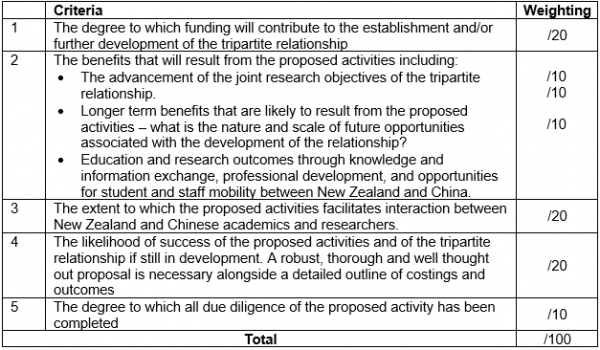
- tripartitecriteria
- Phowhiri
- Asia trip 4
- Patricia
- Infograph
- PMSA PMSLA Individual Terms and Conditions March 2023 FINAL
-
ENZ responds to international education commentary on NBR
ENZ Acting Chief Executive Dr Linda Sissons rebuts an economics commentary published on National Business Review (NBR) on Monday 25 March 2024. The rebuttal is published here on NBR and is reproduced below.
 In response to your piece “International education: wrong horse to back for export growth?” my answer to the question is a hard “no”. Here’s why.
 Students are returning to New Zealand. In the first eight months of 2023 international student enrolments topped 59,000 with all sectors experiencing growth except wānanga. Accepting that it is from a low base, comparing 2023 to 2022, Universities have bounced back strongly reporting a 15% increase from 24,040 to 27,535.
It is true that we have not yet returned to 2019 numbers. In my opinion, this is not a bad thing. During the pandemic years the sector lost people and capability. The recent moves of some of our competitors tell you what a sudden return to those numbers of students brings.
I want to address your correspondent’s concerns about the lack of a plan and competition within amongst universities. There is a plan. The New Zealand International Education Strategy, revised in 2022 in discussion with the sector and across Government, sets out the plan to develop a high-value, resilient and innovative education sector for both international and domestic students.
I can also assure you that the sector is working together to achieve its goals, that all eight universities participated in a recent ENZ-led delegation to India, is just one example of the co-operation.
International education is more than universities. In the first eight months of 2023 English Language Schools saw the greatest percentage increase in international enrolments, increasing by 347% from 1,565 to 7,001. Schools reported a 114% increase from 5,925 to 12,662. NZIST Te Pūkenga, a 32% increase from 4,955 to 6,560 and Private Training Establishments (funded and unfunded), a 13% increase from 5,000 to 5,671.
Immigration New Zealand tell us that international student visa applications for all forms of study have increased by about 20 per cent in the peak application period. Between 1 October 2023 and 8 March 2024, they received over 31,800 applications for an international student visa.
Today we have a base of international students in the country and the pipeline for the coming academic year has strong growth.
Our own research shows that the experience international students have while studying in New Zealand is a good one. In our Student Experience survey of 4,755 international students from more than 70 nationalities, 84 percent rated their overall experience positively, while another 83 percent said they would recommend New Zealand as a study destination.
When these students return to their home, and 75% of international students return home after three years, they will be our word-of-mouth advocates – an advocacy we didn’t have during the COVID years.
New Zealanders also appreciate the benefits of international students. In an ENZ survey of 1,100 New Zealanders conducted in December last year, 75 percent of respondents believe that international students benefit New Zealand. The Ipsos Fast Facts survey, which drew responses from all regions of the country, saw 80 percent of respondents highlighting economic benefits, particularly in local communities, as a key reason for their positive view.
The results of the 2023 survey highlighted the continuing growth in support for international students and their positive impact on New Zealand since 2016 when only 57 percent believed international students helped the New Zealand economy and economic growth.
We have students in New Zealand; a strong pipeline; students having a positive experience and advocating for New Zealand; and New Zealanders appreciating the benefits having of them in our communities.
International education is highly competitive. Your correspondent rightly recognises that there are new competitors emerging and Singapore is a good example. We’ve also seen countries like South Korea, a core market for New Zealand, become competitors.
This is not new. We have, and will always have, to compete to attract international students to New Zealand – that they are returning tells me our reputation is good and we remain an attractive option.
Globally the number of international students has grown significantly over the past two decades from around two million in 1998 to over 6.4 million in 2020, according to UNESCO data. New Zealand only needs a very small proportion of what is effectively a supply-driven market to return to pre-pandemic levels of economic contribution and value.
While I am confident that international education is not the “wrong horse”, achieving double the export earnings is going to require a lot of hard work and there is much to do. My point is, that in less than two years since the borders reopened in August 2022, the recovery has well and truly commenced, the progress made to date is significant, and as a sector we can be rightly proud of what we have achieved together.
Linda Sissons
Acting Chief Executive, Education New Zealand