Search

Showing 10 of 7165 results

  • Successful New Zealand – India Education Connect Initiative held in India

    New Zealand – India Education Connect took place from 8 to 14 February, involving a high-level sector delegation made up of Vice Chancellors, Deputy Vice Chancellors, International Directors, academic heads, and regional recruitment staff from all eight New Zealand universities.  

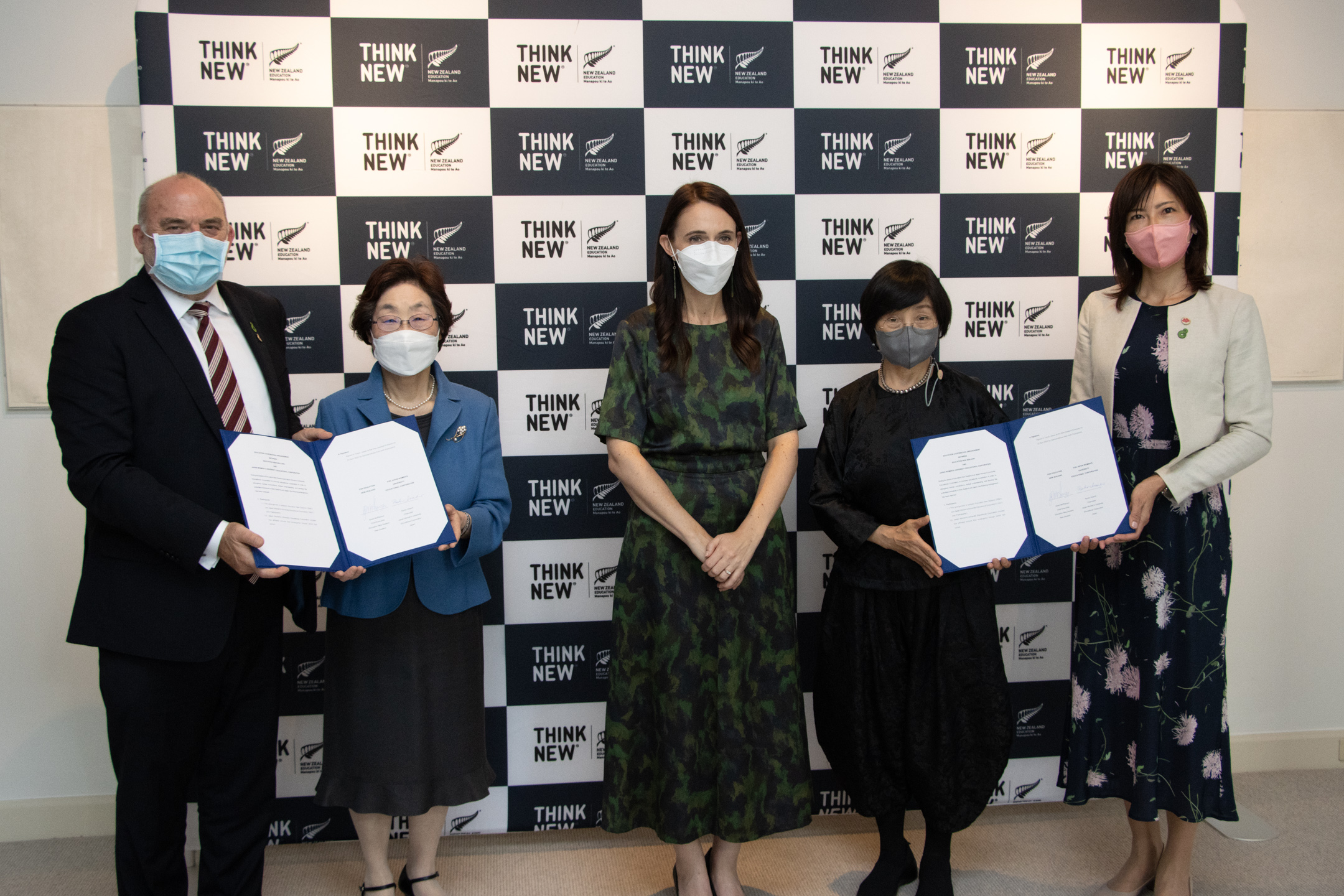
    Led by Lisa Futschek, ENZ’s General Manager International, the delegation visited Bengaluru, Chennai, New Delhi, and Ahmedabad. During the visit, ENZ signed two Education Cooperation Arrangements (ECAs) and one Memorandum of Understanding (MoU), with the Higher Education Department, Government of Karnataka; Indian Institute of Management Ahmedabad (IIMA); and Gujarat International Finance Tech City (GIFT City) respectively. The ECAs and MoU provide a high-level umbrella arrangement for New Zealand universities to explore potential collaborations with each of the partners. 

    The New Zealand delegation with IIM Ahmedabad officials on 14 February.

    New Zealand universities delegation with Hon Dr. M C Sudhakar, Minister, Karnataka Higher Education Minister and officials of Karnataka Higher Education Council, Bengaluru on 8 February

    Ms Futschek acknowledged the special relationship India and New Zealand have, noting that this year marks the 72nd anniversary of diplomatic relations between the two countries.  

    “India consistently holds the position of the second-largest international student market for New Zealand. The dynamic growth in the education partnerships between our two countries is attributed to strategic investments by universities, marked by heightened levels of internationalisation and strengthened commitments through the establishment of in-country representatives/offices by all eight. 

    “There is certainly much to be said for having power in numbers. Engaging as a group is a very good way to leverage connections with key government and private stakeholders that would otherwise be difficult on an individual institution basis, said Ms Futschek. 

    The delegation visit to the New Zealand Centre at IIT Delhi (IITD) was one of the highlights of the programme as it facilitated discussions on resource mobilisation for long-term sustainability of the centre. The New Zealand Centre at IITD was established in February 2020 as a focal point for joint academic activity between New Zealand's eight universities and IITD.  The centre is a research-focused hub that fosters collaborative, sustainable, self-supporting research programmes in areas of shared national interest such as climate change, disaster management, urban planning, and the environment. The first big engagement at the New Zealand Centre included 10 joint research projects between NZ universities and IITD academics in 2022. Subsequently, a fellowship programme with a joint funding of NZ$ 100,000 was announced in 2023, and as part of this programme four New Zealand Fellows will be spending time working with IITD in 2023/24 and two IITD Fellows with New Zealand universities.  

    Ms Futschek noted that the New Zealand Centre at IITD is a great example of how the cohesion between our eight universities and IITD has led to a flagship project growing in scale and sustainably. 

    “This success has all happened while building our reputation for quality education and a commitment to bilateral relations between our two countries,” added Ms Futschek.  

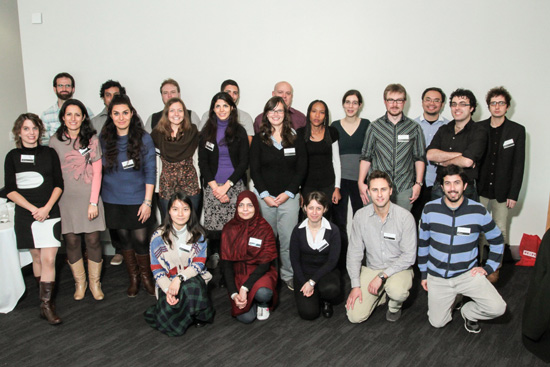
    The networking reception organised by ENZ in Delhi during the ENZ Connect series, was attended by a group of 24 students from University of Auckland, University of Waikato, Massey University and Victoria University of Wellington, who were in India as part of the PMSA India immersion programme. They not only engaged with the ‘friends of NZ’ attendee, but also performed a Bollywood dance they had learnt during their six weeks in India, much to the delight of the audience.

    Other activities conducted during the week included a media roundtable, led by H.E. Ambassador David Pine at the New Zealand High Commission in New Delhi. The roundtable reached over 984 million people with a PR value of over NZD 624,000, further increasing the brand awareness of New Zealand’s world class education across India.    

    Media Roundtable at New Zealand High Commission in New Dehi, led by NZ High Commissioner to India, HE Mr David Pine, Lisa Futschek, GM International, ENZ and Brett Berquist, Assistant Vice-Chancellor Engagement University of Canterbury.

    New Zealand universities also had a strong presence at QS India summit 2024, which coincided with the New Zealand – India Education Connect, helping delegates reflect their interest and achieve visibility in the Indian B2B space. ENZ was invited by QS to be a strategic partner at this summit. 

    The delegation at the QS India Summit 2024.

  • New Zealand and Viet Nam sign Arrangement, strengthening education ties

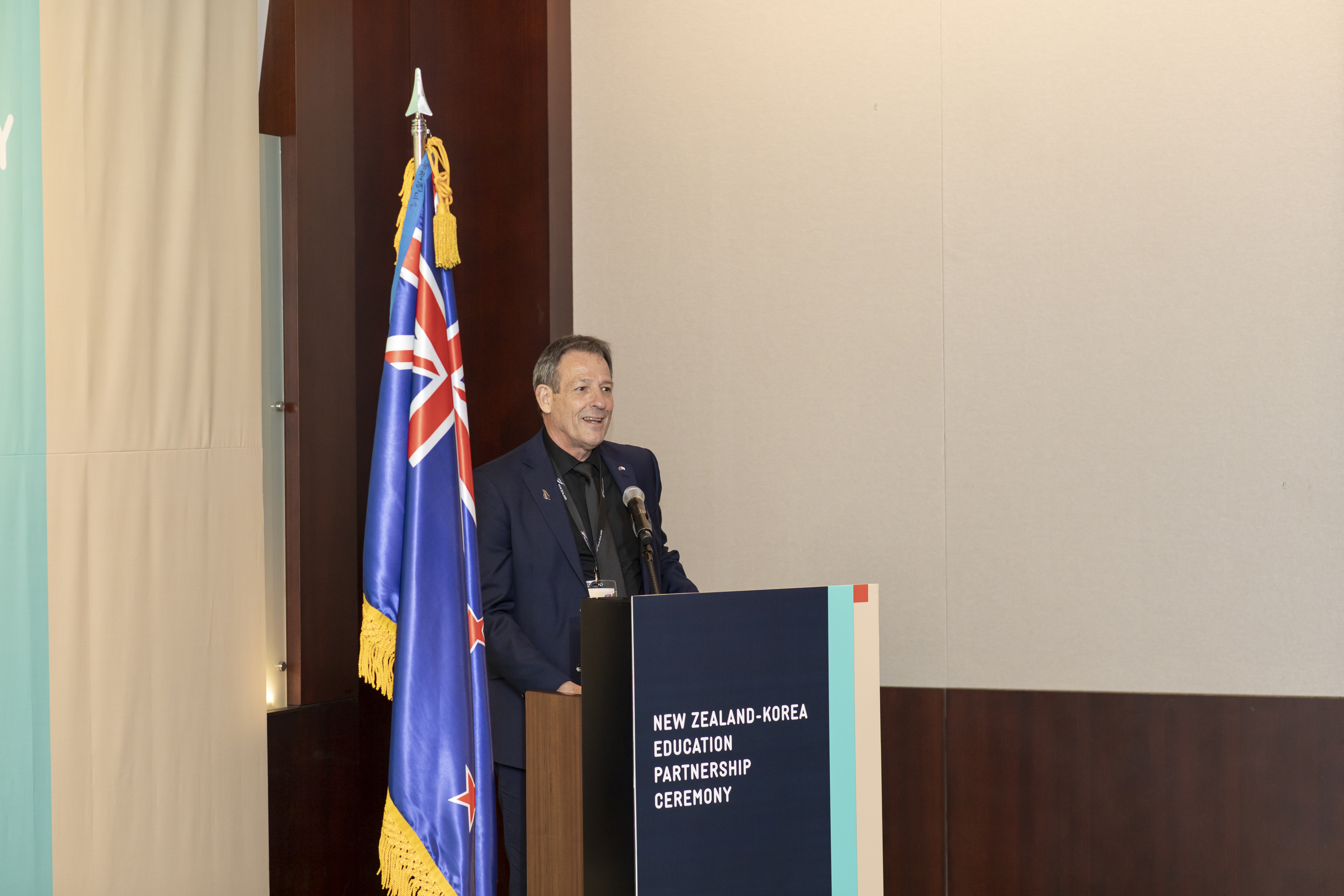
    This arrangement was signed by New Zealand Minister for Tertiary Education and Skills, Hon Penny Simmonds and Viet Nam’s Minister of Education and Training, Nguyen Kim Son during the Prime Minister of the Socialist Republic of Viet Nam His Excellency Phạm Minh Chính’s visit to New Zealand from 9 – 11 March. Prime Minister Pham and Prime Minister Luxon witnessed the signing of this arrangement, which covers the period 2023 – 2026.  

    The EEA, which will replace the Strategic Engagement Plan on Education (SEP) 2020 – 2023, identifies areas of engagement and sets new targets over the next three years.  

    Specific areas covered in the arrangement include collaboration and information exchange in English language training, short courses and executive education programmes that New Zealand provides in Viet Nam. 

    The arrangement will also explore opportunities to build mutual value in English language literacy, early childhood education and science, technology, engineering, and mathematics (STEM) disciplines. Sharing and publicising scholarship programmes in both countries will be undertaken while institutions will also be encouraged to increase research engagement as well as student, lecturer and research exchange activities. 

    Both countries have also agreed to actively support the activities of alumni groups in both Viet Nam and New Zealand, and celebrate the lifelong connections generated through these networks. 

    The signing of this arrangement with Viet Nam aligns with the New Zealand Government’s priority to revive international education, lift its contribution to New Zealand’s economy, and diversify international education markets. Concerted effort is going into deepening and broadening our overall bilateral relationship with countries in Southeast Asia including Viet Nam, including our trade and economic interests.  

    ENZ’s Acting Chief Executive, Linda Sissons, said the Education Engagement Arrangement provides an important opportunity to build on the longstanding education partnership between New Zealand and Viet Nam.   

    “Viet Nam is a multi-sectored market for New Zealand’s international education industry and an important source country for international students.” 

     “This arrangement demonstrates to prospective students and their families that New Zealand is a partner of choice for the Vietnamese Government in the field of education, which aligns with the New Zealand Government’s priority to build a more resilient and sustainable sector.” 

    “With its strong focus on partnerships, the arrangement also lays an excellent foundation for further growth by New Zealand’s tertiary sector. It presents real opportunities for our EdTech sector to continue to build on the recently completed market familiarisation trip, with further development of opportunities that support Viet Nam’s digital transformation strategy. 

    Bilateral meeting between New Zealand and Vietnam during the Prime Minister of Vietnam, His Excellency Mr Pham Minh Chính's visit to New Zealand. March 11, 2024 in Wellington, New Zealand. Photo by Mark Tantrum.

    The first Strategic Engagement Plan on education (SEP) was signed in 2015, laying the foundation for a strategic education partnership between New Zealand and Viet Nam. The SEP sits under our overarching bilateral Education Cooperation Arrangement between the Ministries of Education, which was refreshed in 2022. The SEP was renewed in 2018 and again for the period 2020 – 2023, between Education New Zealand and Viet Nam’s Ministry of Education and Training (MoET) and was signed during the year we marked the 45th anniversary of diplomatic relations with Viet Nam (2020). This built on existing education initiatives and identified new opportunities to be co-developed and delivered for the mutual benefit of both countries.  You can read about the last signing of the Strategic Engagement Plan in 2020 signing here.

    Following the signing of the EEA, both education ministers participated in a bilateral meeting to discuss the education relationship between the two nations, current priorities and the development of activities under the new arrangement. This discussion touched specific areas of collaboration such as early childhood education, institutional partnerships and vocational training. 

    Minister Penny Simmonds present Minister Nguyen Kim Son a gift following the bilateral education ministers meeting.

    New Zealand is offering Vietnamese students two government scholarship programmes for secondary school study (the New Zealand Schools Scholarships – NZSS) and for postgraduate study (the Manaaki New Zealand Scholarships). In view of increasing demand for study with New Zealand, ENZ has implemented a wide range of initiatives to equip Vietnamese learners with the 21st century skills, and support families in obtaining up-to-date information to plan for their study journey in New Zealand.  

    The New Zealand Education Day, ENZ’s flagship event, is scheduled on 19 and 20 October. It has been held annually since 2017 and attracts hundreds of visitors. 

  • International photo round-up

  • About this site

    Plain Language

    We aim to use plain language on this site. Plain language is appropriate to the intended audience, and clear, concise and well organised.

    The Plain Language Act 2022 sets out some requirements for using plain language in our documents.

    Plain Language Act 2022 – New Zealand Legislation

    Let us know if you find something that isn’t clear, or that doesn’t comply with the Plain Language Act. We’ll use your feedback to make our content easier to understand. To send us feedback, please email info@enz.govt.nz

  • International student enrolments top 59,000 for the first eight months of 2023

    The Minister for Tertiary Education and Skills, Hon Penny Simmonds, today released international student enrolment data for the first eight months of 2023. From January to August 2023 there were 59,306 international student enrolments* with New Zealand education providers, a 43% increase compared to the full year in 2022.   

    Minister Simmonds said, “Over 59,000 enrolments, in just eight months, confirms that international students continue to find New Zealand an attractive education destination. And for the university sector with 27,535 students enrolled, where a proportion of learners may study for a number of years, there is a solid base of students from which to grow.” 

    International student enrolments have grown in all subsectors except wānanga. Comparing 2023 to 2022, English Language Schools have seen the greatest percentage increase in international enrolments, increasing by 347% from 1,565 to 7,001Schools reported a 114% increase from 5,925 to 12,662. Te Pūkenga, a 32% increase from 4,955 to 6,560. Universities, a 15% increase from 24,040 to 27,535 and Private Training Establishments (funded and unfunded), a 13% increase from 5,000 to 5,671. 

    Universities and schools remained New Zealand’s two largest subsectors for international students.  

    As with all New Zealand’s competitors, China is the largest source market for international students. In the reporting period, China was 36% of enrolments, with India (10%), Japan (10%), South Korea (5%), and Thailand (4%) in the top five. 

    Minister Simmonds said, “It is a Government priority to diversify our recruitment efforts for international students with the aim of reaching a broader spectrum of countries.” 

    Final enrolment numbers for 2023 will be available shortly. 

    To access the latest data provided by the Ministry of Education, please use the public access link to Tableau here

    * One individual may enrol more than once 


    For further information: 

    Justin Barnett | Director of Communications, Education New Zealand  

    +64 21 875 132 

  • PIF Recipient: Financial education platform for secondary schools

    Founded in 2015, Banqer set out to tackle the global challenge of financial illiteracy. The team knew that school students were missing out on practical and engaging financial education, partly from a lack of curriculum-aligned resources, and partly from time-poor schools and teachers struggling to deliver financial education on top of everything else.

    Research shows that 75% of us believe schools aren’t doing enough to combat financial illiteracy, and with financial education widely seen as a ‘circuit breaker’ for intergenerational inequality, something needed to change. That’s where Banqer’s award-winning platform came in. Through an online simulation, Banqer introduces students – from primary school through to secondary – to financial concepts like budgeting, savings, careers, insurance, renting, home ownership and investment. 

    "We've seen firsthand the engagement and impact that Banqer creates in New Zealand secondary school classes, and are excited to take this to the world with the support of Education New Zealand,' said Kendall Flutey, Co-Founder and CEO of Banqer 


    Banqer High at Cashmere High School

    A step-change from textbooks or written resources of the past, Banqer helps students learn by doing. Learners explore their own simulative economy where they create fictitious bank accounts, earn income, pay expenses, invest, insure, budget and more. 

    Banqer is one of the recipients of the International Education Product Innovation Fund – an initiative funded by the New Zealand Government’s Covid Response and Recovery Fund and managed by ENZ, New Zealand’s dedicated agency for international education. 

    With Banqer’s platform already widely used by schools across New Zealand, the company is looking to scale up its impact and innovation to create financial empowerment for more learners around the world. 

    Support from the Product Innovation Fund will help the company scale Banqer High (its platform for secondary school learners) across Australia and validate new markets, including in North America. The funding will also help develop Banqer Beyond, a new product which aims to bring Banqer’s financial education to a broader audience beyond schools, which could include workplaces, community settings, or direct to consumers. 

    Banqer was a natural fit for the Product Innovation Fund, which is supporting seven pilot projects that deliver new, meaningful and unique learning experiences from New Zealand to the world. These pilots reimagine what a New Zealand education experience can look like and mean for global learners.  

    From New Zealand to the world, Banqer’s technology is setting learners on track for better financial futures. And thanks to the partnership between Banqer and ENZ, the stage is set for this New Zealand-built product to have an even greater impact around the world, delivering financial education and empowerment to learners wherever they are. 


    More information: 

    Learn more about Banqer. 

  • PIF Recipient: Blue Tomorrow

    A new online offering from AUT Ventures is set to immerse learners worldwide in one of the greatest challenges – and opportunities – of our times: the blue economy. More importantly, it aims to give learners the confidence to take their next steps towards a rewarding career and an education pathway that builds a more sustainable future for humanity and the ocean. 

    The blue economy describes marine activities that generate economic value and contribute positively to ecological, cultural and social well-being. ‘Blue Tomorrow’ is an innovative learning experience that will guide learners through the blue economy’s mission, careers and pathways. 

    Blue Tomorrow is a pilot project developed jointly by AUT Ventures and Education New Zealand Manapou ki te Ao (ENZ), New Zealand’s government agency for international education. Through its International Education Product Innovation Fund, ENZ is supporting a range of pilot projects that reimagine how a New Zealand education can engage and inspire international learners and create impact through new delivery modes, approaches, and partnerships. 

    Blue Tomorrow was one of the first projects to be supported by the Product Innovation Fund and is a natural fit as innovation is both its cause and career lens. The approach positions New Zealand as a leader and champion for sustainable oceans, inspiring learners into a diverse range of career opportunities and the education pathways to get them there. 

    So why Blue Tomorrow? Globally, the blue economy is set to double in size by 2030. It is a natural fit with New Zealand’s identity as an island nation and a member of the South Pacific region, whose countries and peoples are intrinsically connected to the ocean. With 96% of its territories underwater, New Zealand has one of the world’s longest coastlines and largest exclusive economic zones, making it a hotspot for marine biodiversity. Aotearoa has the wisdom, obligation, and opportunity to lead the world toward the ocean we want.  

    To deliver this programme, AUT Ventures is partnering with Moananui, a collaboration of leading private companies, public sector entities, and research institutions, with the goal of transforming Aotearoa New Zealand into a world-leading ecosystem for developing and commercialising blue economy products, services, technology, research, and capability. For Moananui, Blue Tomorrow aligns with its mission to accelerate innovation and investment in Aotearoa’s blue economy to generate unparalleled economic, social, cultural, and ecological value.  

    AUT Ventures is partnering with Moananui, a collaboration of leading private companies, public sector entities, and research institutions.

    Modern learners are searching for a career in service of a cause, but the pathways to enter them are often unclear. Mission-led organisations require talent and leadership with a shared purpose to fill the domestic and global needs of the growing blue economy. Blue Tomorrow flips the traditional model around - purpose first, career second, and helps take care of the pathway puzzle. The online learning experience shows how the blue economy can lead to a financially rewarding career that contributes to shared global challenges and builds a more sustainable global economy. 

    In today’s climate, there is no shortage of challenges, from over-fishing and biodiversity loss to ocean warming and acidification. The importance of sustainable oceans, and the pressing need for action, are reflected in the UN Ocean Decade and Sustainable Development (SDG) Goal #14 – life below water. But developing the blue economy also presents immense opportunity, including the potential to address other SDGs, including zero hunger (SDG #2), decent work and economic growth (SDG #8), responsible consumption and production (SDG #12), and climate action (SDG #13). 

    The partnership with Moananui brings together commercial, public, and community partners from New Zealand’s blue economy who have global credibility and unique stories of innovations that are good for the planet to share with learners worldwide. Blue Tomorrow has the potential to become a widely known model for linking the blue economy’s growing demand for talent with respected education offerings from New Zealand providers, building awareness, and enabling action for a more sustainable future for the ocean. 

    Across four weeks of online learning, Blue Tomorrow will empower learners to find their own place in the blue economy. Unlike some traditional programmes designed to prepare learners for a specific career, sector or discipline, Blue Tomorrow aims to inspire learners around a cause – in this case, the blue economy. Local industry guests accompany learners on the journey that starts with an overview of ocean literacy and the blue economy. They then explore the blue economy sectors and take a deep dive into one (aquaculture in the pilot), where they investigate careers and pathways, including a taste of local learning (Te Pūkenga, NMIT’s sustainable aquaculture programmes in the pilot). The experience wraps up with learners reflecting on their inner development and planning for their next steps in the blue economy. 

    The blue economy is one of the biggest opportunities on the planet. Blue Tomorrow puts learners at the centre of this new frontier. 

  • PIF Recipient: Boma

    Christchurch-based Boma is a new kind of education provider, on a mission to support current and emerging leaders to be more intentional, intelligent, and courageous for the future. Boma runs events, workshops, and courses, and has worked with leading organisations in Aotearoa and around the world, from global tech companies Facebook and Zoom to locally based organisations such as Meridian Energy, Stuff, and New Zealand Trade & Enterprise. 

    But it’s the next phase of Boma’s expansion that’s really set to make waves on the world stage. Thanks to an award of funding from the International Education Product Innovation Fund, Boma is creating a global, cohort-based course for rugby coaches delivered in partnership with The Crusaders – the Christchurch-based professional rugby team and the most successful team in the history of the Super Rugby competition. 

    Founder and CEO of Boma NZ, Kaila Colbin with Crusaders Coach, Scott Robinson

    Founder and CEO of Boma NZ, Kaila Colbin with Crusaders Coach, Scott Robinson

    "We at Boma are so excited to be working with Education NZ and the Product Innovation Fund. We share so many things: a commitment to excellence; an agile test-learn-iterate approach; and a passion for bringing Aotearoa's special sauce to the world. We're honoured to have been chosen as one of the recipients of the fund, and we know we'll be able to go farther, faster by working together".

    Kaila Colbin , Founder and CEO, Boma New Zealand 

    Aimed at rugby coaches from high school teams through to professional level, the Crusaders Coaching Leadership Programme™ will run for the first time in late 2022. Unlike competitors who offer training through on-demand video but generate low completion rates, Boma’s pilot project with The Crusaders combines the flexibility of self-directed learning with the accountability of being part of a real-time cohort of learners. 

    Education New Zealand Manapou ki te Ao (ENZ) is the agency behind the Product Innovation Fund. As New Zealand’s dedicated government agency for international education, ENZ is helping shape a broader, more diverse international education sector with built-in resilience to future shocks such as global pandemics. 

    In total, seven pilot projects have been supported through the Product Innovation Fund. Together, they reimagine what a New Zealand education experience could look like and mean for global learners. Boma’s pilot project, for example, taps into a new audience – rugby coaches around the world looking to learn ‘The Crusaders Way’. Before COVID-19, rugby coaches from around the world would travel to New Zealand to learn what makes the team so successful. 

    By partnering with Boma, The Crusaders will be able to share their rugby and leadership expertise with learners around the world through a course offering that is high quality, consistent and scalable. 

    Boma has big plans for the future and sees a logical path for its course offerings to grow from rugby leadership into sports leadership, to business leadership and then into general leadership. Boma’s approach to learning is as much values-led as it is content-led, and this sets Boma apart from its competitors. 

    The support from ENZ through the Product Innovation Fund for Boma’s first pilot project with The Crusaders may well pave the way for more to follow. With a goal of building the leaders the world needs, Boma sees an opportunity to partner with other well-respected, values-led organisations like The Crusaders to create transformational, immersive learning experiences from New Zealand to the world. 

    More information: 


  • PIF Recipient: Chasing Time English

    Across the world, there is a vast market for English language learning. To put a number on it – around one billion learners. In many countries, though, English is taught through repetitive, mostly grammar-based content. The result is two-fold: students become disengaged and disinterested, and they advance in writing and reading skills at the expense of speaking skills. 

    Chasing Time English is a New Zealand company on a mission to make English language learning engaging, exciting, and effective for educators and students around the world. How? Through video. The team at Chasing Time English believe that English language classes should excite and inspire students to learn more, and decided video was the best medium to achieve this. 


    Chasing Time English uses engaging video story content to educate learners.

    Chasing Time English uses engaging video story content to educate learners.

    Through original, live-action-drama videos, Chasing Time English brings intrigue, humour, surprise and suspense into learning. Redrawing the line between education and entertainment, the short videos produced by Chasing Time English are designed to stand alone as quality entertainment, with strong learning outcomes embedded throughout. 

    To achieve this feat, the company brings together a team of English language educators, applied linguists and filmmaking professionals, who collaborate to create compelling, narrative-based drama content backed up by a cutting-edge pedagogy. 

    While other education publishers also produce English language learning video content, this is often lower quality video with limited learner appeal and retention. By creating professional quality drama content, Chasing Time English has become a market leader in English language video learning. Captivate learners, and the learning will follow. 

    Chasing Time English is one of the successful recipients of funding from the International Education Product Innovation Fund, a New Zealand Government-funded initiative to support pilot projects that reimagine and rethink what a New Zealand education experience can look like and mean for global learners. Education New Zealand Manapou ki te Ao (ENZ) is the government agency responsible for international education and is managing the Product Innovation Fund. 

    ENZ will work in a partnership approach with each successful recipient, sharing skills, expertise and resources to help each pilot succeed and develop into a self-sustaining education offering. The lessons learned through the pilot projects will be shared for the benefit of New Zealand’s entire international education sector, with a view to encouraging innovative, new offerings for international learners to experience a New Zealand education. 

    The Product Innovation Fund award will enable Chasing Time English to design, develop and deliver a new set of programmes for high beginner to elementary English language learners and educators. Target audiences include New Zealand education institutions with offshore partners, high schools in Japan and the Netherlands, and English language teachers at the post-beginner level. 

    Across two programmes of 10 weeks each, learners will be able to access up to 100 hours of engaging resources, including Chasing Time English’s distinctive video content, along with other audio and video resources and communication-based activities. The new set of programmes will incorporate a strong New Zealand theme, sharing New Zealand storytelling and themes of environmental sustainability and innovation. The original video content will also showcase New Zealand’s spectacular natural scenery, helping inspire learners and build a connection with New Zealand, wherever they are in the world. 

    With the support of ENZ through the Product Innovation Fund, Chasing Time English is set to continue growing its impressive offering for English language learners around the world. Already setting the bar for the quality of its learning resources and pedagogy, this Kiwi education provider is showing that online learning can be fun and effective, while also showcasing New Zealand’s landscapes, people and values to learners wherever they are. 

    More information: 

  • PIF Recipient: Connect2NZ

    Connect2NZ aims to show that tertiary education providers can work with government agencies to build a framework for international learners that is innovative, future focused, and learner-centric.     

    Connect2NZ’s target audience is professionals, living outside New Zealand, who are seeking skills development in emerging sectors. Work has been undertaken to determine learner needs and match those with areas where New Zealand is strong. The project will design and deliver micro-learning and short courses which have pathways, allowing these learners to study from a group of courses to achieve their desired career outcomes. Potential topics include technology, leadership, health and wellness, food and agritech, energy, tourism, design and natural hazards. Our goal is to eventually extend our offerings to degree qualifications.  

    "What excites me the most about the Connect2NZ project is the exploration of potential new offshore/online markets. In particular, the global lifelong learner market which is huge and to date not well served by some of the fantastic educational offerings available from the New Zealand Higher Education sector, "  

    Professor Mick Grimley, Dean of Future Learning and Development, University of Canterbury 

    Some of these courses will be delivered by one provider partner, while others will be jointly designed and delivered. The number of tertiary education providers is expected to grow following consultation with government agencies and community outreach.    

    The pilot project is supported by Education New Zealand Manapou ki te Ao (ENZ). Through its International Education Product Innovation Fund, ENZ is supporting a range of pilot projects that reimagine how a New Zealand education can engage and inspire international learners and create impact through new delivery modes, approaches and partnerships.  

    "Connect2NZ breaks the mold by uniting our organizational strengths in solving a challenging problem. When we prove success, the value add is a model other institutions can follow". 

    Dr David Dannenberg, Director of Learning, Teaching and Library, Lincoln University.


What's in it for me?