Search
Showing 10 of 7355 results
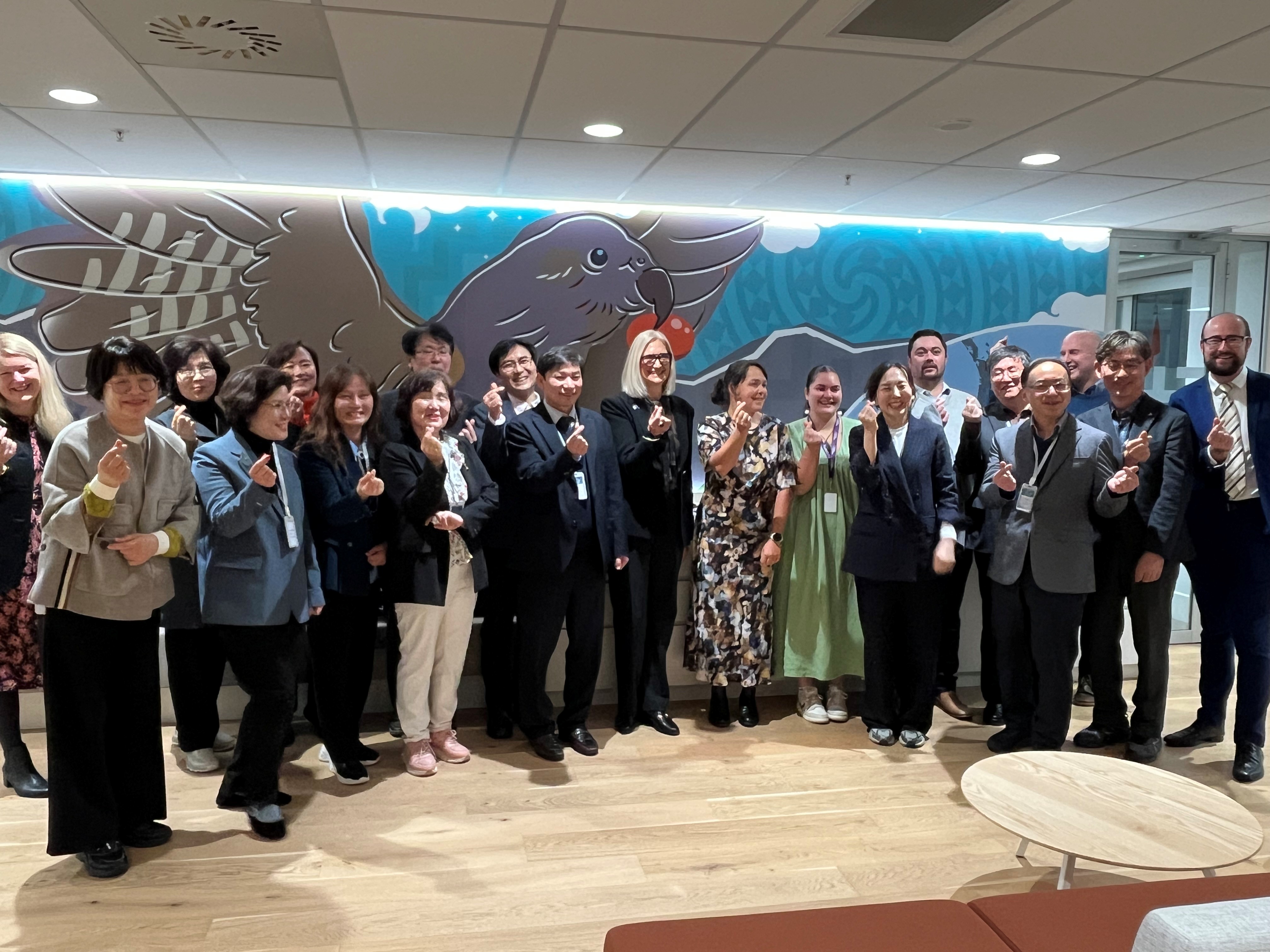
- ENZ Hosting Incheon
- 580 x 210
-
New video series: Discover the inspiring journeys of New Zealand alumni
The series showcases the journeys of New Zealand alumni from across the world, highlighting the diverse paths they have taken since graduation.
Three videos have been released so far, with the remaining set to be released through the rest of this year.
Each video offers a glimpse into the personal and professional achievements of former students who have made their mark across various industries and communities.
Alumni from all levels of New Zealand’s education offering will be featured – ranging from schools to universities and vocational education providers.
These stories are designed to inspire prospective students and their families to consider New Zealand as their study destination of choice.
You can view and download the alumni videos and photos on The ENZ BrandLab. Search ‘Alumni’ to see the latest stories.
In addition, the series is supported by a new alumni blog story each month on the Study with New Zealand website and a dedicated page for Alumni stories.
Check out the series so far
Meet Yao – classical musician and cultural bridgebuilderOur first story features Chen Xiyao, a Chinese-born guzheng player and classical musician now based in Beijing. Although he earned a degree in Business Administration, it was in New Zealand where his love of music truly flourished—thanks to the support of an inspiring high school teacher. He went on to earn a Master of Arts (with Distinction) from Wintec.
From playing in a metal band to performing with Māori musicians and even entertaining former Prime Minister John Key, Yao's journey reflects the unique opportunities and cultural exchange that a New Zealand education can offer.
Today, he teaches music for Wintec in China, continuing to share his passion and talent with others.
From New Zealand to New Delhi: Suvan’s Inspirational Culinary JourneySuvan Kitchlue began his Bachelor of Culinary Arts at Le Cordon Bleu Wellington in 2015, graduating in 2018.
Inspired by MasterChef Australia in India, he chose the school for its rare offering of a culinary arts degree at that time. He thrived in the programme, calling it the “Harvard of culinary education.”
After graduating, Suvan opened a European café in New Delhi, aiming to bring refined technique and quality baked goods to a market he felt was underserved. Inspired by Wellington’s coffee culture, he also focused on elevating his café’s coffee offerings to New Delhi.
He plans to open two more café locations, and a fine-dining restaurant.
Devika Hartono: Alumni storyDevika was born in Indonesia and moved to New Zealand in 2016 on a scholarship to study Biotechnology at The University of Waikato.
Passionate about biology since high school, she sought scholarships to expand her opportunities beyond medical school or teaching. A photo of New Zealand’s stunning landscapes sparked her interest, and she was thrilled to receive both the University of Waikato International Excellence Scholarship and the High Achievement Scholarship for International Students.
After graduating, she launched Keyoura, a skincare brand inspired by the Māori greeting "Kia ora."
-
Tribute to a longtime friend of New Zealand
Education New Zealand Manapou ki te Ao (ENZ) would like to share a tribute to the memory of KC Yong, Chairman of SELSET Education, Malaysia, particularly to his tremendous contribution over a lifetime to growing the education relationship between New Zealand and Malaysia.
KC – as he was fondly known – first connected with New Zealand as an international student studying engineering at the University of Auckland. His experience studying and living in the country left him with a deep, lifelong appreciation for New Zealand education.
It was likely this close connection to New Zealand that led KC to set up SELSET Education, a pioneer New Zealand specialist education consultancy in 2002. Over the past 21 years, KC’s efforts have seen SELSET grow to become the largest Malaysia-based education agency recruiting international students for New Zealand.
ENZ’s Regional Director – Asia, Ben Burrowes, said it was a real privilege to have known and worked with KC, who was so passionate about New Zealand education.
“KC and his son Rick – as well as their extended family who work for SELSET – have held close working relationships with our international education sector for decades. KC’s passing is a huge loss. I would like to personally acknowledge his immense contribution to the education relationship between New Zealand and Malaysia over the last few decades.”
ENZ’s Acting Market Manager – Malaysia and Indonesia, Naluri Bella, also recalls her association with KC Yong and SELSET Education.
“KC was a pioneer in the international education space for Malaysia and will certainly be missed. His legacy lives on in his family and team at SELSET Education.”
-
Around the world in five
Asia
China urged to “go global” as NAFSA cohort returns
Chinese higher education institutions are encouraged to increase their global presence, as a significant number of Chinese universities attended the NAFSA conference in 2023. Despite geopolitical tensions, some American and European universities remain open to collaboration with Chinese institutions. Chinese HEIs are urged to diversify their portfolio and actively engage in international exchanges and cooperation.
North America
U.S. denied more than a third of student visa applications in FY2022
The USA denied 35% of student visa applications in 2022, resulting in an estimated $26.4 billion economic loss. Factors contributing to the increase include high demand, lack of non-immigrant intent, and a shift in source markets, with India surpassing China as the top source country.
South America
Brazil: Affordability will be key to unleashing demand for study abroad
The Brazilian economy is recovering, and there is a strong demand for study abroad among Brazilians. However, students and their families are facing financial challenges, making affordability a key factor in attracting Brazilian students. Scholarships, agent support, and work opportunities will be crucial in attracting Brazilian students in the coming years.
Europe
UK: operational shift in diversify drive mapped
90% of UK universities are diversifying international student recruitment, with changes in application processes, multiple rounds of applications, and the introduction of scholarships to adapt to the global market. Pre-CAS interviews, deposit requirements, and agent quality frameworks are proposed to maintain high recruitment standards and mitigate risks.Africa
Collaboration aims to help make Africa’s youth an asset
African universities unite under the Education Collaborative to transform higher education, focusing on shared curricula, student exchanges, and joint research. The goal is to make Africa's youth an asset, benefiting at least one million students by 2030. The initiative promotes leadership collaboration, incentivizing staff innovation, and embraces a dynamic approach to sustainability for transformative change.
- International photo round-up
- 2021 200 Statement of Performance Expectations 2021 22
- resize pic
- list of successful Sister Schools for website
- Grant connect 18