Search
Showing 10 of 7355 results
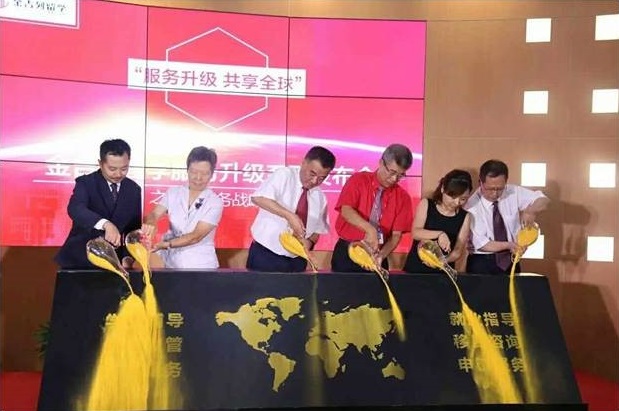
- JJL services launch China
-
New Zealand on the road in Viet Nam
The students were all treated to special presentations during the tour, with most walking away with an ENZ bag containing materials promoting New Zealand as an education destination.
The purpose of the Roadshow’s education aspect of the was to raise awareness of New Zealand and drive registrations for the upcoming New Zealand education fairs on 3 – 4 October.
This was very much an NZ Inc. initiative with ENZ, the New Zealand Embassy and Tourism New Zealand all working together to make the roadshow a reality.
A Māori cultural performing group from the New Zealand Māori Arts and Crafts Institute stole the show.
“Māori culture is a fascinating and unique part of New Zealand culture; it’s something that sets us apart from others,” said New Zealand Ambassador HE Haike Manning. “The visit by this performance group was a great opportunity to showcase Māori culture to Vietnamese students to raise their awareness and interest in our country,”
“We took the opportunity to showcase a number of other things we think make New Zealand special – our excellent education system, our beautiful landscapes, our cities, our food – all the things that make New Zealand such a wonderful tourism and study destination! We also showcased our positive and growing relationship with Viet Nam, so that Vietnamese students could gain an appreciation of the cooperation that has being going on between New Zealand and Viet Nam over the past 40 years.”
The Roadshow is the latest in a year-long series of events organised by the New Zealand Embassy as part of the ‘New Zealand – Open to the New’ season, celebrating 40 years of friendship and diplomatic relations between New Zealand and Viet Nam.
- INZ Flyer Student print May15
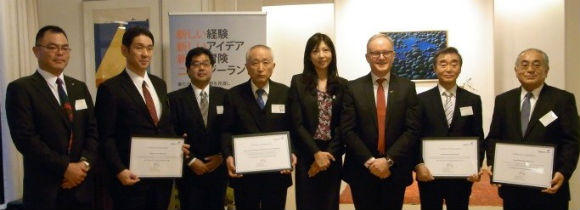
- Japan story2
-
PM mission advances New Zealand and China education relationship
The New Zealand Education Connect event on 20 June at the New Zealand Embassy in Beijing brought together leading Chinese government representatives, institutional partners, education agents, and alumni to strengthen people-to-people links and celebrate collaboration.
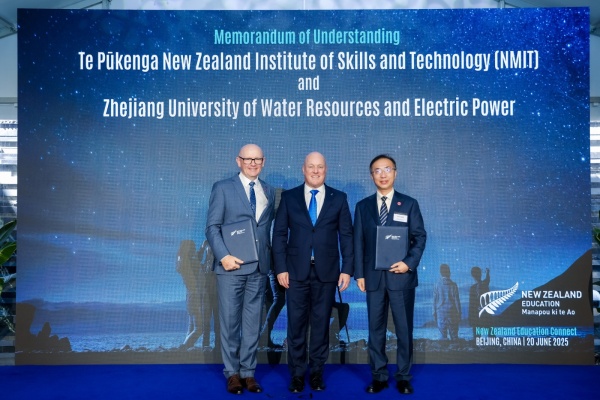
The event programme was packed, with nine Memorandums of Understanding (MoUs) signed between New Zealand and Chinese counterparts, and another MoU signed between Victoria University of Wellington and Fudan University on 19 June.
Providers from across the tertiary education sector signed the MoUs – with Victoria University of Wellington, Unitec, NMIT and UP Education’s University of Auckland International College and New Zealand Tertiary College formalising partnerships.
These agreements cover a mix of in-market delivery, joint programmes, and initiatives to grow student mobility between New Zealand and China.
This builds on the now over 60 approved joint education programmes and institutes recognised by the China Ministry of Education between New Zealand and Chinese institutions, and other education partnerships across early childhood education, vocational training, higher education, and research areas.
The New Zealand Education Connect event had senior leaders officially launching New Zealand’s Country of Honour campaign for the upcoming China Annual Conference and Expo for International Education (CACIE), China's largest platform for international education, due to take place in October this year.
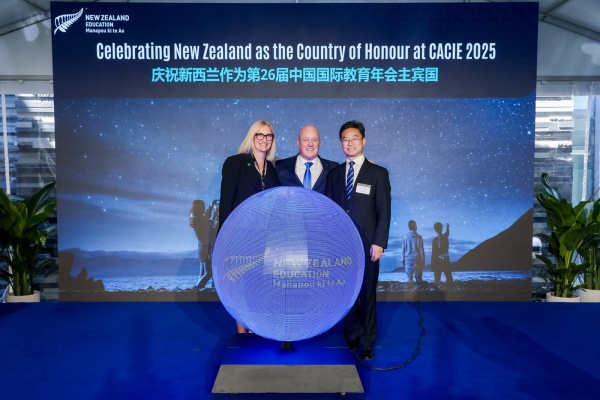
ENZ’s Chief Executive, Amanda Malu, launches the Country of Honour campaign for New Zealand at CACIE alongside Prime Minister Luxon and CEAIE’s Secretary General Jun Yang.
ENZ Chief Executive, Amanda Malu, said it’s exciting to see advancement of the partnerships New Zealand providers have built with their Chinese counterparts.
“We’re eager to see the outcomes of the new agreements formalised at New Zealand Education Connect and look forward to deepening our bilateral ties by leading a delegation to CACIE later this year,” she said.
Information on the registration process for New Zealand education providers to join the New Zealand Country of Honour events in October will be shared next month on ENZ’s event page.
The Country of Honour promotional video is available with Chinese subtitles on The Brand Lab.
- card 1 welcome chch2
- Attendee List Shanghai Agent Seminar
- AG photo 2
- Regional Director Position Description
-
NZ admissions staff key to sustainable industry
There are relatively small numbers of people working in the area of international qualifications in New Zealand, so training and the sharing of knowledge is vital.
To support this need for professional development, AUT and ENZ jointly hosted UK NARIC to run training sessions on 17 and 18 September for New Zealand admissions staff. The workshop also provided a valuable opportunity for admissions staff from around the country to share their knowledge and expertise.
UK NARIC is the designated United Kingdom national agency responsible for providing information, advice and expert opinion on vocational, academic and professional skills and qualifications from over 180 countries worldwide.
The sessions were well attended and well received. Here’s some of the feedback, grouped under each of the four training session topics.
Evaluating International Qualifications.
This session provided some guidance in the all-important area of qualification evaluation.
-
This session helped me to understand different models of education and evaluation process of international qualifications. Among the four traditional education models of: Anglo- Scottish, American, Humboldt and Napoleonic. The first two models are quite straight forward, unlike the last two!
-
Exercises in identifying which model to apply where, gave us better understanding of the entry requirements, duration, progression route and qualification comparison the various qualifications.
-
I now have a greater understanding on what to request and look for while checking and accepting documents.
Degrees of Deception.
This session looked at the worldwide problem of applicants presenting fraudulent documents to ensure a place in a learning institute.
-
The overview, general and brief as it was, gave me a starting point as to the kinds of alterations to look for when presented with a document for assessing.
-
A major part of an admissions staffer’s daily workload includes deciphering international documents and recognising the difference between acceptable and fraudulent qualifications. The NARIC training course has made me think twice and question things I may have otherwise not thought about.
Education in China.
This session gave an overview of the structure of the education systems in China.
-
As well as gaining a general understanding of the Chinese education system in different provinces, I found the session on numbers and dates in Chinese characters particularly helpful, as it helped me get a precise understanding of the course duration, start date and completion date in order to verify authenticity of the translation. Also, the exercise we did identifying Chinese characters to confirm the school and entry to higher education will help me to understand Chinese certificates more easily.
-
The other interesting exercise was identifying the authenticity of the certificate by looking at its serial number. After this session I am clear about how to read the transcript and the completion certificate.
Education in North America.
This session gave an overview of the structure of the education systems in North America.
My top three takeaways from this session were:
-
There is no national qualifications framework in Canada, thus there is a lot of variation in education between the provinces.
-
There is also no national accrediting body in Canada to evaluate the quality of all degree programmes, although a number of regulatory authorities perform this function for programmes in professional subjects at both the undergraduate and graduate levels.
-
Many countries in the Caribbean have very few nationally accredited higher education institutions, so links with international universities to offer recognised qualifications are common
Ways in which the training will change or improve the way I work:
-
More knowledge of the education systems in North America will make it easier and more efficient to assess applicants from this area, as less time will be spent looking up information.
A particular challenge in my job that is now made easier since having the training:
-
The training provided specific information on the difference between vocational and academic Associate Degrees from the United States. This was useful as we only accept Academic Associate Degrees for University Entrance and it was previously not always easy to identify if the qualification was academic or vocational.
-