Search
Showing 10 of 7355 results
-
MIQ costs changing for temporary visa holders
Our managed isolation and quarantine (MIQ) facilities are an essential part of our COVID-19 defence system. The fees charged to people who stay in MIQ are designed to strike a balance between the benefits to both the New Zealand public of having such a robust system, and those who leave and enter the country.
Currently, temporary entry visa class holders are liable to pay $3,100 for 14 days in managed isolation.
From 12:01am on 25 March 2021, anyone entering New Zealand on a temporary visa is now liable to pay the MIQ fee of:
- $5,520 (including GST) for the first or only person in the room;
- $2,990 for an additional adult in the same room;
- $1,610 for an additional child (aged 3-17 years) in the same room.
Charges for some stays in managed isolation were introduced in August 2020, as it was not financially sustainable for the Government to continue to fund all the costs of MIQ. The fees were set at two levels: one for returning New Zealanders and one for some temporary visa holders.
These new charges will help ensure the ongoing financial sustainability of MIQ, which is now expected to remain in place for at least the rest of 2021. However, as time has passed, Cabinet has decided that more people entering the country should contribute to the costs of their MIQ stay.
The fee level temporary visa holders pay is closer to the actual cost of MIQ, although the Government is still subsidising some of the cost.
The new fees are the same as those charged to critical workers entering the country under a border exception. Critical healthcare workers entering under a border exception will continue to be charged the current standard fee of $3,100 to ensure the healthcare workforce can be quickly scaled up in case of a resurgence of COVID-19.
MBIE can grant a full or partial waiver of managed isolation fees in cases of financial hardship or other special circumstances, or arrange a deferment of payment, for temporary entry visa class holders.
See the MIQ website for more details: https://www.miq.govt.nz/being-in-managed-isolation/charges-for-managed-isolation/
- Step 2
- IMG 1186
- EcoQuest 2
-
New Zealand universities on show at NACAC annual conference
Representatives from six universities – Massey University, Victoria University of Wellington, University of Otago, University of Auckland, Lincoln University, and University of Waikato joined forces to engage with hundreds of US high school counsellors.
The New Zealand booth was a standout attraction, drawing heavy foot traffic thanks to the ever-popular ENZ Kiwi plush toys, four of which were raffled off to attendees. But while the Kiwi drew people in, it was the conversation about undergraduate study opportunities in New Zealand that kept them engaged.
Over 100 high school counsellors expressed interest in learning more about New Zealand universities, with many requesting in-person visits to their schools for student and family information sessions.

The universities and ENZ held an intimate reception for conference attendees at a local flower shop. High school counsellors had the opportunity to learn about New Zealand education offerings while doing crafts with New Zealand ferns.
ENZ also hosted an intimate reception during the conference, where attendees had a chance to learn about New Zealand and take a part of it home with them, through crafting New Zealand fern boutonnieres (similar to a corsage)
ENZ Director of Engagement North America, DuBois Jennings, said that many of the guests were Hawaiian high school counsellors.
“This event has continued the strong relationships built during ENZ’s Hawaii Roadshow earlier in the year,” he said.
“All New Zealand universities have reported a notable increase in applications from Hawaii following this roadshow,” DuBois added.
Participation in NACAC is a strategic move for ENZ, providing a vital platform to strengthen connections with US high school counsellors who are some of the key influencers in students’ college decision-making.
By deepening this stakeholder network, New Zealand universities are better positioned to attract more US students to pursue full undergraduate degrees in New Zealand.
-
‘Apply four months in advance of travel’ - INZ Update
Visa processing update
As at 7 October 2023, the average processing timeframe for an international student visa application submitted from outside of New Zealand is six weeks (29 working days). This is counted from the time the student submits their application, until the time the visa is declined, or the visa granted. Whilst the average processing time is six weeks, Immigration New Zealand continues to strongly recommend that students apply for their visas around four months ahead of their intended travel date, especially as we are entering the main student processing peak combined with summer, which sees high numbers of visitor visas. We cannot prioritise processing for late applications and are unable to prioritise based on travel bookings. Students should not finalise travel plans until they have their visa granted.
The approval rate for offshore student visa applications received (1 Aug 2022 – 7 Oct 2023) is 84%
Tertiary student in-study work rights
Tertiary students’ in-study work rights have typically been linked to whether the qualification being studied gains points under the Skilled Migrant Category (SMC). As of 9 October 2023, only qualifications at Bachelor’s degree Level 7 or above qualify for points.
To maintain work rights for tertiary students, references to the SMC in the in-study work instructions have been removed. Eligible qualifications, programme level and type will be shown instead, to carry over the eligibility of many students studying below a Bachelor degree.
Since 9 October, all students studying a full-time programme that directly results in a New Zealand qualification at Level 4 or above on the New Zealand Qualifications and Credentials Framework (NZQCF) are eligible for in-study work rights of 20 hours per week. Training schemes and micro-credentials are not qualifications and remain ineligible for in-study work rights.
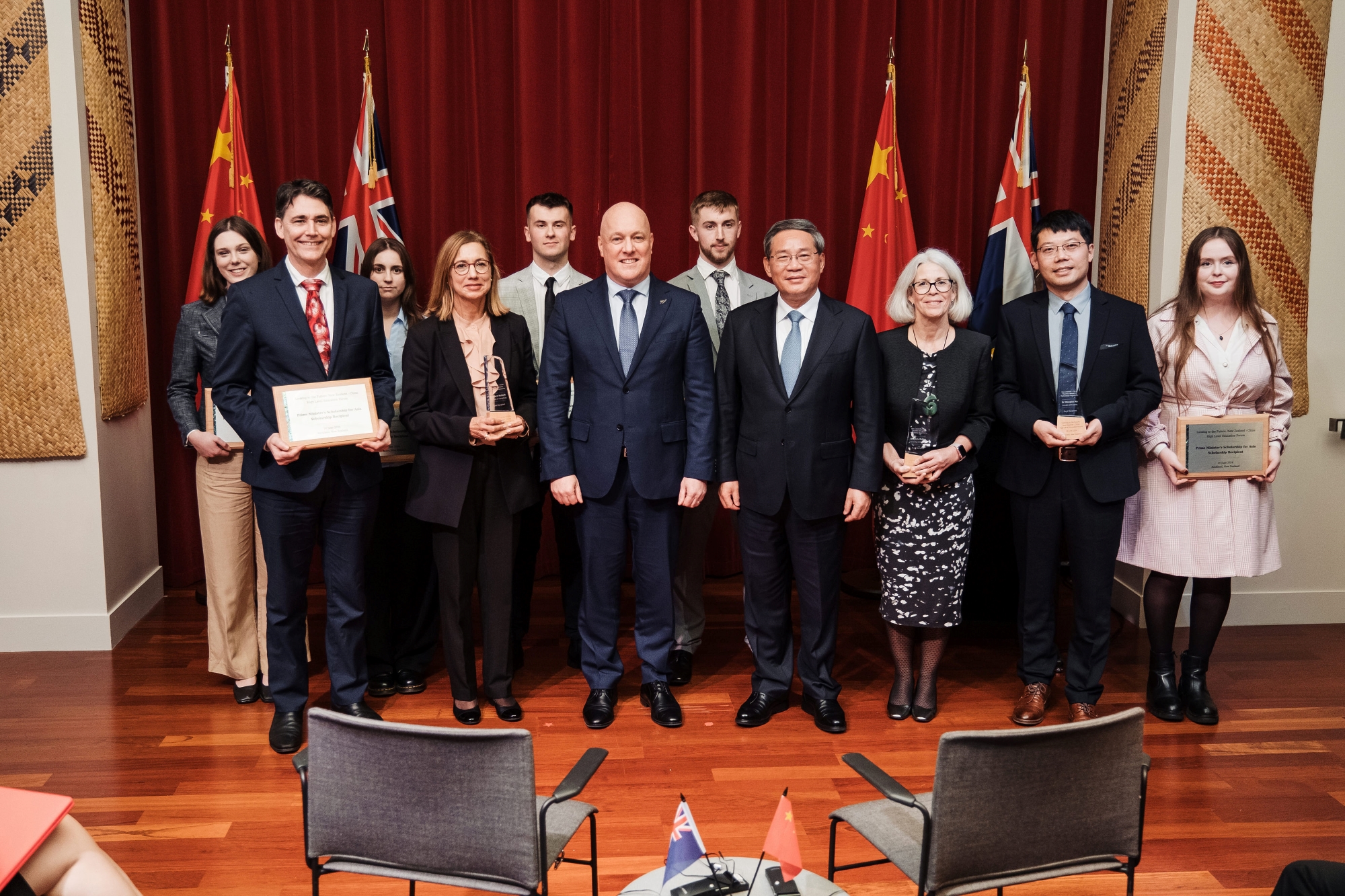
- 240614 NZChina 248 resize
-
ENZ invites proposals to establish New Zealand Education Centres globally
The centres will deliver education programmes for students progressing onto further study with New Zealand education providers, and act as pathways for greater education, cultural and diplomatic engagement between New Zealand and partner countries.
The centres will receive support from New Zealand universities, ENZ design and marketing packages, and have opportunities to host events, promotions and student mobility activities.
“In developing New Zealand Education Centres we are extending our support for international students offshore, and providing flexibility in how and where they experience a high-quality New Zealand education” ENZ Chief Executive Grant McPherson said.
“The establishment of New Zealand Education Centres will support both the Government’s International Education Recovery Plan and the goals of the New Zealand International Education Strategy aiming for a more globally connected New Zealand.”
Interested organisations can contact John Laxon, Director Global Education Partnerships (nzcentres@enz.govt.nz) to receive further information on the establishment process.
Download the NZ Centre Proposal Summary Information 2021 here.
Proposals are due by Wednesday 25 May, with centres being established and open for initial student intakes by 2022.
-
Lifeswap premiere celebrates friendship between New Zealand and Germany
The final two episodes of the cult-hit webseries Lifeswap, ‘Laughing Matters’ and ‘Die Brücke’, concluded the animated adventures of Duncan and Jörg – the German and Kiwi friends who helped one another understand a new culture.
‘Laughing Matters’ tells the story of Jörg, who had an excellent experience in New Zealand, and (due to his preparedness for the future) was accepted into one of New Zealand’s most innovative and technologically advanced companies ‘Rockets R Us’.
The episodes were commissioned by ENZ and the Germany Embassy respectively.
“We were very fortunate to be able to celebrate Lifeswap with its creators Steffen Kreft – who was himself an international student at Massey University in Wellington – and William Connor, and their many fans at a live event at Wellington’s Embassy Theatre,” ENZ Chief Executive Grant McPherson said.
“After a year of restricted international travel and very few in-person events, it was a reminder that global education connection and cooperation has not stopped.
“The Lifeswap series highlights how the longstanding friendship between New Zealand and Germany transcends the situation we find ourselves in. It is a very powerful example of international education relationships keeping New Zealand globally connected while travel is limited.”
Following the launch of Laughing Matters – which built on the success of the first joint ENZ Lifeswap episode Group Effort in which Prime Minister Jacinda Ardern had a cameo appearance – the partnership is also being shared with key partners and audiences in Germany as part of ENZ's Americas, Middle East and Europe Education Week.
To leverage the popularity of the new episode and the wealth of the important topics it deals with, ENZ is working with a PR agency in Germany to tell this positive story more widely.
The PR engagement will involve a mix of approaches, including traditional media, social media and partnering with influencers, to ensure we reach a wide audience on all relevant channels.ENZ General Manager – International, Lisa Futschekworked with Kreft and Connor for months on ‘Laughing Matters’.
“It’s a great fit for Education New Zealand to be working with such creative people who are telling a fantastic story about the friendship between New Zealand and Germany.”
Also in attendance was the German Ambassador to New Zealand, his Excellency Stefan Krawielicki.
In his speech to the audience, the Ambassador noted how the humour of Lifeswap allows New Zealanders and Germans to laugh at themselves, and understand our differences.
“It’s such an enriching experience for young people to go to New Zealand – or for young people to go to Germany – and learn about different approaches and shared values,” he said.
“Education is a bridge builder and makes young people [become] lifelong ambassadors.”
Lifeswap dates back to 2013, when creators and partners Kreft and Connor began to work together, pooling their considerable skills in language, animation, and cultural competency.
The pair said at the premiere that while they’re sad to leave Duncan and Jörg behind, their story is complete.
“It’s probably a little bit like what parents feel like when their kids are going to study overseas,” Kreft says.
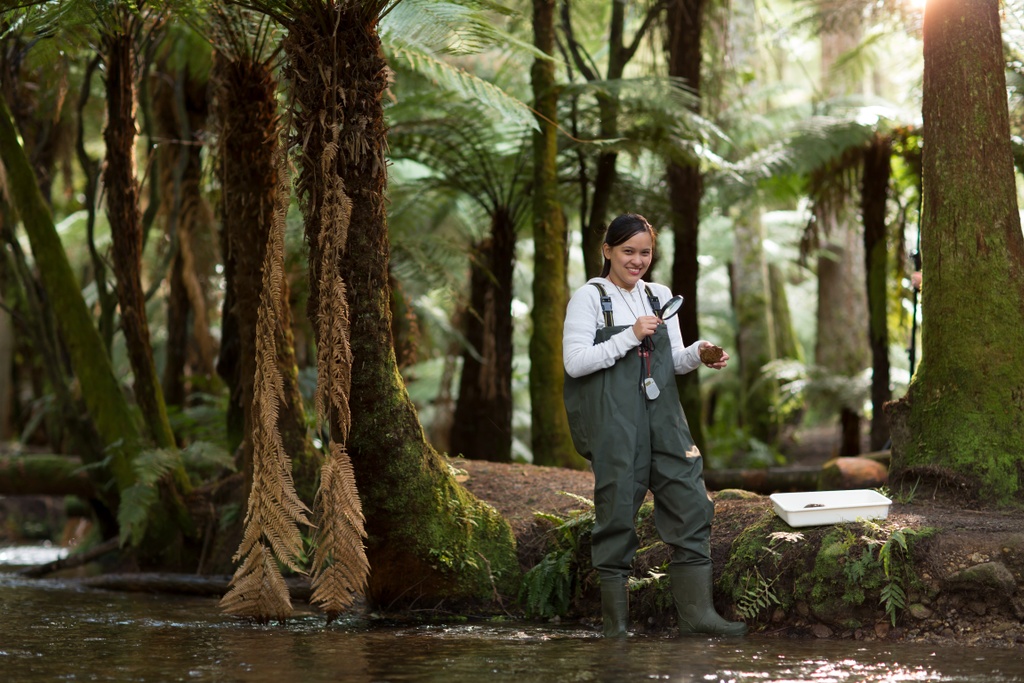
- 0283 Studyinnewzealand ThinkNEW