Search
Showing 10 of 7355 results
- International Marketing Advisor Position Description
-
Digital skills and global citizenship at #NZAsiaTech Code Camp
A team of six students from Te Kura Māori o Porirua, a predominantly te reo Māori medium school in Porirua, interacted with school students in Japan, South Korea, Thailand, Viet Nam, Philippines, Malaysia, and Indonesia.
The overall theme was tourism, seen through the lens of the United Nations Sustainable Development Goals (SDG) - a theme that is highly relevant for the Asia-Pacific region. Students were given the task of profiling their home country’s SDG initiatives, with a focus on sustainable tourism.
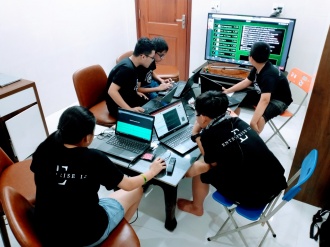
Team Enterprise 12 from Viet Nam work on building website project during #NZAsiaTech Code Camp
The North Asia Centre of Asia-Pacific Excellence partnered with educational coding programme Code Avengers and Education New Zealand Manapou ki te Ao to deliver the event.
“With New Zealand’s borders having been closed for more than two years, it’s crucial that the next generation of students still have opportunities to build cultural competencies and make connections across the globe,” says Education New Zealand’s Regional Director for Asia, Ben Burrowes.
“The #NZAsiaTech Code Camp was an opportunity for Kiwi students to re-establish connections with students in other countries, while gaining critical digital skills to prepare them for the future.
“It also also gave a taste of New Zealand’s education offering to prospective international students from the Asia region, who might consider enrolling in high school or tertiary study in New Zealand in the future.”
Code Camps can help to generate subsequent visits by interested students to New Zealand. For example, the Code Camp held at Waseda Jitsugyo School in 2021 and at Waseda University Junior and Senior High School in 2022 has led to Waseda’s group students’ programme sending around 50 students from three schools to New Zealand for three weeks in March 2023. Code Camp served as a great opportunity for students and teachers from Waseda University affiliated schools to experience our world-class digital education first-hand.
Honam Jeon, the Education Manager at Gangwon International Education Institute said the programme helped increase awareness of New Zealand:
“South Korea is very interested in international engagement and exchange programmes for school students. The #NZAsiaTech Code Camp was a perfect example we want to continue to join. Thanks so much again to ENZ for organising the well-structured programme.”
The online programme included team building exercises, English learning, HTML coding lessons, and the creation of a website by student teams, to demonstrate their understanding of the importance of sustainable tourism.
“As our students look to enter an increasingly globalised word, developing cultural connections and transferable skills is so important,” says Te Kura Māori o Porirua school principal, Whāea Evelyn Wharehinga.
“The Code Camp has been an exciting growth experience for our students, who have extended their digital literacy skills while having the chance to connect with students of different ethnicities and cultures across the Asia-Pacific region.”
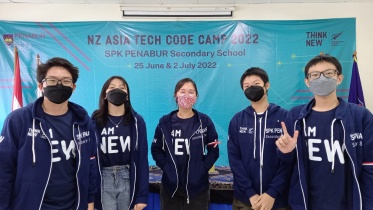
Team Indonesia was the winning team after presenting their newly developed website on Sustainable Tourism to a virtual panel of judges.
The students presented their sustainable tourism-themed websites to a panel of expert judges at the awards ceremony on 2 July 2022, with students from Indonesia winning the top prize.
Steve Budd of Code Avengers, a global edtech company based in New Zealand, said it was a great programme to participate in.
“It was a privilege to gift all participants a one-year free subscription to the Code Avengers site as part of our mission to build lasting digital capabilities for educators and young people, and bridge the digital divide,” says Budd.
- 1689667604367
-
Around the world in five
GLOBAL
Four Worlds of Work: Preparing students for the global market
According to consulting firm PwC, students will need to prepare for four possible ‘worlds of work’ by 2030, including scenarios such as innovation outpaces regulation, big companies are king, and social responsibility trumps corporate agenda.
GERMANY
Germany’s foreign enrolment grew again in 2018
The number of international students in Germany has climbed once again, with 374,580 international students enrolled in German universities in 2018, up from 358,900 in 2017, according to an annual trends report from the German Academic Exchange Service.
UK
Chinese students’ applications to UK universities up by 30%
The numbers of Chinese students applying to UK universities exceed those from Northern Ireland for the first time, with UK higher education benefitting from tensions between US and China, according to experts.
GLOBAL
In the future, will acquiring relevant skills matter more than earning a degree?
There has been a lot of talk about the need for graduates to acquire certain ‘soft skills’ if they are to survive in a future fuelled by technologies such as automation and robotics.
INDIA
India allocates $86.1 million to create “world class institutions”
India’s finance minister Nirmala Sitharaman has proposed to allocate $86.1 million NZD to create “world-class institutions” in a bid to attract a greater number of international students. However, concerns have been raised over the “ambitious campaign”.
-
Register for ENZ’s market intelligence webinar
New Zealand education providers are invited to sign up for the industry webinar hosted by the ENZ team in Viet Nam.
The ENZ team in Viet Nam has organised an industry webinar to offer local market updates and insights, competitors analysis, external expert views as well as updates on ENZ’s upcoming promotional events and activities in the country.
ENZ’s Director - Asia, John Laxon, said the industry webinar is a great opportunity for New Zealand education providers to receive local in-market intelligence from ENZ staff and independent in-market experts.
“This will help education providers in ensuring their in-market recruitment efforts are well targeted. Our 2019 webinar series is providing market insights and updates from across the Asia region, taking into account the strong industry interest in the 2018 series.”
Vietnam Industry Webinar
Thursday, 15 August, 10am Viet Nam time/3pm New Zealand time
- future proof 11 april
- Generation Study Abroad Summit
- ExportEd2014
- pic3
-
‘Apply four months in advance of travel’ - INZ Update
Visa processing update
As at 7 October 2023, the average processing timeframe for an international student visa application submitted from outside of New Zealand is six weeks (29 working days). This is counted from the time the student submits their application, until the time the visa is declined, or the visa granted. Whilst the average processing time is six weeks, Immigration New Zealand continues to strongly recommend that students apply for their visas around four months ahead of their intended travel date, especially as we are entering the main student processing peak combined with summer, which sees high numbers of visitor visas. We cannot prioritise processing for late applications and are unable to prioritise based on travel bookings. Students should not finalise travel plans until they have their visa granted.
The approval rate for offshore student visa applications received (1 Aug 2022 – 7 Oct 2023) is 84%
Tertiary student in-study work rights
Tertiary students’ in-study work rights have typically been linked to whether the qualification being studied gains points under the Skilled Migrant Category (SMC). As of 9 October 2023, only qualifications at Bachelor’s degree Level 7 or above qualify for points.
To maintain work rights for tertiary students, references to the SMC in the in-study work instructions have been removed. Eligible qualifications, programme level and type will be shown instead, to carry over the eligibility of many students studying below a Bachelor degree.
Since 9 October, all students studying a full-time programme that directly results in a New Zealand qualification at Level 4 or above on the New Zealand Qualifications and Credentials Framework (NZQCF) are eligible for in-study work rights of 20 hours per week. Training schemes and micro-credentials are not qualifications and remain ineligible for in-study work rights.