Search
Showing 10 of 7355 results
- Henderson High School 10
-
Event season in Viet Nam
Two alumni networking events had more than 200 registrations, as well as the participation of Immigration New Zealand (INZ) and New Zealand Aid, who answered queries from students and parents about studying in New Zealand.
Several seminars were held alongside the fairs to discuss student visas, the New Zealand curriculum and NCEA, and the NZ ASEAN Scholar Awards. The seminars drew significant interest with the rooms full for most of the day.
Ben Burrowes, ENZ’s Regional Communications & Strategic Relations Manager for South East Asia, said it was fantastic to see so much interest in the seminars.
“It was clear that the students and parents had already conducted their own research and had come prepared with specific questions on programmes of study and life as a student in New Zealand.”
The Hanoi agent seminar, held on 17 March, included student visa updates from INZ, followed by education agent training and “speed meetings” between local agents and New Zealand education providers.
The events were accompanied by a comprehensive public relations programme that resulted in good coverage in Vietnamese media. Some 15 local media members attended a media briefing in Ho Chi Minh City, seizing the opportunity to interview two Vietnamese alumni and Ben.
The ENZ team also conducted an online chat with vnexpress.net, a top online news website in Viet Nam with over one million views per month. During the two-hour live chat session, questions were put to panel members Ben, Chris Klaassen (Chair of SIEBA), Giang Nguyen (University of Waikato’s SEA Regional Manager), and Lucy Nguyen (SIT’s International Marketing Officer for Vietnam). They answered nearly 60 questions ranging from New Zealand’s quality of education, the transferability of qualifications, the high school system and NCEA. After the live chat, the answers remained on the news site and were syndicated by many other online sources.
Ben said the number of questions put to the panel was a positive sign.
“A number of questions asked for comparisons between New Zealand and some of our stronger competitors – a further testament to the growing market awareness of New Zealand,” he said.
Air New Zealand was among the events’ partners, providing two sets of return tickets to New Zealand at the fairs.

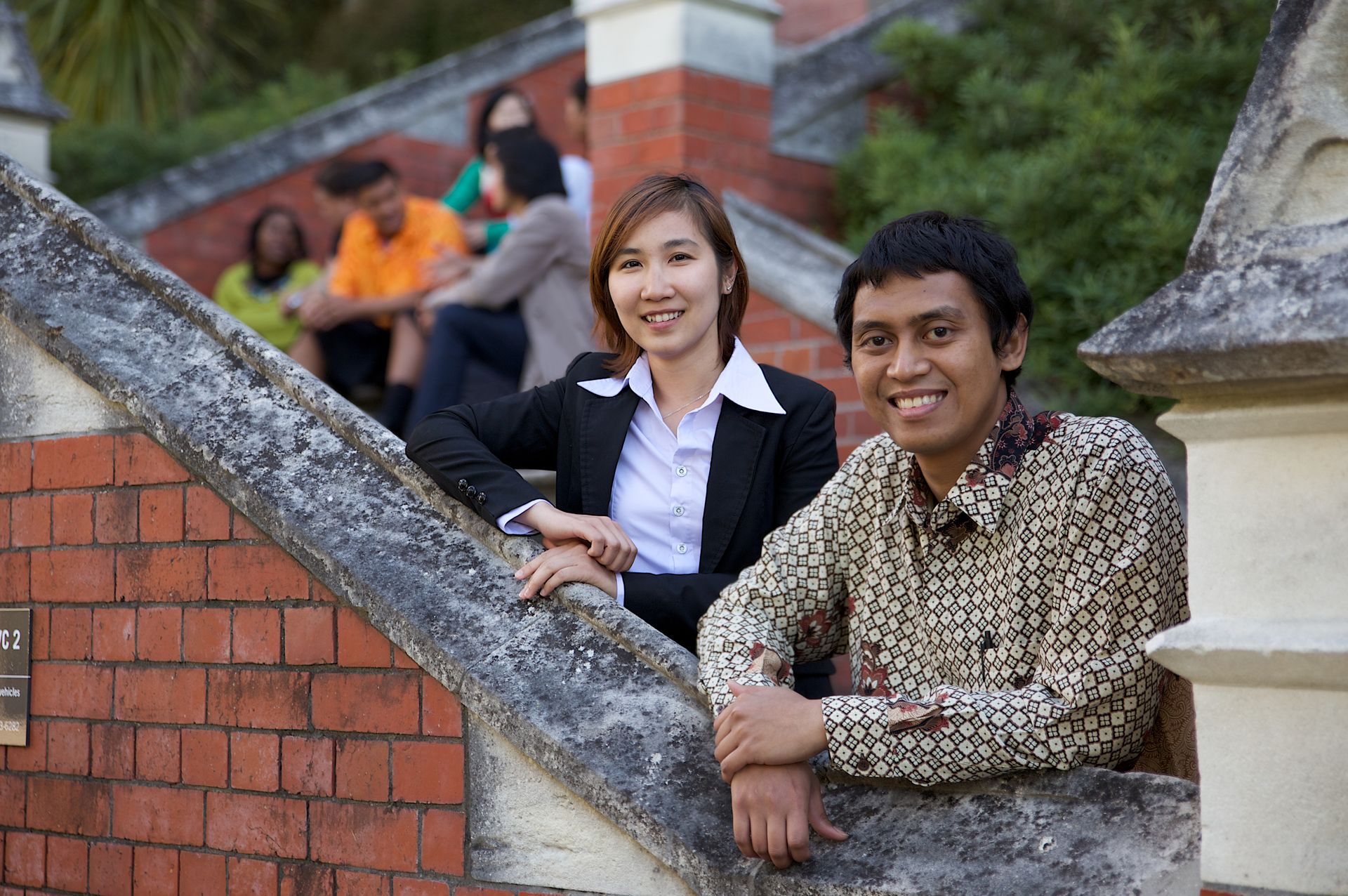
Ben Burrowes (second from left), Tam Le (second from right) with Vietnamese alumni

Speed meetings at the Hanoi Agent Seminar
- pmsdec2019
-
Winds of Change students team up to tackle shared climate challenges
While world leaders continue to discuss how to best tackle global warming, an inspiring group of students is stepping up collaboration between New Zealand and Chile to better understand the problems both countries face, share knowledge, and identify solutions.
The Winds of Change programme, funded by the Latin America Centre of Asia-Pacific Excellence (LatAm CAPE) and hosted by Otago University, is taking a broad approach by drawing in post-graduate students from a range of backgrounds including natural, physical or social science, business, finance, science communication, and humanities.
They are motivated to tackle climate change by developing sustainable strategies in land management, business, and policy-making. Supporting them is a team of talented academics from both countries whose insight and expertise are helping to create impact.
“The Winds of Change participants are extraordinary leaders from diverse backgrounds with a passion for making a difference,” says lead Otago academic Associate Professor Chris Moy.
“Their collaborative work will help inspire communities and drive change.”
Joining forces to reach common goals
Project manager Hélène Eunson says the multi-disciplinary approach is vital. “It is one of the key features and strengths of the programme. We need people who bring a range of perspectives in addressing climate change issues,” she says.
“We have come to realise that the scientists want to learn more about business and policy-making, and the policy-makers want to learn more about the science. We are trying to join forces to reach our common goals.”
Now in its second year, Ms Eunson says there has been huge interest in the six-month programme, which seeks to attract 30 students in each cohort - 10 New Zealanders based in New Zealand, 10 Chilean students based in New Zealand (“Chiwis”), and 10 Chileans based in Chile.
“These young leaders have a real drive to make a change. They volunteer their time and do not earn credits towards their degrees.”
The participants work in small groups on projects based on common interest, to investigate an aspect of climate change, its impact on the environment and communities, and to identify solutions. Their findings are presented at an annual symposium attended by key industry players, researchers, embassy representatives, and past participants.
The Winds of Change programme includes a series of workshops hosted by a range of expert speakers from both countries including business owners, industry experts, and academics studying climate change.
Pacific partners help shape future solutions
By studying the common climate change impacts that New Zealand and Chile are facing, the students are not only helping to shape future solutions, but also to build relationships with a key Pacific partner and enhance economic and social wellbeing in both countries.
Projects undertaken by the participants have tackled wide-ranging issues including wetland restoration, wildfires, water scarcity, rising sea levels, diversity in agriculture, and renewable energies.
Ms Eunson says the concept of global citizenship is a strong theme which runs through the programme. “The participants share experiences from their own countries and help to create bonds with each other by bringing their different perspectives to the table.”
Being involved in the programme has been a profound experience for many of the participants.
“Often, if you think as an individual about environmental issues, you don’t feel as though you can achieve much, but when you see all these people together with the same objective, you feel really powerful to make change,” says Julia Harvey, who grew up in Invercargill.
“Meeting people from different backgrounds with a common interest has provided a unique opportunity to learn about sustainability in both countries,” says Javiera Otero, originally from Villa Alemana, Chile, but currently living in Napier.
“This experience has given me hope for the future, as there are people out there who want to make changes to live a more compatible life with the planet.”
Winds of Change programme builds credibility and impact
Winds of Change is quickly building its network and outreach. “As we build the credibility of the programme, we will start to see long-term impacts,” Ms Eunson predicts.
This new generation of leaders is already anticipating a future of global collaboration. In last year’s first post-programme survey, participants identified the most important benefits as “building networks, connections, and relationships”, and “having confidence to work in a transnational team”.
LatAm CAPE Director Matthew O’Meagher says he looks forward to the ongoing expansion of the programme to include other partners, and ideally other nations in Latin America. “In this way we can continue to provide the best opportunities for our talented young New Zealanders to engage internationally on innovative scientific, sustainable business, and policy-focused, solutions to climate change.”
Dr Moy agrees. “Our future depends on culturally-aware young leaders that can think globally and work collaboratively to tackle climate change impacts.”
Learn more about the Winds of Change programme on the LatAm CAPE website.
-
Future Focus Programme helps Publishers Association go digital
October usually sees many from the book industry depart Aotearoa’s shores for the biggest and most prestigious event on the publishing calendar – Germany’s Frankfurt Book Fair. Travelling to large, international book fairs has long been a standard part of selling New Zealand stories to the world. But with publishers, authors and agents unable to leave the country, and book fairs like Frankfurt increasingly going online, this year called for a new approach.
With support from Education New Zealand and Creative New Zealand, PANZ worked with its publishers to make the most of the Frankfurt Book Fair’s online offering. Central to this is the creation of a digital rights platform to promote and showcase New Zealand books across a breadth of publishers’ lists.
In addition to the Frankfurt fair last month, the platform will be used for other upcoming events, such as the Guadalajara Book Fair in December and the 2021 Bologna Children’s Book Fair.
“PANZ is delighted to be partnering with ENZ and Creative NZ to find new, innovative and effective ways to take New Zealand stories to the world. We know that our writers, illustrators and publishers are producing excellent books across all genres; we anticipate that this new initiative will help us to spread the word even further”, PANZ Director Catriona Ferguson says.
Rights sales in international markets are an important revenue stream for many in New Zealand publishing. In 2019, export rights sales accounted for $22.3 million across the sector. For publishers, book fairs have long offered the chance to network and find buyers in new markets as well as to buy rights to new works to bring home to New Zealand readers.
“Educational publishing is an important part of New Zealand’s international education sector and ENZ is pleased to support PANZ and help create the digital rights platform. We want to help the international education sector look at new approaches to the way they operate in a vastly changed global marketplace. The platform provides a way to promote education products and services digitally and ensure New Zealand products continue to be seen by global markets,” ENZ General Manager – Partnerships and Marketing Paul Irwin says.
The FFP was set up earlier this year in order to provide support to the international sector at a time of great challenge. It provides $1.2 million of funding to help sectors develop new approaches to strategic challenges or opportunities, through grants to peak bodies of up to $200,000 per sector. For more information, head to the FFP webpage.
- 445574 manaaki scholars 1 web version 1920px
- Enzo
- Wellington JApan guidebook
- 0d8e5fd4 3c0a 4da7 ad41 3f5bba3d088a
-
Dr Jason Fox joins NZIEC

Above: Dr Jason Fox
Dr Jason Fox is a self-described “modern day wizard-rogue,” author and leadership adviser, who uses his expertise in motivation design to show leaders how to unlock new ideas and move beyond the status-quo in order to remain relevant.
At NZIEC, Jason will discuss how to ‘Lead an International Education Quest’.
“I'm very much looking forward to joining you at NZIEC this August,” says Jason.
“Nearly everything in the international education industry is changing, and faster than ever before. To build for the future, we need something different. It’s time to lead a quest.”
Sam Mackay, ENZ Strategic Projects Manager says Jason is sure to stimulate some interesting thoughts and discussions over the course of the conference, and will be delivering this year’s opening keynote as well as the closing address.
“This means Jason will be engaging with delegates over the course of the conference, and will be on hand to draw everything together after two days of discussions and debate,” says Sam.
“You won’t want to book an early flight!”
We’ll have more keynote and plenary speaker announcements to make before registrations open in May. NZIEC 2017 will be held at SkyCity Convention Centre in Auckland on 22 and 23 August.