Search
Showing 10 of 7261 results
-
High numbers of student and visitor visa applications
Jeannie Melville, INZ’s Assistant General Manager, Visa Services says this is typical for this time of year and will likely continue until March 2019.
“Due to the high application volumes currently being received, we strongly recommend that visitor and student visa applications are submitted as early as possible.
“Student visas should be submitted at least eight weeks ahead of their intended travel date, while visitor visas should be submitted as soon as possible in advance of travel. This gives INZ time to assess the application and gather more information from the applicant if needed.”
The fastest and easiest way to apply for a visa is to use the Immigration Online system via the INZ website, where applicants can upload supporting documents, photographs and pay for their application.
While INZ makes every effort to streamline assessment of applications, applicants may experience longer timeframes if they do not supply all required information (including translations) when they submit their application. If they do not supply the correct information this could hold up the processing of their visa.
INZ does not advise purchase of travel before an application is completed as the grant of a visa is not guaranteed. In particular, assessment of visitor visa applications will not be prioritised if the sole reason is that the applicant has pre-purchased travel.
Education providers can refer students to the INZ website for visa processing timeframes, which applicants should take into account when applying for their visa and planning their travel.
-
Indian students look to Kiwi universities
The third round of the New Zealand Excellence Awards (NZEA) was announced earlier this month at a student and media event, with John Laxon, ENZ Regional Director for SSEA and actress Kriti Sanon, ENZ’s Brand Ambassador for India, on hand to present.
This round of NZEA is the biggest yet, with 34 scholarships together valued at $215,000 NZD. The scholarships are jointly funded by ENZ and all eight New Zealand universities, offering deserving Indian students partial scholarships to study at New Zealand universities.
On the back of the awards, ENZ also partnered with Universities New Zealand to launch the New Zealand Master’s campaign in India, promoting industry-linked 18-month taught Master’s qualifications for Indian students, with flexible options to suit a student’s career trajectory.
A dedicated microsite to help students explore options is now live.
ENZ’s Country Manager for India, Jugnu Roy, says both initiatives show there’s a growing interest among Indian students for tertiary qualifications in New Zealand universities.
“In particular, they are drawn to the flexible nature of the way New Zealand courses are structured and the fact that all our universities rank in top 3% of the world globally (QS world rankings).
“That they can access these ‘Future-proof’ programmes that help prepare students to enter the global marketplace is what makes us stand out as a study destination compared to other countries.
“Both of our announcements were well received by students and media – ENZ’s scholarship team saw a surge of high quality applications coming in for the 2018/19 round of NZEA.”
To amplify both announcements, ENZ and some New Zealand universities are organising a Counsellor Training Webinar later in the month to equip agents to help promote these initiatives to prospective students.
- Korea 2
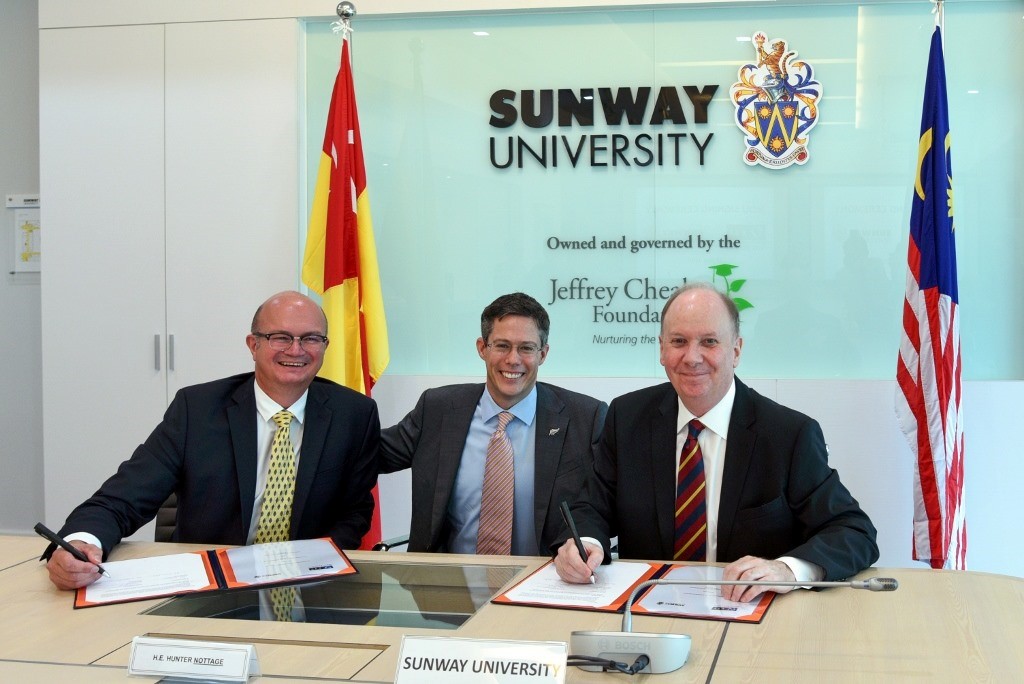
- Manaaki Scholarships signing ceremony
- IEGF Richard Allan 3
-
PIF Recipient: Te Kaihau Ltd
Te Kaihau Ltd, based in the Hutt Valley, is the organisation behind the Global Enterprise Experience (GEE), a well-known social enterprise proposal competition. For years, GEE has brought together eight-person virtual teams from around the world. Their challenge: to work together on a six-page business case for a profitable, self-funding business venture that addresses a United Nations (UN) Sustainable Development Goal (SDG) and can get off the ground with limited capital.
In 2022 alone, GEE placed 1,100 participants from 131 universities and 98 other organisations across 72 countries onto global teams. Although many participants are tertiary students studying business or other courses, GEE teams are open to anyone, anywhere in the world, looking for a cross-cultural challenge.
From a highly successful foundation, Te Kaihau Ltd is planning to upgrade the Global Enterprise Experience into an even more impactful programme that builds lifelong links between Kiwis and emerging global learners, while making a real contribution to sustainable development. Thanks to an award of funding from the International Education Product Innovation Fund, managed by Education New Zealand Manapou ki te Ao (ENZ), the upgraded GEE programme is on the way to becoming a reality.
The new ‘GEE Peer-Leader Plus’ programme is designed to supercharge the impact of the existing programme, which already develops an impressive set of skills in its participants: cross-cultural communication, teamwork, entrepreneurship and innovation to name a few.
Future GEE learners who opt into GEE Peer-Leader Plus will benefit from one-on-one leadership coaching, peer-group interactive webinars, online learning modules, and a microcredential in peer-leadership which will be assessed on performance.
As Te Kaihau Ltd explains, the upgraded programme aims to transform learners into peer-leaders. Instead of being passive recipients of knowledge, peer-leaders step up to make a difference where they can, no matter their ‘designated role’ in a workplace or other organisation. Peer-leaders are confident, can influence others, are action oriented, and can support designated leaders to make change.
A deeper, more immersive learning experience through the GEE Peer-Leader Plus programme will also leave learners in a better position to bring their sustainable business concept to life, or take other meaningful action on the UN SDGs.
Woven throughout the new learning experience is a uniquely New Zealand theme, which draws attention to New Zealand’s efforts on sustainable development and positions New Zealand as a leader in ‘manaaki leadership’, which uplifts and supports the mana of others.
To complement the upgraded GEE experience, a microcredential will be developed and offered to universities and other education providers. A microcredential – a short course that offers certification on completion – recognises achievement in a specific set of skills, competencies, and knowledge. The GEE Peer-Leader Plus microcredential will provide a way for education providers to incorporate peer-leadership into their international-focussed course offerings.
Over time, and using the GEE Peer-Leader Plus microcredential as a stepping stone, Te Kaihau Ltd hopes to build a full qualification in global leadership and innovation by 2025, with the GEE Peer-Leader Plus experience serving as one module. With GEE participants coming from 800 universities around the world, Te Kaihau Ltd has built a valuable network of learners and education providers. Now, with support from ENZ and the International Education Product Innovation Fund, the stage is set for the New Zealand-led GEE programme to supercharge its impacts, building peer-leaders around the world with the skills and capability to take action for a better future.
More information:
- Caption Fifteen regions were represented at the workshop all gaining new insights like destination marketing best practice2.
- news placeholder1
- ENZ 15 Linda Sissons resized
-
US students attend Kiwi youth leadership summit
Hosted at the University of Canterbury and led by ENZ and the Ministry of Foreign Affairs and Trade, the Marjory Stoneman Douglas High School (MSD) students teamed up with the Student Volunteer Army to discuss student leadership and mobilisation.
Over five days, they heard from prominent speakers from across New Zealand’s business, government, university and non-profit sectors. Students also conducted a tree-planting project, held panel discussions and visited Government House in Wellington at the invitation of Governor General Dame Patsy Reddy.
In February, Marjory Stoneman Douglas High School (MSD) became the site of one of the deadliest school shootings US history. In the aftermath, MSD students mobilised to create a student-led ‘Never Again MSD’ organisation, and used their time in New Zealand to learn about the leadership of the Student Volunteer Army, which mobilised following the 2011 Christchurch earthquake.
ENZ’s Director for the Americas and Europe, Lisa Futschek, said the summit was an exceptional opportunity to raise the profile of New Zealand’s education system in the US, and to demonstrate how it equips young people to become independent leaders, thinkers and global citizens.
“The Summit was a great example of how international education can equip and inspire emerging global influencers and leaders.
“It was great to see New Zealand featured in high profile publications including the New York Times, The Washington Post and the Los Angeles Times, along with major US television networks showcasing our country as a desirable international education destination, well placed to host aspiring student leaders.”
US student numbers in New Zealand grew seven percent from 2016 (2,852) to 2017 (3,050) – the majority at university level.