Search
Showing 10 of 7355 results
-
International students get work ready in Welly
Several times a year, Wellington Regional Economic Development Agency (WREDA) offers a free Work Ready in Wellington programme to help prepare international students and graduates for work in New Zealand.
Since 2016, some 600 students have completed the course, which covers CV preparation, job search strategies, interview techniques, employee rights and more. Specialist tutors teach a range of topics such as the importance of communicating in the New Zealand workplace including small talk.
WREDA’s Talent, Skills and Education Manager Brook Pannell said the programme gives international students a clear picture of what is appropriate in the Kiwi workforce.
“That sounds intuitive to New Zealanders but there are a wide range of norms in business behaviour and expectations around the world. We want to show students the Kiwi way to kickstart their careers in Wellington,” he said.
Course coordinator Nicky Riddiford said engaging in small talk in a new workplace is an important element of fitting in.

“It’s important to engage in small talk but it is often more challenging for newcomers because they are not sure which topics are suitable, and who they should do small talk with,” she said.
Chinese international student Allen (Feng) Zhu graduated from Massey University before completing a Work Ready course in 2017. He then worked as an intern at WREDA’s head office for a month before starting his current role at the Ministry of Health.
“Being able to quickly fit into a new workplace is something employers look for and having the confidence to chat with colleagues about everyday things is important.
“Small talk was a good thing to learn about as part of the Work Ready programme.”
-
New Zealand is world-leading in preparing students for the future
The first report, The Worldwide Educating for the Future Index, was released by The Economist Intelligence Unit, and ranked New Zealand first out of 35 economies for instilling future skills.
The report looked at how well each country was preparing students in a time of rapid change, where there is a greater need for students to know how to learn, rather than reiterate knowledge.
New Zealand’s ranking was attributed to university-industry collaboration, a future-skills focused curriculum framework and the high quality of our teacher education.
The second report, The World Economic Forum’s Global Human Capital Report 2017, ranked New Zealand seventh out of 130 countries for preparing people for the future of work.
The report states that how nations develop their human capital can be a more important determinant of their long-term success than virtually any other factor.
The report is a tool to assess progress within countries and point to opportunities for cross-country learning and exchange.
“Both of these reports are fantastic international endorsements for New Zealand’s education system,” said ENZ’s General Manager, Stakeholders and Communications, John Goulter.
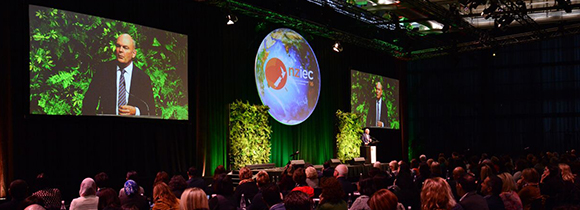
- NZIEC 2FINAL
-
Around the world in five
BRAZIL
Brazil unveils new HE internationalisation scheme
Brazil is replacing the Sciences without Borders (CSF) initiative with a new international mobility financing regime, aiming to enhance bilateral relationships with overseas partners. The new fund will be targeted towards postgraduate students and early career researchers looking to develop research abroad. While the CSF was managed at a federal level, the new scheme gives more autonomy to universities, requiring them to form an internationalisation strategy with international partners.
GLOBAL
Is fear of unqualified leads holding back your school website?
If universities optimised their websites, most could multiply the number of enquiries captured by up to 400%. Achieving this result requires just a few simple tweaks that make it easier for visitors to register their interest, such as decreasing the number of questions on a web form, segmenting by readiness (the distinction between “Keep me updated” forms and “Talk to me” forms) and using more student testimonials and videos.
UK
74% of public value international students when economic worth revealed
New research has found that people’s attitudes towards international students change when learning of their economic contribution and the jobs they generate. In a recent survey, only 12% of respondents wanted to see more international students in the country, but this doubled to 24% when they learned of the economic gains. Similarly, the 20% who wanted to see less international students in the country dropped to 13% when told of the economic value of international students.
FRANCE
French tech: A hot spot for entrepreneurs, 15 years in the making
Watch out Silicon Valley – the tech scene in France is gaining massive traction. Students from France’s world-leading business schools are now choosing tech over other job options, with one third of French students stating they would like to either found or join a start-up. The French talent pool is also impressive: Paris has over 134,000 professional developers, the second highest in Europe behind London, and 43% possess an MSc in Computer Science.
SOUTH KOREA
South Korean teens top in maths and science, but lack interest
South Korean students are excelling in science and mathematics, but the way the subjects are taught is not kindling interest in the students, a new report reveals. While South Korea placed fifth worldwide in the Program for International Student Assessment (PISA) 2015 science test, and first for maths, they ranked 26th and 28th (out of 35) in terms of interest. Professor Lee Joo-ho of the Korea Development Institute (KDI) says the disparity can be traced to the “learning by rote” method in the nation’s schools.
- PMSA compilation
-
Ngā Manapou in action
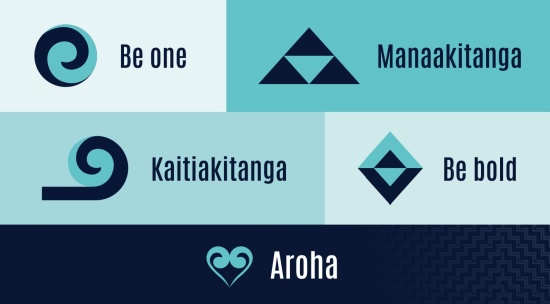
We’re proud to foster a culture at ENZ that values the beliefs, backgrounds, and experiences of all our people.
Our Manapou (values) guide how we collaborate, support one another and connect with our external partners and stakeholders. Guided by our overarching principle of Aroha, we listen respectfully, strive to think, and act constructively.
You will see our values come to life through Manaakitanga, uplifting our people’s mana, leading with kindness and showing care for others. Kaitiakitanga, treasuring cultural diversity and remaining curious to new perspective and ideas.
Be One is one team mindset where we work collaboratively and appreciate effective team work. Be Bold challenges what’s gone before and helps shape what’s coming.
This is what makes us who we are. Our Ngā Manapou are woven into everything we do and shape how our people thrive and show up at ENZ. - Capture2
-
Border exception: 1,000 more international students
A further border class exception for 1,000 international students has been approved by the New Zealand Government.
For details please click on this link: Border class exception for 1,000 international students – Ministry of Education
-
Kiwi students encouraged to join leadership summit
The Summit, now in its third year, is aimed at senior high school and first-year tertiary students. It is designed to celebrate the close relationship between sister cities in New Zealand and China by empowering the next generation of global citizens and leaders.
From 13 – 19 July, the students will take part in workshops and work on projects about global citizenship, social responsibility, leadership and more while in residence at St Andrew’s College. The Chinese delegation will then visit Queenstown and Dunedin while hosted by Taieri College, showcasing our southern cities over four days.
Last year’s Summit was awarded Best Youth Project 2018 by Sister Cities New Zealand.
After previously running in the sister cities of Auckland and Qingdao, this year’s event will be hosted by Christchurch, sister city of Wuhan, and has been acknowledged as an official youth event for the China-New Zealand Year of Tourism.
Further details and a registration form can be requested from summit@globalengagement.ac.nz
- Sara Gamez and Ana Karina Fajardo outside the AUT marae 2