Search
Showing 10 of 7162 results
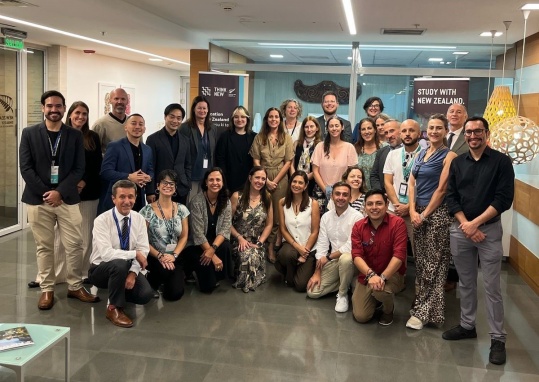
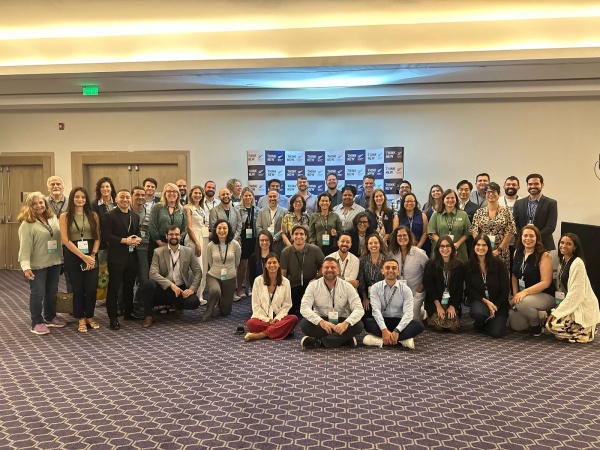
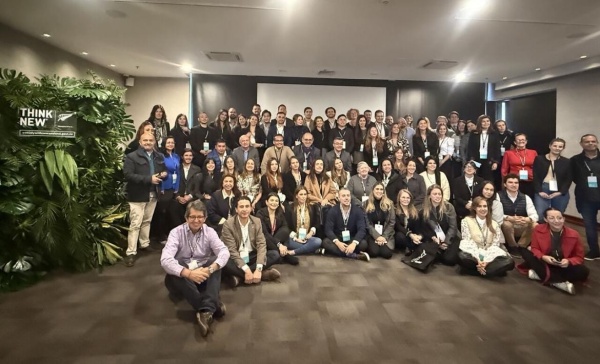
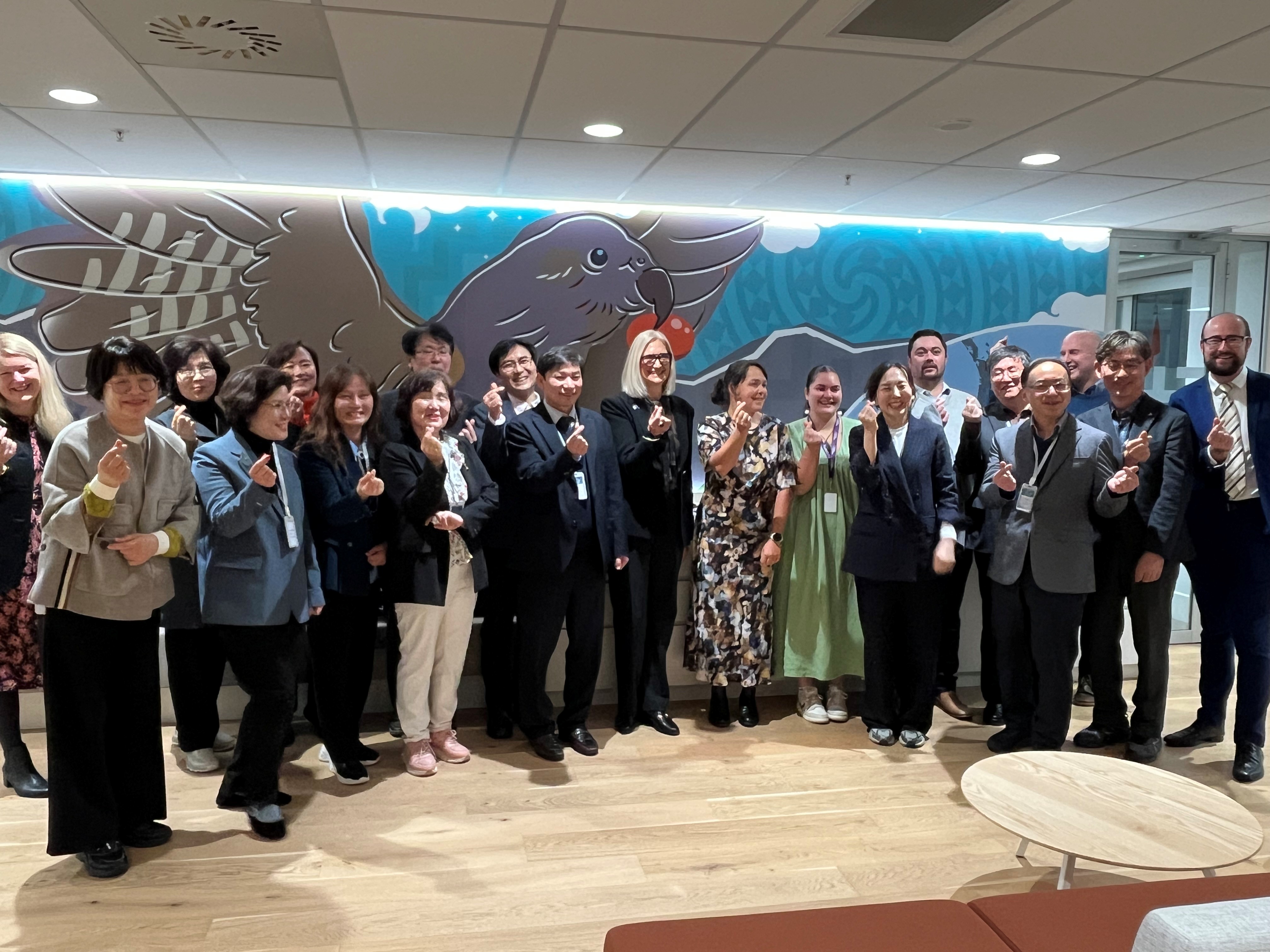
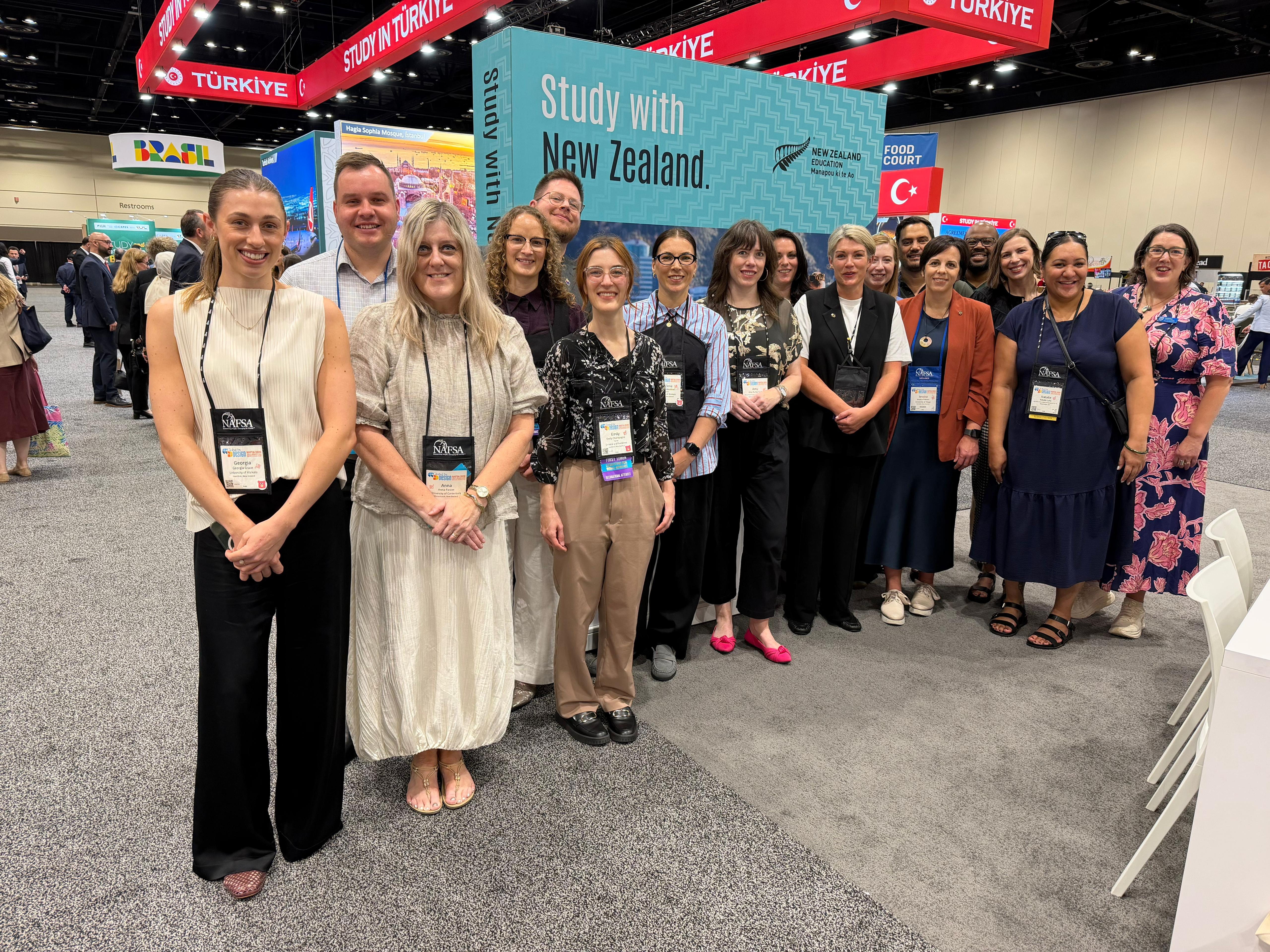
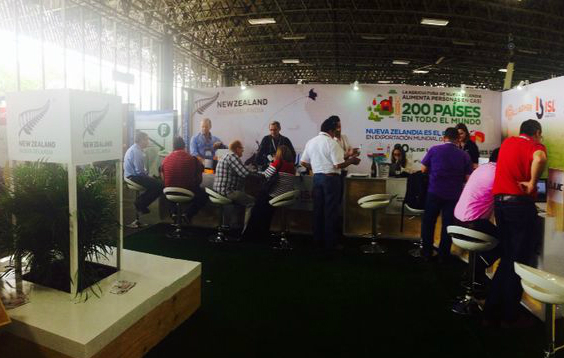
- International photo round up
-
ENZ calls for funding proposals for New Zealand-China research partnerships
The New Zealand-China Tripartite Partnership Fund 2025 offers funding of up to NZD 20,000-30,000 including GST for each partnership project, with the call for proposals open until 2 March 2025.
Funding proposals are due by 2 March 2025. Download the New Zealand-China Tripartite Partnership Fund 2025 Guidance and Call for Proposals and the Proposal Form. Send your completed proposal as a PDF, and any questions, to china@enz.govt.nz.
The fund supports new or existing research partnerships between New Zealand and Chinese universities. There are usually three universities involved – two from China and one from New Zealand.The Tripartite Partnership Fund, administered by ENZ, has a pool of up to NZD 100,000 in 2025 for research partnerships in the arts, humanities, social sciences, sciences and applied sciences. Designed to encourage strategic academic relationships, the fund focuses on fostering relationships and the development of the partnership rather than funding the research itself.
The Tripartite Partnership Fund is a key piece of education cooperation between New Zealand and China. Projects under the fund have enjoyed a high level of visibility and attention in both New Zealand and China.
Established in 2005, the Tripartite Research Partnership is a valued part of the New Zealand – China bilateral education relationship and we welcome proposals from researchers to join the growing list of funding recipients.
-
Around the world in five
Asia
While financially strained institutions in the U.S and UK reassess their models, Asia’s universities are reshaping global higher education, leveraging innovation and collaboration to address economic challenges. The shifting dynamics carry profound implications for how knowledge is produced, shared, and valued, raising the question of how it will ultimately redefine higher education worldwide.
Australia
The Department of Education in Australia has released six new guides and an overall framework to support innovative practice in international student engagement, covering areas such as mental wellbeing, community engagement, developing innovative programmes and supporting with accommodation.
Mexico
Study travel agents in Mexico are expecting a diversification of outbound trends in the year, while it is hoped that business to the traditional top destination of Canada will settle after a challenging year of policy changes and visa issues, according to delegates at the recent ST Alphe Secondary Focus Mexico City event.
New Zealand
News Editor of StudyTravel Network, Matthew Knott, shares comments from Executive Directors of English New Zealand and SIEBA, Kim Renner and John van der Zwan, along with Keri Ramirez, Managing Direcotr of Studymove on New Zealand’s international education recovery. A recent industry seminar on industry data claimed full recovery could come in 2025.
Sri Lanka
Perth-based Curtin University has officially launched a new branch campus in the Sri Lankan capital of Colombo. After establishing similar facilities in Singapore, Malaysia, the UAE, and Mauritius, Curtin University Colombo is the institution’s fifth global campus.
-
Apply now for early 2025 study
It’s the busiest time of year for student visa applications at Immigration New Zealand.
If students are coming to New Zealand for early 2025 study, they need to apply for their student visa now. Otherwise, they might miss out.
Students must submit all the information needed when they apply. Our Student Visa Information Sheets on the Immigration New Zealand website have more information on what to include with a student visa application. If applications are incomplete, it will take longer or may be declined.
Apply now on the Immigration Zealand website.
-
New Zealand universities continue to top world sustainability rankings
The 2025 QS World University Rankings: Sustainability were released yesterday, highlighting that New Zealand’s universities continue to lead the way when it comes to environmental, social and governance sustainability. The rankings by QS Quacquarelli Symonds are in their third year and measure an institution’s ability to tackle the world’s greatest sustainability challenges.
New Zealand came out top country overall based on the average score of our universities for Environmental Impact and Governance, in addition to the Equality and Environmental Education lenses (among countries with at least eight universities ranked). This is good news for universities as they look to attract students to their campuses especially as QS Destination: Australia and New Zealand report 2024, found that 63% of students interested in studying in New Zealand say environmental sustainability was very or extremely important.
Ben Sowter, QS Vice President, said: “New Zealand’s higher education sector has long been a world leader in sustainability and this year’s results show yet again that the country punches above its weight, surpassing many of its international competitors.
“However, this year’s results also show that universities in other countries are improving their sustainability efforts, with New Zealand’s institutions advised to enhance their offers in areas of governance, employability and outcomes and health and wellbeing.”
The 2025 rankings showcase over 1,740 universities from 107 countries and territories. This reflects significant growth from last year’s rankings which included 1,397 institutions across 95 locations and more than 1,000 institutions since the inaugural rankings in 2022.
Jessica Turner, CEO of QS said that “The QS Sustainability Rankings provide a critical benchmarking tool for universities to evaluate their progress across areas such as knowledge exchange, equality, environmental impact, and governance. As more institutions engage with this framework, the increasing competitiveness of the ranking reflects the growing commitment globally to advancing sustainability in higher education.”
The full rankings can be found on the QS website here: QS World University Rankings: Sustainability.*
QS Quacquarelli Symonds
QS Quacquarelli Symonds is the world’s leading provider of services, analytics, and insight to the global higher education sector, whose mission is to empower motivated people anywhere in the world to fulfil their potential through educational achievement, international mobility, and career development.
The QS World University Rankings portfolio, inaugurated in 2004, is the world’s most popular source of comparative data about university performance.
-
From the CE: Accountability and balance
ENZ has experienced a challenging operating environment in recent years, and it continues to work through changing expectations. In order to best prepare the organisation for the challenges ahead, I recently initiated an organisational restructure, the decisions of which were released to staff this week following a two-week consultation process.
I have been very clear as to what I am looking to achieve and have set out the following driving principles of:
- Clear accountability for the delivery of core services and enabling support.
- Achieving a balance between New Zealand based and offshore capability.
- Improving decision making, communication and collaboration by ensuring appropriate spans of control.
- Optimising spend, where appropriate, to meet government expectations.
- Identifying and creating opportunities for investment into the future capability needed to deliver our strategy.
- Positioning ENZ to deliver at speed, with agility and reinforce a culture of high performance.
Key changes include a realignment and reduction of Senior Leadership roles by more than half, a focus on lifting the capability and resourcing of our international teams, changes for Sector Engagement and Services with a pivot toward a stronger focus on international services, and the creation of a Strategy, Capability and Performance Group. In total 28 roles have been disestablished with 17 new roles created.
ENZ now moves into a process to fill these new roles – with leadership roles to be advertised externally shortly. The new organisational structure will come into effect on 3 February 2025.
Change is never easy and I understand how difficult this has been for our ENZ team. I am very proud of the professional way everyone has engaged with this process.
I appreciate your understanding and patience for our people as we work through the implementation of this new structure. In the meantime, your key contacts and teams will remain the same. I will be able to provide a further update in the New Year.
He taonga rongonui te aroha ki te tangata
Kindness to all people is a great treasure.
Ngā mihi nui,
Amanda Malu
Chief Executive
Education New Zealand Manapou ki te Ao -
Advertising opportunity for Japan’s 2025 New Zealand Study Guidebook
The KBUNSHA New Zealand Study Guidebook is a trusted publication and is the only one of its kind supported by the New Zealand Embassy in Tokyo and Education New Zealand Manapou ki te Ao (ENZ). KBUNSHA distributes 20,000 copies of the study guidebook to Japanese schools, universities and education organisations as well as education fairs and seminars.
ENZ Business Development Manager – Japan, Tomomi Kontani said advertising here is a great opportunity to leverage an increased demand for information on New Zealand’s education offering.
“We are continuing to see significant interest in New Zealand as an education destination from students and their parents, schools, and education agents here in Japan” she said.
“This is a great opportunity to showcase what makes New Zealand unique, especially in the regions. Destination marketing plays a key role in student attraction for a market like Japan with a tourism focus,” Tomomi added.
The guidebook’s last edition was distributed at the annual student fair and stakeholder focus events hosted by ENZ Japan. The events attracted around 1,000 people. The guidebook remains the main information source ENZ refers to and distributes at upcoming events in 2025.
Advertisement rates for individual providers range from approx. $2,560 NZD to $6,120 NZD for guidebook and or website listings. With the ‘Premier Plan’ and ‘Advertorial Plan’, the school logo will be listed on the new scholarship campaign page built by KBUNSHA. Individual providers can download the proposal here. Advertising copy can be provided in English.
For regional groups, download the proposal here for further details on the guidebook and pricing (approx. $2,200 NZD for a two-page colour advertisement and $3,300 NZD for a four-page colour advertisement).
Bookings must be made by 27 June 2025 directly with KBUNSHA. For more information, visit the KBUNSHA website here. The 2024 guidebook can be viewed here.
KBUNSHA contact:
Minori Takahashi (Director)
Tel: +81-3-3234-1744
Email: minori@kbunsha.com
-
Empowering early career scientists through New Zealand-Germany research collaboration
The third funding round of the New Zealand-German academic exchange programme, known as the Programmes for Project-Related Personal Exchange (PPP programme), has enabled five New Zealand research projects to undertake research with academic partners from Germany.
The following universities have formed partnerships:
- University of Auckland and University of Paderborn
Topic: Preparing students for a data science future using innovative teaching - University of Auckland and the Technical University of Dortmund
Topic: The development of contextual visual processing in the Ebbinghaus: illusion in children and its underlying neuronal basis (EBBI-KIDS) - University of Auckland and University Medical Centre Hamburg-Eppendorf
Topic: Perspectives of equitable medical education: a comparison between Aotearoa New Zealand and Germany - University of Canterbury and Westcoast University of Applied Sciences
Topic: Younger generations as reflexive agents of change: Motivating Generation (Gen) Z to participate in the voluntary sector - University of Otago and Helmholtz Munich
Topic: Modulation of central GIPR signalling to increase health during ageing
The programme invited researchers to think of a project that would particularly benefit from working with German academic counterparts. Research projects will run from 2025 to 2026, with work taking place in both New Zealand and Germany.
Acting Regional Director, Americas & Europe, Natalie Lulia, said the programme aims to strengthen the relationships between New Zealand and German academics and institutions.
“It opens up New Zealand researchers to a global network of academics.
“Since the programme’s beginning, we’ve seen awardees think forward and explore possibilities of further collaboration with their research partners” she said.
The PPP programme was established in 2021, when ENZ and the German Academic Exchange Service (DAAD) signed a Memorandum of Understanding.
The bilateral agreement between ENZ and the DAAD enables young academics to further their careers and expand their international research links. ENZ contributes funding to support New Zealand researchers, while the DAAD supports German researchers to travel to New Zealand.
Find out more about the PPP programme by visiting the dedicated page on our website.
You can also contact Olga Elli, Associate Director of Engagement, Europe at europe@enz.govt.nz.
- University of Auckland and University of Paderborn
-
Prime Minister’s Scholarship group round opening soon for applications
New Zealand organisations and institutions will soon be able to apply for this year’s group round of Prime Minister’s Scholarships for Asia and Latin America.
This award is administered by Education New Zealand Manapou ki te Ao (ENZ), enabling New Zealanders to experience international education and continue to build and maintain key trade relationships between New Zealand and key Asian and Latin American regions.
Acting Group General Manager, International Marketing, Brand & Scholarships, Sahinde Pala, said the group programme is flexible, and applicants are encouraged to think creatively about their learning programmes.
“We invite organisations and institutions to design a learning experience that can give learners the chance to follow their passion, develop connections, and make an impact in our global and local communities” she said.
Successful past applications have included semester exchanges, language immersion, indigenous-to-indigenous exchange programmes, internships, and research projects.
Applications can be made by any education provider (including universities, institutions, wānanga, iwi, hapū, whānau, institutes of technology and polytechnics, and private training establishments).
About the scholarship
All citizens or permanent residents of New Zealand over the age of 18 can apply for the scholarship. Recipients do not need to be in tertiary education, as the programme aims to make international educational opportunities accessible to all New Zealanders.
The scholarships cover tuition fees for offshore institutions, and a contribution towards internship fees, flights, living, accommodation, and visas.
Since the programme’s beginning in 2013, at least 3810 scholarships have been granted to New Zealanders.
Applications are open from 26 February to 11 April, find out more by visiting the Prime Minister’s Scholarship website.
You can also email any questions to the ENZ Scholarships team at scholarship@enz.govt.nz.
-
Helping education agents understand the NCEA qualification and the pathways it opens to higher study
Education New Zealand and the New Zealand Qualifications Authority (NZQA) collaborated to organise a webinar for education agents in December on the National Certificates of Educational Achievement (NCEA), New Zealand’s school-leaver qualification.
The webinar was well received, with 241 attendees, and featured a robust question and answer session at the end.
The session helped education agents – and by extension the international students they support – in better understanding how NCEA works, the changes introduced to the qualification in recent years, and how learners can access higher education in New Zealand and internationally after achieving the NCEA qualification.
NZQA Deputy Chief Executive - Assessment, Jann Marshall, said the webinar was a valuable opportunity to build understanding of how the NCEA qualification works.
“It is important for everyone working with international secondary learners to have some understanding of how NCEA works, and the opportunities it creates for learners wanting to continue their study in New Zealand or internationally.
“It was great that we could engage with education agents on the topic and answer questions.”
NCEA is a well-recognised qualification in many countries. New Zealand is also a signatory to UNESCO qualifications recognition conventions (for example, Lisbon, Tokyo and Global Conventions), which support learners with NCEA to work or study internationally.
About NCEA
NCEA is offered at three levels – Level 1 is usually attempted by students in Year 11 of schooling, Level 2 at Year 12, and Level 3 at Year 13 (the final year of New Zealand secondary school). NCEA Level 2 is generally the minimum qualification needed for some jobs and tertiary education programmes, while Level 3, with the University Entrance award, is the minimum standard for entrance into a New Zealand university.
NCEA is standards-based, meaning each learner needs to show they have skills and knowledge at a specified level (a “standard”). Each standard a learner achieves gains them credits, and credits build toward an NCEA qualification.
Learners are also required to meet minimum requirements for literacy and numeracy. There are multiple opportunities in each school year for learners to attempt specific literacy and numeracy assessments, and there is also a list of other standards that can be used towards these requirements.
A recording of the webinar is available to view here on the Resources section of AgentLab
NCEA resources for education agents, students and parents
If you have any questions about NCEA, contact internationalunit@nzqa.govt.nz.