Search
Showing 10 of 7165 results
-
New Zealand institutions strengthen ties with Latin American education agencies
In April, ENZ supported the Study in New Zealand Agent Seminars – an event series organised by Kiwi EdLink, a New Zealand-based organisation that represents education providers across the country.
New Zealand’s educations offerings for Latin American students were showcased to education agents at the seminars. From English language programmes for children, youth, and adults to short or long-term school studies in New Zealand.
The participating institutions from New Zealand were the Kiwi English Academy, Glendowie College and Onslow College.
ENZ teams in Santiago and São Paulo hosted networking events at the New Zealand Embassy in Chile and the Consulate in Brazil, inviting selected agents aligned with Kiwi EdLink’s strategic goals in the region.
In addition to facilitating these connections, the ENZ team also provided market insights and engaged in conversations about future steps to deepen engagement and opportunities in Latin America’s dynamic education landscape.
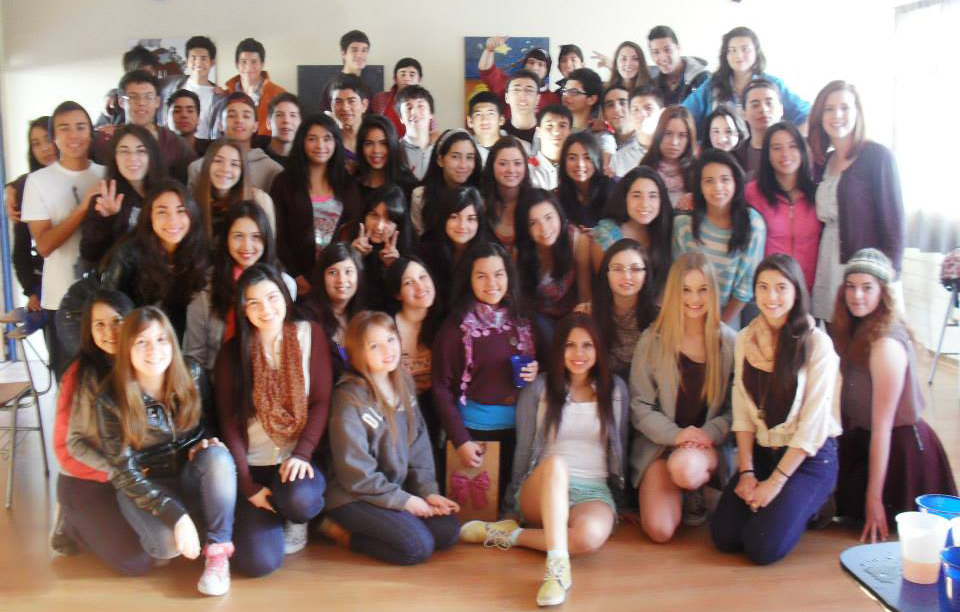
Attendees of the Study in New Zealand seminar in Santiago, Chile. This event was hosted at the New Zealand Embassy.
During the event in São Paulo, Director of Kiwi English Academy, Kathryn Herbert, said “This is a moment to reconnect with our Latin American partners so we can better understand how to offer relevant programs to Brazilian students.”
The feedback from sector attendees was positive. Director of International Students at Onslow College, Robynne Bloemstein, said that the institution is very excited to reengage with the Latin American market and welcome students from the region into its student body, which already includes 45 international students.
It was the first visit to Brazil for the Director of International Students at Glendowie College, Rebecca Johnstone. She said “We love Latin American students—we currently have 47 international students in total, including two Chilean students and a new Brazilian student starting in July. They all contribute greatly to the multicultural environment of our school.”
Check out the video report the ENZ team put together with the representatives of New Zealand schools at the São Paulo event.
-
From the CE: Purpose, Place and Partnership
Kia ora koutou,
I am pleased to report that the cross-agency work to develop an International Education Growth Plan for the Prime Minister and Ministers is progressing well.
In recent weeks, Education New Zealand has held a series of engagements with different parts of the international education sector to validate assumptions on supply and focus markets, and to better understand current system capacity and which interventions will enable quality, sustainable growth. This work continues at pace.
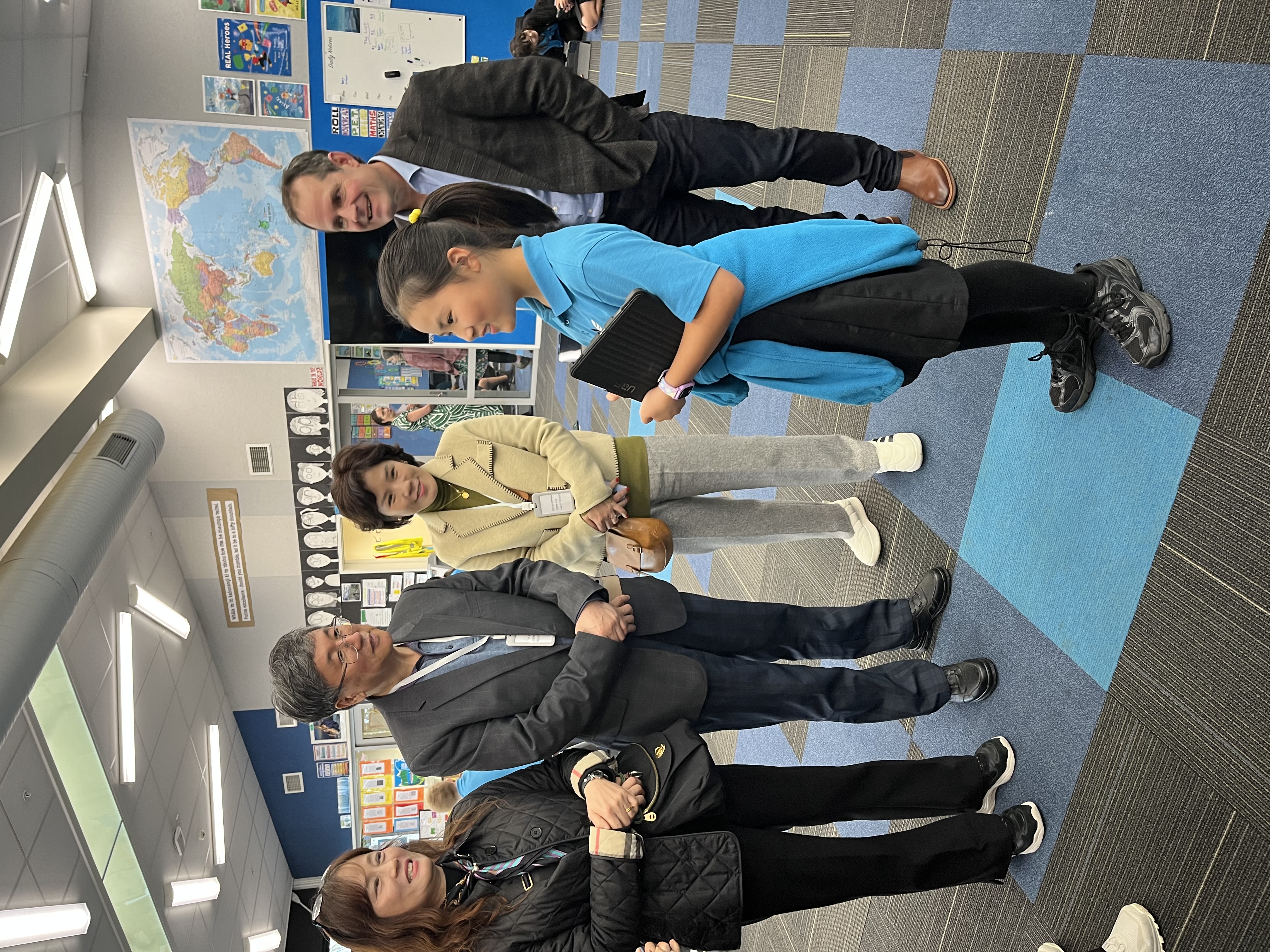
Last week, we were delighted to welcome to our Wellington office a visiting delegation of senior school leaders from the Incheon Metropolitan Office of Education - East Asia Global Education Institute. At the mihi whakatau, I explained the Māori phrase Nau mai and the New Zealand way of showing hospitality and care (Manaakitanga) to visitors.
The visit was a valuable opportunity to reinforce New Zealand and its education institutions as trusted partners for South Korea. I am certain their stay, which included visits to New Zealand schools and vocational training institutes, will contribute to raising awareness of the New Zealand education system in their hometowns and strengthen ties with education providers here.
Later this month I will be travelling abroad for NAFSA, the world’s largest international education conference, which will be taking place in San Diego, California. The theme this year is Purpose, Place and Partnership, and it is one that resonates in a time of global uncertainty. I am looking forward to engaging with our sector partners and team in market, as well as showcasing New Zealand’s unique education offering to the world.
He whenua auaha tātou, he whai tikanga, he whai whakaaro tonu ki te hapori.
We are a country that is creative, practical and community minded.
Ngā mihi nui,
Amanda Malu
Chief Executive
-
Update from Immigration New Zealand
Visa processing update
- From 01 January to 31 March 2025, student visas have been processed in 12 days (two and a half weeks) on average, compared to 24 days (five weeks) for the same period in 2024.
- Currently, international student visas are being decided in 10 days (two weeks) on average.
- The tertiary sector’s mid-year intake is almost upon us, and students need to apply for their visas now.
- Latest visa processing times can be found on the INZ website: Student visa wait times | Immigration New Zealand.
Reminders from Immigration New Zealand
The conditions of a student visa state that the visa holder must attend the programme of study at all times, at the place of study endorsed on the visa (unless there are genuine reasons for absences), and that they must make satisfactory progress in the programme of study.
Immigration New Zealand (INZ) receive a number of applications from students in New Zealand, who have poor attendance and/or progress, without any explanation of why.
If students do have poor attendance or progress, it is recommended that an explanation for this is provided up front with the application to avoid the need for INZ to request further information. This will prevent any delays in processing.
- All terminations of enrolment (ToE) must be submitted to INZ. This can be done through the INZ website: https://www.immigration.govt.nz/assist-migrants-and-students/assist-students/student-enrolment-termination
If you are refunding an international student’s fees, then the ToE form should be filled out, regardless of whether or not the student’s visa has been sighted by the provider.
- From 01 January to 31 March 2025, student visas have been processed in 12 days (two and a half weeks) on average, compared to 24 days (five weeks) for the same period in 2024.
-
Aotearoa sharpens Sherpa’s ambitions on conservation in Nepal
The Everest region of Nepal is his home, and he has seen first-hand the impact of climbers and climate change on the world’s most famous mountain environment.
The former international student to New Zealand is a columnist in the Kathmandu Post, readily highlighting successes and calling out failures on a range of environmental issues impacting Nepal. He is part of a generation determined to find solutions.
Tsewang recently completed his Master’s in Environmental Management at Lincoln University, an international education experience made possible by the Mingma Norbu Sherpa Memorial Scholarship. Mingma was an early graduate of Sir Edmund Hillary’s Khumjung School, an alumnus of Lincoln University, and one of the leading voices on conservation in Nepal and Bhutan through his work with World Wildlife Fund (WWF) before his untimely death in 2006.
His legacy is a scholarship jointly funded by WWF, Lincoln University, and the Greater Himalayas Foundation which supports students from remote regions of Nepal committed to careers in conservation to study at Lincoln.
Tsewang says the links with New Zealand which date back to the work of Sir Edmund Hillary, and his belief in the importance of education for future generations, are a driver for many Nepalese students seeking to improve their opportunities in life.
“The connection is very strong,” he says. “Sir Ed Hillary is such an icon and I feel that the students who come to New Zealand to study are continuing to strengthen the relationship established by Sir Ed and Mingma”.
Fulfilling the dream of a New Zealand education
“The scholarship allows you to fulfil a vision of having a higher education in New Zealand, but more than that, it connects many people already working in the conservation sector in New Zealand, Nepal, and other parts of the world.”
Tsewang spent two years in New Zealand, arriving just before the border closed in 2020 and is grateful that his studies were largely unaffected by the pandemic. He says he has learned much about New Zealand’s approach to conservation and gained a better understanding of te ao Māori and the concept of kaitiakitanga (guardianship and protection).
“I am a Sherpa. We are renowned as mountaineers, but we are also an ethnic tribe with a strong connection and respect for nature and a strong desire for environmental stewardship.
“Seeing Māori taking ownership of preserving and retaining their culture was an important learning for me. These are taonga (treasures) which we should be taking from one generation to another.
“Through my education I want to promote empowerment of local people on conservation issues,” Tsewang says. “Studying in New Zealand made me realise that this is already happening in Nepal, but we just need to find ways to make it more effective.”
Tsewang’s Master’s research was into the effectiveness of the Garbage Deposit Scheme (GDS) initiated by the Sherpa people, in which Everest climbers pay a US$4000 deposit that’s returned only if they bring back at least 8kg of rubbish produced during their expeditions. “Working in conjunction with the aims, aspirations, and opportunities of local communities is incredibly empowering.”
Making a positive impact in Nepal
The students who have come to Aotearoa have made a positive impact in Nepal, Tsewang says. “It’s all about learning from best practice and sharing knowledge.
As one person it’s hard to make change, but by sharing information and knowledge we can make incremental change.”
“We are seeing that governments globally are starting to overhaul their environmental protection policies. New Zealand has played a key role in the context of Nepal because people before me came to study and returned home to build crucial environmental education and awareness.”
Tsewang loved his time in Aotearoa, both inside and outside the classroom, having spent most of his free time hiking iconic tracks. “There’s so much learning that happens out in the field where you hear first-hand of the experiences of those working in conservation.
“This was an essential part of my education experience. You have unplanned conversations which are inspiring and hugely valuable,” he says.
“The last two years have been monumental in so many ways. It’s not just the academic learning, but also the personal growth. I have gained so much confidence to voice my opinion and share my knowledge.
“I will stay in touch with many of the people I have met and hopefully we will have the opportunity to collaborate in the future. Learning never stops.
“The international education opportunities with New Zealand only serve to strengthen the long-standing bond with Nepal. There’s a real legacy involved for both countries.”
-
Brazilian champions Māori world view to design students globally
So transformative was the experience, that the former international student is determined that design leaders globally learn from AUT’s success embracing Māori knowledge in tertiary design studies.
Marcos came from Sao Paulo to study for his PhD in Design at AUT in 2015. He always felt that Aotearoa was “calling” him and was drawn to the concept of practice-led research, which allows students to be assessed by their creative work alongside a supportive piece of writing.
“This means that your practice is your contribution to knowledge,” he says. “I was fascinated by the idea.”
Practice-led research has been around for many years but is still not widely used. AUT, now considered a world-leader in its implementation, developed the approach under education “disruptor” Professor Welby Ings, who believes thinking outside the box can be the key to success for many learners.
Embracing the natural world from a Māori perspective
While Marcos enjoyed the early months focusing on his photography, it was an introduction to respected Māori scholars Professor Hinematau McNeill and Professor Robert Pouwhare late in his first year which really rocked his world.
“They shared their love and knowledge and introduced me to Māori views of the natural world. Their way of thinking and seeing the world completely resonated with me. I understood how ignorant I was in terms of expecting to be able to explain the world through a Western perspective. I learned from them that there is so much beyond it that we cannot see.”
“I learned how the world can be seen from an indigenous perspective, and I felt really bad that my own culture has more than 300 indigenous tribes and we never learn anything about them.”
He says he became really connected with Māori epistemology (theory of knowledge) and committed to understand and incorporate Māori elements in a substantial part of his thesis. “I try my best to captivate the complex Māori concept of mauri (life force or essence) in my work.”
Incorporating the Māori view of the natural world in practice-led research is attracting and retaining students who might not otherwise thrive in a university environment, Marcos says.
At AUT’s Manukau campus, the majority of students are Māori and Pasifika. “These students have natural storytelling talents, and they love graphic design, photography, street art, and all forms of contra-culture expression (outside mainstream media).
Māori and Pasifika students feel sense of belonging
“They feel a sense of belonging to the university with this approach. ”Last year saw the biggest increase in the number of students continuing from undergraduate to postgraduate study in Communication Design, using the practice-led approach.
Driven to promote this diversity of thought and boost the status of indigenous cultures and language elsewhere, Marcos is using his connections in Brazil to share Aotearoa’s success with South America and beyond.
A former colleague, Professor Sérgio Nesteriuk Gallo, is now head of a postgraduate programme in Art and Design at Anhembi Morumbi University (UAM) in Sao Paulo where students are increasingly using practice-led methodologies. “We agreed when I left for New Zealand that the knowledge I gained in practice-led research we would share and promote in Brazil,” Marcos says.
“We promised we would create an event every year to build a body of knowledge about practice-led research into the future. I know that many people, especially those from an indigenous background in Latin America are keen to take up this form of research.”
The first symposium was held in 2016 and attracted 10 exhibitors. Last year’s online symposium drew in 400 submissions from 13 universities around the world.
Planning is underway to take 10 of the most influential Māori practice-led researchers to Brazil for this year’s conference in December, called LINK2022 Moana Crossing, where they will run a series of workshops and launch a special edition of the journal incorporating original manuscripts from the Māori scholars and from collaborative partnerships with non-Māori practitioners.
Aotearoa New Zealand leading the way
“We have at least half the leading scholars in this field,” Marcos says. “Sharing this knowledge will hopefully influence the approach of those who teach elsewhere in the world.”
The new model of undertaking research and presenting knowledge must be more considerate of alternative approaches. “Māori traditions can enhance our understanding of research, practice, and the intricate connection with te taiao (the environment).”
He says he is committed to elevating the practice-led approach connected to Māori and first-nation knowledge, “taking our thinking to the world and giving a voice to indigenous cultures elsewhere”.
Piha at Sunset by Marcos Steagall.
-
BizVenture winners tackle youth mental health with "It's Okay" clothing range
The innovative business entrepreneurship scheme is a pilot initiative led by Education New Zealand, Young Enterprise Scheme (YES), and Japanese partners to give students in both countries real-life experience in developing business solutions that address one of the United Nation’s 17 Sustainable Development Goals.
Forty students collaborated in a three-day virtual exchange, where they chose a challenge tackling some of Japan’s pressing social issues, before designing and presenting a business plan in a “Dragon’s Den” style pitch to judges.
The winning New Zealand team - Hamish Robinson (Taradale High School, Napier), Benjamin Young (Tauranga Boys’ College), Daniel Blight (Waimea College, Napier), Kaiah Sherriff (Southland Girls’ High School), and Abirami Kabilan (Pakuranga College, Auckland) - chose to come up with a strategy which would directly enhance the mental wellbeing of Japanese teenagers.
The UN SDGs are some of the biggest problems facing humanity today, so working on them was a pretty full-on task” – Pakuranga College student Abirami Kabilan
It is a topic which directly impacts young people in both countries, as UNICEF ranks Japan 37th among 41 OECD countries for the state of children’s mental health, and New Zealand one lower, at 38th place.
Insights into business and culture “eye-opening”
To succeed, the students had to gain a thorough insight into Japanese culture, youth behaviour, and business practice. Ahead of their pitches, the teams joined interactive workshops with New Zealand and Japanese guest speakers, cultural mentors, and language coaches.
Abirami Kabilan describes the exposure to Japanese business and societal culture as “eye-opening”.
“The UN SDGs are some of the biggest problems facing humanity today, so working on them was a pretty full-on task.”
“One of the most interesting things about this cross-cultural experience was seeing how the Japanese students approached the same problems. Young people around the world will have such different ways of approaching these problems too. Imagine the ideas we would come up with if we all worked together.”
The winning team successfully pitched a clothing brand called 大丈夫, which translates in English to “It’s Okay”, to get the conversation about mental health out in the open among Japanese youth, and hopefully gain the support of high-reach Japanese influencers to help push their critical wellbeing message.
They decided the best way to break into the Japanese market would be with “in your face” messaging using symbols of strength, such as dragons and samurai, to promote their message.
“This is something that has not been done in Japan before and we’re ecstatic to be winners,” Hamish Robinson says.
BizVenture promotes global competency
The BizVenture programme will allow students to understand the Japanese business context and increase their global competency, says Young Enterprise Scheme lead Elizabeth Pittman.
“New Zealand youth have such a strong interest in sustainability and improving social outcomes within their communities and abroad, and this challenge allows them to explore that interest in a business context.”
International education adapts to changing needs of learners
Education New Zealand is keen to build on the success of this year’s pilot BizVenture programme as international education adapts to meet the changing needs of learners. International research shows that students are increasingly seeking programmes and content that is relevant to real world problems and which will allow them to make a real difference.
The programme also builds on New Zealand’s diplomatic relationship with Japan while travel for international students remains limited.
“Over many decades Japan and New Zealand have benefitted from an enduring partnership,” says Hamish Cooper, New Zealand Ambassador to Japan. “Education has played a really important role in fostering people-to-people ties, and supporting the development of what are now, in 2021, very close connections between our two countries.”
“Before the pandemic, more than 10,000 students from Japan studied in New Zealand every year, making an important economic contribution, but also enriching our schools and communities, and helping New Zealand students become more globally connected.”
-
Caroline plays her part in Christchurch rebuild
But she is now a qualified quantity surveyor as comfortable working on building sites as she is back in the office crunching the numbers.
Caroline says it is not a profession she would have contemplated in China, where she grew up, but Christchurch’s rebuild inspired her to pursue a career in the construction industry and she is grateful for the freedom to be able to achieve her ambitions.
“It has been very rewarding to be part of the rebuild and to see the changes in the city. Bettabuilt, the company I work for, specialises in school rebuilds. When we finish a new school, you feel like you’ve done something you should be really proud of.”
And her parents are proud too. They have backed her career choice and know that the bold decision they made to send their only child to New Zealand for education was the right one.
New Zealand a safe place to study
Caroline says they had travelled widely as a family before making the decision that she would come to Burnside High School Te Kura o Waimairi-iri in Year 11. “They wanted me to be open-minded and take on new experiences and cultures,” she says. “They decided it would be good for me to study in another country with a different culture and chose New Zealand because it was a peaceful and safe country.”
Before she arrived, Caroline was set up with a “buddy”, a student from her school in Beijing who was already studying here and helped provide insights into life in New Zealand. She also took an online course prepared for international students.
“This made me feel more confident and familiar with what I was coming to which was important, because the culture and environment is quite different from my home country.”
But there were still some big adjustments to be made when it came to schooling. “All courses in China are set by the Education Department. In New Zealand, you have freedom to choose your own courses,” she says. “At first, I was a bit overwhelmed by the options available to me because I didn’t know exactly what I should take. But it was good that I had the opportunity to try courses that I was interested in.”
She also had to get used to a self-directed approach to learning. “It allows you to study in a way which suits you best, which was positive for me. And it means when you start work you have the ability and discipline to study by yourself. I have used methods I learned in high school and university to build my knowledge in the workplace.”
With more free time in her life, Caroline had the opportunity to play sport and even take on a part-time job which she says would not have been possible in Beijing. “That job really helped me because I got to practice English and gain more confidence talking to local people.”
New career opportunities
It was all part of an international education experience which Caroline believes is about much more than study.
“When you’re an international student, you quickly acquire life skills and become much more independent.
You also learn about other cultures because you are mixing with people from many different backgrounds. It was quite an eye-opener for me, but I enjoyed it.”
Once she determined her career choice, Caroline chose Ara Institute of Canterbury as the next step on her education pathway. Starting with a Diploma in Quantity Surveying, she followed it up with a Bachelor of Construction. Job and internship opportunities were regularly shared by their programme leader, illustrating the close ties with business.
The decision to study in New Zealand has taken Caroline on a journey she couldn’t have imagined when she arrived. “In China I would not be working in construction. I would probably have been working in finance or management,” she says. “The environment here changed me and gave me career options I would not have considered at home.”
In the past few months Caroline has secured residency and bought her first house, giving her a real sense of belonging. “I enjoy my work and my life in New Zealand. I love Christchurch and I’m proud to be contributing to the rebuild of the city.”
“I feel really happy that I came here.”
-
Charan overcomes obstacles to finally return to New Zealand study
Having to dig deep to overcome the disruption to his education caused by the Covid-19 pandemic, he recently returned to Lincoln University to pick up where he left off. He is part of the second cohort of 1000 international students able to come back to New Zealand to complete their studies after being caught offshore when border restrictions began in March 2020.
As Covid spread, the Indian student was recalled to New Zealand only six weeks into his semester exchange at Wageningen University in the Netherlands, but our border closed while he stood in line at Amsterdam’s Schipol Airport.
“It was pretty tense,” he says. “The flight I had initially booked was cancelled, so I had to book the next earliest flight which was at 7am the next day. I reached the airport around 2am but while waiting for my boarding pass, I received a call from New Zealand asking me not to board the flight as the borders were closing that night.”
Charan could not even get back to India, as the airports he would need to transit in were closed. At the time, he was in the third year of his Bachelor of Agricultural Science degree, with one year left to complete.
He says the staff at both universities were super-helpful and after many flurried emails and calls, it was agreed he could return to his studies at Wageningen. With no sign of the border opening in June he was granted permission to stay until the end of the year, and he managed to secure an extension to his Erasmus scholarship which funded his living costs.
“I decided I was going to treat what was happening as an adventure”
Covid disruption a stressful time
But the disruption came at a price. The high-achieving student failed his first test after the stressful experience at the airport. “It took me some time to accept what had happened. I just couldn’t focus on study.” But his second attempt was successful, and he never looked back.
“I decided I was going to treat what was happening as an adventure, and to make the most of my time in the Netherlands.”
By the end of 2020, Charan was still unable to return to New Zealand and he made the decision go home to India. “The first four months were pretty chaotic, but I was really blessed I could be with my family.”
He didn’t know how long he would be in India but was committed to getting back to Lincoln to complete his degree. “I didn’t want to study remotely. I decided it was better to have time off and then return to do my Honours year.”
In the end, it took another year and multiple attempts at securing a place in MIQ before he could return to New Zealand. “When they brought in the lottery system, I had to wake up at 3am each week to log in and try and secure a place. I’m still trying to look at the experience positively and I know that I have stories to share in the years to come!”
Charan arrived back in Christchurch in January and is excited to be underway with his Honours year. He is working with Professor Clive Kaiser at Lincoln University’s new Centre of Excellence for Potato Research and Extension.
Potato research of value internationally
He is researching the development of a rapid test for the identification of Candidatus Liberibacter in potato leaves and tubers. The bacterium causes Zebra chip, a disorder of potatoes which creates distinctive stripes in the flesh and poses a threat to commercial potato growers. Rapid identification of affected plants in the field will help reduce cost and wastage for the $1 billion potato industry in New Zealand.
“I was keen to be involved in this research because I like solving problems and this is a real-world problem with big implications here and overseas,” Charan says. “Potatoes are grown all around the world and almost every culture uses them as a staple part of their diet. So, this research will be of value internationally.”
Charan is eyeing a future in vertical farming, an intensive form of horticulture where crops are grown in trays indoors under controlled conditions and he hopes to one day run his own business.
He says studying at Lincoln has been “an amazing experience” where he has made friends with New Zealand students and other international students. “I learned a lot about different cultures from them.”
Charan describes the challenges that Covid has thrown at him as “daunting” but says that overcoming them has made him more resilient. He is grateful to be back on track with his international education in New Zealand, a place which “keeps you grounded and allows you to focus on your study”.
-
Employers embrace influence of international students
These employers know that, along with their skills, the international graduates bring rich cultural context, a fresh perspective, an innovative mindset, and a solid work ethic to the office each day.
Assurity Consulting, a New Zealand-owned digital delivery services consultancy, has been hiring international students for their graduate programme almost since the company’s inception 17 years ago. Last year it won the International Student Workplace category at the Wellington International Student Excellence Awards.
“From very early on we took an approach of inclusive selection,” says Aron Chantelau, General Manager, People and Capability. “We wanted to find people whose values aligned with ours instead of simply trying to select based on people’s background and whether or not they went to Uni.”
Assurity has also partnered with Wellington NZ’s Employer Connect programme, established to provide insights into the business environment and networking opportunities for graduating international students; and the Work Ready programme, offering support on CV writing, cover letters, and what to expect from the hiring process.
“For the students, it is an opportunity to build their own network in a place where that might not otherwise be easy. For our staff, they get to connect with new people outside the industry and learn about the challenges the international students face, which gives them greater perspective.”
Aron says the students who attend both programmes are engaged, good at taking feedback, and highly motivated to start their careers.
Learning from each other
For Assurity, employing international graduates is about much more than filling jobs in the tech sector. “Our international graduates bring diversity of thought to our teams, which benefits our clients,” Aron says. “They also bring innovation, introducing new ideas and fresh perspectives which has led us over the years to try new things. And, culturally, it makes for an enjoyable workplace because there’s lots to learn from each other.”
He acknowledges there can be challenges, especially for students with English as a second or third language but says it’s all about providing the right structure and level of support. “We have a People Lead in all our teams. That role can be about supporting career progression, but it can also involve pastoral care - understanding what challenges that person is facing and helping to mitigate them.”
In Southland, Blue River Dairy is another company which recognises the value which international student graduates bring to their business. Since 2018, Blue River has hired more than 30 international students from the Southland Institute of Technology (SIT) and other institutions.
“The culture within an organisation is so important. Hiring only for skills is short-sighted,” says People and Capability Manager Abbigail Surridge. “With many of the international students that we have hired, we’ve been able to harness their life experience, dynamic exposure, and untapped potential as they have grown in their roles.”
“Diversity adds value to our organisation, by introducing different ways of thinking and problem-solving. When we collaborate, those differences help to create success.”
Jacky Shen arrived at SIT from Beijing in 2017 to study for his graduate diploma in Information Technology (IT). He already had a Master’s degree in Communication and Information Systems but wanted to better understand the New Zealand tech environment. He is now a software engineer at Blue River, leading a team of three.
Not only does the company benefit from Jacky’s technical skills, but also his language skills. “We have a number of Chinese suppliers, so I can speak to them easily and provide quick solutions for them,” he says. “Many companies want applicants to have local experience, but Blue Dairy allowed me to gain that experience on the job. It’s been a great opportunity.”
Economic and cultural influence
He believes that international students bring real value to the workplace. “We come with good technical skills, but we also contribute to the economy and to the cultural diversity of the country. It’s a win-win.”
Aron Chantelau says the international students who work in New Zealand have a bright future, whether here or overseas.
“They make a huge difference to our economy, both in terms of digital outcomes for New Zealand but also improving the quality of life here through the work they do,” he says. “Some of them will move overseas but if they’ve had a good experience here, they will become ambassadors for New Zealand.
“It’s great to be part of their journeys.”
-
Felix Loh: kūwaha a symbol of enduring ties to New Zealand
Now chief executive of the stunning and expansive botanical attraction that is Singapore’s Gardens by the Bay, Felix is delighted that it was selected as the site for a Māori kūwaha, or carved doorway, which feels personally symbolic to him.
Recently unveiled by Prime Minister Jacinda Ardern, the kūwaha celebrates the long-standing friendship between Aotearoa New Zealand and Singapore. “New Zealand has a special place in my heart, and I am honoured to host this precious Māori artefact. I hope the kūwaha will be a symbol of our friendship for many years to come.”
New Zealand now feels like a second home to Felix, but he shocked his parents and perplexed the scholarship selection committee back in 1988 when he told them he wanted to study horticulture at Massey University.
“I knew that Massey was well-known as an agricultural centre of excellence, and that horticulture was a very popular course,” he says. “But they were puzzled and asked me why I wanted to be a farmer in an urban city state like Singapore.
“My Dad did not speak to me for a few years, because Asians all want their kids to be lawyers, engineers, and doctors, and I chose to be a plant doctor instead. But I never regretted that decision.”
Felix says he felt welcome from the moment he arrived in New Zealand and enjoyed his four years as an international student so much he would have stayed on if he could. But the terms of his scholarship meant he needed to return to Singapore.
The Māori kūwaha recently unveiled at Gardens by the Bay.
No such thing as a stupid question
A less formal approach to education, with an emphasis on inquiry and collaborative learning, proved an initial challenge for Felix but ended up being one of the reasons he rates his New Zealand education experience so highly.
“At my first class we were told that we were expected to ask questions. This was the first time that I heard the phrase ‘there’s no such thing as a stupid question’,” he says. “That shook me, because in Singapore in those days nobody answered a question in class unless they were sure they had the right answer. For the first time, someone was willing to explore an alternative point of view.”
He turned up to English classes thinking it would simply be language tuition but discovered it was all about writing for your audience, with essays to be critiqued by classmates. “I initially questioned why fellow students would judge my work, but I quickly understood the value in taking on board a diversity of views to refine an idea or get a better product.”
And group project work certainly provided a life lesson for Felix, who had been conditioned to individual success based on exam results. “Not only did we have to work in groups, but we couldn’t choose our project partners,” he says.
“I’ll never forget the lecturer telling us that when we get to the workplace, we cannot choose our boss or even our colleagues, so we need to be able to work with different people. I learned that New Zealanders place people at the centre of what they do, and that we need to learn to appreciate the input of others.”
“I learned that New Zealanders place people at the centre of what they do”
Felix says his New Zealand education set him up for life-long learning which has helped to drive his career success. “You’ve got to learn and unlearn throughout your whole lifetime. It’s not so much about the content, but about being curious and knowing where to go for the answers.”
Friendships lead to enduring ties
It is through the people he met that he has forged an enduring relationship with New Zealand. Fellow churchgoers and schoolmates became life-long friends and “a moral and emotional support base” over the years. He has returned to New Zealand many times and stays in touch with former lecturers and teaching staff, some of whom are now plant suppliers for him in his role at Gardens by the Bay.
Felix at Gardens by the Bay.
“When I took on this job, one of my first trips was to go back to New Zealand to source new plants for our temperate Flower Dome. I visited a number of nurseries, just knocking on their doors, and I was made to feel so welcome. It just felt like I was at home.”
The world is a very different place from what it was in the 1990s, but Felix says the value of international education remains as important as ever.
“International education helps us to understand other perspectives better and demystify misconceptions we have about each other.
“In today’s uncertain world it is always good to have friends in other places. You discover that we have more things in common than set us apart.”