Search

Showing 10 of 7183 results

  • Immigration New Zealand email error

    Due to an administrative error, some partners and dependents of international students with work rights may have received an email from INZ on 23 December 2020 that incorrectly stated their visas may have been eligible for a six month extension. Student visas have not been extended.

    Those who received the email incorrectly will need to apply for a further visa or arrange to depart New Zealand before their current visa expires. Further information on applying for visas is available on the Immigration New Zealand website or an immigration professional can help.

    We acknowledge this is a stressful process for students and their families.

  • From the CE: Introducing The Insight Story

    We are planning to release The Insight Story quarterly as a useful and timely snapshot for members of the international education sector.

    Overall, the data tells us New Zealand is well-positioned for change – despite the ongoing, devastating impact of COVID-19.

    This first issue covers four broad topics that have been top of mind for international education practitioners over the past year: how New Zealand is moving from volume to value, perceptions of international education, the transformation of international education, and the current operating climate.

    It shows good progress towards two key goals under the 2018 New Zealand International Education Strategy, which was developed with the sector.

    In particular, it is heartening to see that from 2013 to 2019, we can see a real shift from a volume model of student attraction to one of value – the courses and levels of study are changing, and the type of education providers students are choosing is broader, too.

    We’re also beginning to see more international students choosing to study in regional New Zealand, and particularly outside of Auckland city.

    The majority of the data has already been released by the Government, including ENZ. However, this is the first ENZ publication to bring together the many strands of international education to paint a picture of this complex sector.

    To read The Insight Story, head to MaiENZ. MaiENZ is a new way to access ENZ's digital services and was developed to give our industry partners easy, centralised access to our tools and services. It is free and quick to register for MaiENZ – it has a single sign-on, so one account gives you access to multiple tools.

    Ehara taku toa I te toa takitahi, engari he toa takitini.

    My strength is not that of a single warrior but that of many.

    Ngā mihi,

    Grant McPherson

    Chief Executive Education New Zealand Manapou ki te Ao


  • Education New Zealand’s Brand Protect our most successful brand campaigns to date

    Both campaigns exceeded previous ENZ results and were well above industry standards. These results, alongside the brand tracking research, have affirmed that global appetite for a New Zealand education remains high.

    “We have learnt that our message resonates globally with people who are now seeing New Zealand in a whole new light,” ENZ Director Brand, Clayton Foster, says.

    The second brand protect campaign – also known as Brand Protect 2.0 – ran from November to December 2020. It targeted the UK, Vietnam and Indonesia, and utilised the same video as the first campaign.

    Brand Protect 2.0 reached 47 million people and achieved a high view through rate of 33.79 percent – or one in three viewers watched the video to a meaningful extent. The overall engagement rate was also high at 29.42 percent.

    The first global brand campaign ran from July to August 2020. For a modest investment of $190,000 in Germany, Indonesia and Brazil, this campaign reached more than 30 million people across the three key markets and achieved an engagement rate of 22.35 percent. One in four people who came across this campaign watched the video to a meaningful extent.

    The Brand Protect campaigns are a key part of the Recovery Plan’s third workstream, ‘Transforming to a more sustainable future state’. They leverage the positive global sentiment towards New Zealand to keep the dream of a New Zealand education alive in-market.

  • ENZ confirms 2021 Recognised Agencies

    Education agents play a crucial role in New Zealand's international education ecosystem, including supporting students and their families during COVID-19.

    ENZ’s recognised agent (ENZRA) programme aims to increase engagement with quality education agencies that have demonstrated a long-term commitment to promoting New Zealand as an international study destination.

    More than ever, ENZ Recognised Agencies contribute to a unique and high-quality student experience and to the positioning, market share and overall achievement of New Zealand within the international education sector.

    To acknowledge the impacts of COVID-19 on agents and their inability to place students with education providers in New Zealand, all current Recognised Agencies were provided an opportunity to extend their time in the programme subject to meeting conduct requirements.

    The new list of ENZ Recognised Agencies is now available to view online on our StudywithNewZealand website. For queries regarding education agents, please email: agenthelp@enz.govt.nz.

    The next round of applications to the programme will open in early 2022.

  • ENZ launches Korean Student Reporters Programme

    Throughout 2021, this group of student reporters will share everything from their personal experiences to advice for Korean students about to embark on their New Zealand study.

    ENZ Senior Market Development Manager – South Korea, Kay Lee, said that the ENZ Korea blog is an invaluable resource for prospective international students there.

    “All the student reporters are very keen to help future international students avoid mistakes and make better decisions. Their vivid and inspiring stories will help potential international students from Korea to prepare for their study in New Zealand post-COVID.

    “We’re encouraging them to write in an honest and informative way, as their insights as a student are priceless to someone thinking about studying in New Zealand in the future.”

    The student reporters consist of 10 tertiary students (from University of Auckland, University of Otago, University of Canterbury, Unitec, WelTec and Up International College) and 10 secondary school students (from Nelson College for girls, Sacred Heart Girls’ Collage, Bethlehem College, St Peter's Cambridge, Takapuna Grammar School, St Margaret College and Auckland International College).

    The first batch of stories in January included headlines like ‘My first summer break in New Zealand’, ‘Life in New Zealand during COVID-19’, and ‘University entrance preparation in New Zealand’.

    The student reporters programme is the first time ENZ has asked international students from Korea to contribute to our digital content platform in the local language. It is part of ENZ’s Korea team’s efforts to keep the New Zealand education brand alive in-market under the New Zealand Government’s Recovery Plan for International Education

  • Girls in Tech plugs women into a career with computers

    This year’s lucky recipients – the top 18 out of 436 total applicants – will have the opportunity to participate in fully funded courses with Hacktiv8, an Indonesian coding bootcamp and training provider.

    “We are so glad to be able to offer further learning opportunities to women in Indonesia who are either already in tech or thinking about entering this fast-growing industry,” ENZ Programme Manager, Naluri Bella Wati, said.

    It’s the sister initiative to ENZ and Girls in Tech Indonesia’s Arisan Digital 2020, a series of workshops delivered to members of Girls in Tech Indonesia and members of the public throughout last year.

    The workshops featured top New Zealand academics and covered a range of topics, including cyber security, artificial intelligence, augmented reality, big data, and more. A total of 1,141 women across 20 cities in Indonesia participated in the hybrid and then virtual sessions.

     “This industry-specific partnership with Girls in Tech allowed us to accomplish two key things: position New Zealand as a world leader in the area of tech education, and second, to showcase New Zealand’s unique teaching style in an innovative, offshore format,” Desiree said.

    Both Arisan 2020 and the Girls in Tech Scholarship are part of the government’s Recovery Plan for International Education, under the internationalisation section of the ‘strengthening the system’ stream.

  • Viet Nam kickstarts 2021 with series of offline student events

    This January, ENZ’s team in Viet Nam sought out a number of opportunities for New Zealand providers to appear at in-person or hybrid events.

    ENZ has also participated in a series of multi-destination education fairs organised by SiPM and ATS at three top high schools in Ha Noi, university admission day in the northern Vĩnh Phúc province, and a New Zealand University Fair co-hosted by ENZ at Nguyen Sieu school (a long-standing partner for several New Zealand institutions).

    As travel restrictions are still in place around the world, these fairs are not necessarily aimed towards immediate student attraction. ENZ is attending these events as part of the marketing and brand protection work that comes under the third workstream of the Recovery Plan for International Education.

    Many attendees expressed a wish to study in New Zealand, especially after learning about our successful COVID-19 response.

    “Students and parents are still concerned about safety and political stability, so New Zealand is currently being viewed as an ideal destination for study when border restrictions are lifted,” ENZ Market Manager – Viet Nam, Van Banh, says.

    Viet Nam’s economy was heavily impacted by COVID, but data still shows that Vietnam recorded net positive GDP growth in 2020, which is considered an impressive achievement in the present global context. As a result, other study destinations have also kept their promotional activities warm in this market.

  • NZ-China education relationship strengthened

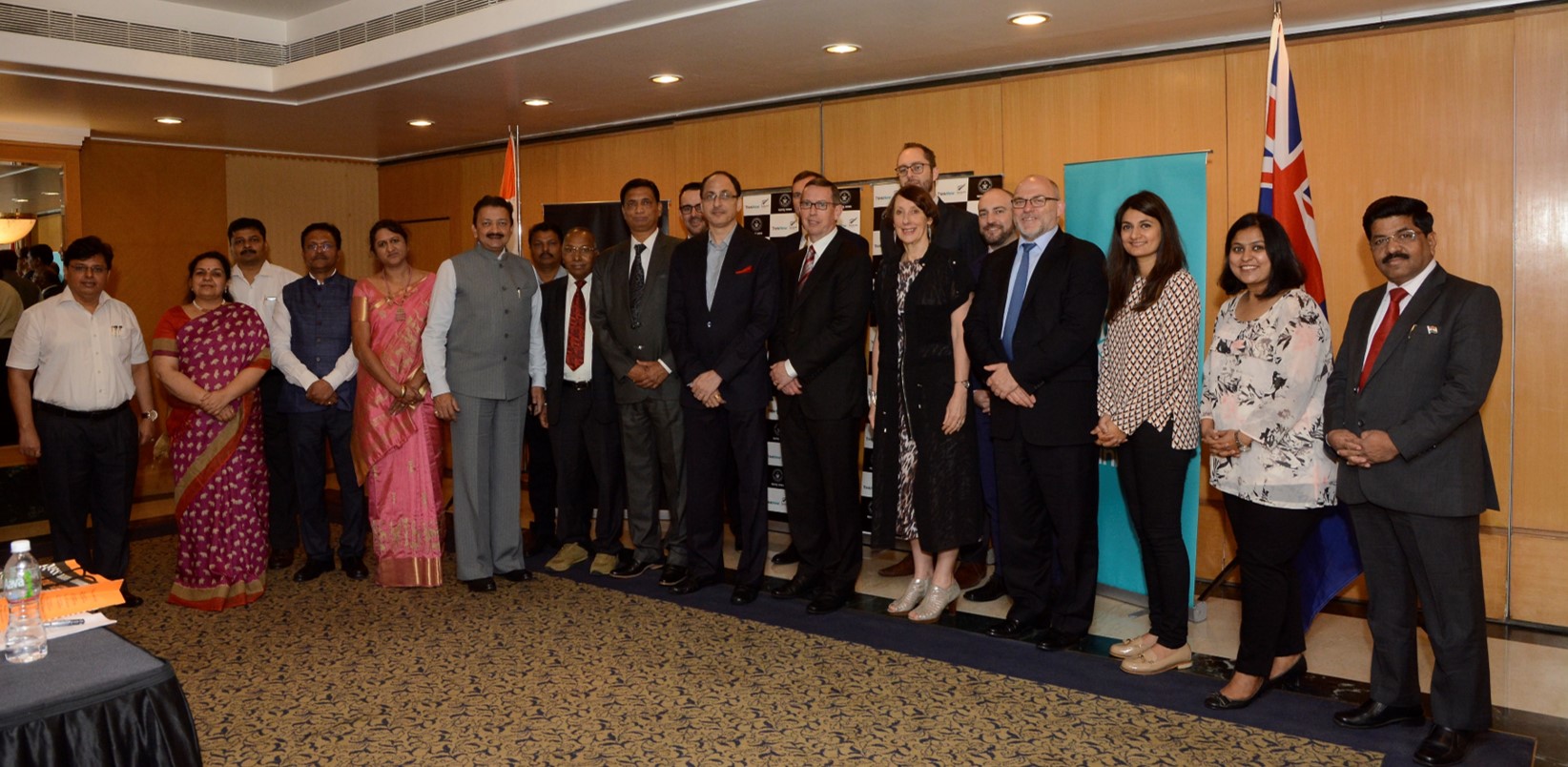
    Chief Executive Grant McPherson says the Joint Working Group is a valuable mechanism for maintaining the long-standing education relationship between the countries, which dates back nearly 20 years.

    “Joint initiatives including the innovative Tripartite Partnership, bring together our governments, as well as our researchers, educators and students and leverages New Zealand’s research strengths.”

    The Secretary for Education, Iona Holsted, co-chaired the Joint Working Group meeting and led the New Zealand Delegation, with ENZ Chief Executive Grant McPherson and NZQA Chief Executive Dr Grant Klinkum. The Chinese delegation was led by the Vice-Minister of Education, Tian Xuejun.

    A key outcome of the meeting was the signing of a Strategic Cooperation Arrangement by the New Zealand Qualification Authority’s (NZQA) Chief Executive, Dr Grant Klinkum, and Director General of the Chinese Service Center for Scholarly Exchange (CSCSE), Mr Jiacai Cheng.

    Dr Klinkum commented that: “This refreshed agreement reflects the value both organisations place on mutual cooperation regarding the exchange of information and qualification recognition arrangements.”

    “As part of our future work together, the two agencies have agreed to establish a working group to better understand the opportunities and challenges related to recognising online qualifications.”

    Universities New Zealand representative Rebecca Needham said the Joint Working Group meeting was a timely reminder of the breadth of initiatives that continue to strengthen New Zealand's education links with China during a time of limited international mobility.

    “The meeting was a valuable opportunity to undertake some deeper thinking about areas of longer-term cooperation, while continuing to celebrate the Chinese Scholarship Council students who are able to continue their study in New Zealand following the recent PhD border exceptions,” Needham said.

    Chair of the International Working Group for Te Pūkenga, Tony Gray, said he was pleased to see the “genuine enthusiasm” at the Joint Working Group meeting to further develop tertiary education partnerships.

    “There are many potential opportunities to collaborate with China as it implements its 2019 National Implementation Plan for Vocational Education Reform. There is real interest [from China] in understanding New Zealand's key vocational education and applied higher education practices and pedagogy,” Gray said.

    “The Joint Working Group between China and New Zealand highlights the strength of our strategic education partnership and provides further impetus for key projects that are mutually beneficial,” ENZ Director – Greater China, Miranda Herbert, says. “It is pleasing to see that we’re both heading in the same direction with our internationalisation goals.”

  • Around the world in five

    IRELAND

    Irish gov’t creates group to enhance student wellbeing

    Ireland’s government has announced the creation of a new group, chaired by the Union of Students in Ireland, to examine how student wellbeing and engagement can be enhanced at the country’s higher education institutions.

    Read more


    GLOBAL

    Why ethical internationalisation is no longer a choice

    By catering mostly to rich kids from rich families in the developing world, we surely have to admit that international education in developed countries serves to reinforce the economic inequality and social stratification in students’ home societies.

    Read more


    NEW ZEALAND

    Returning student happy with coffee and company

    Hannah Mello (29) was the first Otago PhD student to return to complete their studies in New Zealand, under a Government scheme to allow up to 250 overseas PhD students to return the country.

    Read more


    AUSTRALASIA

    Spotlight on Australia and New Zealand

    ICEF Monitor featured a country spotlight on New Zealand (including the 1,000 cohort announcement and the global pathways initiative) to their e-subscriber base. Recent surveys among agents and students gave high marks – and top safety ratings – to Australia and New Zealand in the wake of the success that both countries have achieved in limiting the spread of the coronavirus.

    Read more


    UNITED STATES

    US: first Biden policies will “restore” international student confidence

    US education organisations have welcomed Joseph Biden as the 46th president of the US, whose administration shows “encouraging signs” towards a more favourable climate for international education, science, and engagement with the world.

    Read more

  • Government announcement allows longer stays for visitor visa holders in NZ

    What does this announcement mean for international students currently in New Zealand?

    • This announcement is unlikely to have any impact on international students currently in New Zealand, as most students are likely holding student visas.

    • Visitor visa holders who have not yet studied, may wish to consider undertaking a short course at an approved education provider.

    • Visitor visa holders can study short course/s (or a term at school) of up to three months per 12 month period. The extension of visitor visas does not extend how long visitor visa holders may study for.

    • Family members of students currently studying in New Zealand may benefit from the visitor visa extension if they remain in New Zealand due to COVID-19 restrictions, or otherwise choose to stay longer. Under the announcement they will also be able to apply for further visitor visas as the limit of time spent in New Zealand as a visitor has been temporarily suspended.

    Immigration New Zealand will email affected visa holders to confirm the visa extension by 5 March 2021.

    Where to go for more information:

What's in it for me?