Search
Showing 10 of 7183 results
-
Wellington honours international student success
The annual event, hosted by economic development agency WellingtonNZ, recognises the contributions international students make to the region through their academic, creative, sporting, community and online pursuits.
The awards also celebrate local students who support their international peers, international graduates and locals who give international students opportunities in the workplace.
Wellington mayor Andy Foster presented awards to 18 international students and graduates from tertiary institutions and high schools in the region.
Victoria University of Wellington doctoral student Thoa Thi Thu Hoang, from Vietnam, won an academic excellence award for her dissertation, which produced a method for prioritising buildings in the city for seismic retrofit and analysed the residential red zone programme in Christchurch.
Ehsan Hazaveh of Iran took out a creativity award for his doctoral research at Victoria University of Wellington on using photography to tell the stories of refugees in Wellington. One of Ehsan’s solo exhibitions was opened by Prime Minister Jacinda Ardern at the New Zealand Portrait Gallery, while another was part of the World Refugee Day Festival.
Malaysian student Nurul Izzati – who plays basketball, netball, frisbee, futsal, athletics and korfball – took out a sports award. She has represented Victoria University of Wellington in ultimate frisbee and korfball and won gold in the 100 metres and 4 x 100 metres relay events in a Malaysian sports tournament, where she was named sportswoman of the year.
Wellington Girls’ College student Jasmine Yip, from Hong Kong, was recognised for her contribution to the community as an international student representative, Student Volunteer Army ambassador, charity volunteer and climate change activist.
Giam Li Heng Ronel was recognised for completing his university entrance programme with UP Education online from Singapore due to border restrictions and mentoring other students along the way.
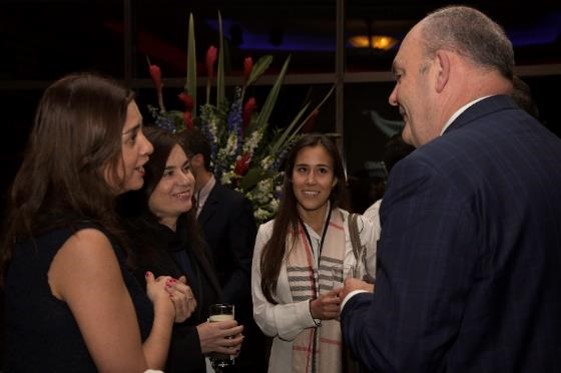
The event at The Opera House in Wellington on 9 November 2021 also drew a virtual audience of more than 200 others from 37 cities in 13 countries around the world.
Education New Zealand congratulates all the winners on their outstanding achievements.
-
New student forum for NauMai NZ WeChat mini programme
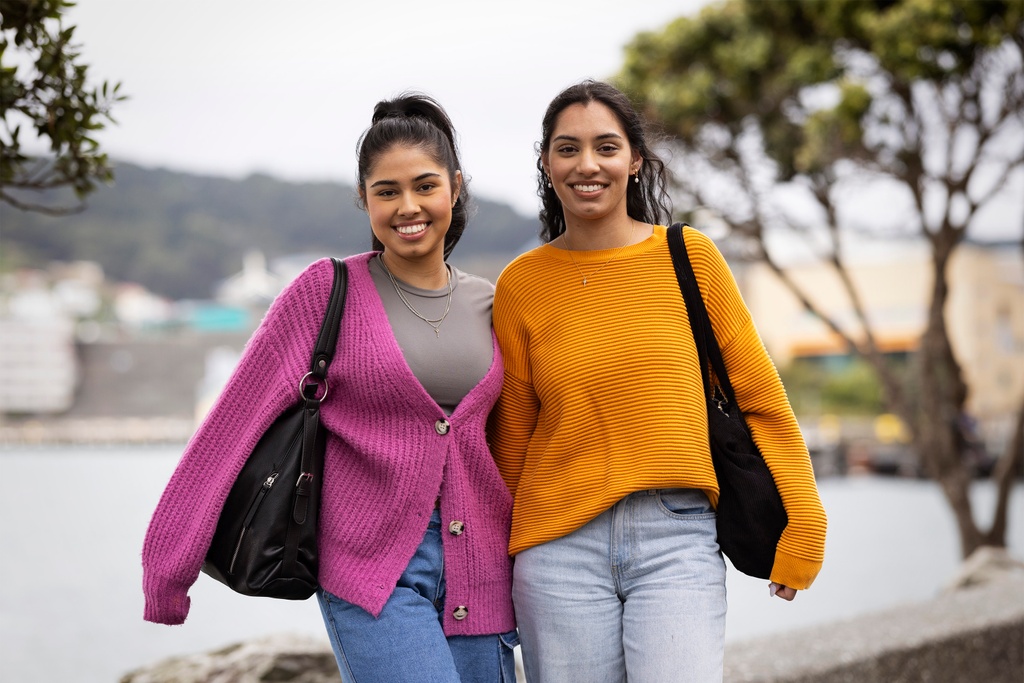
Education New Zealand’s NauMai NZ platform is designed to inform, support and empower international students.
A WeChat mini programme – an app designed for the WeChat ecosystem popular with Chinese students – has extended NauMai NZ’s reach, attracting over 12,000 users in its first year.
The NauMai NZ WeChat mini programme helps students make the most of their New Zealand experience, with advice on everything from finding a part-time job and knowing their rental rights to looking after their wellbeing and understanding Kiwi English. There are also stories from students about their lives – for instance, people sharing ideas on what to do during their summer in New Zealand.
“We know that Chinese students prefer to connect with each other in their language, on the WeChat channel they trust,” says Faymie Li, Senior Advisor for Student Experience at ENZ.
“We’re delighted to see how much they enjoy this digital platform and how quickly it’s growing. It’s great to be able to connect Chinese students to each other and to people who’re willing to help them out.”
The WeChat mini programme has now run six livestreams hosted by experts, alumni and current international students on topics including employability, how to grow your network, and mental health and wellbeing. Students tuning in to watch can use the chat feature to ask questions.
The livestreams have attracted a total of nearly 3,000 live views with over 18,000 engagements during the live events and, so far, more than 1,000 views afterwards.
The WeChat mini programme has now added a new forum so that Chinese students and alumni can better share their life and study experiences and support one another. The text-based, moderated forum allows students to have their questions answered by their peers.
A group of international students have signed on as ambassadors for the WeChat forum, including alumni from the Prime Minister’s Scholarship for Asia programme. One of the forum ambassadors, Mengdi Zhang, says she’s looking forward to connecting with newer students.
“I am excited to be a student ambassador so that any students with unresolved questions can reach out. I can see my own past in the students’ questions, and I hope to help them through to a better experience in New Zealand,” she said.
If you would like to know more about the NauMai NZ WeChat mini programme, contact faymie.li@enz.govt.nz. You can share it with others using the WeChat QR code.
-
International education during the pandemic – what we’ve learned
Education New Zealand held a webinar in its Kōrerorero: Conversations that Matter series at the Conference of the Americas on International Education – drawing academics and decision-makers from around the world.
Leading academics from Victoria University of Wellington, Auckland University of Technology, Massey University and Lincoln University explained the New Zealand approach to the challenges of distance learning and the innovations they discovered during the toughest moments.
Associate Professor Arun Elias, Associate Dean of International and Accreditation at Victoria University’s Wellington School of Business and Government, said while student-to-student interactions had fallen, digital platforms were opening up new ways of doing things.
“We had two PhD examinations which were completely online. We had one PhD student from Victoria being examined in an oral examination by an examiner in Colombia. Also, I was an examiner for a PhD student in the University of Sao Paulo, so that was something which we usually don't do which was a very unique experience.”
Dr Elias quoted a famous Māori proverb: “What is the most important thing in the world? It’s the people, it's the people, it's the people.”
Professor Guy Littlefair, Pro Vice-Chancellor International and Dean of Faculty at Auckland University of Technology, said lockdowns demanded change on many fronts.
“We've all had to learn how to be much more innovative around how we deliver programmes, but also how we conduct research and particularly how we engage with our partners right across the world.
“So, coming out of the pandemic I actually think we have more things in common than we've ever done before.”
Associate Professor Kerry Taylor, Head of School of Humanities, Media and Creative Communication at Massey University, said the difficulties had the potential to deepen relationships.
“There are a lot of lessons that we can share, but also learn from our partners, in terms of the importance of agreements and things like that.
“But I think one of the important things we need to make sure (of) is that we don't treat the relationship simply as an economic one. It's got to be about cultural understanding; it's got to be about shared values and sharing values and aspirations to bring people into the conversation.”
Professor Hugh Bigsby, Dean of the Faculty of Agribusiness and Commerce at Lincoln University, said the pandemic was a chance to find new ways to make human connections.
“One of the wonderful things about international connections and the importance of it is that you learn other institutions’ cultures.
People use the same fundamental skills and ideas a little bit differently and by mixing with other people’s understanding – why they're doing what they're doing – it actually helps inform things that you do back home.”
Watch the full webinar – Kōrerorero: Internationalisation for growing partnerships, a New Zealand perspective.
Education New Zealand was a platinum sponsor at the Conference of the Americas on International Education (CAEI). This continental forum brings together the main actors and decision-makers on the internationalisation of higher education in the Americas to chart the future of academic cooperation in the region.
-
Indigenous women leaders see international education as key to the future
They were speaking at a new webinar in the Kōrerorero: Conversations that Matter series – organised by Education New Zealand’s North America and Latin America teams in partnership with The Chronicle of Higher Education.
The webinar attracted almost 800 academics, international education professionals, government officials and businesspeople, with 275 joining live and the rest registered to view it later. The event drew on the Chronicle’s large subscription base to reach an audience of high-ranking academics in the Americas and attracted an all-star panel of indigenous women leaders in education and business.
Dr Alina Namuncura Rodenkirchen of Chile’s Universidad Católica de Temuco explained the challenges faced by Mapuche women, whose accessibility issues are amplified by rural living and lead to exclusion.
“Education is the key to face all these obstacles. International education can show opportunities, can give us a bigger picture, can empower us,” she said.
“At the same time, we can look back. When we are far away, we can cherish our people and feel what is missing, feel where we want to go back, to support and to collaborate.”
Indigenous entrepreneur and consultant Rachel Petero shared her experiences as a Māori wāhine connecting with the Mapuche.
“Think of entrepreneurship (as a way) to own your own self-determination, your sovereignty. We need to decolonise entrepreneurship and how we do that is (by) connecting,” she said.
“International education is even more important now than ever before because it gives us hope. … It takes us out of this global pandemic mindset that we are stuck in and gives us hope to develop ourselves and move forward.”
Carrie L. Billy, President and CEO of the American Indian Higher Education Consortium, said indigenous people had a special perspective on international education.
“The cultural and societal responsibilities of women are the centre of our collective ability to maintain balance and harmony and wellbeing within the community. When that's out of balance, everything else follows,” she said.
Associate Professor Ella Henry, Senior Lecturer in International Business, Strategy and Entrepreneurship at Auckland University of Technology, said international education could help to turn the tide for disadvantaged communities.
“International education is very important, particularly for addressing some of the discrimination and disadvantage that indigenous communities and indigenous women face. Indigenous education is an important vehicle. What is also strengthened by that process is our indigenous identity,” she said.
Dr Henry, of Ngātikahu ki Whangaroa, Ngāti Kuri and Te Rārawa, addressed non-indigenous educators interested in supporting indigenous international education, asking them to “learn to walk with us, alongside us, as allies.”
Watch the full webinar episode – Kōrerorero: International Education and Developing Indigenous Women’s Leadership.
The Chronicle of Higher Education – Education New Zealand’s webinar partner for the event – has an audience of 10 million higher education employees and 1,600 organisational subscribers to its web content and publications.
-
Around the world in five
Australia
Scott Morrison prepares to let in over 200,000 students and skilled workers
Japan
Travel ban lifted but students could be a long time coming
United States
68% increase in new first-time international enrolments across the United States
Global
Agent views of Australia/New Zealand drop as United Kingdom, Canada and United States benefit
United Arab Emirates
-
Waikato and Cardiff Universities launch strategic partnership
The two institutions have launched a strategic partnership that will open up new opportunities, and a new seed fund will offer $240,000 a year to their researchers and professional services staff for collaborative projects.
Speaking at the launch of the partnership, Education New Zealand’s Chief Executive Officer Grant McPherson said university partnerships are key building blocks to international engagement and connecting New Zealand to the world.
“Sharing academic and research best practices while developing global citizens through the mobility of students and scholars is a proven method of delivering mutual benefits to all parties,” he said.
“It is great to see two forward-looking universities ... seeking out tomorrow’s leaders to offer them a new future.”
The initiative follows several years of successful cooperation between the universities in the areas of artificial intelligence, biochemistry and environmental law.
That collaboration now extends to a wide range of disciplines from climate change, engineering, agritech and data science to management, psychology, education and nursing.
-
Indian and New Zealand academics talk sustainability
The virtual New Zealand-India Sustainability Conclave 2021 featured conversations on equity, economic growth, environmental protection and the link between the Sustainable Development Goals of the United Nations and the international education sector.
High Commissioners from both countries joined the two-day conclave along with Vice Chancellors, academics and senior leaders from prominent Indian and New Zealand universities.
Education New Zealand used the conclave to launch Studying Sustainability in Aotearoa New Zealand – a guide to the diverse programmes on offer through a Māori lens, with an introduction to the ideas of kaitiakitanga or guardianship, manaakitanga or respect and whanaungatanga or kinship.
The New Zealand participants included the University of Auckland, Massey University, Auckland University of Technology, Lincoln University and the University of Otago. The Indian institutions included the TERI School of Advanced Studies, Shiv Nadar University, the School of Planning and Architecture and the National Institute of Fashion Technology.
-
New Zealand to begin opening up to vaccinated foreign nationals from 30 April 2022
COVID-19 Response Minister Chris Hipkins says New Zealand will be removing the requirement to go into managed isolation and quarantine (MIQ) for most travellers in stages, but they will have to self-isolate for seven days, with pre-departure and post-arrival testing.
Travellers will be able to enter New Zealand without going into MIQ in three steps:
- Step 1 – opening to fully vaccinated New Zealand citizens and those residence-class visa holders and other travellers eligible under our current border settings, from Australia, from 11.59 pm on Sunday 16 January 2022, provided they have been in Australia or New Zealand for the past 14 days.
- Step 2 – opening to fully vaccinated New Zealand citizens and those residence-class visa holders and other travellers eligible under our current border settings, from all but Very High-Risk countries, from 11.59 pm on Sunday 13 February 2022.
- Step 3 – opening to fully vaccinated foreign nationals, possibly staged by visa category, from Saturday 30 April 2022 onwards.
The Very High-Risk classification for Indonesia, Fiji, India, Pakistan and Brazil will be removed in early December 2021 and travellers from these countries will be able to enter New Zealand on the same basis as travellers from most other countries. Papua New Guinea will continue to be classified as Very High-Risk.
The three steps are a medium risk pathway. Those who do not meet the requirements for a medium risk pathway, but are still permitted to enter New Zealand under current border settings, will continue to enter MIQ upon arrival under the new regime of seven days in managed isolation, followed by three days of home isolation. This will include those who do not meet vaccination requirements, including unvaccinated New Zealand citizens and those from Very High-Risk countries.
All travellers not required to go into MIQ will still require:
- a negative pre-departure test
- proof of being fully vaccinated
- a passenger declaration about travel history
- a day 0/1 test on arrival
- a requirement to self-isolate for seven days, and
- a final negative test before entering the community.
“It’s very encouraging that as a country we are now in a position to move towards greater normality,” Minister Chris Hipkins said.
“We always said we’d open in a controlled way, and this started with halving the time spent in MIQ to seven days. Retaining a seven-day isolate at home period for fully vaccinated travellers is an important phase in the reconnecting strategy to provide continued safety assurance.
“These settings will continue to be reviewed against the risk posed by travellers entering New Zealand,” he said.
“There continues to be a global pandemic with cases surging in Europe and other parts of the world, so we do need to be very careful when reopening the border.”
Education New Zealand Manapou ki te Ao Chief Executive Grant McPherson has welcomed the New Zealand Government’s move towards opening the borders to international students.
“This news is a great boost for the international education sector. We will keep education providers and international students up to date as we learn more on the detail of how the changes will work,” he said.
The New Zealand Government will release further details on how self-isolation will be implemented in December 2021. There will be guidance on how people can travel from their arrival airport to their location of self-isolation and requirements for the places where they can self-isolate.
For more information, read the media release from COVID-19 Response Minister Chris Hipkins – Reconnecting New Zealand – the next steps.
For the latest official New Zealand Government information and advice, go to covid19.govt.nz
-
From the Chief Executive: Meri Kirihimete and Happy Holidays
While I am optimistic about the New Year, the impact is real, and as we have seen today, the uncertainty is likely to be ongoing. There is much to do as we rebuild our sector through 2022 and into 2023.
Over the past 12 months, we have all had to adjust to an ever-changing environment. A good example is the growth of online and offshore-based courses, and programmes that offer pathways to onshore study or blended learning. These options are helping to hold the interest of students who want to study with New Zealand.
At Education New Zealand, our focus has been on supporting our students and our sector, diversifying products and services and protecting New Zealand’s education brand. In each area, we have made progress.
Our contribution to the development of border class exceptions has seen the return of some international students to our shores. We have enjoyed welcoming them back and look forward to seeing more students over the coming year.
In August 2021, Prime Minister Jacinda Ardern announced the Reconnecting New Zealanders to the World framework. ENZ has been working with the Ministry of Education, Immigration New Zealand, the New Zealand Qualifications Authority and the Ministry of Foreign Affairs and Trade to ensure that government agencies are ready to respond to a phased reopening of the border.
I would like to acknowledge the efforts being made across government agencies and within the international education sector to engage and respond with fresh ideas and momentum. There will no doubt be further developments in the New Year.
We have just launched a new website and brand materials in line with our latest campaign – Study with New Zealand. This is the next evolution of New Zealand’s education brand, designed to appeal to students who want to explore our new, flexible study options.
The shift from studying in New Zealand to studying with New Zealand is the result of a lot of careful work to protect our brand. Alongside the efforts of our teams at virtual events and trade fairs, including the upcoming Expo 2020 Dubai, this work is helping to keep our brand alive as we move towards reconnecting with the world.
A pilot project with global learning platform FutureLearn is a good example of our work to diversify our products and services. The initial results have demonstrated the potential for marketing online courses from New Zealand to new audiences around the globe.
With more to do as we move into 2022, I hope there is an opportunity for all of us to rest and recharge with family and friends over the summer break.
I would like to wish everyone involved in international education across the world a Meri Kirihimete and Happy Holidays.
On behalf of all at ENZ, thank you for your open and honest support. I look forward to working with you all in 2022.
He waka eke noa
We’re all in this together.Grant McPherson
Chief Executive, Education New Zealand Manapou ki te Ao -
Updated timeframe for the re-opening of New Zealand's borders
Note: The information in this story was correct at the time of publication, however, some steps in New Zealand's border reopening plan have now been brought forward. Click here to check the current border reopening steps.
“To slow the rapid spread we have seen overseas, we are pushing out the start of non-MIQ travel until the end of February 2022”, COVID-19 Response Minister Chris Hipkins said.
You can read the full announcement from the Government here.
The Government has not yet announced the date from which any specific group of foreign nationals, such as international students, will be able to travel to New Zealand or apply for visas to do so.
Until then, New Zealand’s current border settings will remain in place. Most people outside New Zealand cannot apply for a visa unless they have a border exception. There are limited border exceptions for international students.
New Zealand suspended most offshore visa applications from August 2020 and that suspension currently extends to August 2022. The Government may decide to lift the suspension, in whole or in part, before August 2022 – in line with its decisions on the stages of the border re-opening.
It is Education New Zealand’s view that it is better for international students, education providers and agents to wait for certainty on border entry conditions before making new plans or commitments to students.
At this stage, in most cases, if international students who are now in New Zealand leave, they will not be able to return to the country for the start of the 2022 academic year. They will need to wait to apply for visas and to travel to New Zealand until the dates the Government sets for them to do so.
At Education New Zealand we understand how much international students and education providers have been through during the COVID-19 pandemic. We will keep students and providers up to date with the Government’s decisions as they are announced.
We are looking forward to welcoming international students back to New Zealand.
More information
Find out more about visas from Immigration New Zealand if:
- You want to enter New Zealand
- You want to study in New Zealand
- You are a student visa holder already in New Zealand.
Find out more about New Zealand’s response to COVID-19:
- Official government Covid-19 website
- International travel and transit
- Information for international students on NauMai NZ