Search
Showing 10 of 7355 results
- Tripartite Fund 2020 21 Funding Round Application
- IMG 1579
-
LINK Symposium connects academics
The second iteration of the LINK Symposium was held on 27 and 28 November. It was originally slated to take place in São Paulo, but was moved online in response to COVID-19.
LINK invited art and design practitioners to be inspired by research methodologies that centre their practice. Presenters demonstrated the potential of their practical frameworks in a range of design topics, including emergent design, design education, and Pacific-Atlantic design.
AUT Programme Leader for Communication Design, Prof Marcos Mortensen Steagall, said “the LINK symposium promotes opportunities for academics from Brazil and New Zealand not only to expand their knowledge about state-of-the-art practice-oriented methodologies in design research, but also to establish networks of collaboration and partnerships. For instance, Brazil can benefit from the way New Zealand incorporates Māori knowledge in their research practices, acknowledging their native traditions.
“New Zealand can learn and benefit from top-level production practices and Brazil's over 150 million users in the gaming market. It starts with academic interests that can potentially be expanded into business opportunities.”
University Anhembi Morumbi Prof Sergio Nesteriuk, who specialises in game design with interests in animation, film and transmedia, said: “The event exceeded all our expectations both for the quantity, quality and diversity of works presented, as well as for the exchange and engagement of all participants.
“We were also honoured to have Education New Zealand's support on this issue. This allows us to project new growth for the event next year, consolidating it as one of the main ones in this area worldwide.”
ENZ Director of Education - Brazil, Ana Azevedo, spoke at the opening.
“This is a significant development for the academic relations between Brazil and New Zealand and it is very positive to see it happening in areas that are so valuable to our cultures like Art and Design.
“New Zealand and Brazil have many shared research interests, including an affinity for practice-based modes of enquiry and pedagogy. I am very pleased that the LINK Symposiums have carved out a niche for Brazilian and New Zealand academics to connect,” she said.
International academic cooperation is aligned with the goals of the IES and can bring mutual benefits to New Zealand and partners around the world, developing better solutions for common challenges. Education New Zealand has supported other international cooperation activities as the Tripartite Partnership Fund with China and the joint call for research mobility with the São Paulo Research Foundation in Brazil (FAPESP).
-
Around the world in five
GLOBAL
Will university rankings adjust to our uncertain times?
Rankings have become a part of academic reality and, when this reality begins to change, rankings must follow suit. Hence, the ranking elite took the opportunity to discuss the possible impact COVID-19 may have on both international and national rankings.
UNITED STATES
The US issued 99% fewer student visas to applicants from China this year — here’s why
The US has granted a total of 808 F-1 visas to students in mainland China between April and September 2020, according to data from the US State Department.
JAPAN
Japan’s National Universities to Increase Number of International Students
Japan’s Education Ministry is planning to increase the number of international students who will be permitted to pursue studies at the country’s national universities in the 2022 academic year.
UNITED KINGDOM
UK 600k int’l student target by 2030 “achievable”
Despite the impact of Covid-19 on study abroad numbers, the UK government target of attracting 600,000 international students by 2030 is still “completely achievable”, according to the Home Office head of Student Migration Policy.
NEW ZEALAND
How NZ university fees compare to the rest of the world - are they too high?
New Zealand university fees are higher than those in many European and Asian countries, according to a new study. An analysis of 50 nations with top-ranking universities ranked New Zealand 14th most expensive, averaging $8595 per student per year.
-
ISANA NZ Awards 2020
Nominations for the ISANA NZ Awards for 2020 are now being sought now and must be submitted by 5pm on 4 December. The three awards include:
- The ISANA NZ Professionalisation Award recognises a practitioner who has exemplified an outstanding professional commitment to their international education work.
- The ISANA NZ Award recognises an individual for their resourcefulness and outstanding commitment to international student welfare.
- The Tracy Evans Scholarship recognises the outstanding work of an individual working in the New Zealand schools international education sector.
Visit the Awards and Scholarships page on the ISANA NZ website.
Nominations to be sent to: contact@isana.nz by 5pm, 4 December.
Click here to register for the ISANA NZ Awards Ceremony at 11am, 9 December.
- my study nz card
- Courtney Davies
- Education New Zealand Research Language course Vocational training Students June2112
-
Around the world in five
United Kingdom
UK: student visas down as dependent applications plummet
The UK Home Office has published data showing a large decline in student dependent applications since new legislation was introduced at the beginning of this year, as well as a fall in student visa applications.Australia
The Australian government has announced a legislative package with a series of new measures for the country’s international education sector. The measures include a cap on new international student enrolments, a prohibition on education providers holding ownership positions in education agencies, a ban on agent commissions for onshore student transfers, and more stringent oversight of education providers and agents alike.
India
Record immigration is colliding with housing crises across the world
India Times is reporting that countries like Canada and Australia are reevaluating their immigration policies to address the pressures on housing affordability and sustain economic growth.
United States
Agents worried over high US visa rejections for African students
International education actors in Africa are uniting with their US partners and activists to call on the study destination’s government to ‘rethink’ visa policies for African students.
SEA
Malaysia, Singapore & Thailand rise in THE Asia rankings
India has overtaken China as the second-most represented country in the Times Higher Education Asia University rankings 2024, with 91 universities compared with the neighbouring nation’s 86 institutions.
-
Entrepreneurial skills lead teams to win BizVenture Japan challenge
The business pitch challenge centred around iconic New Zealand brand Cookie Time, which has operations in Japan. Six teams of Kiwi students and four Japanese teams experienced a taste of entrepreneurship through ‘dragon’s den’ style business pitches, tackling one of two real-world business briefs.
The first focussed on the development of a new product for Cookie Time to introduce to its already established Japanese food and beverage market, supported by a three-year marketing plan.
The second focussed on the identification of a new market opportunity for Cookie Time to deliver its existing product range, either through a new sales channel, distribution model, or food and beverage sector.
While Covid-19 lockdowns in 2021 meant BizVenture Japan’s pilot year was entirely virtual, BizVenture Japan 2022 saw 30 Kiwi students from across the country flown to Wellington to experience cross-cultural education in person and present their business solutions, while Japanese students gathered at the New Zealand Embassy in Tokyo.
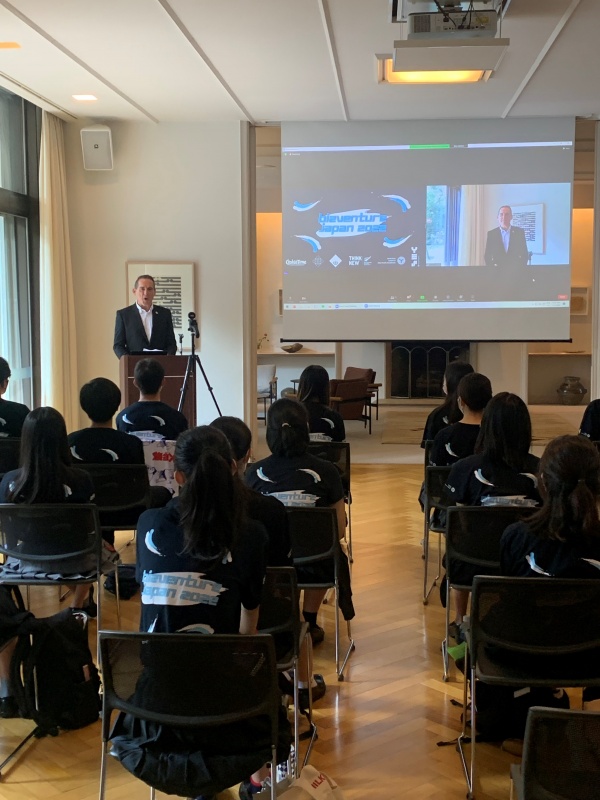
New Zealand’s Ambassador to Japan, Hamish Cooper, welcomed Japanese students to the New Zealand Embassy, Tokyo
The winning New Zealand team comprised Fred Sugden from Taradale High School, Tiana Manu-Griffin from Tokoroa High School, Archie MacDonald from Cashmere High School, Jackson Wright from Whangaparaoa College and Keira Hills-Wilson from New Plymouth Girls’ High School.
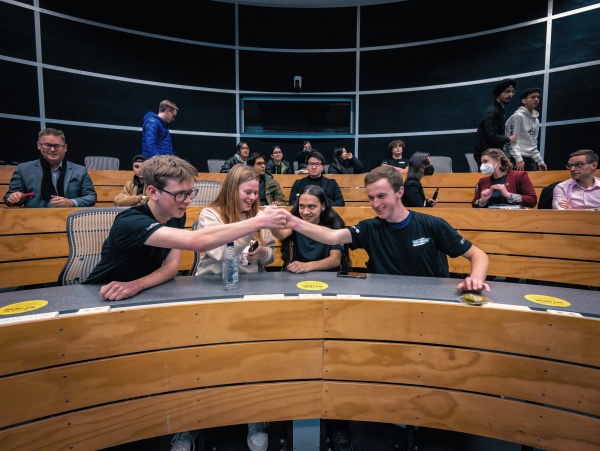
The winning New Zealand team
Targeted at middle-aged Japanese businesspeople looking for an energy boost, and high school students fuelling their study, the line of Enerugi Cookies and Sweet Enerugi Senbei (rice cakes) combines Japanese culture, energy and the iconic Kiwi Cookie Time brand to offer a compelling product for the two target markets.
“Energy drinks are a growing market in Japan as people seek out more energy to work and help support their families,” said Fred Sugden, a Napier local. “At the same time, we learned that parents do not give their children energy drinks as many believe it will make their children go ‘crazy’.
“By offering a product with familiar and healthy ingredients like Matcha and creating a unique spin on traditional Senbei (rice cakes), we are confident our line will be enjoyed by Japanese consumers.”
Tiana Manu-Griffin, says the exposure to Japanese business and culture helped unleash the team’s creativity as they collaborated with like-minded individuals.
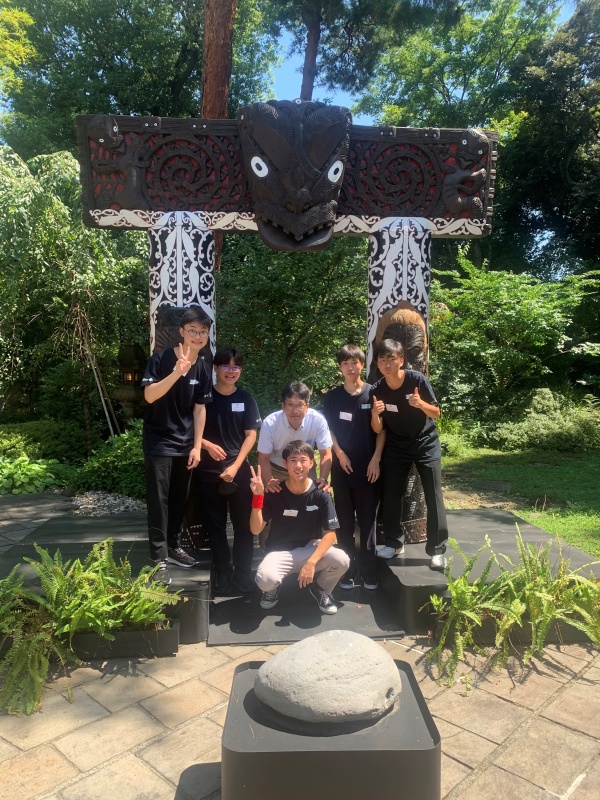
Students from the affiliated schools of Waseda University and Japan Women’s University took part in the challenge from the New Zealand Embassy in Tokyo
“The best part of the competition was the ability to work directly with Japanese students and businesspeople, to understand the importance of culture and tradition in Japan. As a result, we developed a proposal that our target market loved, putting a twist on Japanese traditions and culture to reduce the use of energy drinks in Japan,” Manu-Griffin says.
“It was amazing to see what we could accomplish using our different backgrounds and experiences as a sounding board for problem-solving.”
BizVenture Japan students were mentored through a series of interactive workshops, where teams were encouraged to delve deep into the Japanese culture and business environment.
The bilateral collaboration exposed students to business and culture in both countries, with Kiwis developing their cross-cultural skills and Japanese students building on their entrepreneurial talents and English language fluency.
“I’m walking away from this experience with real-world skills and knowledge that I can take with me into university and the workplace. I now have a better understanding of how to approach business problems not only in New Zealand but around the world,” says Manu-Griffin.
Misa Kitaoka, Director of Education, Japan, for Education New Zealand Manapou ki te Ao, says the collaboration with Japan marked a special milestone.
“This year we celebrate 70 years of diplomatic relations between New Zealand and Japan. BizVenture Japan serves as a way to continually build on this relationship, as travel for international students to New Zealand continues to open up.
“With education fostering people-to-people ties and supporting the development of close connections between our two countries, we cannot wait to take this collaboration to the next level in 2023.”
The 2022 BizVenture Japan programme is an initiative co-hosted by Education New Zealand, North Asia Centre of Asia-Pacific Excellence, and Young Enterprise Trust. Education partners in Japan include Japan Women’s University affiliated schools and Waseda University affiliated schools.
2022 BizVenture Japan is supported by the New Zealand Embassy in Tokyo and Embassy of Japan in Wellington. Cookie Time New Zealand and the Cookie Time Harajuku store kindly offered to be the focal business for the latest business challenge.