Search
Showing 10 of 7355 results
- SSEA20regional20planning20day
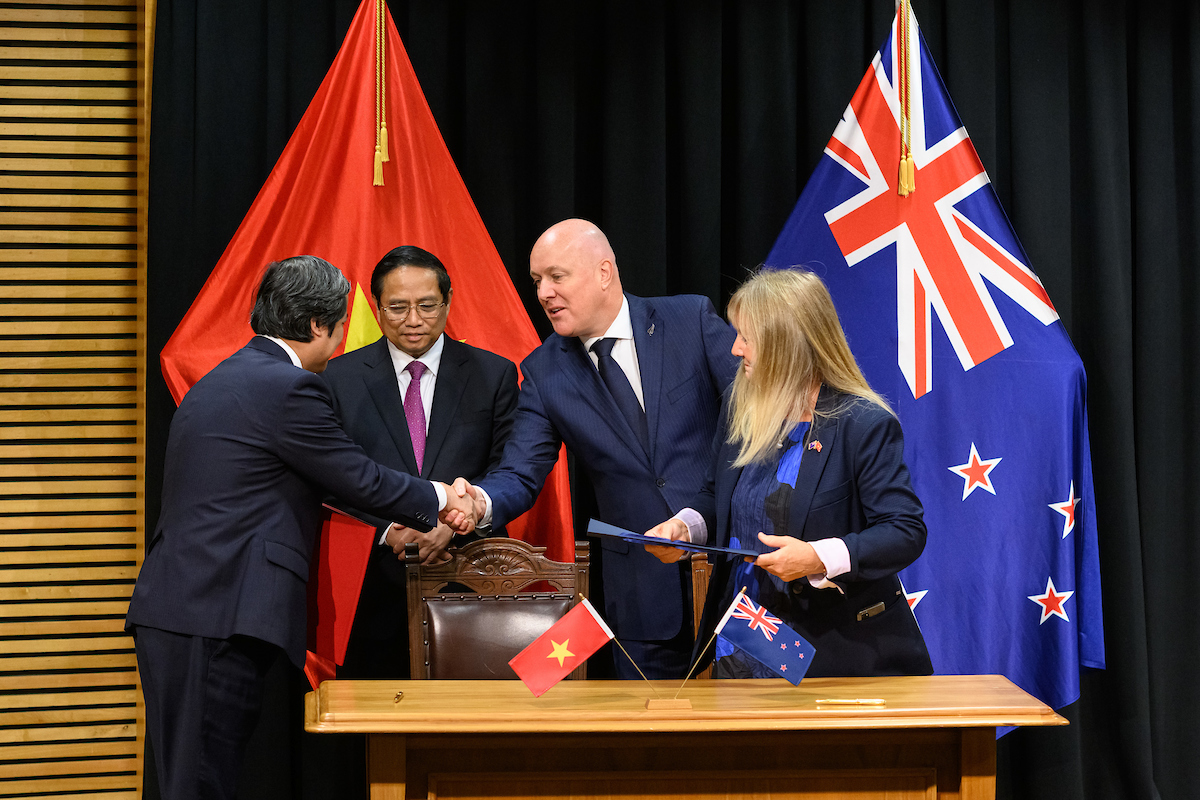
- Vietnam NZ
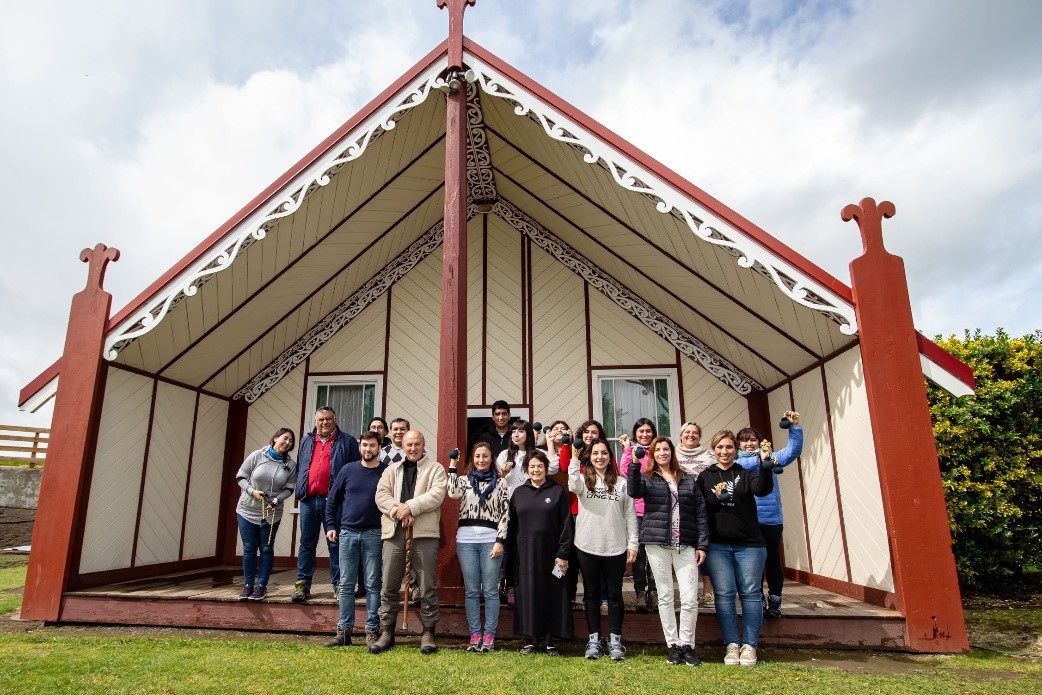
- chileanteachers2019
-
Europe market update for secondary schools
As the sector rebuilds capability and welcomes international students back to New Zealand, this session will provide valuable information to secondary school staff wanting to refresh their knowledge or learn more about working with education agents and recruiting school students in Europe.
We are hosting one 1.5-hour Zoom session on Thursday 16 March from 3.30-5.00pm NZT.
The session will introduce schools to ENZ’s Europe team, provide an update on the market, and have guest speakers on hand to share their experiences of working in Europe.
In previous years, many students from Germany, France and Italy have travelled to New Zealand on student exchanges, seeking new experiences at New Zealand high schools. These countries are a priority focus for ENZ staff based in Europe.
In 2019, 1855 German students, 406 Italian students, and 370 French students spent time studying in New Zealand high schools. At least 66% of German international students were enrolled in schools in 2020, making this the largest subsector for Germany students.
Register for the session here.
Visit IntelliLab here to learn more about the Europe market.
-
Teaching English in Korea
The temperature drop of over 30 degrees, didn’t deter Christine Black, teacher from James Hargest School in Invercargill from enjoying a unique opportunity to teach a week-long English programme sponsored by the South Korean government.
Black and two other teachers from New Zealand, Elizabeth Henry from Kowhai Intermediate School, in Auckland and Patsy Richardson, from Te Puke School, in the Bay of Plenty were selected to teach the English programme in South Korea.
The teachers were selected through an application process facilitated by ENZ to teach 15 students from throughout South Korea about New Zealand culture and history at the JEI education centre in Cheonan from 19-23 December 2022.
Through the English Language programme funded by the Korean government, New Zealand teachers were invited to Korea to support Korean school students from rural agricultural backgrounds to extend their conversational and speaking skills. The students also engaged in hands-on classroom activities that included mini science experiments.
The one-off 2022 Korea-New Zealand English Language Training Program was sponsored by EPIS, an agency tasked by the Korean government to support English language training for Korean students and facilitated by Korea FAO Association.
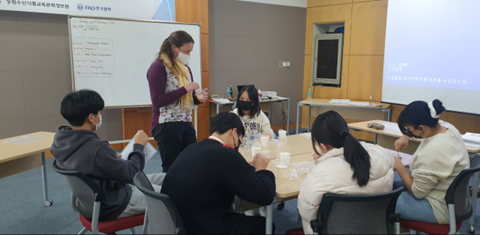
Teacher Christine Black leads the students in an experiment making slime. Photo credit: Korea FAO Association
Yoon Cho, Senior Manager of Korea FAO Association, said it was an experience the students will never forget.
“Well before the teachers arrived, they could feel their passion and enthusiasm for meeting students from rural areas in Korea. I would like to thank the New Zealand teachers who took time to visit Korea at the end of December, especially Christmas week, and made meaningful memories for middle and high school students in Korean rural areas,” Cho said.
School teacher Christine Black was excited for how her first visit to South Korea broadened her understanding of Korean culture.
“It was exciting to travel there to broaden my understanding of this culture as my high school has international students from South Korea. This definitely was a win-win situation to be able to travel somewhere new to me and also share our New Zealand culture.”
As part of the programme, each teacher was responsible for a couple of aspects of New Zealand. Black was responsible for sharing the life of a New Zealand high school student and introduce the different regions of New Zealand and their unique characteristics.
For Patsy Richardson, a teacher at Te Puke School, it was her first time in South Korea, and she introduced waiata to her homeroom group.
“I chose to teach the waiata ‘Tutira mai ngā iwi,’ with actions. We had three 30-minute slots in which to learn it and they had it perfected. Now whether that is because they are willing and diligent students, or I am such a fantastic teacher, is to be debated. The students also performed the waiata at the closing ceremony [for the programme] and it was a great display of cross-cultural connections,” Richardson said.
Despite the short time spent together, it was a great opportunity for the students and teachers to build relationships and cultural understanding between the two countries. The students in Korea were enthusiastic about speaking in English and enjoyed learning some Kiwi slang.
An intermediate school student, Kyungdon Joo, said he studied English and made new friends during the training which gave him a new perspective. “Now I have another goal: To go to New Zealand and learn more about New Zealand.”
For Elizabeth Henry, a teacher from the Auckland region, the English teaching programme was more than the opportunity to enhance language skills. Henry recognised the importance of being a cultural ambassador as she was one of the first New Zealanders the students had ever met.
“I was prepared to bring my best teaching practice to this opportunity prior to the trip not realising that once in Korea, the picture of my purpose there was so much bigger than I had anticipated. Not only did I bring my very best teaching practice to all the students I taught, my mindset changed, thinking one day these children will share this experience with their family and friends.”
Final reflections
Black reflected on the opportunity it provided for the New Zealand teachers as well as students.
“I think it is really important for teachers to grab opportunities like this, especially as there is more and more diversity in our classrooms, and it is important to get first-hand experience of other cultures.”
Henry summed up the English language teaching experience well. She hopes that whenever the students think of New Zealand “a happy memory pops into their mind from this experience.”
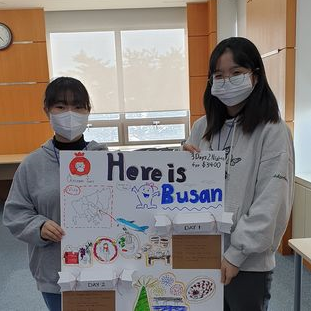
Students present their destination marketing posters Photo credit: Patsy Richardson
Education New Zealand Manapou ki te Ao would like to thank North Asia CAPE and regional education bodies for sharing the opportunity with contacts. This was a one-off overseas short-term teaching programme organised by the South Korean government. ENZ will continue to share these opportunities as they arise with education cooperation partners through the CAPE and regional education channels.
-
New Zealand Schools Scholarships relaunched in Viet Nam
The 2023 round of New Zealand Schools Scholarships – launched in January – will see 45 scholarships to 45 secondary schools offered exclusively to secondary school students from Viet Nam. Secondary schools from Kerikeri to Invercargill are taking part in what is ENZ’s latest international education initiative in Viet Nam.
This year’s initiative follows the New Zealand Education Fairs in Ha Noi and Ho Chi Minh City in October 2022 that attracted more than 1,000 attendees. The New Zealand – Viet Nam education relationship was also at the forefront of a visit to Viet Nam in November 2022 by former Prime Minister Jacinda Ardern.
Viet Nam is a priority market for New Zealand schools. Pre COVID, the sector saw 80 percent growth in students from Viet Nam between 2017 and 2019. Moreover, nearly a third (28 percent) of all international students from Viet Nam choose to study in New Zealand schools.
ENZ’s Business Development Manager Mary Camp said the New Zealand School Scholarships initiative has attracted quality students with high grade point average and good English language ability to study in New Zealand.
“Vietnamese school students are usually very committed to New Zealand, they stay for several years, experience success, and often pathway to study in New Zealand universities.
“We are delighted to welcome them back to New Zealand and eager for them to experience our quality education in a safe and nurturing environment.”
With relaunching the New Zealand Schools Scholarships for Viet Nam, it was also valuable to have the support of the Schools in International Education Business Association (SIEBA), Camp said.
“SIEBA has been supporting schools by undertaking reference checks in relation to interested education agents, thus reducing the burden on schools and helping them connect with new agents. Activating new agents in Viet Nam will help the entire sector.”
ENZ’s Regional Director – Asia, Ben Burrowes said he was pleased to support the reactivation of the New Zealand Schools Scholarships initiative in Viet Nam.
“ENZ is absolutely committed to its education relationship with Viet Nam and we’re excited to relaunch the New Zealand School Scholarships this year.
“It’s fantastic to see that our international education sector continues to foster strong education ties with Viet Nam, which is demonstrated by the number of schools offering scholarships in 2023.”
Since its launch in 2018, the New Zealand School Scholarships initiative in Viet Nam has grown to become a prestigious, top of mind scholarship for local students.
Celebrating past recipients of the New Zealand School Scholarships

Xuan Khang
Year 13, Pakuranga College
2019 New Zealand School Scholarship recipientXuan Khang came to Pakuranga College in June 2019 and graduated at the end of 2022. He remained in New Zealand throughout the pandemic, and achieved an outstanding academic record. He passed NCEA Levels 1 to 3 endorsed with Merit or Excellence gaining Excellence in both Level 3 Calculus and Chemistry. He was involved in the Academic Council, Environmental Council, the Service Council, the Cultural Council and Peer Support. Xuan Khang won Top Academic International Student at senior prizegiving in 2022 and will study Engineering at the University of Auckland in 2023.
"I came to New Zealand to broaden my horizons and become more independent. I have really enjoyed the practical aspects of working in labs and putting theory into practice. By using English daily, I feel my English has improved to a high standard. I have enjoyed being able to discuss my work with my teachers, who have been friendly and helpful. I feel I have really benefitted from the opportunities provided by living in New Zealand and studying at Pakuranga College."
- Xuan

Ho, Thi My Ha (Ha)
Year 13, Mt Roskill Grammar School
2020 New Zealand School Scholarship recipientHa began her study at Mt Roskill Grammar School in 2020. Intent on success, she achieved ‘Excellence’ endorsements at all three NCEA levels, obtaining 230 Excellence credits even before final exams. This is despite COVID lockdowns, the challenge of online learning, and not being able to travel back to see her family. Her homestay and the Mt Roskill International Department supported her during this time. At the 2022 Senior Graduation, she won the International Student Award, 1st in Level 3 accounting, 2nd in Level 3 Physics, the Hays trophy for Excellence in Commerce and the Lacy Cup for Senior literature.
“My time at Mt Roskill Grammar School was a really fun and helpful experience. One of the things I like most is how helpful everyone is. The teachers and the students are all happy to help and support each other. I also like how different it is from Vietnam because there is flexibility to choose our own subjects and how we learn. We have options about how we study and do exercises, so long as we get the results. There are a lot of extra-curricular activities and opportunities to learn new things.”
– Ha
- eDM header My Path shadow
- UNESP PMSLA Brazil
- MFAT12820ASEAN2040th20Anniversary Logo 300dpi20large20version
- hero1