Search
Showing 10 of 7355 results
-
Education diplomacy strengthens New Zealand’s relationship with the Pacific Alliance
This initiative, funded by Education New Zealand Manapou ki te Ao, is a significant milestone in the relationship between New Zealand the alliance.
At the graduation ceremony, New Zealand Ambassador to Chile, Linda Te Puni, said “this celebration today is, first and foremost, yours but it is also a milestone for New Zealand because it reaffirms our commitment to the Pacific Alliance. We are pleased to continue to build and strengthen this relationship in various areas, including networking, educational and between peoples.”
The Pacific Alliance is a Latin American free trade area and economic integration initiative, established by Chile, Colombia, Mexico, and Peru in 2011. The bloc comprises the world’s eighth-largest economy and is home to over 220 million people. It has been identified by the Ministry of Foreign Affairs and Trade as a priority region for New Zealand, with negotiations for a free trade agreement currently underway.
The objective of the English Network of the Pacific Alliance is to develop a cooperation strategy to improve the language in the bloc, work in which it has had the support of New Zealand as an observer country.
“The promotion of the English language expands our people’s access to educational, scientific, technological and employment opportunities, while contributing to the formation of a more productive workforce, with a view to strengthening our competitiveness in global arenas,” Director of Regional Coordination and Integration Mechanisms of the Ministry of Foreign Affairs of Colombia and National Coordinator of Colombia for the Pacific Alliance, Adela Maestre, said.
The Pacific Alliance version of the NZGCC was led by teachers from Massey University. The first four weeks of the course were dedicated to the certificate, while the last two focused on creating a ‘community of learning’ for support and guidance, where methodologies, teaching practices and resources can be shared well after the course has finished.
The NZGCC was originally designed by AFS. The certificate teaches self-awareness, empathy for other cultures, and ways to build bridges in multicultural settings.
-
Bringing Us Together – TVET in the Asia-Pacific
The Global COVID pandemic has put skills issues and innovation on the center stage, as governments, industries, and educators alike work to upskill and reskill workforces disrupted by the pandemic and ensure strong working futures.
The APAC TVET Forum will bring together the necessary key groups for effective TVET: Governments, Industries, and Educators. The Forum will offer Government to Government (G2G), Business to Business (B2B), and System-to-System content streams, then “bring us together” for a cross-system conversation across the APAC region.
The Forum will be free to register, and held over two Fridays (5 November and Friday 12 November, 2021) across the following local times:- Bangkok, Thailand 09.30-14.00
- Beijing, China 10.30-15.00
- AEDT 13.30-18.00
- Samoa 14.30-19.00
- New Zealand 15.30-19.30
We will hear from senior government officials, major companies, international agencies and organisations, and TVET sector leaders from around the APAC region.
The New Zealand partners include New Zealand government’s international education agency, its largest private sector vocational education consultancy, and New Zealand’s new national institution for Vocational Education and Training.
We look forward to welcoming colleagues from around the region for this high quality and not-to-be-missed event: stay tuned to our social media channels for call for abstracts, registration, and speaker information in the coming weeks, or visit our website: www.apactvetforum.com
- NZIEC 1
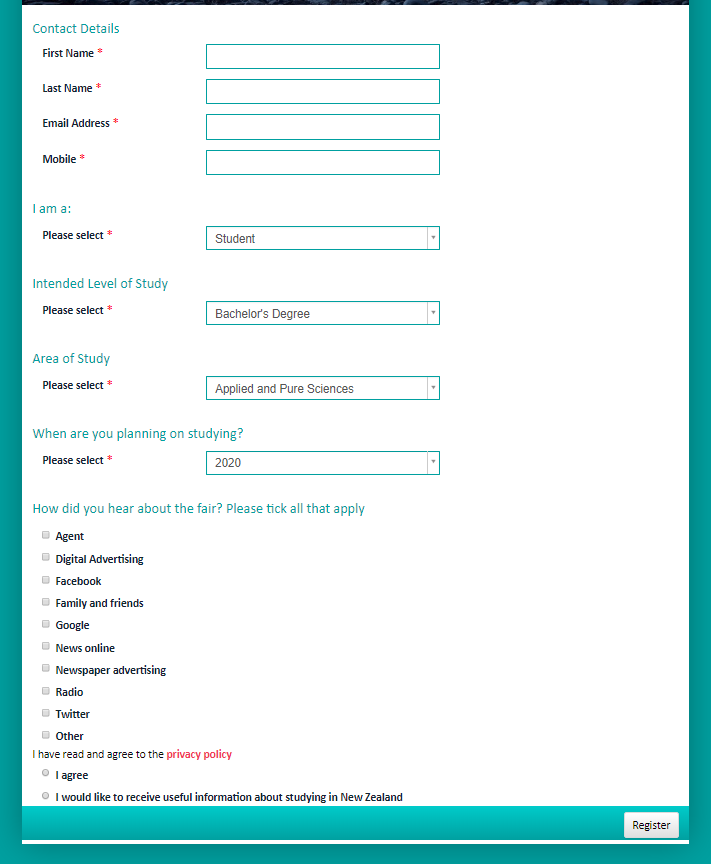
- Exhib Portal Lead Management Student Rego Sample
- Picture1
- Overall new format
-
Mayoral events provide vibrant welcomes to students in their regions
Last month we shared some of the wonderful images that New Zealand schools, universities, PTEs, Te Pūkenga and English Language Schools shared with ENZ as they welcomed their new students for 2024. This month we are sharing details and images from the Mayoral welcomes that some of our regions have held for their visiting international students.
Thank you for adding to our diversity and vibrancy!
More than 40 international students were greeted by Whanganui District Council Mayor, Andrew Tripe, at a special Mayoral welcome to the community on Monday 8 April.
Speaking to the students from countries including Brazil, South Korea, Japan, Germany, China, India Indonesia, Thailand, and Viet Nam, the Mayor thanked them for choosing Whanganui and adding to the “diversity and vibrancy of our community”.
The students attending had enrolled in both secondary schools and tertiary institutions in the district such as Whanganui High School, UCOL Whanganui and the New Zealand International Commercial Pilot Academy.
Formal greeting over, the Mayor was rushed by students seeking a special ‘selfie moment’ to share with families and social media.
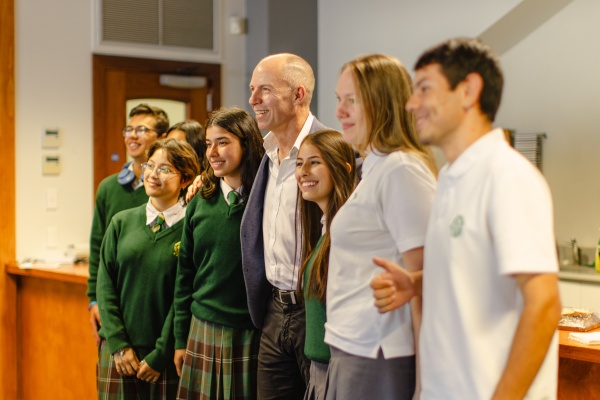
A group of Brazilian international students attending Whanganui High School take up the opportunity of a photo with the Whanganui District Council Mayor, Andrew Tripe.
Similar levels of excitement were seen in Hamilton where the Mayor of Hamilton, Paula Southgate and local performance groups welcomed approximately 250 new international students to the Waikato region. The welcome event was held at the Pā, University of Waikato and is the first welcome since the Covid-19 pandemic put these events on hold.
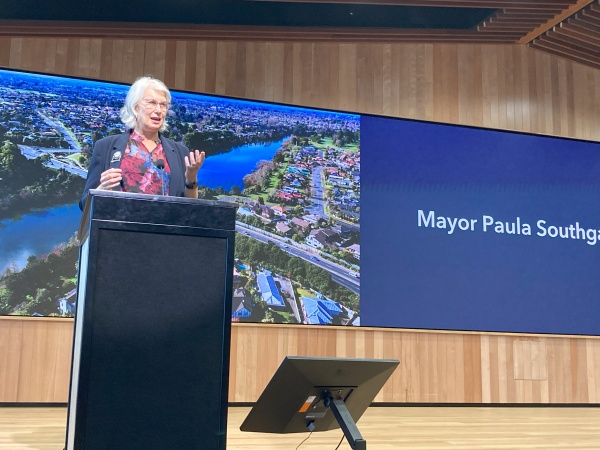
Mayor Paula Southgate providing the official welcome to the Waikato’s approximately 250 international students.
Faymie Li, Education New Zealand Manapou ki te Ao’s Senior Advisor Student Experience said, “I was deeply honoured to witness this significant event and see how we demonstrate manaakitanga to our international students.
“The diverse cultures we embrace in Aotearoa is truly something to cherish and celebrate. It was wonderful to see so many school students attending the ceremony, offering them a unique student experience they don't typically encounter.”
Jiabao Zhao (Boa), a former international student who completed a Bachelor of Management Studies with First Class Honours at the University of Waikato, shared a message of encouragement with the students. Boa’s advice for new students was: to study hard but also “talk to and meet students from outside your country. It’s easy to remain in your comfort zone but that is not the point of studying abroad. Network and build your presence”.
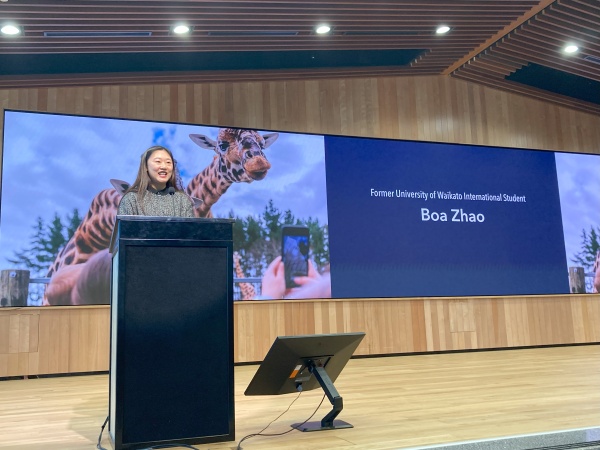
Former University of Waikato International Student sharing a message of encouragement to the new international students.
She also reminded students to take care of both their physical and mental health. There will be challenges but also great opportunities, and her own study and career journey is testament to that. She now works as an International Sales Operation Executive at Prolife Foods Ltd in Hamilton.
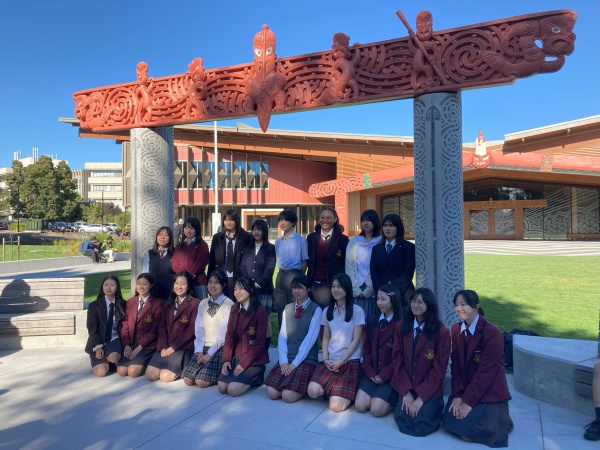
A handful of the 250 students who travelled to the Pā at the University of Waikato, for the international student welcome.
Also in March, nearly 100 international students received a fine welcome centered on the theme of connection, by Timaru District Mayor, Nigel Bowen. The Timaru District will be home to students from Japan, China, Germany, Thailand, South Korean, Hong Kong, Macau, Fiji, Philippines, Brazil and Poland, and more over the course of this year. You can read about this welcome in the Stuff article here - Nearly 100 international students welcomed to Timaru | Stuff.
-
NZISA hits the road
Congratulations to NZISA for organising and delivering these four separate events to give international students a warm welcome to New Zealand. The events were also an opportunity for students to connect with each other in person, hear from inspiring speakers from international and migrant backgrounds, and network with a range of government and NGO organisations who work closely with international students.

The Roadshow also provided a moment to celebrate NZISA’s five-year anniversary and recognise five years of advocating on behalf of international students, raising issues and concerns with appropriate government agencies.
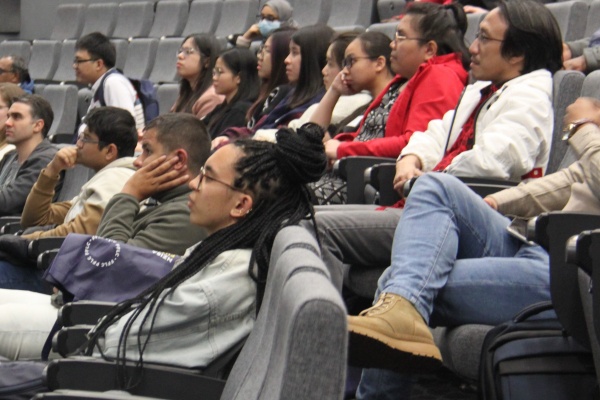
More than two hundred international students attended the events, which attracted very positive feedback. There was real appreciation for the kōrero of the guest speakers and the opportunity to connect with other students, especially from students who have just recently arrived in New Zealand.
“It was so inspiring to hear from the panellists how they were able to adapt and grow in new surroundings in a short time. I asked them about their motivation to work in New Zealand despite the cultural differences, and their answers really opened my eyes, as they mentioned that we can see challenges as a barrier, but instead look at them as opportunities to change and grow.” – Anis Aqeelah Afrina Mohd Raduan, who recently arrived in New Zealand to complete the final year of her Bachelor of Commerce at Te Victoria University of Wellington, majoring in Actuarial Science and Finance.
“It was so lovely to reconnect with past Presidents and executive members from NZISA and acknowledge just how far the association has come in five years,” says Sahinde Pala, General Manager Sector Services, Education New Zealand Manapou ki te Ao.
“Their hard work and commitment have given international students a voice with government agencies, ensuring the needs and concerns of international students studying with New Zealand are considered and addressed.”
-
Around the world in five
NEW ZEALAND
The global citizens helping connect New Zealand with the world
UNITED KINGDOM
Avoid transactional view of international HE, says guru
INDIAMore than half of Gen Z considering different career path in the wake of Covid-19
GLOBALConsolidation in English language travel: how Covid-19 has changed the market supply
GLOBAL
Global education has major role to play in climate change crisis
-
From the CE: Telling the story of international education
Kia ora koutou,
I’m pleased to return with another update and much has changed in recent months. The Delta variant has severely impacted several regions across the country, emphasising the importance of the COVID-19 vaccine rollout. Despite the challenges we face today, I believe the international education sector will remain a vital part of the future of Aotearoa New Zealand. We have many positive stories to tell.
Many of us are aware of the broad social, cultural, and economic benefits of international education. However, research shows there is limited public awareness of these benefits. We need more New Zealanders to speak up publicly in support of international education.
To help us carry this crucial message to all New Zealanders, I am very proud to release Communicating the benefits of international education – a toolkit. This new resource from Education New Zealand is designed to help you find and tell your own stories, in your communities, about the valuable contributions you and your international students are making.
You’ll find the toolkit on the ENZ Brand Lab. There is a story framework with eight content themes to help you develop your ideas, and advice on how to tell a clear, consistent story and to promote it on multiple communication channels.
At ENZ we are expanding our own efforts to explain what international education is, how much it matters to our students, our country and our global relationships, and where it is going under the Recovery Plan and the New Zealand International Education Strategy. We have partnered with the award-winning online magazine The Spinoff to publish a series of feature stories. You can read the first feature on the vital role of international education in keeping Aotearoa connected.
If recent months have shown us anything, it’s that we are not out of the woods yet. The world has a way to go before we’re ready to welcome each other with wide-open borders, and we are still fighting to retain and rebuild our sector.
I know that many of you are dealing with the loss of revenue, capability, capacity and global market share, as well as with the impact on your personal lives.
But your hard work is making a real difference, not only to your students and their distant families but also to the reputation of Aotearoa New Zealand as a place that cares about people, regardless of their origins or beliefs.
He rā ki tua – better times are coming.
Grant McPherson
Chief Executive, Education New Zealand Manapou ki te Ao