Search
Showing 10 of 7337 results
-
Register for ENZ’s market intelligence webinar
The webinars offer local market updates and insights, competitor analysis, external expert views relevant to the secondary and tertiary sectors, as well as updates on ENZ’s upcoming promotional activities and Immigration New Zealand visa processing.
ENZ’s Director Asia, John Laxon, said the China industry webinar is a great opportunity for New Zealand education providers to receive local in-market intelligence from ENZ staff and independent in-market experts, which will ensure organisations’ in-market recruitment efforts are well targeted.
“Our 2019 webinar series will provide market insights and updates from across the Asia region, taking into account the strong industry interest in the 2018 series.”
Please register below:
China webinar 29 July, 10am local time/2pm New Zealand time
-
Calling all China research specialists
Since its inception in 2005, the Tripartite Fund has supported the development of strategic research relationships between New Zealand and China.
Universities are invited to submit proposals for the latest round, with up to $30,000 available per application to support quality, high-level research and collaboration. The fund seeks to initiate new tripartite partnerships and facilitate the development of existing partnerships between a New Zealand university and two Chinese partner universities.
Eligible Tripartite Fund subjects can be drawn from the arts, humanities, social sciences, sciences and applied sciences including agriculture, food safety, conservation, forestry, advanced materials engineering and environmental science.
The Tripartite Fund has enabled many high-achieving New Zealand academics to develop relationships with Chinese research partners.
Since 2009, Auckland University of Technology (AUT) has worked on tripartite collaborative projects with Shanghai Jiao-Tong University (SJTU) and Xinjiang University in China.
Nikola Kasabov, AUT Professor of Computer Science and Director KEDRI, said that the ‘three brothers’ partners have exchanged multiple visits of both staff members and students.
“The outcomes have been outstanding, including a large number of joint papers published in international journals and conferences, joint methods and software development in computational intelligence and applications in health, environment protection, and predicting hazardous events.”
Professor Kasabov was also appointed as Advisory Professor to SJTU, meeting with PhD students and staff on an annual basis.
“The collaboration helps staff and students to work together on new frontiers of information and computer sciences and technologies along with important applications for both countries.”
The deadline for applications is 1 March 2019, with a project start date of 1 May 2019, and end 30 April 2020.
Please complete the application form and submit it to china@enz.govt.nz
-
Around the world in five
CHINA
International students from China need extra support, say experts
US student agency WholeRen says Chinese students need extra support to succeed at universities, due to ‘only-child’ syndrome – Chinese students are typically a single child and come from a different education system, language and culture.
INDIA
Demand for education technology in India is huge – the challenge is language
There has recently been a sharp rise in India in the use of technology in education. Nick Cain, Project Manager (Education) at Google.org, talks about technology’s potential in providing quality education.
JAPAN
Most international students opt to stay in Japan after graduation
A survey conducted by the Japan Student Services Organization found that nearly three-quarters of international students in Japan at universities and other educational institutions remained in Japan to pursue employment or a higher degree.
MALAYSIA
Malaysia’s education is outdated says new education minister Mahathir
Malaysia’s new Prime Minister says the country’s teaching is “outdated” and wants to introduce online teaching so that Malaysians will be more computer-savvy.
UK
Slow uptake in study abroad, but student profile increasingly diverse
In 2017, UUKi launched a campaign to double the number of outbound international students by 2020. While the number in the latest report was near identical to the previous cohort, the findings revealed a more diverse range of undergraduates are choosing to study abroad.
-
Registrations open: NZ Vocational Education and Training Research Forum
The NZ Vocational Education and Training Research Forum (NZVETRF) is a multi-sector opportunity for discussing ‘what works’ in vocational education. In 2020, the forum will be delivered fully online, including international keynotes, and a curated programme of breakout sessions, along with interest based ‘hangouts’ and expert sessions.
The new partnership with Skills International extends the reach of the forum to an international network, to learn from and contribute to global developments in VET to support the COVID-19 recovery efforts.
CEO of The Skills Organisation, Garry Fissenden, says vocational education and training will be a critical component of the response to the employment, economic, and social shocks caused by COVID-19 around the world. He says:
“With New Zealand’s vocational education sector embarking on a major reform, now more than ever is a time to come together to share evidence and capability of how vocational education and training can support skills and productivity, and wider wellbeing.”
For more details, head to the NZVETRF website.
-
Generation Study Abroad and Travel Award winners announced
ENZ has awarded five students US$2000 travel stipends: Cooper Frantz Geddes, Raquel Goutierez, Emma Hardy, William Pahutski and Phoebe Stark.
A further nine students received US$500 from New Zealand universities towards their study costs.
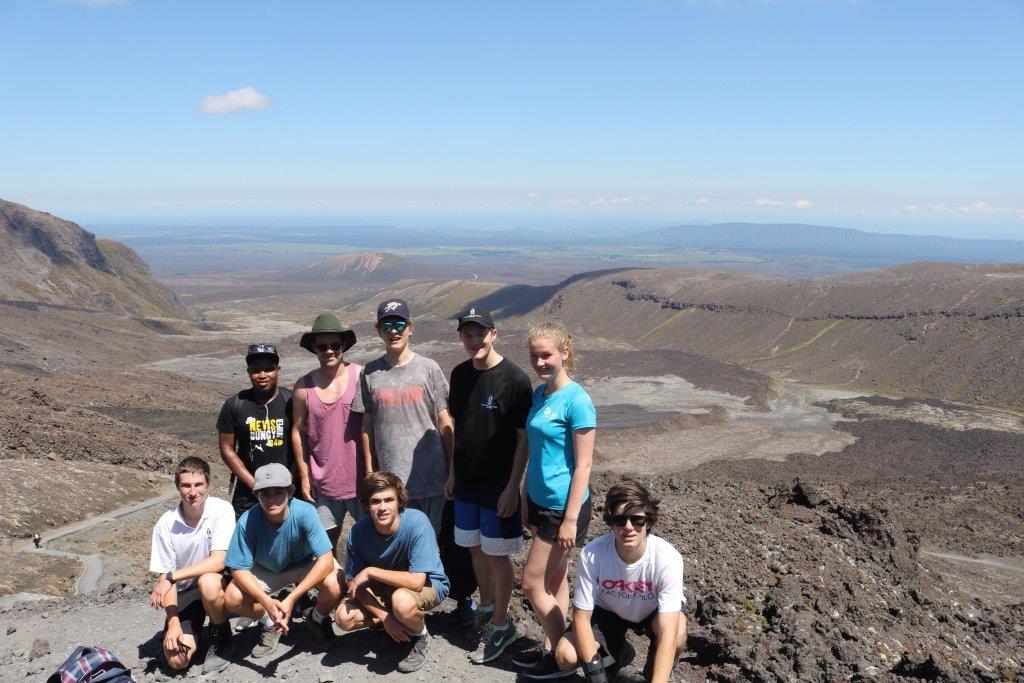
An example of a ‘Kiwi ambassador’ - US student Jake Voss shares his New Zealand adventures on the SiNZ Instagram.
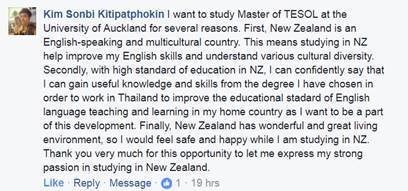
To apply, students had to submit an essay explaining why they wanted to study in New Zealand and serve as ‘Kiwi ambassadors’ on social media.
ENZ’s Director of Education, North America, Amy Rutherford said this support is part of ENZ’s commitment to helping US students experience New Zealand universities.
"These programmes open up new opportunities for US students seeking to study in New Zealand.”
Launched in 2014 by the Institute of International Education, GSA is an initiative to double the number of American students who study abroad by the end of the decade.
ENZ has provided more than 24 scholarships to US students since the programme’s inception, selecting recipients on the basis of academic excellence, leadership skills and ambassadorial qualities.
In addition to the GSA Awards, ENZ and the US Department of State recently announced a new $100,000 partnership in support of the Benjamin A. Gilman International Scholarship Program, which enables students of limited financial means to study or intern abroad.
To read about the winners’ Kiwi adventures, visit their blogs:
Cooper Frantz Geddes http://coopertakeschristchurch.blogspot.com/ Raquel Goutierez http://raquelalexis.weebly.com Emma Hardy https://emkathardy.wordpress.com/ William Pahutski http://billsnewzealandadventure.weebly.com/ Phoebe Stark https://therockytopkiwi.wordpress.com/ Maya Calderwood https://studynz17.wordpress.com/2017/04/27/why-new-zealand/ Sadie Dix https://mynewzealandchronicles.wordpress.com/ Eliza Fallick https://efallicknz2017.wordpress.com Carli Fawcett http://newzealandadventures.webs.com/ Michael McGaw https://michaeltakesonnewzealand.wordpress.com/ Daniel Patel http://danpinnz.blogspot.com/2017/04/im-off-to-new-zealand.html Ellie Peoples https://passportpagesweb.wordpress.com/ Kelsey Woody https://kelseywoody22.wixsite.com/website/blog Josie Davis https://medium.com/@davis.josie01 -
Chinese students engage with My StudyNZ WeChat
In October, ENZ brought My StudyNZ to WeChat, a social media platform with more than one billion users.
Students enter their study intentions into the programme and receive suggestions of institutions or courses that closely match. This enables ENZ to drive high value leads to New Zealand institutions and ENZRA agents from China.
Lucia Alarcon, ENZ’s Digital Programme Manager, said as ENZ has had a WeChat account since 2014, it made sense to build on the existing social community which is easier for Chinese students to use than the China version of the Study in New Zealand website.
“It has enabled us to engage with students in a more personal way, and to share tailored information. It also provides a more seamless user experience for the student, allowing them to assess study options using their mobile phones, and to contact institutions directly if they want.
“While it’s early days, we’re already seeing high-quality leads coming through.”
My StudyNZ China has gained strong interest from Chinese students, particularly those with an interest in tertiary and secondary institutions:
ENZ’s efforts in China have included a media campaign using WeChat banner ads with Future Proof key messages and an invitation to join ENZ’s social community on WeChat. Seen by more than three million prospective students and parents so far, this has helped increase ENZ’s WeChat followers by 25 percent.
“Our Future Proof Campaign and Wechat development are part of a wider programme of work in China. As we continue investing in our China audience, we will also find new ways to reach students and share useful information personalised to their study plans,” said Lucia.
-
Digital masterclass a runaway success
Two New Zealand academics were among the speakers showcasing the latest technological solutions to revolutionise education at this second SEAMEO – New Zealand masterclass.
Professor Richard Green from the Department of Computer Science & Software Engineering at the University of Canterbury, who also co-chairs the NZ AI Researchers Association, presented on “AI is Revolutionising Sustainability, Food and Biosecurity”. Dr Suranga Nanayakkara, Associate Professor at the Auckland Bioengineering Institute, University of Auckland, presented on “Kiwrious: Keeping Kiwi Kids Curious”. The other two keynote speakers were from National Institute of Education, Singapore, and Universiti Malaya, Malaysia.
The event was broadcast on SEAMEO Secretariat YouTube Channel and targeted policy-makers, government officials, educators, teachers, lecturers at TVET institutions and universities in Southeast Asia and beyond.
“The high level of interest in this event reflects the changes that the COVID-19 pandemic has caused in the way we live, work and learn,” said ENZ’s Regional Director, Asia, Ben Burrowes.
“A huge part of the attraction of a New Zealand education has been our world-class teaching and learning environment. We have been focusing on teaching 21st century skills within our national education strategy. This includes soft skills enabling our students to become critical, creative and independent learners. Our use of digital technology in the classrooms is also widely recognised and remains a huge focus in our school and tertiary curriculum.
“This second Master Class gave teachers and educators in the Southeast Asia region an opportunity to learn more about what a New Zealand education can offer, and broaden their viewpoints on the technological disruptions arising from the COVID-19 pandemic.”
Officially admitted as an Associate Member Country in 1973, New Zealand's co-operative relations with SEAMEO include scholarships and provision of experts for SEAMEO Regional Centres. The first SEAMEO-New Zealand masterclass on “Education Technology and Digital Security” was held in September 2021.
The 2022 masterclass can be viewed from the following link on the SEAMEO Secretariat YouTube channel https://link.seameo.org/MasterClass/20220524
-
Export Education Levy projects from 2016/17
The annual report covers the period from 1 July 2016 to 30 June 2017, and can be found on the Education Counts and ENZ website.
The levy is paid by education providers who enrol fee-paying international students in New Zealand.
“In 2003, the Government introduced the Export Education Levy to fund a wide range of development and risk management initiatives for the export education sector. This includes funding the Code of Practice which oversees the wellbeing of our international students while they are studying in New Zealand, as well as marketing, development, quality assurance and research for the sector,” says Belinda Himiona, Group Manager International Education, Ministry of Education.
Activities funded by the levy in 2016/17 include:
- Implementing the International Student Wellbeing Strategy
- supporting promotional activities in ENZ’s priority markets
- expanding the scope and regions in ENZ’s Regional Partnership Programme
Support for promotional activities in ENZ’s priority markets included digital marketing via the Study in New Zealand website, social media campaigns, fairs and events held overseas. It also supported in-bound agent visits and international media familiarisation visits to New Zealand.
Funding also went into expanding the scope of growth activities, and number of regions participating in ENZ’s Regional Partnership Programme, which works with international education providers, local government, regional economic development agencies and communities to encourage regional growth in international education.
Funding was also allocated to administering and monitoring the Code of Practice for the Pastoral Care of International Students. To support the implementation of the new Code of Practice, guidelines and other resources were developed and published on the New Zealand Qualifications Authority’s website. A letter of expectations was sent to all signatories advising them of the new Code of Practice and highlighting their responsibilities
-
Towards a low-carbon future – together
The week-long programme was organised and funded to a large extent by DAAD (the German Academic Exchange Service), with the overall objective of deepening existing academic links and encouraging the development of new ones, under the theme of transitioning to a low-carbon economy.
Led by ENZ Chief Executive Grant McPherson, delegates from New Zealand’s Centres of Research Excellence (CoREs) met with German academics, researchers, government officials and students in Bonn, Cologne, Aachen, Hamburg and Berlin.
As an outcome of the trip, DAAD and the Kiwi delegates are working on an action plan that includes opportunities for cooperation between New Zealand researchers and their German counterparts, particularly on sustainability issues in line with the visit’s theme; a potential government-level arrangement to facilitate academic exchange; and possible funding for post-graduate student mobility.
It was the first time that ENZ had brought such a senior research delegation to Germany.
“Germany is one of New Zealand’s key education partners in Europe, with nearly 3000 German students travelling to New Zealand in 2018,” McPherson says. “However, alongside student recruitment, we’re renewing our focus on encouraging academic mobility between our two nations.”
“This delegation was all about showcasing the excellence of New Zealand’s research institutions. Our academics produce world-class work, and teaming up with partners like Germany will only create more opportunity for researchers to solve some of the world’s biggest problems.”
-
Alumni embrace tikanga Māori in Vermont
The North American Whānau Council – East Coast is one of three Whānau Councils worldwide (the other two being Europe and the USA’s West Coast) and is made up of AUT alumni who attended the Noho Marae weekend at AUT’s Ngā Wai o Horotiu marae.
There, students learned what it means to be whānau and experienced a range of Māori cultural activities including sleeping on the marae and learning waiata and the haka.

Jason King (centre) Senior Lecturer of the Faculty of Maori & Indigenous Development, AUT with brother Charles and wife Andrea.
Originally a student-driven initiative in Europe, the Whānau Councils are now supported formally by AUT and Jason King, AUT’s Senior Lecturer, Faculty of Māori and Indigenous Development. Jason and his wife Andrea make an annual trip to each of the Whānau Councils’ AGMs.
Lewis Gibson, ENZ Field Director, North America, attended this year’s events with students from Champlain College (currently hosting its first Māori student on campus) and the University of Vermont (UVM) where AUT has exchange programmes.
“The Whānau Councils act as local communities for alumni to maintain their connections to each other, New Zealand and Māori culture.
“They’ve also been instrumental in helping US universities connect with their own tangata whenua; the Chief of the Nulhegan Abenaki tribe, Don Stevens, attended Whānau Council events this month to show support. For these students, it was the first time many had had any interaction with the Abenaki.”
Lewis said the experience these students had at AUT’s Noho Marae has profoundly impacted them, turning them into lifelong advocates for New Zealand, its education system and Māori culture.
“By embracing an indigenous culture on the other side of the world these students have found a home away from home and a whānau they belong to.”
This sense of belonging has remained long after those students left New Zealand. Today, a large number of alumni from both UVM and Champlain College have become teachers, sharing Māori culture in their own classrooms with their students.
“By incorporating lessons and culture from New Zealand, these alumni are exposing US students to the benefits of a New Zealand education, as well as actively sharing their positive New Zealand education experiences with their peers in the wider community.
“This encourages more US students to participate in study abroad opportunities in New Zealand, and further entrenches the kiwi connections in Vermont,” Lewis said.