Search

Showing 10 of 7183 results

  • What’s New Zealand really like? Students find out online.

    Using image galleries and videos, students can explore what their daily lives might be like in New Zealand – including where they might live and the outdoor adventures they could have.

    For many students, understanding the day-to-day workings of a country is a big part of the decision process, making it important for the SiNZ site to provide information that shows New Zealand is a welcoming environment with a range of activities on offer – meaning different students can create different lifestyles depending on their individual needs.

    The page also has links to blog posts on the climate, how to save money and how Kiwi students typically dress. By setting these expectations, new students can adapt more quickly to life in New Zealand, lessening their culture shock when they arrive.

    The page also includes case studies from other international students, ranging from secondary school level to postgraduate. Their testimonies allow new students to see what New Zealand is like for people their own age.

    The Living in New Zealand page is part of the Live-Work section of the website – a hub with all the need-to-know info for prospective students looking for a world-class education, but also the experience of a lifetime.

  • Christchurch city open as usual

    Christchurch educational institutions are generally unaffected by the major fire on the hills outside Christchurch, says John Goulter, ENZ General Manager Stakeholders and Communications. 

    The fire covers around 2000ha in the Port Hills, and one local school, Cashmere Primary School, is closed today as a precaution.

    All other schools and campuses are open and functioning as normal.

    Lincoln University, Ara Institute of Canterbury and the University of Canterbury are not near the affected area and are business as usual today. 

    Christchurch Airport is also operating normally.

    “Students in Christchurch are able to continue with their studies as normal,” he said, “and we will keep you informed if the situation changes."

    A civil State of Emergency has been declared to assist with more resources to help control the fire. It also gives additional authority to police and civil defence on the ground to ensure the safety and welfare of residents and visitors.

  • Around the world in five

    INDIA

    Watch for shifts in Indian outbound this year

    India has become a key sending market in international education. However, Indian students’ choice of study destination is highly influenced by visa policy and the availability of post-study work opportunities. Recent developments in the US and the UK have called their continuing appeal into question, opening the door for other destinations to claim a share of the market. So where will these students go?

    Read more   

    MALAYSIA

    Many students in fields that don’t interest them

    At least one in three Malaysian students is pursuing a degree that doesn’t suit his personality or character traits, according to an international recruitment agency. The agency suggests that the mismatch between character traits and qualifications was one of the main reasons that Malaysia had a high number of unemployed graduates – 200,000 in 2016, according to the Malaysian Employers Federation.

    Read more

    CHINA

    Schools develop global vision in students

    In Hangzhou, education authorities are encouraging schools to adopt an international outlook and curriculum. Next month, 30 local elementary and middle schools will officially be models in international student exchanges, global relations and the employment of teachers from abroad. By the end of this year, the city hopes to have 80 schools in that designation.

    Read more

    CANADA

    Campaign launches to spur #LearningAbroad

    The Canadian Bureau for International Education has rolled out a nationwide campaign, Learning Beyond Borders, to encourage students to study abroad. Just 2.3% of university students studied abroad in 2014/15, but research suggests a much higher number of students are interested in studying abroad. Already, 87 education institutions have signed up, committing to removing barriers such as funding and credit transfer.

    Read more

    GLOBAL

    Study zones: Find out the best cities in the world for international students

    The annual ‘Best Student Cities’ list by Quacquarelli Symonds (QS) table ranks 125 cities on a number of measures including student satisfaction, affordability, university rankings, employer activity and more. The list highlights Montreal, Canada as the number one location, pushing Paris into the second place. For the first time, New Delhi and Mumbai feature among the top 100. Auckland is ranked 28, and Christchurch is ranked 74.

    Read more

  • ENZ explores new models of education fairs in Korea

    On 19 February, ENZ Korea staff participated in the 2nd annual FPP EduExpo, in Seoul, where they engaged with a large number of students interested in studying in New Zealand.

    The EduExpo is organised by FPP Edu Media, an education recruitment fair specialist originating from South America which has recently expanded into Asia. The Korean EduExpo was launched last year.

    The New Zealand table at the FPP EduExpo

    The New Zealand table at the FPP EduExpo

    Cecily Lin, ENZ’s Regional Lead for North Asia, said her team wanted to participate in the fair to explore alternatives to other commercial fairs in Korea, where for the past few years a significant number of New Zealand providers found that they were not achieving their outcomes. 

    Cecily said that compared to other fairs, the Korea EduExpo is relatively small in scale (22 exhibitors) and specifically targets students seeking study abroad options at universities and other tertiary institutions.

    “The ENZ table was definitely one of the most popular ones out of all participating institutions from around the world,” said Cecily.

    Students largely enquired about different courses offered by New Zealand institutions and what it is like to study in New Zealand. Many were interested in education, engineering, tourism and hospitality as well as other vocational courses.

    At the New Zealand seminar session during the fair, Cecily ran a presentation about why New Zealand is the ultimate study destination, using videos to show different institution campuses.

    From here, Cecily said the ENZ North Asia team will consolidate all education fairs in Korea and come up with a plan for the market in the near future.

    Prospective students at the New Zealand seminar session

    Prospective students at the New Zealand seminar session

  • Korea and New Zealand sign historic agreement

    On 23rd February, New Zealand hosted a Korea-New Zealand education Joint Working Group (JWG) in Wellington, where a delegation of Korean education officials met with officials from the Ministry of Education (MOE), the New Zealand Qualifications Authority (NZQA) and ENZ to exchange policy updates and sign a Joint Recognition Statement – a landmark document regarding senior secondary school qualifications in both countries.

    The statement follows the Comparison of Senior Secondary School Qualifications, a joint research report which concluded that the Korean High School Certificate and the New Zealand National Certificate of Educational Achievement Level 3 are broadly comparable.

    New Zealand Secretary of Education Iona Holsted said the signing of the statement will support higher education institutions in both countries to make decisions about these qualifications, with the potential to open up study opportunities for young Kiwis and Koreans.

    “The joint statement is a step towards our students being able to have previous qualifications more easily recognised abroad and will provide access to further study that has traditionally been difficult to access.

    “While there is still more to do, I’m looking forward to seeing the shared benefits for both countries,” Ms Holsted said.

    NZQA Chief Executive Dr Karen Poutasi said the Recognition Statement and research report are a result of the two countries’ collaborative work under the Education Cooperation Arrangement, signed in 2009.  

    “The statement is the first of its kind signed by Korea and is a sign of confidence in the quality of education in both countries,” said Dr Poutasi.

    “The joint research report has helped to promote a shared understanding of the Republic of Korea and New Zealand’s education systems and curricula. We look forward to further dialogue between our two countries.”

    Poutasi now hopes to see more Korean students coming to study in New Zealand, and vice versa.

  • Canterbury conference showcases the power of regional collaboration

    Organised by Christchurch Educated and with major sponsorship from China Southern Airlines, it was fitting that the theme for the event was ‘Strength through collaboration and social responsibility’.

    Since 2015, the Canterbury region has been supported by ENZ’s Regional Partnership Programme (RPP) in conjunction with the Canterbury Development Corporation and the Canterbury Leadership Accord. Canterbury is implementing an ambitious growth strategy that will see student enrolments soar from 11,000 to 25,000, and the economic value more than triple from $291 million to $937 million. 

    ENZ’s Programme Manager for the RPP, Greg Scott, said Christchurch Educated is showing how international education will contribute to an exciting future for Christchurch and the wider Canterbury region.

    “International education hugely benefits our regions as an enabler of economic growth, community development, cultural diversity and global connections,” said Greg.

    “Regional centres have the capacity for a wide variety of educational, social and cultural opportunities for international students. It is important that we continue to enhance value propositions for all regions across New Zealand.”

    Tom Hooper, CE of the Canterbury Development Corporation

    Tom Hooper, CE of the Canterbury Development Corporation

    Canterbury Development Corporation’s Chief Executive, Tom Hooper, presented Christchurch’s future as a culturally diverse “city of opportunity” that attracts and retains younger, more entrepreneurial migrants. Tom also emphasised that international education is a key enabler to meet a projected skilled workforce gap of 75,000 over the next 15 years. Christchurch Deputy Mayor, Andrew Turner, opened the day by emphasising the importance of international education for the future growth and diversity of Christchurch, noting that more than 50 percent of recent skilled migrants had previously held a student visa.

    During the day, participants engaged in a variety of workshops on topics such as the future of work, social enterprise in international education, design thinking, social media, agent management and panels on student wellbeing and the Code of Practice.

    Bree Loverich, Programme Manager at Christchurch Educated said the conference demonstrated the strength of collaboration in Christchurch and how the rebuild is allowing their city to respond beyond recovery.

    “Through our speakers and workshops, we explored global challenges and predictions of industry disruption, including automation and digital technology,” said Bree.

    “The not-so-distant future will require us to innovate in order to attract a new breed of international student – collaborative thinkers and doers looking for communities of likeminded people.”

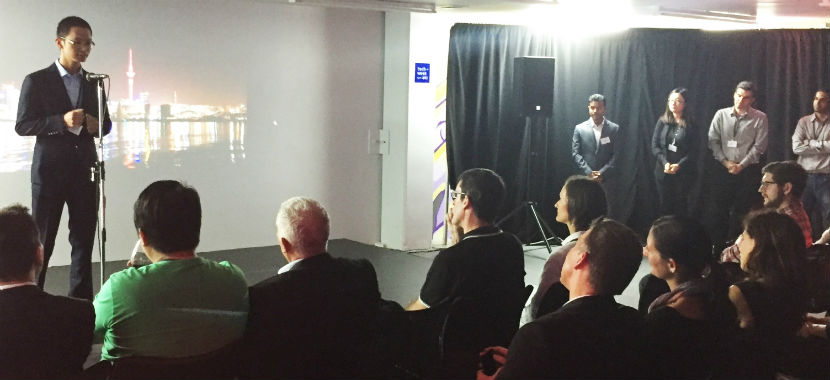
    Francis Valentine, Founder of Mind Lab, presenting on the future of learning

    Francis Valentine, Founder of Mind Lab, presenting on the future of learning

  • ENZ signs MOU with Tokyo Metropolitan Board of Education

    Keizo Nakai, Director General of the Board of Education, signed the memorandum during a ceremony at the New Zealand Embassy in Tokyo. ENZ’s Chief Executive, Grant McPherson, had already signed in Wellington.

    New Zealand Ambassador to Japan, Stephen Payton, and ENZ’s Senior Market Development Manager – Japan, Misa Pitt, were among the participants that served as witnesses to the signing.

    As the Tokyo Metropolitan Board of Education landed in Wellington a week prior to the signing ceremony, Misa found an opportunity to show the Board members more of New Zealand and to help them gain a better understanding of the New Zealand education system and pastoral care for international students.  

    Students from the Next Generation Leadership Programme at Wellington High School

    Students from the Next Generation Leadership Programme at Wellington High School.

    “We took them to schools in the area, including Wellington High School where the students from the Next Generation Leadership Programme are studying. It was great to see how much they are enjoying their experience studying here, and living with their homestay family.”

    ENZ also partnered with Wellington Regional Economic Development Agency to host a luncheon, inviting more than 10 school representatives interested in exchange relationships with high schools in Tokyo.

    “This was a great networking opportunity for the Board members to receive first-hand information on our education offerings and lifestyle in Wellington,” said Misa.

    “There are many opportunities for New Zealand providers to establish education partnerships – particularly with the Japanese government’s increasing focus on internationalisation ahead of the 2019 Rugby World Cup and 2020 Olympics and Paralympics.”

    ENZ would like to give special thanks to SIEBA, English New Zealand and other education bodies that played an important role in the lead up to the signing. 

    At the New Zealand embassy in Tokyo

    Keizo Nakai, Director General of the Board of Education (left of centre) added his signature to the memorandum at the New Zealand embassy in Tokyo.

    Networking lunch in Wellington

    Networking lunch in Wellington with the Tokyo Board of Education members.

  • Swedish students experience New Zealand at ACG

    ACG has partnered with a number of private Swedish high schools as part of a sister-school project, which saw a group of Swedish students and teachers land in Auckland in mid-February for a New Zealand study experience.

    The Swedish students are from the Swedish IT High Schools in Helsingborg, Gotheborg and Uppsala. During their three weeks in Auckland, the students have divided their time between ACG Senior College and ACG Yoobee School of Design – exploring practical study and pathway opportunities.

    As well as experiencing the daily life of an Auckland student, the Swedes have also enjoyed a variety of activities, including day trips to Waiheke Island and Tiri Tiri Matangi Island.

    Evelina Friman, from Gothenburg has enjoyed her experience, and said she would definitely recommend New Zealand to other students.

    “The city, diversity and people are amazing. The teachers and the schools that we attended were great as well. The locals are very friendly and make you feel like part of the community.”

    “I enjoyed ACG Yoobee School of Design the most – to have the opportunity to film in such beautiful nature is a blessing.”

    Each year through a programme called Atlas, the Swedish government provides funding to high schools looking to establish international links with schools from around the world.

    ACG’s Director of Marketing, International, Kim Harase, half Swedish herself, was quick to respond.

    “For ACG, this is a great opportunity to develop an exchange with like-minded students and teachers from a country that shares many values with New Zealand, including a love of nature, respect for individuality and a commitment to interaction with the world,” said Kim.

    Last year, ACG invited a group of Swedish teachers to Auckland and together developed the project to send the first Swedish students to ACG. Further visits from Swedish teachers and principals in 2016 saw interest grow in New Zealand as a study destination.

    Olga Elli, ENZ’s Education Marketing Manager – Europe, said teachers and students in Sweden know New Zealand for its quality education system and lifestyle balance.

    “Many Europeans view New Zealand as a place to learn both in and out of the classroom. The ‘adventure’ of study in New Zealand is what drives many Scandinavians to come here,” said Olga.

    The students will head back to Sweden at the end of this week, but ACG is already planning to reunite them with their new Kiwi friends.

    “The long-term plan is for New Zealand students and teachers to go to Sweden as part of a genuine two-way exchange,” said Kim.

    “We are delighted with the experience and look forward to further expand the collaboration.”

  • US students: Adventurers and Future Makers

    When talking to American students, Lewis found that most held positive views of New Zealand, but lacked any specific details of what study in New Zealand involved. It got him thinking about the four international student personas and, for the most part, Lewis said US study abroad students fall into two categories – Adventurers and Future Makers.

    The Adventurer persona

    The Adventurer persona

    “Adventurers are students who see study abroad as an opportunity to experience new things and places, and to have fun while learning more about themselves,” explained Lewis.

    “Most of my time with these students was spent mapping out the closest mountains to their university of choice, or explaining how to road trip around the country.“Adventurers are students who see study abroad as an opportunity to experience new things and places, and to have fun while learning more about themselves,” explained Lewis.

    “They’re an easy sell for New Zealand but there were a number of other students who weren’t as convinced.”

    Lewis believes this second group of students are in the Future Maker category. For them, career outcomes are top of mind, and education is seen as the road to get there. Lewis said these students were concerned that New Zealand’s appeal to thrill-seekers meant that the academic components wouldn’t be up to standard.

    “For these students, study abroad is a serious opportunity. Beautiful pictures of Fiordland aren’t enough – they need cold, hard facts of New Zealand’s high quality education.

    The Future Maker persona

    The Future Maker persona

    “Because of the perception of New Zealand as a place for outdoor adventure, many students were surprised to hear that they could study subjects like mechanical engineering, IT or physiotherapy in New Zealand, and that all universities ranked in the top 3% in the world.

    “They also had many enquiries about internship opportunities and programmes that combine study and work experience.”

    Lewis also saw that alumni play a  powerful role in this market.

    "At one fair, alumni from the University of Southern California were key in piquing the interest of their fellow students, sharing that their courses in New Zealand were cross-credited, and that the Tongariro crossing was just as beautiful as the pictures.

    “That’s the balance needed – students who are able to attest to both the academic rigour of courses in New Zealand and the adventure opportunities.”

  • University of Canterbury leads a delegation to India

    Accompanying Dr Carr were his UC colleagues Dr Stuart Wise, Deputy Head of School of Education, and Dr Gail Gillon, Pro Vice Chancellor.

    The delegation met with a range of Indian institutions in New Delhi and Mumbai to discuss study abroad, collaborations, research linkages and exchange opportunities. They addressed students and faculty on topics such as doing business in India, an overview on early literacy and learning, and New Zealand skill shortages for teachers in the fields of science, mathematics and ICT. The sessions helped generate awareness for specialist courses offered by University of Canterbury.

    Dr Rod Carr, Vice Chancellor of the University of Canterbury

    Dr Rod Carr, Vice-Chancellor of the University of Canterbury

    Jugnu Roy, ENZ’s Country Manager for India, said UC’s efforts to appeal to talented Indian students is already paying off. 

    “UC is the first New Zealand university to have an in-market presence in India, which has contributed significantly to the growth in its student numbers.  

    “Building on this, the recent delegation reflects UC’s strong and continued commitment to the Indian market.” 

    ENZ coordinated some high-level meetings and media engagement opportunities for Dr Carr during his time in India. 

    The New Zealand High Commissioner to India, Designate H.E. Joanna Kempkers, an alumna of University of Canterbury, hosted a networking dinner in New Delhi, which was attended by a number of Indian education stakeholders.  

    Dr. Rod Carr addressing Masters of Education students at IP University in Delhi.

    Dr. Rod Carr addressing Masters of Education students at IP University in Delhi.

    H.E. Joanna Kempkers (centre) and partner Dr Tim Markwell (also UC alumnus) with

    H.E. Joanna Kempkers (centre) and partner Dr Tim Markwell (also UC alumnus) with University of Canterbury representatives, ENZ representatives and a few guests.

What's in it for me?