Search
Showing 10 of 7355 results
-
APAC TVET Forum: Bringing us together
The inaugural Asia Pacific Technical and Vocational Education and Training Forum will be held online on the first two Fridays in November 2021. The event – themed “Bringing us together” – will allow people in the sector to share best practice and foster new connections despite COVID-19 travel restrictions.
The APAC TVET Forum will be opened by New Zealand’s Minister of Education, Chris Hipkins, and will feature an address by the Chief Executive of Te Pūkenga New Zealand Institute of Skills and Technology, Stephen Town.
The forum is driven by partners Te Pūkenga, Education New Zealand and Skills Consulting Group.
ENZ Chief Executive Grant McPherson says with an increasing emphasis on applied learning and work-ready graduates, the applied vocational sector in Aotearoa New Zealand has much to offer.
“A New Zealand education produces in-demand graduates with the skills and knowledge they need to join the workforce with confidence,” Mr McPherson says.
The APAC TVET Forum will bring together experts from the three sectors vital to effective technical and vocational education – government, industry and education. It will offer government-to-government, business-to-business and system-to-system content streams – bringing people together for a cross-system conversation.
There is no cost to register for forum sessions on 5 and 12 November, and there are networking opportunities and sessions on the days in between.
The international heft will come from speakers including Professor Christina Hong, President of the Technological and Higher Education Institute of Hong Kong and Marc Gomes, Group Senior Vice President and Head of Training for ADECCO Global.
The Pacific representatives include Dr Isimeli Tagicakiverata, Director of the National Training and Productivity Centre at the Fiji National University, who is presenting on upskilling, reskilling and lifelong learning as part of the system-to-system content stream.
The APAC TVET Forum builds on the strong foundations of the Sino-NZ Vocational Education and Training Model Programme, a forum for sharing best practice that is widely acknowledged as beneficial to both countries. Under this programme, Chinese and New Zealand institutions have taken turns to host the annual New Zealand-China Higher Vocational Education Conference.
China’s Central Institute of Vocational and Technical Education – a China Ministry of Education thinktank – has supported and presented at the previous conferences and will deliver a keynote presentation at the APAC TVET Forum.
Wherever we live in the world, a thriving future is what we all want. Governments, industries and educators are all working together to upskill and reskill workforces disrupted by the pandemic. The APAC TVET Forum is a chance to be part of the solution. To register or find out more, go to www.apactvetforum.com.
- Picture10 v2
- Nelson student zone
- Connect roadshow 2017
-
Connecting with education providers and agents in Germany
Earlier this month, ENZ took part in the ICEF Conference in Berlin. ENZ Associate Director of Engagement, Olga Elli, joined a panel discussion on the topic ‘Australia and New Zealand: The Year That Was and the Year Ahead’. This session brought together agents and providers from around the world to explore policy updates, challenges, and opportunities in international education.
Central to the discussion was New Zealand’s International Education Going for Growth Plan, with its ambitious goals and targets. Olga highlighted that the strategy is built around sustainable growth and grounded in public support as well as student success. She reinforced a message that resonated strongly with the audience: New Zealand is open, and students are welcome.
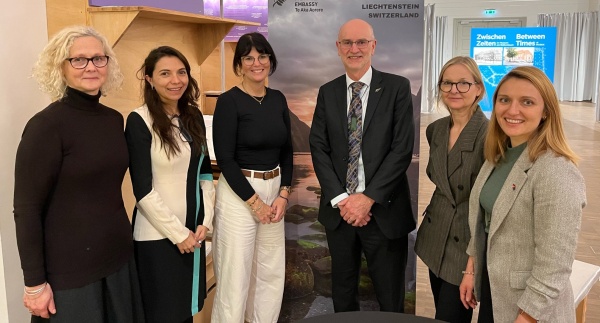
ENZ Associate Director of Engagement, Olga Elli, participating in a panel discussion at the ICEF Conference in Berlin.
Another key engagement in Germany was a roundtable with Hamburg-based education agents, held during a cultural night at MARKK Museum and hosted by New Zealand Ambassador to Germany, H.E. Craig Hawke.
The roundtable provided an excellent opportunity to exchange market insights, address challenges, and identify new opportunities. Agents shared positive feedback on New Zealand’s growing popularity among German students, citing safety, high-quality education, and the manaakitanga New Zealand offers as key drivers.
They also noted the success of scholarship campaigns in promoting New Zealand as a study destination. Single-sex schools were highlighted as particularly appealing to high-performing German student athletes, and agents expressed interest in exploring new schools in smaller coastal towns.
Olga said engagements like this reaffirm the importance New Zealand places on collaboration and open dialogue with international partners. “By sharing insights, addressing challenges, and celebrating cultural connections, we continue to strengthen New Zealand’s position as a trusted and welcoming study destination,” Olga said.
ENZ will continue working closely with education agents to ensure they have up-to-date information on New Zealand, awareness of emerging policy updates, and access to New Zealand Taught Me campaign materials – so students can experience the very best our country has to offer.
-
Opportunity to meet the ‘Voice of the Oceans’ crew in Auckland in November
What is the Voice of the Oceans (VOO) Initiative?
VOO is a maritime expedition that began in August 2021 in Brazil by New Zealand alumni David Schurmann and his family. David is a globally renowned film maker and environmentalist, former NZ secondary school and Auckland University of Technology (AUT) film student.
VOO’s mission is to examine and record the environmental state of the oceans including plastic pollution so that this data can raise awareness and inform education, science, and innovation that improves the health of our oceans. It has the global support of the United Nations Environment Programme.
The VOO crew will arrive in Auckland to mark the end of the first stage of their journey, after travelling for two years and visiting more than 100 destinations, recording the levels of plastic pollution they see as they go.
Who is David Shurmann?
Living and studying in Aotearoa New Zealand inspired David to create VOO. He first came to New Zealand as a child when sailing around the world with his family and decided to stay on to study here.
His study led him to tell the story of his family’s connections to NZ, including the sister he gained, through film. David directed Little Secret to tell his story, this film went on to be nominated for an Oscar in the 2016 Academy Awards. David said that the decision to complete the first stage in New Zealand was straight forward due to the close relationship they have with our country.
“Our relationship with New Zealand goes beyond the sentimental ties however as we recognise New Zealand’s leadership in its conservation of the environment, and particularly the marine environment. In our travels we share with other countries, the sustainable and best practices that we see here in New Zealand, including its waste management and the prevention habits and practices of waste entering the ocean,” said David.
The Event
To celebrate their arrival, the Latin America New Zealand Business Council has organised this event on November 3 to bring together experts in the fields of sustainability, innovation, the environment and climate change to join David on a panel discussion on the topic of sustainability and innovation. Following the discussion, event participants can visit the KAT sailboat moored in the Viaduct harbour.
The event will have the participation of His Excellency Marcos Arbizu, Ambassador of Brazil and Dr Matthew O’Meagher, Director of the Latin America Centre of Asia-Pacific Excellence.
Event panellists include:
-
Colum Rice - Head of Strategy & CFO at Mint Innovation
-
Dhanya Herath - Co-founder Climate Club NZ
-
James Ferrier - Co-founder BioFab NZ
-
Rachel Williams - Founder and Managing Director Viva Expeditions Ltd
Please join us to recognise the important trip the Schumann family have taken so far and engage in a discussion about sustainability and innovation.
Click here to register: Brazil and New Zealand: Sustainability and Innovation
- 123
-
New insights on East Asian and Indian markets for New Zealand educators
Education New Zealand is bringing together education agents, academics, administrators, government officials and other experts for seven twice-weekly sessions starting on 18 November 2021.
ENZ’s Regional Director Asia, Ben Burrowes, says the East Asia and India Market Insights Series will explore ways of staying connected in the region, analyse competitors and market trends, and offer fresh perspectives on New Zealand’s offerings.
“Our expert government, institution, agent and industry partners have up-to-the-minute insights to share on learner demand, market sentiment and the competitor landscape,” he says.
“The range of perspectives on offer will be invaluable in helping our people to shape their strategies and continue to build a sustainable international education sector.”
The series of seven webinars runs on Tuesdays and Thursdays from Thursday 18 November to Thursday 9 December 2021 between:
4 pm – 4:45 pm NZDT
8:30 am – 9:15 am IST
10 am – 10:45 am ICT
11 am – 11:45 am SGT
12 pm – 12:45 pm JST/KST
Each webinar features two presenters and is 45 minutes long including a live Q&A segment. Register now for free access to any webinar.
-
From the Chief Executive: Take a new look at a New Zealand education
Kia ora koutou,
I’m excited to share Education New Zealand’s new global brand campaign – “Take a new look at a New Zealand education.”
The brand campaign is designed to ensure that a New Zealand education remains a highly desirable one.
The campaign promotes our international education sector and the audience includes students around the world who want to explore new, flexible study options.
In other words, it’s a move from Study in New Zealand to Study with New Zealand – a broader idea that draws together all our onshore options with online, offshore, pathway and blended learning.
The campaign is crucial to the evolution of our New Zealand education brand, as we move towards reconnecting with the world.
It’s one of the keys to the Strategic Recovery Plan for International Education, which aims to diversify New Zealand’s education offerings and create a resilient international education sector.
Over November and December 2021, the first phase of the campaign will position New Zealand as a global education provider – one that students can choose to study with from anywhere in the world.
The video-led campaign targets all our markets using a robust email strategy. It is underway in most markets now and will be rolled out in China over the next few weeks. Watch the campaign video here.
ENZ has also produced new creative materials for education providers to use in their own promotions and marketing activity. I am really pleased to see how these materials – brand messages, photographs and video – reflect the shift to the Study with New Zealand message.
All brand and campaign materials are available to you on this ENZ Brand Lab link. Please use them in your work and encourage our education agent partners to do the same.
Our digital platforms will also be evolving to reflect the shift to the Study with New Zealand message.
I’m grateful to our education providers, who worked with us on this project. It was great to develop this campaign in consultation with people from the sector and to meet their request for unified marketing and messaging for New Zealand education.
He moana pukepuke e ekengia e te waka
A choppy sea can be navigated by a wakaGrant McPherson
Chief Executive, Education New Zealand Manapou ki te Ao - Correspondence and communications with the Labour Maori Caucus relating to the vocational education reforms