Search

Showing 10 of 7183 results

  • An update from ENZ’s international teams

    Instead, they’ve been taking proactive steps to support and connect with the international education sector safely, in line with local COVID-19 restrictions.

    Communicating with stakeholders

    For ENZ, ensuring the wellbeing of international students who remain in New Zealand over this lockdown period is a key priority. A factsheet outlining New Zealand’s support for international students has been developed and translated into the languages of key priority markets.

    Our teams overseas have been communicating with a range of stakeholders from local government and institutions to providers and agents, and in some cases directly to students and parents to ensure they have the latest information.

    ENZ staff have been recommending students enrol on NauMai NZ and asking international partners to pass SafeTravel information on to New Zealand students they may have on campus.

    The International team is able to tap into these networks for market-specific insights to help inform the New Zealand international education industry’s next steps during this rapidly-evolving and unprecedented situation.

    Anecdotally, the response in New Zealand has been well received overseas. New Zealand’s proactive approach to communications has been noted by partners.

    Doing it digital

    For our teams offshore, fairs, conferences and other international education events have had to be cancelled or postponed. As a result, they’ve ramped up their online activities.

    To share best practice advice and take advantage of the pause in promotional activity, they’ve developed educational webinars for sector stakeholders. 

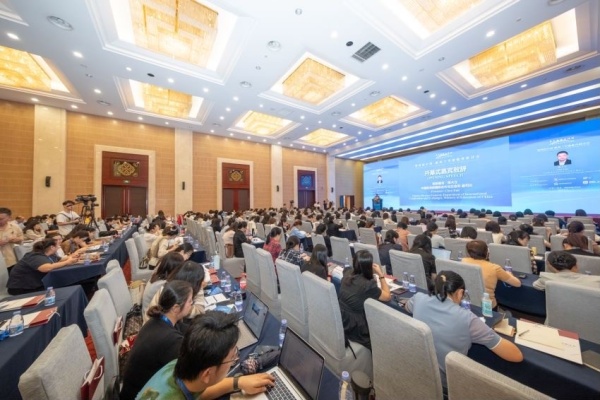
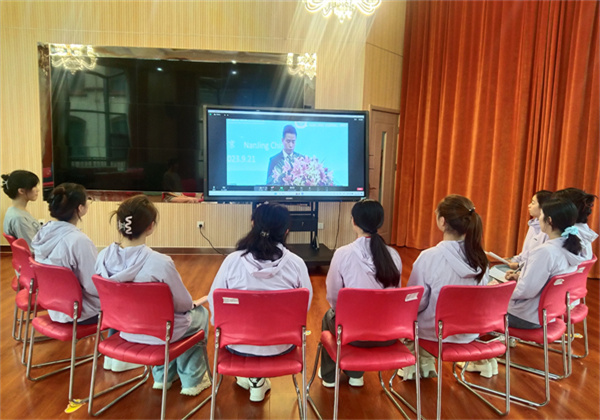
    1. On 24 March, ENZ Market Development Manager Shelly Xu teamed up with the General Manager of UMS (a China media specialist agency), Jordi Du, to deliver a webinar for New Zealand international education staff on Chinese social media. Over 30 people attended.

    The Chinese digital space looks very different to ours. The platforms WeChat and Weibo rule, rather than Facebook and Twitter. Shelly and Jordi aimed to demystify Chinese platforms by taking providers through the Chinese social landscape and discussing what kind of posts would stand out to their target audiences.

    Watch the Zoom recording.

    2. On 17 March, ENZ Team India delivered a webinar especially for Indian agents and counsellors focused on business courses available in New Zealand.

    An incredible 177 people tuned in to hear from ENZ staff as well as guest speakers: Associate Professor Lincoln Wood from University of Otago; Dr Jens Mueller from Massey University; Ashish Suri from The University of Waikato and Andrea McLeod-Karim from Victoria University of Wellington.

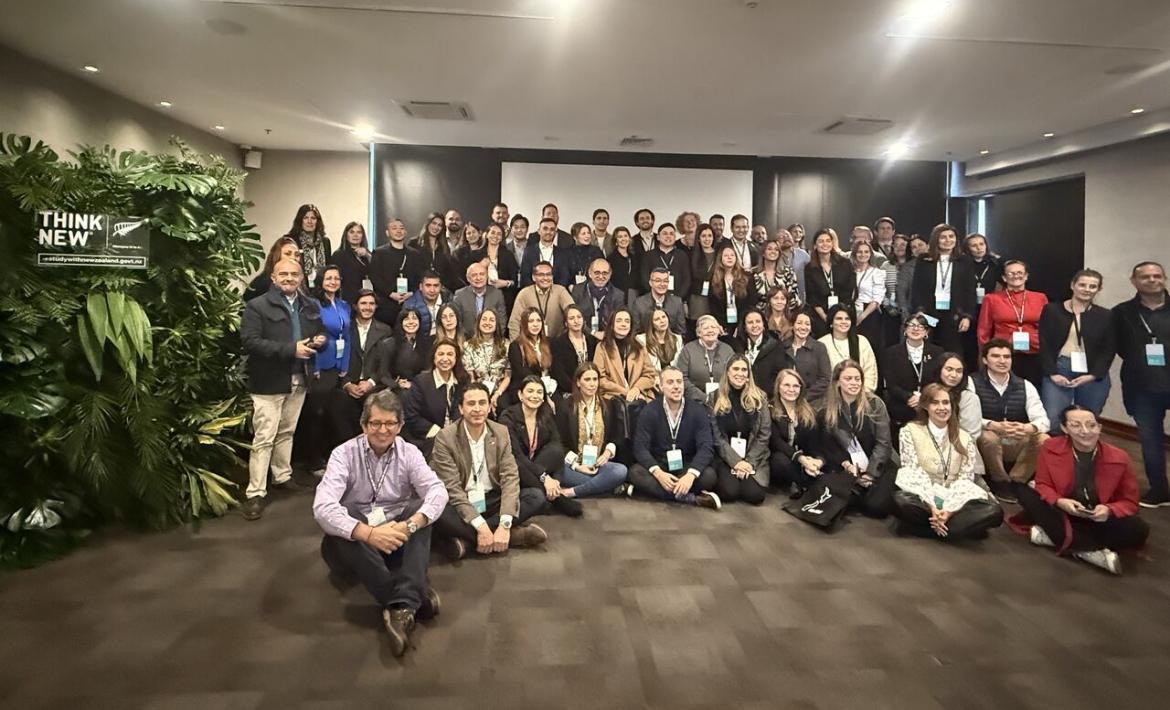
    3. On 16 April, Senior Market Development Manager for Chile and Colombia, Javiera Visedo, was the guest on a Facebook Live session with the Blue Studies agency (who have over 21,000 followers) for the Latin America Spanish-speaking audience.

    She also presented at Colfuturo (a Colombian scholarship-loan non-profit organisation) for a Study in New Zealand webinar on 17 April. This week, she will participate in a virtual fair organised by Colombian agency Estudiar.

     For the chance to attend future webinars, keep an eye on E-News and the ENZ LinkedIn and Twitter pages.

    Beginning to test market sentiment

    As ENZ moves into the next phase of supporting the international sector, a new priority for our international teams is testing market sentiment.

    For example, a survey was sent out to agents in Spanish-speaking markets in March. Of the 18 responses received, most of the agents have English language students in New Zealand and 68 percent are from Colombia. The agents set out their students’ main concerns at the moment: work situation while studying, uncertainty of the global situation, and visa expiration.

    This fits with what we are hearing across all markets – agents and other institutional partners need information about New Zealand’s response to the current situation.

  • New Zealand continues to protect and care for international students during lockdown

    Providers, host families and supporting networks have been setting up additional support for international students to ensure they feel connected and safe.

    Education New Zealand is pulling together some of the great things that have been taking place across the sector. Here are just a small number that we have heard about so far.

    • Otago University has a dedicated information page for students, with students registering with Ask Otago. They can then request daily phone calls to check in and see how they are doing. University recreation centre staff are also offering virtual fitness classes.


    • University of Auckland has been supporting the COVID-19 response by undertaking modelling work that informs the Prime Minister’s Chief Science Advisor and working directly with the Auckland District Health Board to help with testing capacity by using their facilities and people.


    • Rotorua English Language Academy (RELA) is teaching online classes to 30 students from nine different countries. Many students are worried about their families back home so in addition to support during class time, staff make individual phone calls and arrange fun activities such as the recent Easter video competition on WhatsApp. Friday full-school assemblies and farewell speeches continue to lift students’ spirits with the RELA tradition of singing ‘Now is the Hour’ – managed by the school’s director playing on the piano at home while students sing over Zoom.


    • Several Northland schools have been working closely with Study Northland to support the 150 international students in their care. The international students are being well supported by their schools and homestay families by keeping them busy and making them feel like an integral part of the family.


    • SIEBA is doing an amazing job supporting the school sector. The small SIEBA team has been working around the clock to provide advice and guidance to schools, including publishing residential care emergency guidance to help schools navigate these tricky areas. On top of all that, SIEBA is raising key issues with the Ministry of Education and alerting government agencies to emerging challenges.


    • Massey University’s international support staff are running virtual one-on-one support sessions which can be arranged by the students themselves. The university, like other universities, is making personal phone calls to all students to ensure they feel supported. Massey also has a range of wellbeing resources available and the recreation centres have taken their services online.


    • Aspire2 International has launched a number of online learning solutions that have all gained NZQA accreditation. This means English, hospitality, IT and business students can transition from face-to-face to remote learning quickly in order to complete their qualifications.


    We want to hear more about the great work the sector is doing to support international students within New Zealand both in enabling their learning but also supporting their wellbeing.

    Please let us know what your organisation has been doing and we will look to share this wider. Send your stories to industryteam@enz.govt.nz.

  • Around the world in five

    CANADA

    Country briefing: Canada confirms travel exemption and emergency assistance for eligible international students

    In a normal academic year, this week would have marked the end of classes for the winter semester at many Canadian universities and colleges, followed by a transition to final exams and the packing up of campus for the summer break. Needless to say, this year has been anything but normal so far.

    Read more


    AUSTRALIA

    Int’l Student Support Network launched

    The Australian Homestay Network has launched an Australia wide program called the International Student Support Network to provide short-term, heavily discounted homestay to eligible international students impacted by the global crisis. 

    Read more


    GLOBAL

    Measuring COVID-19’s impact on higher education

    A new report from Moody’s Investors Services highlights the financial impacts of the pandemic on higher education institutions around the world.

    Read more


    UNITED KINGDOM

    A day in the life of an online student

    To further her business career, Charlotte Synnestvedt had to make a choice. She could either stay in her home country of Norway where her business education would be subsidised or she could apply for a leading business school overseas.

    Read more


    GLOBAL

    Vouchers over refunds could save study travel sector from collapse

    The study travel sector is at risk of imploding unless language students are obliged to accept vouchers instead of being given refunds for cancellations of their overseas study experience, industry professionals have told The PIE News.

    Read more

  • Assistance during COVID-19

    International students are valued members of our community. We want to ensure they stay safe and have access to the information, care and support they need during this time.

    Education providers, intermediary or community organisations and students can use the resources linked below to know where international students in New Zealand can find assistance if they are in urgent need of essentials like food, medicine or cleaning products.

  • ISANA NZ – COVID-19 Update

    Catch-up cafés

    ISANA NZ is offering members and friends the chance to catch up and discuss the issues they are facing.

    We have a weekly Zoom networking opportunity on Wednesday mornings from 11am. Join special guests each week including officials from ENZ, MoE, NZQA and INZ. MoE is providing responses to concerns and questions raised by the weekly events.

    Register here for this week’s Catch-up Café, or through our Events tab on the website for upcoming Cafes. Please go to our Good Ideas and Responses page to learn more and access previous Café notes and responses.

    Each week, the general Q&A starts at 11am, and special guests are introduced at 11:30am. Email contact@isana.nz to forward any questions ahead of a session.

    Looking Ahead webinar series

    ISANA NZ is pleased to announce our International education: Looking ahead webinar series.

    This series includes professional standards and self-care, enabling international student integration and work readiness, responding to racism and supporting online learning. Keep an eye out in ISANA NZ mailouts, our website and social media platforms for details of our up-coming webinars.

    Feel Good Friday 

    ISANA NZ would like to acknowledge members who are going above and beyond the call of duty.

    Every fortnight on a Friday we would like to acknowledge these wonderful people through our social media channels and give them a chance to go in a draw for a $100 gift voucher to be drawn later in the year. Please send an 100-word explanation as to why you would like to nominate your colleague and also the logo of your institute (optional) to contact@isana.nz

  • English New Zealand’s new Accredited Pathway Assessment opens up cross-sector collaboration

    Bridge International College, Kaplan International Languages and Languages International are now able to offer the Accredited Pathway Assessment (APA).

    Although there are already agreements between individual English New Zealand schools and universities, the APA puts in place a structure for acceptance of proficiency across all of the universities, English New Zealand executive director Kim Renner says.

    “This will enable greater collaboration between English Language schools and the universities,” Renner says. “With inevitable changes coming for the export education industry due to COVID-19, seamless pathways into further study and close collaboration will become more important than ever before.”

    In Australia, the rate of students who transitioned to further study is significant – according to a report released by the Australian government in January, 54 percent of English language students go on to attend an Australian university or vocational training provider. Anecdotally, we know the rate in New Zealand is much lower. There is room for New Zealand to encourage more of the 20,000 plus students who study at unfunded English language schools in New Zealand to make much more of pathway opportunities.

    Accredited schools will use the APA to attract those students who are interested in studying at a New Zealand university, but may not meet the current English Language standards.

    The APA is also a way that English Language schools can prepare students for New Zealand’s academic teaching style.

    “The assessment is built into a school’s teaching – it’s not a one-off test,” Renner says. “Key goals are to increase cross-sector collaboration and provide a great student experience.”

    This announcement is a result of a Memorandum of Understanding signed by English New Zealand and Universities New Zealand in June last year. The APA is only available to English New Zealand member schools.

  • From the CE: The next phase

    One of the first projects to be discussed in the early days of lockdown, the Future Focus Programme, was launched last week.

    The programme has reallocated $1.2 million of our existing funding to provide our sector peak bodies with the support to reimagine international education in a post COVID-19 world. ENZ has already approved funding for two peak bodies.

    Initially, funding will assist peak bodies in developing an innovation plan with their sub-sector. Once planning is complete, funding may also be provided to support the introduction of innovation projects.

    ENZ’s Industry Team will work in close contact with the sector on the programme, and although it’s a little while away, I’m looking forward to seeing what creative initiatives come out of it.

    Since my last update, we have also stood up an internal group who will be charged with preparing and planning for ENZ’s role in any possible relaxation of border controls for international students.

    This group will work with other Government agencies and representatives from the international education community to develop an understanding of what the challenges are in reducing border restrictions and implementing strict quarantine requirements, as well as how the sector can prepare.

    We are aware that some international students are experiencing unusual hardship because of changes to their personal circumstances due to the global impacts of COVID-19. The Government has established a hardship grant fund for international students to address urgent, temporary needs, which ENZ will administer.

    The $1 million fund is designed to meet emergency, temporary needs, and must be both applied for and administered by either an education provider or a community group. You can find out more information on the ENZ website, International Student Hardship Grant Fund. Applications opened yesterday.

    I would like to finish with a whakataukī that has been in high rotation around ENZ.

    He waka eke noa (we’re all in this together).

    Ngā mihi,

    Grant McPherson

    Chief Executive

    Education New Zealand Manapou ki te Ao

  • Around the world in five

    AUSTRALIA

    Australia to consider July entry for international students

    International students may be the first cohort of international travellers that will be exempt from Australia’s current travel ban according to the latest three-step process for exiting lockdown that PM Scott Morrison has outlined.

    Read more

    GLOBAL

    Early lessons from moving ELT online: start with what makes your school special

    Students – and agents as well – are now faced with a wide range of new online language programmes, and are still measuring the quality of instruction and student experience on offer.

    Read more

    CANADA

    Canada: new flexible post-grad work rules

    Canada’s government has announced “flexible” post-graduation work permit rules for international students studying at a distance, while individual institutions have introduced millions of dollars in support funds to help students struggling financially as a response to Covid-19.

    Read more

    JAPAN

    COVID-19 hits student finances, amid calls for wider reforms

    Many students in Japan have been forced to give up university studies for financial reasons, after the country’s coronavirus emergency and lockdown resulted in the loss of part-time jobs and problems with family income.

    Read more

    CHINA

    China's top universities cancel entrance exams for overseas students

    Universities in China have begun canceling entrance examinations for overseas students, citing coronavirus concerns, as the central city of Wuhan reported a new cluster of cases for the first time since its lockdown was lifted.

    Read more

  • Agents key to NZ’s international education recovery

    Education agents have been playing a crucial role in ensuring that international students and their parents have accurate information about the impact of COVID-19 on New Zealand. Many international students will approach their agent for support and advice, ahead of their study provider.

    Looking ahead, agents will play an even more important role in the recovery of our international education sector and visibility of New Zealand as a study destination.

    ENZ’s General Manager – Partnerships & Marketing, Paul Irwin, says our partnerships with education agents will be essential for the international education sector’s recovery.

    “Education agents play an important role in students’ New Zealand education experience and are key information sources for both prospective and current international students. In most cases, they are the main interface between international education providers and students. Working with agents is a significant focus for ENZ and most providers as part of our COVID-19 recovery phase.”

    This view is shared by the sector. For example, at a recent SIEBA (Schools International Education Business Association) webinar, 77 percent of participating SIEBA members said recognised that education agents would be more important to the sector through the post COVID-19 recovery phase, while 33 percent said agents would be important.

    In response to COVID-19, ENZ has upped the frequency of communications and engagement with agents have the information they need to advise current and future students and their families.

    A key tool is AgentLab, ENZ’s special resource for education agents. Over 3500 agents around the world are registered to use AgentLab. It supports agents with regular COVID-19 updates, and a dedicated COVID-19 FAQs section to answer agent queries.

    In addition ENZ has held 11 well-attended COVID-19-specific webinars since February, reaching over 2000 agents. Topics have included measures taken by New Zealand in response to COVID-19, the importance of education agents in a post COVID-19 world and a Schools sector update on the support available to international students during this time.

    Agents also receive a fortnightly update from ENZ’s Chief Executive Grant McPherson, and a monthly electronic newsletter to ENZ’s 305 Recognised Agencies.

    Agents are also supported with market-specific webinars and live social interactions by ENZ’s internationally based teams, who are the first point of engagement for overseas agents.

    ENZ’s Manager – Education Agents, Geneviève Rousseau Cung, education agents are highly engaged with COVID-19-specific resources and communications to date.

    “We have seen 1081 new education agents register on AgentLab since late March (when New Zealand moved to lockdown under Alert Level 4). This is a huge 30 percent increase in registered agents in just seven weeks.

    “We are seeing high attendance for our COVID-19 specific agent webinars, which have emerged as one of our key communication channels with agents as they facilitate direct interactions and let us respond to a range of market-specific queries.”  

    Agent webinars are also a good opportunity for to run quick polls to measure agent sentiment on key topics.

    In a recent webinar, poll results showed that the perception of New Zealand’s COVID-19 response in agents’ countries or regions was overwhelmingly positive (84 percent). Just over 51 percent of agent participants said that their prospective students (with an offer of place to New Zealand institutions) were willing to defer their start date to 2021 (and 38 percent were undecided as yet).

    “At such a critical, unprecedented time, it’s great to see education agents playing a crucial role in ensuring that international students and their parents have access to the necessary information and advice regarding COVID-19,” Geneviève says.

    ENZ is planning a series of webinars involving ENZ teams, other New Zealand government agencies and the international education sector. If you would like the ENZ team to engage with you regarding a potential agent webinar, please get in touch with us at agenthelp@enz.govt.nz.

  • Meet the Team: Lisa Futschek

    Hi Lisa. Could you please outline your own role and the role of the International team?

    ENZ’s International Team delivers on the strategies our organisation sets to best position New Zealand as an education partner in our key offshore markets. It’s a two-way flow with our skilled offshore teams not only delivering a vast array of in-market initiatives, but also providing crucial market intel contributing to the setting of our core strategies and objectives.

    We ask a lot of our teams. Not only do they bring crucial language skills and a deep understanding of the cultural context, but they are also marketers, event organisers, Government-to-Government experts, relationship managers, skilled communicators and more. They need to be as comfortable talking with a Minister as they are with a student seeking an education in New Zealand.

    My role is to set the direction, to coach, mentor, energise, and to ensure that the output of our team plays its part in realising the overall vision of our organisation.

    How is the COVID-19 pandemic impacting your team’s work?

    The impacts of COVID-19 on the International Team’s work have been wide-ranging.

    The first order of things related to the closed borders and the need to cancel, postpone or re-imagine the large number of in-market events that had been planned.

    At the same time, there was a square focus for both ENZ’s off- and onshore teams to support the experience of those international students who remained in New Zealand or had been unable to get here. This included everything from their access to online learning, accommodation needs, physical and emotional wellbeing, support through hardship, visa queries and connection to repatriation flights.

    Throughout all of this, the offshore teams have been heavily engaged in communicating with a full range of stakeholders – students, parents, agents, industry partners, NZ Inc partners and governements – to keep them abreast of developments and to assist in responding to their wide-ranging information needs. 

    Can you tell me a bit about your own professional background?

    I’ve always been interested in international relations. I spent 18 years as a career diplomat with the Ministry of Foreign Affairs and Trade (MFAT), living and working in Chile, Germany and New York City.

    Through those 18 years at MFAT, I gained an understanding of New Zealand’s place in the world. There is no doubt that we punch above our weight. Positioning our nation globally through diplomacy is highly rewarding but it is also a long game.

    What I have found particularly satisfying since joining Education New Zealand in 2013 is the short gap between effort and result. We get to see very quickly the impact of our work on thousands upon thousands of people whose lives have been transformed by  a New Zealand education. I’m proud to be able to play a part in that.

    People might think that diplomacy is something which happens exclusively at embassies and at a Government level. But in fact, education diplomacy is part of our organisaton’s DNA. And through our alumni we have created an enormous international network of ambassadors for both a New Zealand education as well as everything else our country has to offer.

    What do you do in your spare time? Can you tell us about the choir you sing in?

    Yes! I’ve been in a local choir called the Doubtful Sounds since 2014. It’s wonderful. It’s complete “me time”.  It’s away from work, it’s away from the family, it’s an escape from the normal preoccupations of life. I find it completely joyful.

    I love making music with other people. We’re not too serious; it’s not an auditioned choir and reading music is not a pre-requisite. I love the fact there’s a whole range of people involved. Our choir master Bryan Crump (of RNZ fame) is a brilliant musician and arranger of music, and is very active in getting us in public. We sing at  weddings, flash mobs in the street, the Fringe Festival, slots on RNZ. We sang last year in the Wright’s Hill gun implacement and at this year’s Newtown Fair. 

What's in it for me?