Search

Showing 10 of 7183 results

  • Student voice 2014

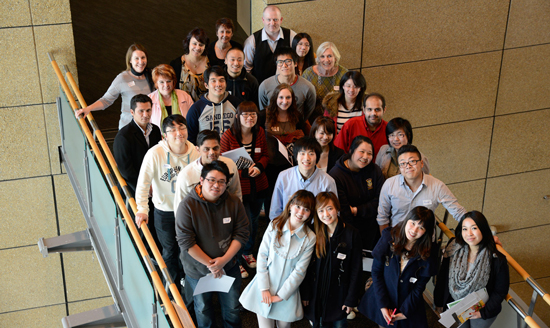
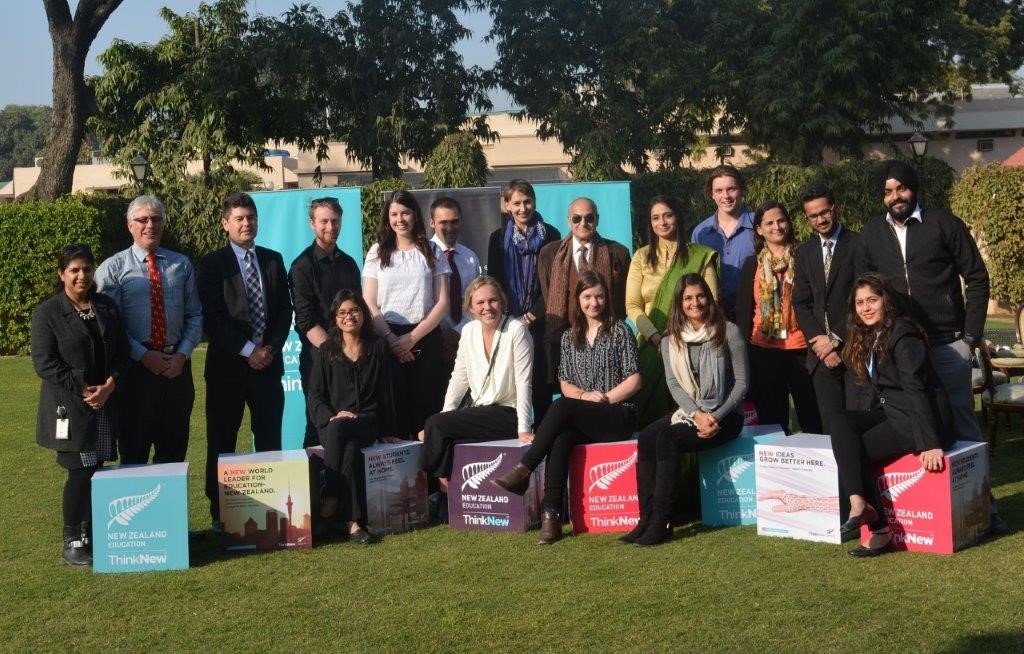
    Twenty six current and former international students came together from all around New Zealand to share their personal education experience about their time studying here.

    The first afternoon was all about fun and getting to know each other - a Matariki-themed scavenger hunt around Te Papa followed by a burger-making masterclass on a classic Kiwi BBQ and rounded off with a delicious pavlova decorating competition.

    The second day focused on workshops where students shared their New Zealand education stories. We wanted to find out what went well, and not so well, and where improvements could be made to increase satisfaction of international students experiences while in New Zealand.

    The workshops provided a platform for participants to provide advice to other international students, to hear their take on common statements and beliefs that are associated with education in New Zealand, and to network with international students from across the country.

    “I got to meet new people from all parts of the world and make new friends. I also felt the ENZ values our opinions and reviews by giving us importance. I would like to thank ENZ for giving us this platform,” said one student after Student Voice.

    This year we involved our 160k Facebook followers in Student Voice with followers getting amongst the event by interacting with the students and making comments. You can find photos and comments on our Facebook page or search Facebook for #NZstudentvoice2014.

    “It was a great experience. And I learned a lot from other students’ experience. And now I understand that I wasn’t the only one to experience difficulties initially in New Zealand.”

  • Showcasing NZ in cyberspace

    Lisa Futschek, Regional Director – Americas, Japan and Korea, said: “It all stemmed from an industry idea during the Latin American mission in November last year. It was dusk, we were all in a charter coach chugging over the crest of a steep hill and watching the millions of lights of Medellin miraculously materialise below us, when Prof. Al Gillepsie from the University of Waikato, mused about how we should be marketing New Zealand international tertiary education via subject rather than institution. Over a Colombian meal that evening, we sketched out a schematic on what that might look like and the seeds of the virtual fair were sown.”

    International Events Manager Caroline Carruthers said the experience for students was similar to physical fairs. “Students were able to ‘visit’ individual institution’s stands, view videos, pick up brochures and business cards, and ask providers questions.

    “It was interesting to note a change in the way students plan to study overseas. A lot of high school students were planning for their tertiary education overseas. A few years ago, high school students would only ask about high school courses and wouldn’t plan that far ahead.”

    “We are evaluating the feedback we received from the institutes who participated in this pilot and will evaluate if it’s an approach to roll out to other markets and add into our event mix.”

  • New appointments in South and South East Asia

    Including some new roles to support the existing and potential opportunities the region offers New Zealand education providers. 

    “The SSEA region accounts for around a quarter of all international students in New Zealand and offers significant export education opportunities as well. It is home to two of ENZ’s three tier one markets and our fastest growing market this year – India,” says Peter Bull, General Manager International.

    Peter says the new appointments will increase the depth of in-market expertise in marketing, business development and government relations, as well as ensure strong coordination with NZ Inc agencies and the education sector in New Zealand. 

    Following the appointment of Ziena Jalil, as Regional Director – SSEA from 1 July, the latest additions to the region include:

    Sarah Stabler has been appointed Lead – Public Relations/Marketing (SSEA). This is a new role and aims to provide stronger marketing and PR expertise and leadership in the region to increase awareness of New Zealand as a study destination and to lead the delivery of ENZ PR and marketing activity. Sarah is currently Senior Director at PR agency Baldwin Boyle Shand in Singapore and has more than 16 years of PR and marketing experience in South East Asia. Sarah is based in Singapore.   

    Grant Fuller has been contracted as a Senior Advisor to work on a specific project with ENZ in-market staff and the Business Development team in New Zealand to develop a strategy for realising the many business development opportunities that the region offers. Grant is a former New Zealand Trade Commissioner to Malaysia, Indonesia and Singapore and has considerable in-market experience.  

    Jugnu Roy has been appointed Lead – Events (SSEA). In this role, Jugnu will provide leadership to ENZ’s SSEA marketing staff on developing and implementing an events strategy which supports New Zealand institutional needs. Jugnu has most recently been ENZ’s Marketing and Strategic Relations Manager for South Asia and will continue to perform this function while taking on leadership for regional events as well. Jugnu is based in New Delhi. 

    Francesca Hilbron has been appointed Lead – International Market Manager, South and South East Asia, Japan and Korea. Francesca’s role provides the conduit between ENZ in-market staff and New Zealand strategic relationships. It also provides leadership for activities such as Ministerial missions and bilateral meetings. Francesca has most recently been ENZ’s International Market Manager for South Asia, Japan and Korea and brings useful NZ Inc experience to the role, having also worked for Immigration New Zealand. Francesca is based in Wellington. 

    Johnny Tramoundanas-Can has been appointed International Market Manager, South East Asia and reports to Francesca Hilbron. Johnny has joined ENZ from the Tertiary Education Commission where he was most recently Private Secretary in Minister Joyce’s office. Johnny is based in Wellington. 

    In addition, ENZ will shortly be recruiting for another new role – Marketing and Strategic Relations Manager Malaysia, to be based in Kuala Lumpur. 

    “Malaysia is a very important market for New Zealand given the high value of students who come from there. However, recent changes in-market have meant that our student numbers are down. This role will play an important function in strengthening in-market relationships and strongly driving awareness for New Zealand in this key market,” says Ziena Jalil, ENZ Regional Director SSEA. 

    “There are exciting times ahead for the South and South East Asia team, with ASEAN 2015 commemorations and the Cricket World Cup coming up, among many other activities. Our team is determined to ensure we make the most of these opportunities for New Zealand’s education sector,” says Ziena. 

    For further information on ENZ plans for SSEA please contact Ziena Jalil at: ziena.jalil@enz.govt.nz

  • What’s new in The Brand Lab?

    We received an overwhelmingly helpful response when we asked for ideas for locations and talent for the recent photo shoot – thanks to everyone who made us feel so welcome.

    “It was lovely to get out around the country to get a wide range of new photos, including shots of primary and co-ed schools, unique ITP and PTE courses, Saudi students, technology and education and general life in New Zealand,” says Kaylee Donald, International Brand Manager.

    “We’ve now got over 800 photos for you to choose from when you are putting together your marketing material, or looking for pictures that show what it is like to be a student in this country.”

    “At the moment we are working on a set of exciting ‘Day in the Life of’ videos, following current students as they go through their day including home and study life.”

    “To keep the videos relevant for all sectors, the specific institution the student is at will not be shown and each video will focus briefly on their studies and then capture what they do outside of study.”

    “We will be including things that might seem ordinary, like catching a bus to school, but we know that prospective students want to be able to get a feel for what actual life in New Zealand will be like.”

    “I can’t think of anyone better to tell our stories than the students that are here experiencing everything this country has to offer,” says Kaylee.

    The new photos are available now in The Brand Lab and the videos are expected to be available in November.

  • Immigration ONLINE-Student goes live

    The new service is available to full fee paying, scholarship, exchange and English language students. Students will find the login box here

    Student applicants will still need to provide passports, either through Visa Application Centres offshore or, if the applicant is already in New Zealand, through the INZ Palmerston North office.

    Once label-less visas (e-visas) become widely available in 2015, most applicants will no longer need to send in their passports along with their applications.  

    Next year, INZ’s third party partners such as immigration advisers, education agents and education providers will be able to apply for visas on behalf of their student clients.

    Until then, all current application methods will remain available. Advisers and providers can help students complete the form, but for now, the student must submit it until ‘apply on behalf ‘becomes available.

    Further information about INZ’s Immigration ONLINE project can be found here.

  • International Students Support Framework

    I-graduate surveys show that we do a good job with supporting international students, exceeding the international benchmark in many areas.

    But we also know that international students are at times overloaded with information which can be inconsistent and are looking for a more coordinated, thorough, and targeted approach to the information they receive.

    The Ministry of Education is leading a cross-government agency initiative to develop an International Students Support Framework to ensure that government information and support for international students is well coordinated with the support which providers deliver.

    Government agencies provide a wide range of information to international students and services where necessary, helping communities, sectors and other relevant bodies to create a good support network for international students in New Zealand.

    A variety of organisations including education agents, education providers, community bodies and local government also provide support and we need to work together to ensure we are meeting international students’ information needs.

    Once government agencies have shaped what the Framework may entail in terms of government initiatives, wide consultation is planned with sector bodies, education providers, international students, student bodies, local governments, community organisations, and other stakeholders.

    Consultation will seek feedback on:
    • government roles and responsibilities, including proposed initiatives

    • current practice outside of government departments

    • developing a directory of information and support services for international students throughout New Zealand

    • what is missing or could be done better.

     A process and timeline for feedback on the draft framework will be advised in the coming months.

  • Stephen Fleming flies New Zealand education flag in India

    Taking advantage of the former Black Caps captain’s massive profile in India, ENZ organised several awareness raising events fronted by Stephen Fleming to encourage Indian students to come to New Zealand.

    “Stephen has legendary status in India with the country’s love of cricket and Stephen’s own connections through the Indian Premier League where he is coach of the Chennai Super Kings. He is a very well-known and highly regarded personality and working with him to convey New Zealand’s education story has enabled us to reach a volume and quality of audience that might not have been as readily accessible otherwise,” said Ziena Jalil, ENZ Regional Director for South and South East Asia.

    “As a passionate advocate for quality education with a strong belief in the New Zealand education system, Stephen does a great job in exciting students, teachers and parents about what we have to offer.”

    Stephen was at all three Education New Zealand fairs in India in late August to interact with students and answer questions about studying in New Zealand. School and tertiary education institution visits in Mumbai, Chennai, Bangalore and New Delhi attracted more than a thousand potential students.

    We also secured a huge volume of quality media coverage as a result of Stephen’s promotional activities – one media briefing drew more than 50 journalists including several TV channels.

    An online campaign challenged students who were already thinking about study abroad options to take the next step and actively consider New Zealand as a study destination.

    Visitors who registered their interest in studying in New Zealand on the Education New Zealand campaign website were contacted by an education agent who provided them with more information about the courses, the criteria and support with the application process.

    By expressing interest, prospective students were automatically in to win an exclusive dinner date with Stephen Fleming. The lucky winners enjoyed a once in a lifetime experience with the cricketer who is regarded in India as one of the best captains the Black Caps have ever had.

    You can find photos of Stephen, the students and the fairs on our facebook page.

    While this campaign in India is over, New Zealand’s co-hosting the 2015 Cricket World Cup (CWC) also offers additional opportunities in India from an education perspective.

    If you are interested in learning more about the Stephen Fleming or CWC programmes for India should contact ENZ at: india@enz.govt.nz.

  • NZIEC in review

    “Attendees welcomed the inclusion of market specific presentations from our offshore staff,” says Clive Jones, General Manager Business Development.

    “Think New in Action is all about matching the strengths of our education system with the needs of students looking for an international study destination. To do this effectively we have to understand our key markets and how students make their education choices.”

    Conference feedback shows that people highly valued the presentations by the two keynote speakers, Frances Valintine from the Mind Lab and Jeff Lehman from NYU Shanghai.

    Frances challenged the audience with her look into the future of education from the perspective of the upcoming generation of global digital citizens – generating a buzz of discussion over lunch and many references back to her presentation in the afternoon sessions.

    Jeff shared his first-hand knowledge of establishing international partnerships in China which seemed to resonate with the audience.

    “A particular pleasure was NYU Shanghai Vice Chancellor Jeff Lehman’s presentation. The China team had identified Jeff as a speaker, and it was rewarding to see industry colleagues respond so positively to his insightful presentation on the “four waves” involved in China relationships – and to hear the chuckles as people recognised their own experiences of working in China,” says Alex Grace, Regional Director Greater China.

    All of our international staff presenting at the conference agree that the opportunity to talk to so many people from across the industry was one of the major benefits of the conference.

    Fiona Haiko from our Japan office says: “It was a great chance to hear from different institutions about their aspirations for Japan and to get a feel for how the New Zealand industry perceives the Japanese market.”

    The benefits of getting more than four hundred industry participants together in one place also has a positive effect on our own people.

    “Coming back to New Zealand is always great – even in winter. It is sort of a reality check for the job you keep doing over the year from far away,” says Ute Haug, our Senior Market Development Manager in Berlin.

    “It is most important for me to come to New Zealand, to get a direct feel of the country, link back to headquarters and take new impressions back to Berlin.”

    Back in Riyadh, John Laxon describes the conference as “a great platform for getting organisations interested in the Middle East region and considering new ideas and initiatives” and adds that the industry seems to be on a roll after some hard work over the last couple of years.

    Thanks must go out to all the industry presenters who generously shared their professional knowledge and experience in workshops and sessions.

    “The strategic roadmaps development process has showed us that increased collaboration and cooperation is key to growth across all sectors and around the country.”

    “I am looking forward to the next year as the industry steps into the driver’s seat and begins to put some of the strategic choices and actions into operation,” says Clive.

    You can download the presentations from the conference here.

    The New Zealand International Education Conference is scheduled to be held again in August 2015.

  • Bold gaokao reforms announced

    The changes will see the removal of streaming – a policy which has been in place since 1957 – allowing students greater flexibility in subject choices to count toward their final score. Higher education admission processes are also slated to change.

    Common subjects remain

    Under the current gaokao system, students must study Chinese language, maths and a foreign language (usually, but not exclusively, English). Students will continue to study these common subjects.

    While the three common subjects will be tested at a ‘unified date’, many provinces will allow students to take two separate exams for English and submit their best result.

    Streaming abolished

    The reforms will remove the policy of streaming students into the arts stream or the science stream in their second year of senior high school. Instead, students will study a mix of arts and science subjects.

    More subjects introduced

    As well as the three common subjects, the reforms will see students study 11 others. The 11 subject areas will likely vary between provinces.

    While students must study all 11 subjects, only three results from six identified subjects – history, geography, politics, chemistry, biology and physics – will count toward their overall gaokao score. The three results may be a student’s best results and/or be from subject areas which align well with their future study plans.

    The 11 subjects will be assessed based on a ranking system, with students awarded a ‘pass’ or ‘fail’ grade. How the rankings will be converted into scores for the overall gaokao score is an area that will be clarified through implementation plans.

    These changes will likely see students prioritise particular subjects based on their future study plans.

    Change in admission processes

    The admission processes of China’s higher education institutions will also change. The reforms encourage institutions to adopt a multidimensional enrolment system; to look beyond a singular focus on gaokao results to include ‘academic performance’ and ‘overall qualities’ in their assessments.

    With the removal of streaming, it is likely that Chinese higher education institutions will provide students with greater clarity as to the subject requirements they must meet to apply for specific fields of study – for example, a higher score in politics may be more important for students seeking to study law than biology.

    Another change relates to the ‘extra points’ policy. This policy saw students with strengths in sports or artistic pursuits awarded bonus points for the gaokao and thus a better chance of entering top universities. This policy will be removed from 2015.

    Implementation

    The China Ministry of Education has designated Shanghai municipality and Zhejiang province as pilot areas for the reforms. Implementation will begin later this year for first year students at senior high schools.

    Both Shanghai and Zhejiang are expected to publish implementation plans in the coming months which will outline in greater detail how the reforms will be implemented.

    The reforms will be rolled out nationwide from 2017 and are expected to be fully implemented by 2020.

    Rationale for the change

    The reforms follow the significant debate across China about the education system’s ‘fitness for purpose’ in an era where innovation is essential for the next phase of China’s economic development.

    The reforms seek to address common criticisms of the gaokao. As Vice Minister of Education Du Yubo said, “to put it simply, we are trying to solve the problem of yi kao ding zhong shen (one exam determines one's entire life)”.

    Greater international recognition likely

    The reforms will likely stimulate an increase in the number of tertiary institutions around the world accepting gaokao for admission into degree programmes. A growing number of institutions already accept gaokao results, including seven of Australia’s Group of Eight universities.

    Education New Zealand has been working with Universities New Zealand on the acceptance of gaokao results for direct entry. We are interested in hearing from all New Zealand providers which do currently or are considering direct entry on the basis of gaokao. Email us at china@enz.govt.nz.

  • Brazilian university professors visit

    Last month Education New Zealand and MFAT joined forces with Latino New Zealand to host representatives from top Brazilian universities on a visit to New Zealand. The visit aimed to establish institution to institution links between universities of the two countries, to increase the Brazilian institutions’ understanding of our universities and to raise our profile in the Science Without Borders programme.

    Eight Brazilian universities participated in the visit, including State University of Campinas (UNICAMP), Federal University of Rio de Janeiro (UFRJ), Federal University of Minas Gerais (UFMG) and Paulista State University (UNESP), all ranked in the top 500 in world.

    The visiting professors met with representatives from all eight of our universities as well as with ENZ, UNZ and the Brazilian Ambassador in New Zealand. 

    This is the first significant contact between the universities of the two countries and all of the participating universities were very keen to establish long-term research linkages with New Zealand institutions. Most of the Brazilian universities represented are well resourced in various areas of research, particularly in areas such as agriculture and plant and animal sciences.

    As a result of the visit, ENZ has received invitations to present to some of the universities and one of the professors also offered to join the New Zealand SWB presentation at his university to share his positive experience in New Zealand. Most of the visiting professors have also uploaded photos of their trip on Facebook and their university pages where they will be widely viewed by their contacts and university communities.

    Brazil is New Zealand’s largest source country for international students in Latin America. Traditionally Brazilian students come to New Zealand for short-term language courses, but in recent years we have seen an increase in the number of students from the school sector, mainly due to the Pernambuco state’s Win the World scholarship programme.

    Since New Zealand joined the Science without Borders (SWB) scheme in 2013, more than 170 Brazilian students have studied in New Zealand under the undergraduate sandwich programme.

    Although the undergraduate sandwich (study abroad) awards take up the majority of the SWB funding, the programme also funds full PhD and sandwich PhD studies. A new Masters programme has also been established and ENZ and UNZ are currently working on New Zealand’s inclusion in this programme.

    SWB also provides the following awards:

    • Inbound Fellowships which aim to bring early-career researchers and senior scholars to Brazilian universities and research centres.

    • Young Talent awards fully fund one to three year research stays in Brazil with an attractive package including round-trip tickets, relocation expenses, a tax-free highly competitive lecturer-level monthly allowance, a contribution toward research costs and funding for research assistantship.

    • Special Visiting Researcher Programme for joint projects with research groups in Brazil and work in the country for up to three months every year over two to three years. A generous grant is available to researchers including round-trip tickets for every annual visit, a tax-free highly competitive senior-level monthly allowance, a contribution toward research costs and funding for a sandwich PhD at home and a Post-doctoral Fellowship in Brazil.

    • Offshore Technological and Innovation Development awards that support the participation of Brazilian researchers, specialists and technicians in development and training activities overseas.

What's in it for me?