Search

Showing 10 of 7183 results

  • Thank you for your help

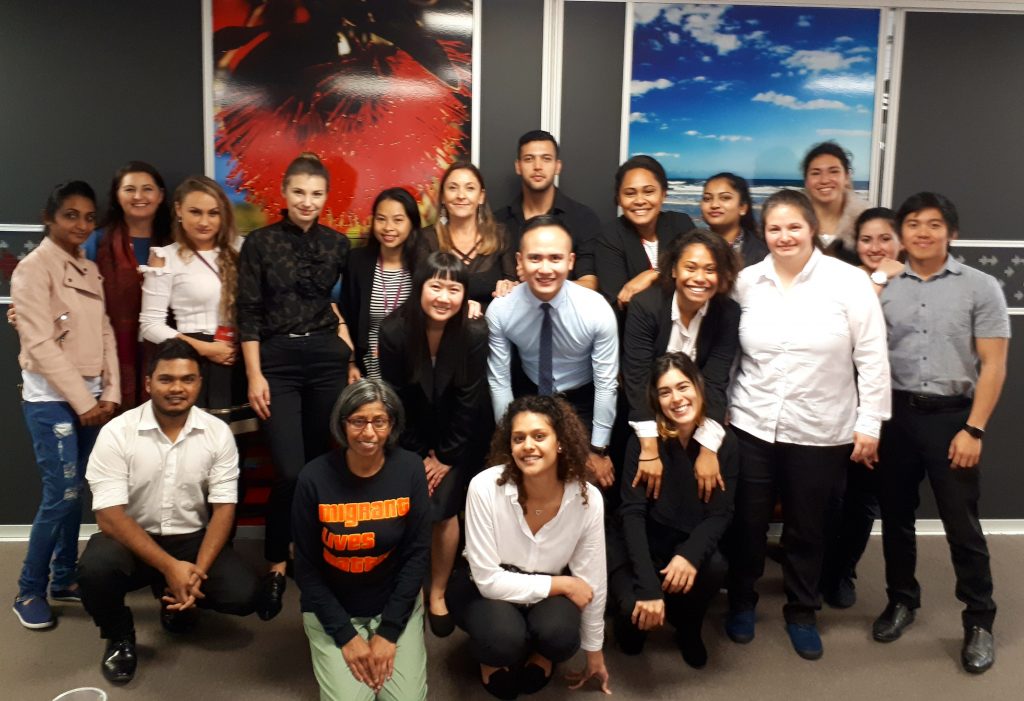
    International students around the country are being photographed, videoed and interviewed to inform and update these materials which will be used online, at education fairs, during offshore school visits and more.

    Education New Zealand (ENZ) would like to thank the schools and institutions nationwide who have helped us by making available students and locations for new photography, for our new high schools campaign (to be run in Thailand, Viet Nam, South Korea and Japan) and for the Dragons documentary campaign in China.

    A marketing toolkit for education providers is also being developed as part of our revamp of marketing materials. The toolkit will include resources schools and institutions can use in their marketing (such as an image library) and collateral for outbound and inbound international visits, including a promotional DVD about studying in New Zealand.

    Institutions have also helped revamp the New Zealand Specialist Agents (NZSA) training programme, due to be launched in the next few months. ENZ has modernised the training programme for agents based on feedback from institutions, agents themselves and students. Training will be provided online through an interactive, seven-step e-learning programme that concentrates on the most important information agents need to sell a New Zealand education.

    Kathryn McCarrison, ENZ’s General Manager Marketing and Channel Development, says Education New Zealand appreciates how responsive and accommodating institutions have been to requests for help and information-checking over the past few months.

    “Despite being busy, you’ve taken the time to bring your best and brightest to our attention. We can’t create great marketing campaigns without your students’ stories, so thank you for your enthusiasm and cooperation.”

  • Code Administrator transfer to take place in August

    On that date NZQA officially becomes the Code Administrator.

    Until 1 August, Code signatories should continue to contact the Code Office at the Ministry of Education for Code related matters. The NZQA will announce future arrangements for Code signatories, ahead of the transfer.

    The Ministry of Education received 44 submissions on the proposal to transfer functions, including 37 from signatory providers (20 schools, 12 private training establishments, 1 ITP, and four universities), plus seven submissions from sector bodies.

    The majority of submissions supported the proposal, but some questions were raised around potential costs, NZQA’s jurisdiction and ongoing support that would be available to providers, especially schools.

    Potential costs associated with the transfer will be covered by the Ministry of Education and NZQA - there will be no cost to the Export Education Levy.

    The transfer will improve alignment between Code quality assurance and other wider quality assurance processes which NZQA has responsibility for in the non-university tertiary sector. Combining this work in one agency will improve efficiency and avoid duplication.

    As the Code Administrator, NZQA will develop relationships with the Education Review Office, and further its existing relationships with schools. Current arrangements with the Education Review Office and Universities New Zealand on Code-related quality assurance will remain the same, unless changes are discussed and agreed collectively by all parties.

    The Ministry of Education and NZQA are working closely to ensure that all Code signatories are well supported and all functions are carried out as usual during the transition period.

    Current arrangements through which students lodge complaints with the International Education Appeal Authority (IEAA) with decisions reached by the IEAA and Review Panel will continue for the time being.

    A formal notice on this change was published in the New Zealand Gazette on 30 May 2013.

    More information can be found at the Ministry of Education’s website here

  • College of Creative Arts “foots it” with the world’s best

    The US National Association of Schools of Art and Design has granted the College “substantial equivalency”, the most comprehensive international benchmark of quality in art and design education in the world. The College now officially sits alongside such world-leading schools as Rhode Island School of Design, Cranbrook Academy of Art and CalArts.

    “The College of Creative Arts is another great example of a New Zealand education institution footing it with the world’s best,” says Kathryn McCarrison, Education New Zealand’s General Manager Marketing and Channel Development.

    “Based on what we know about how international students make their choices over where to study, the college’s substantial equivalency award is a potential game changer for them.

    “The key drivers of choice all relate to quality and reputation – does my institution choice advance my career prospects? How does it stack up quality wise? What’s its reputation and how does it rank internationally?

    “For this reason institutions need to make the most of any international recognition.”

    Kathryn says this type of recognition is also invaluable when it comes to Education New Zealand’s job of promoting New Zealand as a study destination.

    The College’s School of Design is already ranked top in Australasia by Red Dot, the global design award organization.

  • Visa options checker live

    The options checker provides better information specific to student circumstances on the range of visas that applicants may be eligible for.

    The new Visa Options Check is easy to use. Users start by choosing one of four simple options: Visit, Study, Work or Live. From there, the navigation is straightforward.

    The new options checker is the first, small step in the rollout of Immigration New Zealand’s new technology platform, Immigration ONLINE.

    When fully implemented by the end of 2015, Immigration ONLINE will allow all visa applicants to apply online. Information entered into Visa Options Check will be used to pre-populate part of a customer’s application form. Many will be able to complete the entire process online, through to final decision and receiving their visa.

    Visa applicants, or advisers acting for them, will be able to complete and upload forms, supporting documents and photos, pay fees and ask questions online.

    Online visa applications will start later this year with students and some temporary workers. By mid-2014, full online student visa processing will be possible through to final decision, and advisers will be able to view appropriate details of their clients’ applications online.

  • NZSA e-learning pilot starts

    A variety of agents and stakeholders from different locations around the world were chosen to test the revamped programme ahead of its wider launch in July and August. The launch date is still dependent on the feedback received during the two-week global pilot.


    The new e-learning programme is flexible and accessible. Agents can train at a time and place convenient to them and Education New Zealand (ENZ) can easily update and distribute new information to agents. Providing training online will also allow ENZ to better capture agent information.
    Agents have been kept informed of the changes through Channel Development Manager Kaye Le Gros’ monthly newsletters and at a various meetings in New Zealand and offshore.

    Here are a couple of screen shots from the new e-learning programme:

    agents train1agents train2

  • Great Air NZ packages for international students

    “Fly to Celebrate Graduation” is a special offer open to Chinese students and their families (up to four people including the student) flying back to Auckland for their graduation ceremony. When booking, they’ll need to show their graduation letters.

    The offer, which can only be booked in China through the Air New Zealand China Travel Centre (call 0400 101 8080), is for sale from 1 July till 10 September for travel between 25 August and 20 September 2013.

    The package’s return economy fare, CNY 5500, is up to 20 percent cheaper than a normal fare.

    A second package – “explorerPASS” - gives US and Canadian students travelling to New Zealand on Air New Zealand an easy and cost-effective way to travel within New Zealand and also visit Australia and the Pacific Islands on the same trip.

    For more information on how this pass works and terms and conditions please visit the website.

    The pass is on sale till 31 December 2013 for travel starting on or before 30 June 2014.

  • Kiwi robots breakthrough in China schools

    At the 2013 world robotics championship New Zealand high schools won three of the five high school divisions and went on to win the World Championships.

    Students from Glenfield College and teachers from Glenfield College, Westlake Girls High School and Massey University, led by Chris Hamling, National Manager of Kiwibots were invited by Tianjin Association for Science and Technology (TAST) to attend last month’s Tianjin Science Week.

    They visited five schools in the northern Chinese city. As well as showing off their robots, the teachers also did a number of presentations about New Zealand’s education system on the theme of “How we make winning students”.

    Chris says “We wanted to build up from a simple description of how robotics are used in the classroom and then go on to illustrate how New Zealand's education system emphasizes practical work.

    “Our ESOL support is important in allowing international students to find their feet quickly and that our universities are an important part of our education pipeline.”

    The Kiwi party was followed from school-to-school by CCTV, China’s largest television channel.

    Earlier this year TAST approached Chris wanting New Zealand schools to take part because China, like New Zealand, wants to to accelerate scientific progress and develop new technology, popularize scientific knowledge and create an environment for innovation. Chris says discussions between TAST and the Kiwibots led them to conclude that “it is primarily because of our education system that we are so successful”.

    Education New Zealand Senior Education Manager in Beijing, Stijn Te Strake, says “stimulating creativity through education is a recurring theme in dialogue with China and other Asian countries looking towards technological innovation to advance rapidly developing economies.

    “Kiwibots is a great demonstration of New Zealand’s strengths in these areas, in a fun and engaging manner that all can relate to.

    “During the visit we saw New Zealand and Chinese students interacting and learning from each other, with their passion for science and technology as the basis of common understanding.”

    Education New Zealand (ENZ) supported the Kiwibots visit to Tianjin. Last December ENZ also supported the Asia-Pacific Robotics Championship held in Auckland to leverage and promote New Zealand as a study destination, particularly for middle and high school students with an interest in technology.

    More than 500 students in nearly 150 teams competed in this championship, with 70 percent coming from offshore, mostly China (77 teams) but also Hong Kong and Singapore.

  • Education Southland: The power of collaboration

    Over the last five years they have achieved a 250 percent increase in international student enrolments and in 2012 there was a 16 percent increase in international students enrolments in Southland.

    Read more here.

  • Brazilian science scholarship opening

    Education New Zealand is now working with New Zealand Institutes of Technology and Polytechnics (NZITP) on an agreement to include ITPs the SWB programme.

    The inclusion of New Zealand universities in the national call for applications for the SWB Scholarship follows the signing of an agreement between Universities New Zealand and the National Council for Scientific and Technological Development (CNPq) which was witnessed by Prime Minister John Key and Brazilian President Dilma Rouseff, during Mr Key’s visit to Brazil in March 2013. 

    The SWB programme aims to send 100,000 Brazilian students on undergraduate “sandwich” courses; PhD “sandwich” courses; full PhD and post doctorates programmes to study science, technology, engineering, mathematics and creative industries at top universities around the world.

    The SWB also offers opportunities to foster relationships between institutions under a Special Visiting Researcher scholarship scheme. This scheme aims to attract recognised international researchers in priority areas set by the SWB programme to conduct projects with Brazilian research groups and visit Brazil for up to three months each year over a period of two to three years. 

    Information and applications for study at New Zealand universities is now available to Brazilian undergraduate and postgraduate students at this link.

  • GST and international students

    Officials recently released an issues paper dealing with the GST treatment of immigration services provided to non-residents.  While this does not have direct implications for educational institutions, it does serve as a timely reminder that supplies to non-residents must be considered carefully when determining whether GST applies or not. 

    The general rule regarding supplies of services to non-residents is that if the non-resident receives the supply in New Zealand, GST will apply. Conversely, if the supply or services physically takes place outside New Zealand, or if it is made to a non-resident who is not in New Zealand when the services are performed, the supply will be subject to GST at 0 percent.

    In relation to international students, where they come to New Zealand for their education GST must be charged. If the international students are enrolled in distance learning and do not come to New Zealand for the purpose of the course being provided, the supply will be zero-rated. 

    However, there may be situations where the international student completes most of the course via distance learning from offshore, but attends for example block courses in New Zealand as part of the course. In this situation part of the course delivery will be received by the student in New Zealand which makes the supply subject to GST at 15 percent rather than 0 percent. 

    Based on the comments in the immigration services issues paper, potentially all of the course fee could become subject to GST at 15 percent in this scenario, although depending on the detailed arrangements the GST liability may be able to be limited to a portion of the total course fee.

    If you offer any courses where the supply is received by students both within and outside New Zealand, we recommend that you seek tax advice regarding your GST liability.

    Andrea Scatchard is an Associate Director in the Hamilton office of Deloitte, and Allan Bullot is a Partner in the Auckland office.  Andrea can be contacted on 07 838 4808, and Allan can be contacted on 09 303 0732.

    While care has been taken in the preparation of this article, it has been prepared to provide general information only and should not be taken as a substitute for seeking professional advice. 

    Deloitte does not accept any liability for any loss that may arise as a result of any person relying on the information or views expressed in this article.

What's in it for me?