Search
Showing 10 of 7355 results
- METEOR
- AFS photo by Guillaume Kerherve thumbnail
- Helen Clark tweet NAFSA
- johngandlewisdc
- Dr Erik Lithander web version
-
Former international student represents Aotearoa in Ecuador
With his career as an agronomist under way, Juan Pablo came to New Zealand on an MFAT-administered scholarship in 1988, wanting to build on his agricultural qualifications. After taking English courses at Victoria University Wellington Te Herenga Waka, he completed a two-year Diploma in Rural Studies at Massey University Te Kunengaki Pūrehuroa.
His time in New Zealand had such a profound impact on his life that he returned home determined to establish lasting bonds between the two countries. And there is no doubt that his appointment reflects just how much he has achieved.
Juan Pablo says he had dreamed of coming to New Zealand long before he got here. He had read ‘Grass to Milk’, Campbell McMeekan’s 1960s account of New Zealand’s dairying management practices which was well-known among dairy farmers in Ecuador. “I read the book and decided this is the place I want to go.”
Learning from the best
Very few students travelled to New Zealand from Ecuador at that time, most went to the United States for further education, he says. “Many people asked me why I was going to New Zealand, and people still ask me about it today. I tell them I went because I wanted to learn from the best.”
Juan Pablo says he was inspired by his lecturers, especially the late Professor Colin Holmes, a respected researcher, mentor, and advocate of the dairy industry.
“I came from an education system where the teacher held all the knowledge, where it was always black or white. In New Zealand it was totally different because learning was inquiry-based. Critical thinking was the method of developing knowledge.”
He says his experience was transformative on both a personal and professional level.
“The things I saw and learned, the New Zealand way of doing things, and the care and respect people had for each other had a powerful effect on me.”
Over the decades since Juan Pablo’s education experience in Aotearoa, he has built a highly-regarded career in Ecuador, founding and leading primary industry companies, accepting numerous board appointments, representing Ecuador in international free trade agreement negotiations, and being recognised with multiple honours for his contribution to the livestock and dairy sector.
Enduring ties to New Zealand
But he never forgot his ties to New Zealand, working tirelessly to strengthen the bilateral relationship and boost both business and education opportunities. He initially established a company to import agricultural products from New Zealand. When he later secured the role of General Manager of the Cattlemen’s Association, he passed on all his business contacts, and the organisation has been importing electric fencing components and seeds from New Zealand companies ever since.
“In 1988, we brought some cattle in from New Zealand for a breeding programme. Now many farms in Ecuador, including the ones I oversee, have cattle from New Zealand stock. And in the 1990s I helped to establish an education programme with Massey, which saw lecturers come to Ecuador to take short courses in dairy management.”
“When it comes to dairy farming, almost everything I know I learned in New Zealand - pasture management, milk production systems, electric fencing, animal welfare – and farmers have applied these practices successfully in Ecuador,” Juan Pablo says.
“New Zealand is top of mind for every farmer here. When you talk about New Zealand here, everybody knows about its reputation in agriculture. Going to New Zealand is on the wishlist for many people.”
Honoured to represent Aotearoa
Juan Pablo says he was deeply honoured to be asked to be New Zealand’s Honorary Consul in Ecuador, a role which is all about connections and creating opportunities which benefit both countries.
“I am very proud, and I’m happy because I now have the chance to advocate for Aotearoa,” he says. “The better the relationship with New Zealand, the better it is for Ecuador too. We must focus on what we have in common and make the most of it.”
He firmly believes international education is at the heart of relationship-building and collaboration between countries, even more than tourism and business. “You learn the values of a nation through education. Time spent studying in New Zealand will make you a better person.”
“International students will become New Zealand’s ambassadors to the world.”
-
Around the world in five
Australia
From 1 July 2024, holders of a Visitor Visa in Australia will not be able to apply for a Student Visa onshore, in new rules announced by the Minister for Home Affairs, the Hon Claire O’Neil MP. Temporary Graduate Visa holders will also no longer be able to apply for Student Visas onshore. According to the Minister, these changes are aimed at restricting visa hopping, “ending the loopholes that allow student and other temporary visa holders to continuously extend their stay in Australia”.
Europe
The European Council, composed of national ministers from each EU country, has accepted a recommendation from the European Commission (which proposes and implements policies for the EU), to increase opportunities for European youth to learn, train, and study in other parts of Europe as well as in non-EU countries.
Japan
The annual survey of The Japan Association of Overseas Studies (JAOS) was released in May, providing a baseline indicator of outbound mobility from Japan based on responses from a sample of 40 JAOS member-agencies. Top line results show that outbound student numbers have now recovered to 83% of pre-Covid levels however destination choices continue to shift for Japanese students, and more are choosing to study within Asia.
Latin America
Latin America has become a region of high interest as colleges and universities worldwide seek to diversify their international student population, steering away from the traditional recruitment markets such as Southeast Asia.
South Africa
After pandemic-induced turbulence in South Africa’s English Language Teaching sector, which saw a decline in memberships, school closures, and more, the country is witnessing a significant market recovery post-Covid.
-
2024 Tripartite Fund awardees announced
Education New Zealand Manapou ki Ao (ENZ) congratulates the recipients of the 2024 New Zealand China Tripartite Partnership Fund. The three recipients were announced by Prime Minister Rt Hon Christopher Luxon at the closing ceremony of the New Zealand-China High Level Education Forum held in Auckland on Friday 14 June.
The recipients are Professor Chris Bullen from the University of Auckland, Professor Joce Nuttall from the University of Canterbury and Professor Wanglin Ma from Lincoln University. The three recipients were selected from a total of 30 applications by an assessment panel which included representatives from ENZ along with representatives from the New Zealand Ministries of Business, Immigration and Employment, Education, and Foreign Affairs and Trade.
The New Zealand-China Tripartite Partnership Fund is an ENZ-sponsored initiative to encourage the development of strategic research relationships between New Zealand and China, as part of our wider goals to develop strong global connections and highlight the quality of New Zealand education and research.
The fund was established in 2005 when the New Zealand and China Ministries of Education agreed to formally support and promote tripartite relationships between one New Zealand and two Chinese universities, in which a New Zealand university became the ‘third brother’ to an existing ‘two brothers’ agreement.
University of Auckland – Professor Chris Bullen

Credit: The National Institute for Health Innovation.
Professor Bullen’s proposal is a new Tripartite partnership in the sciences with Zhejiang University and Dali University. This project aims to combine the strengths of the University of Auckland, Zhejiang University, and Dali University to develop and implement a platform specifically designed for delivering comprehensive pulmonary rehabilitation services remotely. The primary objective of the research is to build and test for feasibility a pulmonary rehabilitation platform, a solution that will benefit both New Zealand and China and populations who suffer from global health challenges such as Chronic Obstructive Pulmonary Disease (COPD).
University of Canterbury – Professor Joce Nuttall

Photo credit: University of Canterbury.
Professor Joce Nuttall of the University of Canterbury was awarded $25,000 for her proposal titled ‘Digital transformation in early years education: Establishing a shared platform for collaboration.’
Professor Nuttall’s proposal builds on University of Canterbury’s (UC) partnership with Shanghai Normal University that have been in place since 2017, and with Qufu Normal University since February 2023. Her research project aims to develop stronger teaching and learning methods for digital literacy in early childhood.
Lincoln University – Professor Wanglin Ma
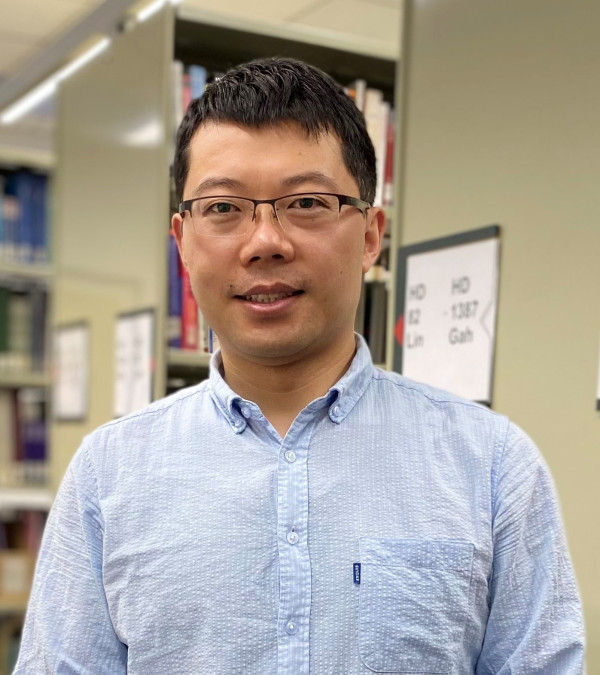
Photo credit: Lincoln University.
Lincoln University’s Professor Wanglin Ma will be awarded $30,000 for his project titled ‘Leveraging circular bio-economy principles for sustainable agricultural waste management: A New Zealand-China collaboration’.
Professor Ma’s proposal was for a new Tripartite relationship in the applied sciences with China Agricultural University and Southwest Forestry University. His project focuses on waste management practices and advocating for innovative use in creating sustainable solutions for reimagining agricultural waste as a vital resource. The aim of the project is to develop strategies and technologies for the conversion of agricultural waste into high-value products in New Zealand and China.
- NZ Centre PKU
- ENZ quarterly report for 1 April to 30 June 2018