Search
Showing 10 of 7355 results
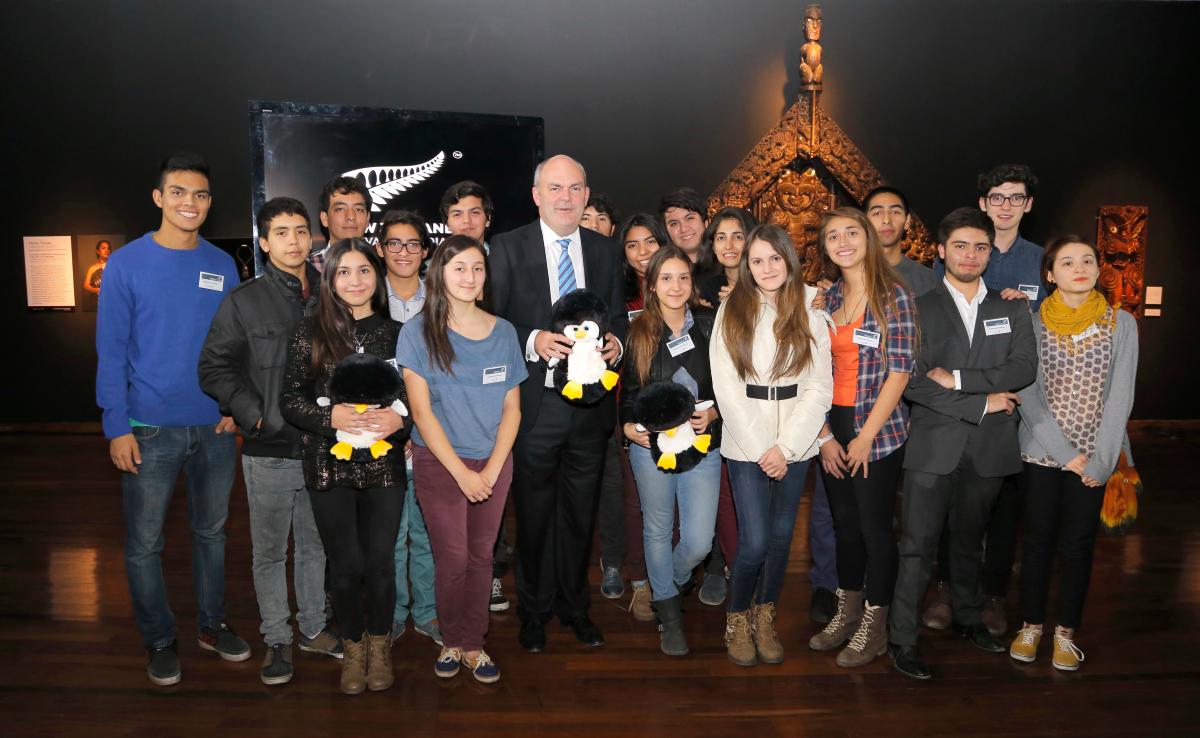
- Minister20Joyce20with20the20Penguin20students20in20Chile
-
Cancellation of NZIEC 2020
The decision was made following discussion and consultation with sector representatives in relation to COVID-19.
Although we are disappointed to have to make this decision, the health and safety of international education sector representatives is of paramount importance.
While August may seem some time away, the nature of conference planning timeframes mean that a decision was required now. This decision provides certainty for all involved and also allows us to focus on other priorities during this unprecedented time.
We will continue to look for ways to keep international education professionals informed and connected in the coming times. Keep an eye on E-News for the latest information.
We look forward to being in touch later in the year as we start preparing for NZIEC 2021.
-
2017 ISB results: Universities and ITPs
The ISB is a global study that investigates the decision making, expectations and experiences of international students including their arrival experience, the support they receive from their education provider, the quality of education provided, and their living experience in country.
Universities sector
Among the 5,487 international students surveyed from six New Zealand universities, 90 percent were satisfied with their institution experience overall. This is the same percentage as the last wave of the study in 2015 and in line with the global benchmark.
International students in New Zealand placed higher importance on several work- and visa-related factors than the global average: 77% considered ease of getting a visa to study as important (8% above the global average), 65% considered opportunities for permanent residence as important (6% above the global average) and 73% considered opportunities to work while studying as important (5% above the global average).
Of the four major components of the survey, universities outperformed the global benchmark on three dimensions:
New Zealand Universities
Global Benchmark
Learning overall
88%
87%
Living overall
86%
87%
Support overall
90%
89%
Arrival overall
91%
89%
And 81% international students in New Zealand would recommend their university to others, which is slightly lower (-2%) than international students globally.
ITP sector
Some 3,470 international students from 13 New Zealand ITPs were surveyed, and overall satisfaction remains high at 89%, similar to the proportion in 2015 (+1%) and in line with the global benchmark.
International students who come to New Zealand ITPs place relatively high importance on employment and employability factors both during and after study: opportunities for permanent residence were rated 12% above the global benchmark, ease of getting a visa and opportunities to work while studying were both 11% above the global benchmark and opportunities for full-time work following their studies was 10% above the global benchmark.
Of the four major components of the survey, ITPs outperformed the global benchmark on three dimensions:
New Zealand ITPs
Global Benchmark
Learning overall
87%
87%
Living overall
90%
87%
Support overall
89%
88%
Arrival overall
92%
90%
Despite high satisfaction, students’ likelihood to recommend their institution to others has fallen to 76%. This is 5% below the global benchmark and a 3% fall since 2015, continuing the downward trend from 82% in 2013.
Each participating education provider in the ISB survey receives a customised report based on their own international student survey results, which they can use to make informed decisions to enhance the student experience and drive successful recruitment and marketing strategies.
ENZ, who funds the survey, receives overall aggregate results for each education sector but does not have access to individual provider results.
Click here for the summary Universities report.
Click here for the summary ITP report.
- goldsmith IES
-
New Zealand School of Tourism sends students to China
The new partnership provides Hainan Airlines with a regular pool of professionally trained flight attendants, and enables NZST to offer overseas employment opportunities to its New Zealand and international graduates. All trainees must meet Hainan Airlines requirements and have recognised tourism qualifications from NZST.
Tip:
-
Try to establish partnerships with companies where international students have a competitive global edge.
NZST Chief Executive Nicole Domett said it is a fantastic opportunity for New Zealand and international students to work for a successful Chinese company.
“NZST is privileged to be able to provide Hainan Airlines with enthusiastic, work-ready students to help them grow their business.
"We look forward to helping more tourism students succeed in this industry.”
Hainan Airlines conducted its first recruitment interviews at NZST’s Auckland Airport campus in March, where nearly 50 NZST students and alumni competed for the chance to live and work in China. Hainan Airlines employed 13 of the students: seven from New Zealand, four from Korea, and one each from Japan and China.
Hainan Airlines said the partnership is a valuable way to staff its international route services between China, New Zealand and Australia.
“Working closely with NZST allows us to recruit highly trained flight attendant students with a global perspective and sense of adventure.
“We see the friendly attitude, professionalism and in-depth training received by NZST students as indispensable qualities for our internationally-minded flight attendants.”
Hainan Airlines will travel to New Zealand in October to recruit more flight attendants as part of its twice-yearly recruitment agreement with NZST.
-
-
South America webinars a success
Last week, the ENZ South America team organised the first New Zealand Regional Webinars Marathon for education agents in South America, sharing information about education, tourism, economy and local industries from around New Zealand.
The webinars were presented by representatives from regional organisations and hosted by ENZ. Javiera Visedo, ENZ’s Senior Market Development Manager Colombia and Chile said webinars are an effective and low cost marketing tool that allows them to provide training for agents without moving from their desks.
“Agents are not able to attend all the education fairs, which can also be a big piece of work for our team. The webinars are a great way to solve both those issues, and allows us to connect with agents across the region without having to hold an in-person event,” said Javiera.
“In a large region like ours, we need to be creative!”
The sessions focussed on cities such as Dunedin, Wellington, Rotorua, Christchurch and Queenstown, presented by regional representatives Margo Reid of Study Dunedin, Christine Pugh of Grow Wellington, Meri Gibson of Rotorua Education, Karen Haigh of Christchurch Educated and Aaron Halstead of Study Queenstown.
The South American team said the webinars were a great success with more than 1,000 registrations and nearly 650 attendances - an average of 130 agents per session.
The majority of participants were from Brazil and Colombia, the largest markets in the region, though agents from Argentina, Peru and Ecuador also took part, reflecting a large interest in New Zealand education from the region.
- image3
- NZIEC day1 306
-
Education New Zealand nominated for three upcoming awards
ENZ recognised for Gilman Scholarship mahi
Education New Zealand has been selected as a finalist in the 2021 AmCham - DHL Express Success & Innovation Awards. The awards, run by the American Chamber of Commerce in New Zealand, celebrate the success and innovation of companies doing business with the United States.
ENZ is a finalist in the Bilateral Connections category and our entry focusses on how our Gilman Scholarship funding and other initiatives underway with US federal agencies and education institutions are helping build lasting connections between New Zealand and the United States through education. The winners will be announced at a function in Auckland on 26 August.
ENZ's digital China ecosystem recognised in China Business Awards
ENZ is a finalist in the 2021 HSBC NZCTA China Business Awards, New Zealand's preeminent awards for recognising business success in China. ENZ is nominated for the United Media Solution Award for Digital Excellence in Business between China and New Zealand, for our China digital ecosystem and experience work.
Tū Ngātahi nominated in prestigious marketing awards
ENZ's Tū Ngātahi campaign, delivered by Special Group, has been selected as a finalist in the Designers Institute of New Zealand Best Design Awards. Tū Ngātahi calls for New Zealanders to stand together with our international student community and send a message of empathy and support. It is nominated in the Public Good category.
- NZregion Proposal