Search
Showing 10 of 7355 results
-
Around the world in five
Asia
The government of Hong Kong has announced ambitions to become an international hub for post-secondary education with measures including an increased quota for international undergraduates at public universities, more scholarships and work rights for postgraduate students.
North America
Canada is set to introduce a “recognised institution” framework, through which colleges and universities with a positive record of vetting and supporting international students may be eligible for fast-track study permits. This comes after over 100 Indian students faced potential deportation earlier this year after their admission letters to Canadian colleges were found to be fake, which the students were unaware of.
Middle East
A British school in Abu Dhabi that has been rated outstanding by the emirate's school regulator for promoting the UAE's national identity said it has weaved elements of the country's culture, history, heritage and, Arabic language into its UK curriculum. The British International School Abu Dhabi is home to 2,080 pupils from 96 countries, with one in five pupils at the school being Emirati.
Europe
According to the Irish Higher Education Authority (HEA), In 2022/23, Ireland set a new all-time high for the number of international students studying at Irish universities. 33,480 students were enrolled at Irish universities last year, an increase of nearly 12% compared to 2021/22, according to the report. Furthermore, India’s student population in Ireland has grown by a significant 17.8%, reflecting a surging trend.
Africa
South African business schools are a higher education success story and champions in terms of higher education on the African continent. Though competing for students, they display a strong ethos of collaboration, generated by a sense of shared purpose to upskill a “new” country. These schools show the power of collaboration, common purpose, and internationalisation outlook.
-
Around the world in five
Italy
Italy announces its “biggest language training and international mobility programme ever”
An important new scholarship programme will send 150,000 Italian youth to other European countries to learn languages and immerse themselves in different cultures. The €420 million in scholarships will cover all aspects of students’ expenses.
Global
The international student recruitment industry needs a reset
As student expectations shift and competition intensifies, institutions can no longer measure success by enrolment figures alone. Lasting success depends on trust, partnerships and supporting students long after they submit an application.
Europe
France, Germany and UK see record international student enrolment as study abroad preferences shift
France, Germany and the UK are witnessing record international student enrolment as stricter visa policies in traditional destinations such as the US and Australia reshape global study abroad trends. Rising enrolments from India and Africa, coupled with high visa approval rates and growing demand for alternative destinations, are driving a shift in student mobility for the Fall 2026 intake.
United States
5 takeaways from new data on international student enrolment in the US
As international enrolment drops, institutions are re-evaluating where and how they recruit international students.
Viet Nam
Riding the wave: Vietnamese students adapt as global study-abroad trends shift
As Western universities face soaring costs and tightening visa policies, emerging Asian hubs and local transnational campuses are capturing a new generation of Vietnamese talent.
- Dinh Duong
-
What's new in IntelliLab
The visa dashboard has a new look, and now uses valid student visas (VSV) as the lead indicator for student numbers, as VSV is less influenced by external factors such as multiple visas for one student. First time student visas (FSV) is the other key indicator, which reveals the number of new students choosing to study in New Zealand.
More in-depth visa information is now available through IVY, the interactive visa tool. IVY is updated monthly, so users will need to download a new copy each month to access the most up-to-date information.
The interactive enrolments tool TED (The Enrolments Data) has also been updated. You may notice revised student numbers when comparing student nationalities by New Zealand region – this is due to the large number of unfunded PTE and ELS students now being assigned to regions based on their provider’s location. However, the top-line numbers, such as total number of students and students by country, remain unchanged.
We appreciate any feedback you may have – please use the ‘contact us’ button on IntelliLab.
- Success Factors and Barriers in School Provision for International Students web
-
2026 New Zealand School Scholarships launched in Viet Nam
Education New Zealand Manapou ki te Ao (ENZ) launched the New Zealand Schools Scholarships (NZSS) 2026 programme, recording the highest level of participation since the programme’s inception in 2019.
A total of 56 New Zealand secondary schools and 55 Vietnamese education agents have participated in NZSS 2026, reflecting strong education provider and market confidence in the programme.
Launched on 5 January, the programme will have applications close on 22 March 2026, with 56 scholarships available across a diverse range of state, private, single-sex and co-educational schools, offering NCEA, Cambridge or IB curricula.
To grow awareness and interest in the scholarships and New Zealand’s school study options, ENZ delivered a series of New Zealand School Scholarships information sessions in collaboration with six education agencies and one partner school in Viet Nam. This was in addition to two public webinars livestreamed on a partner media fanpage.
ENZ also strengthened agent capability through a dedicated six-part webinar series for Vietnamese agents, delivered from 3-18 December 2025. The series featured 36 speakers from New Zealand secondary schools, NZQA and SIEBA, and focused on building agent knowledge of the New Zealand school system, regional school offerings, and NZSS promotion guidelines.
The agent webinar series attracted over 160 registrations, with 60-98 agents attending each session, indicating strong engagement across the market. The sessions were designed to equip agents with practical tools to confidently advise parents and students and to support consistent, accurate promotion of NZSS.
ENZ’s Market Manager – Viet Nam, Van Banh said these activities aim to provide prospective school students and their parents clear, consistent information about the NZSS programme and application process.
“With the programme’s record school participation this year, expanded market outreach, and a strong focus on education agent capability-building, NZSS 2026 is a significant step forward to strengthen awareness of New Zealand’s secondary education offering in Viet Nam and support its long-term, sustainable growth.
“It’s fantastic to see a sustained level of commitment and contribution from education providers for this programme, it really highlights the strategic value of the NZSS as a pathway programme to study in New Zealand and underlines the sector’s continued confidence in Viet Nam’s secondary school market,” Van said.
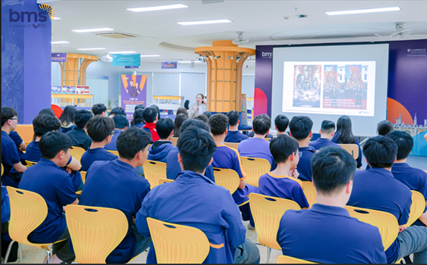
Above: Students from Ban Mai School (Ha Noi) attend a workshop about New Zealand education and opportunity with NZSS
Collectively, participating New Zealand schools have committed an estimated $441,702 NZD in scholarship investment, with each school offering a scholarship valued at 50 percent of the first-year tuition fee.
Since its first launch in 2019, NZSS has awarded nearly 80 scholarships, enabling Vietnamese students to access high-quality secondary education in New Zealand and progress to positive academic and career outcomes. Alumni achievements continue to reinforce NZSS’ reputation as one of the most established and impactful government-backed secondary school scholarship programmes in Viet Nam.
-
Navitas and University of Canterbury strengthen ties
The University of Canterbury (UC) and global education provider Navitas have strengthened their partnership, reflected in a new UC International College (UCIC) logo.
Navitas and UC have worked together since 2013, creating UCIC to provide pathway courses for international students. To date, more than 600 international students have enrolled in the programme.
 The new UCIC logo features the University of Canterbury crest, andwas unveiled at a celebratory launch on 31 January. The logo is just one of many changes UCIC has made recently, which includes the appointment of Stewart Brougham as the new College Director and Principal.
Dr John Wood, CEO of Navitas’ University Partnerships Australasia division, said the changes signal a shift for both institutions.
“The service we offer international students, alongside the strengths Mr Brougham will bring as College Director, are a new chapter for Navitas and UC. We continue to explore further opportunities to enhance and extend programmes offered through UCIC,” he said.
Other changes include Qualifying for UC (QUC), a new postgraduate qualifying programme UCIC will deliver from October 2017. It is anticipated to draw international students seeking postgraduate study, but who first want to improve their language, research and project-based skills. UCIC has also changed its teaching practice to better transition students from international backgrounds into the Western university system, ensuring they are better prepared for tertiary study and life in New Zealand.
Dr Rod Carr, UC Vice Chancellor said their institution is interested in any initiatives that can help international students achieve success in tertiary education.
“UC is among New Zealand’s most international universities due to the ratio of international staff we have on campus. UC is a welcoming and supportive environment, no matter where in the world you come from,” said Dr Carr.

L-R: Stewart Brougham (UCIC College Director and Principal), Dr Rod Carr and Dr John Wood.
- New Zealand Excellence Awards 2016
- BrandLab card
- southcanterbury1