Search
Showing 10 of 7355 results
-
What’s next for ENZ events?
The trial of the EventsAIR OnAIR platform began in September with the Japan New Zealand Education Virtual Showcase and Agent Seminar, and will continue over the next few months for events like agent seminars in-market, the Viet Nam Student Showcase, and the Summer Retention Showcase.
Over and above a video-conferencing application like Zoom, the EventsAIR OnAIR platform has functions like a virtual exhibition, live Q & A, and gamification features, where users can compete to win points.
ENZ recently hosted our inaugural India New Zealand Education Week on the EventsAIR OnAIR platform. To have a look at the platform and how it works, you can register and view recordings of the event here.
ENZ has an established relationship with EventsAIR, having previously partnered with them for lead capture at in-person events.
ENZ Director – Channel Services and Partnerships, Dan Smidt, says what really clinched this new collaboration was the wide range of functionality EventsAIR had developed.
“We didn’t want a platform that would simply recreate what you’d expect from an in-person event. We wanted something that would use digital features in a creative way, to really capture the attention and imagination of our attendees.”
Participants are currently limited to providers who registered with ENZ for in-person events in-market before they were cancelled due to COVID-19. At the moment, ENZ is able to offer participation in these events at no cost to the sector.
“In the results of a survey out to New Zealand providers earlier this year, the cost of developing or participating in digital events was one of the most important factors for those considering their event options,” Dan says.
Even before COVID-19 caused global travel disruption and the widespread cancellation of in-person events, ENZ was looking into ways to host more events virtually.
“We know that education providers and students are becoming more conscious of the sustainability of long-haul air travel,” Dan says. “COVID-19 simply accelerated our work in the online event space.”
“This dynamic virtual events platform is the next logical step in the growth of the ENZ digital eco-system. We’re now able to think about how we do events in a whole new way.”
Dan and the ENZ Events Team hope to develop a virtual and hybrid calendar of events for 2021 with OnAIR. Please watch out for more updates on our events work in E-News on our website.
- 2122 150 ENZ Statement of Intent 2022 2026 and Statement of Performance Expectations 2022 23
- Around the world in 5 2
- miranda headshot
- QS Summit 2025 India 2 panel
- Mortal Engines
-
Engaging personally in Viet Nam
People generally seem tired of online meetings and webinars, preferring to meet and attend events in person. In recognition of this trend, Education New Zealand Manapou ki te Ao (ENZ) has actively engaged with different stakeholders in recent months, to maintain our in-market promotion and explore new opportunities for New Zealand providers.
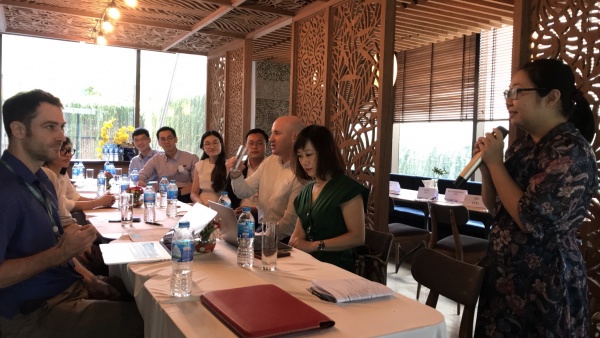
A workshop for counsellors from private and international schools to connect with recruitment representatives from NZ universities.
In late June, ENZ organised workshops to help connect recruitment representatives from New Zealand universities with selected counsellors from private and international schools in Ho Chi Minh City and Ha Noi. At the workshops, we asked about Vietnamese students’ current attitudes towards a New Zealand education, discussed the opportunities and challenges for each New Zealand provider, and identified any topics they wanted to explore further.
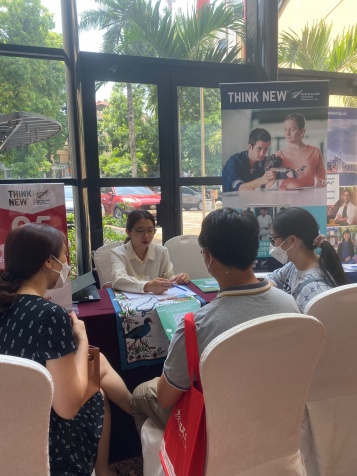 ENZ and in-market representatives of some New Zealand providers have also participated recently in commercial fairs, organised by key education agencies in Viet Nam. These fairs look and feel just like they did in the past, with multiple booths for institutions from various countries, and high numbers of students and parents coming to talk directly with recruitment staff.
 As New Zealand reopens the border for international students, it is critical we communicate directly with students and partners that we welcome students coming to study here. We are looking forward to the Hanoi and Ho Chi Minh City - Agent Seminar and New Zealand Fair in late October.
- Van Banh, ENZ’s market manager based in Ho Chi Minh City
- China20620better20quality20CSCSE20wide20shot
-
From the CE: Manaakitanga in the time of coronavirus
New Zealand was the first country in the world to introduce the Code for the Pastoral Care of International Students. Regulated by NZQA, the code requires all signatories to ensure international students at their place of study are well-informed, safe and healthy.
New Zealand’s education providers have exceeded the expectations of this important responsibility in 2020. Everyone from teachers to international offices to homestay parents have done their bit to make sure our international students, so far away from home, were looked after during the COVID-19 lockdowns and beyond.
New Zealand has a well-deserved reputation for being a warm and welcoming destination. It is crucial that we continue this responsibility of care over the coming summer break when many students would have returned home, under normal circumstances.
To support this goal, ENZ has launched a new programme of activity: Tū Ngātahi, which calls for us to ‘stand together’. ENZ has created the programme to enable our international education community to express support for our international students.
The central imagery of Tū Ngātahi is the pounamu (greenstone) carved into a pikorua (twist). This design is a symbol of cultures joining in friendship and supporting one another.
You may have heard ENZ’s Paul Irwin, General Manager – Partnerships and Marketing, speaking with Radio New Zealand about Tū Ngātahi this week. The story also included perspectives from international students currently in New Zealand, who plan to make the most of their stay over summer.
We encourage New Zealand’s education providers, student associations and more to show their support for international students with the Tū Ngātahi resources (video, graphics, email footers and more), which you can find on the ENZ BrandLab.
Alongside Tū Ngātahi, ENZ is currently running the Summer in NZ campaign. Aimed at international students currently in New Zealand, this campaign will assist students who, given current border settings, must make tough decisions as the end of the academic year nears. You can explore this campaign on the new Summer in NZ NauMai NZ pages.
On Saturday, 31 October, the team will present the inaugural ‘Your Great Kiwi Summer’ virtual fair, where education providers and regional development agencies will share tips and information on how to make the most of the summer break. There is still time for students to register, so please encourage your students to sign up if they haven’t already.
Thank you again to everyone who has supported an international student this year. Our manaakitanga is what these students will remember in the years to come.
Ehara taku toa I te toa takitahi, engari he toa takitini
My strength is not that of a single warrior but that of many.
Ngā mihi,
Grant McPherson
Chief Executive
Education New Zealand Manapou ki te Ao
- Lisa 2