Search
Showing 10 of 7355 results
-
High level of interest in PM's Scholarships
“We’re particularly pleased in the level of interest, given outbound mobility has been paused since March 2020,” says ENZ’s Global Citizenship Manager Carla Rey Vasquez.
“Since the Prime Minister’s Scholarships reopened earlier this year, we’ve also tried hard to reach a wider range of people than previously.
“In this latest round, 17 percent of applicants are Māori while the age range is from 18 to 66 years old. We want to continue achieving greater diversity and inclusion, so that a wider range of people can have an international education experience, and the opportunity to develop their global citizenship skills and learn more about the language and culture of partner countries.”
The majority of applications (110) were for Prime Minister’s Scholarships to Asia, with South Korea the most popular destination country. Prime Minister’s Scholarships to Latin America received 55 applications, and the top destination country is Colombia.
An extra step in selecting the final recipients has been introduced this year. If they are shortlisted, applicants will be given 10 days to respond to four additional questions seeking more detailed information about their proposed programme.
Completed applications will then be considered by the selection panel, which is due to meet in late October.
The current Prime Minister’s Scholarships round is for individual applicants, following the first round that awarded scholarships to 30 groups in July.
For more information about the Prime Minister’s Scholarships, please visit the scholarships website.
-
Contracting support to grow international education in schools
The support for schools was signalled in the International Education Going for Growth Plan and announced by Education Minister Erica Stanford at the SIEBA hui in mid-May.
ENZ will run a tender to find an organisation to help schools establish processes to enrol international students and meet their regulatory obligations. We will also hold and manage the contract and report progress to the Minister on a quarterly basis.
The initiative will help schools lift capability at every stage of the international student journey, providing practical tools to attract and care for international students, and enabling sustainable growth across the system.
An independent organisation will deliver this work, recognising that sector expertise and established networks are key to building school capability and capacity.
All schools can access the support, including those that do not currently enrol international fee-paying students. The intent is to lift capability across the schooling sector, not just in schools with established international recruitment programmes.
ENZ will finalise the scope and requirements of the tender before applications open in late June. The tender will be published on the Government Electronic Tender Service (GETS).
-
International students get behind Super Saturday vaccine drive
A group of students showed their concern and social responsibility by telling their stories to The New Zealand Herald ahead of the Super Saturday vaccination drive on 16 October 2021.
Education New Zealand Chief Executive Grant McPherson said it was great to see international students getting involved in the vaccination effort.
“New Zealand reaching its 90% vaccination target will aid in our recovery and bring us one step closer to welcoming more international students to Aotearoa,” he says.
“These are people who bring an array of benefits to community wellbeing, our global relationships, a productive workforce, a strong education system and enabling trade and diplomacy.”
-
Thai travel advisory
On 22 May 2014, the Royal Thai Army announced that the military had taken control of the government of Thailand. Some travel insurance policies may exclude cover during a coup d'etat and some cover provided under travel insurance policies may be invalid.
The Ministry of Foreign Affairs and Trade website, Safe Travel, provides the latest advisories on travel to Thailand.
Education New Zealand is closely monitoring the situation in Thailand and will advise providers intending to participate in the New Zealand Education Fair on 20 September no later than 27 June whether this event will proceed.
Thailand is an important market for New Zealand, so we are also considering investing additional resources in digital channels to keep building awareness of New Zealand and support ENZ’s in-country Market Development Manager Nan Lertrasameewong.
This includes increasing investment in search engine marketing and building our Facebook activity.
If the planned event in September does not go ahead, Education New Zealand will also investigate running a virtual fair in Thailand and running a Thailand-specific campaign that directs enquiries to local agents.
Nan has been working with many providers over the last few months to build relationships with education authorities and agents outside of Bangkok. We are seeing the results of that in the form of increased student numbers from Thailand to New Zealand, which grew 6 per cent in 2013. It is important to keep these relationships going through this time of uncertainty.
We encourage New Zealand providers to stay in touch with their Thai agents to maintain relationships.
-
ANZA workshop
Education New Zealand’s Channel Development Manager Kaye Le Gros presented the Think New brand and the New Zealand Education Story to agents in a seminar that showcased New Zealand. Immigration New Zealand also presented immigration updates at the seminar.
Almost 100 education institutions attended the three day workshop, including 44 from New Zealand, along with around 60 work and travel organisations and service providers.
Agents from 50 countries were there, all focused on sending students and youth travellers to our side of the world.
For the first time, Brazil was the top agent country, reflecting the popularity of New Zealand and Australia as study destinations for Brazilian students.
Next year’s workshop is coming to New Zealand – mark 28-30 April 2015 in your diary for the workshop at Sky City in Auckland. Kaye says this will be a great opportunity for regions and groups to consider familiarisation visits for agents visiting New Zealand in 2015.
-
Education New Zealand’s Brand Protect our most successful brand campaigns to date
Both campaigns exceeded previous ENZ results and were well above industry standards. These results, alongside the brand tracking research, have affirmed that global appetite for a New Zealand education remains high.
“We have learnt that our message resonates globally with people who are now seeing New Zealand in a whole new light,” ENZ Director Brand, Clayton Foster, says.
The second brand protect campaign – also known as Brand Protect 2.0 – ran from November to December 2020. It targeted the UK, Vietnam and Indonesia, and utilised the same video as the first campaign.
Brand Protect 2.0 reached 47 million people and achieved a high view through rate of 33.79 percent – or one in three viewers watched the video to a meaningful extent. The overall engagement rate was also high at 29.42 percent.
The first global brand campaign ran from July to August 2020. For a modest investment of $190,000 in Germany, Indonesia and Brazil, this campaign reached more than 30 million people across the three key markets and achieved an engagement rate of 22.35 percent. One in four people who came across this campaign watched the video to a meaningful extent.
The Brand Protect campaigns are a key part of the Recovery Plan’s third workstream, ‘Transforming to a more sustainable future state’. They leverage the positive global sentiment towards New Zealand to keep the dream of a New Zealand education alive in-market.
-
Successful New Zealand – India Education Connect Initiative held in India
New Zealand – India Education Connect took place from 8 to 14 February, involving a high-level sector delegation made up of Vice Chancellors, Deputy Vice Chancellors, International Directors, academic heads, and regional recruitment staff from all eight New Zealand universities.
Led by Lisa Futschek, ENZ’s General Manager International, the delegation visited Bengaluru, Chennai, New Delhi, and Ahmedabad. During the visit, ENZ signed two Education Cooperation Arrangements (ECAs) and one Memorandum of Understanding (MoU), with the Higher Education Department, Government of Karnataka; Indian Institute of Management Ahmedabad (IIMA); and Gujarat International Finance Tech City (GIFT City) respectively. The ECAs and MoU provide a high-level umbrella arrangement for New Zealand universities to explore potential collaborations with each of the partners.
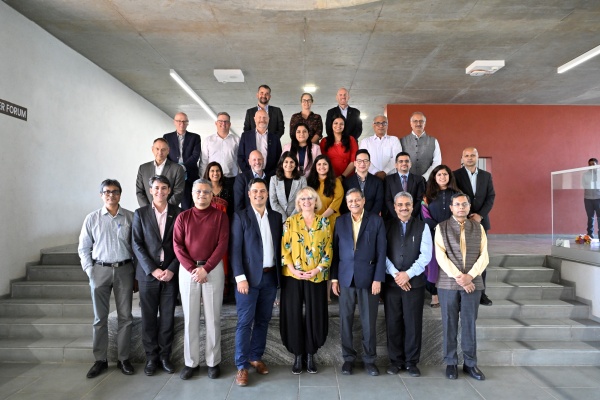
The New Zealand delegation with IIM Ahmedabad officials on 14 February.

New Zealand universities delegation with Hon Dr. M C Sudhakar, Minister, Karnataka Higher Education Minister and officials of Karnataka Higher Education Council, Bengaluru on 8 February
Ms Futschek acknowledged the special relationship India and New Zealand have, noting that this year marks the 72nd anniversary of diplomatic relations between the two countries.
“India consistently holds the position of the second-largest international student market for New Zealand. The dynamic growth in the education partnerships between our two countries is attributed to strategic investments by universities, marked by heightened levels of internationalisation and strengthened commitments through the establishment of in-country representatives/offices by all eight.
“There is certainly much to be said for having power in numbers. Engaging as a group is a very good way to leverage connections with key government and private stakeholders that would otherwise be difficult on an individual institution basis,” said Ms Futschek.
The delegation visit to the New Zealand Centre at IIT Delhi (IITD) was one of the highlights of the programme as it facilitated discussions on resource mobilisation for long-term sustainability of the centre. The New Zealand Centre at IITD was established in February 2020 as a focal point for joint academic activity between New Zealand's eight universities and IITD. The centre is a research-focused hub that fosters collaborative, sustainable, self-supporting research programmes in areas of shared national interest such as climate change, disaster management, urban planning, and the environment. The first big engagement at the New Zealand Centre included 10 joint research projects between NZ universities and IITD academics in 2022. Subsequently, a fellowship programme with a joint funding of NZ$ 100,000 was announced in 2023, and as part of this programme four New Zealand Fellows will be spending time working with IITD in 2023/24 and two IITD Fellows with New Zealand universities.
Ms Futschek noted that the New Zealand Centre at IITD is a great example of how the cohesion between our eight universities and IITD has led to a flagship project growing in scale and sustainably.
“This success has all happened while building our reputation for quality education and a commitment to bilateral relations between our two countries,” added Ms Futschek.
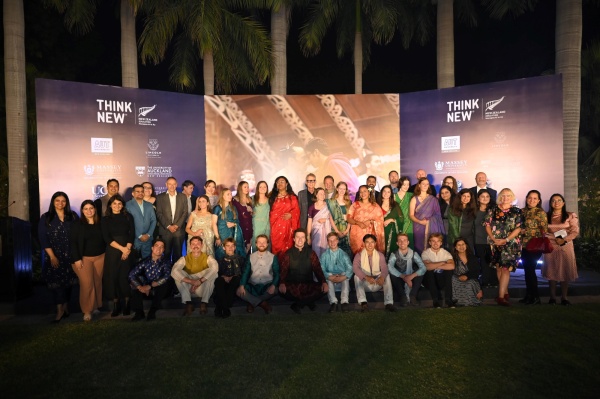
The networking reception organised by ENZ in Delhi during the ENZ Connect series, was attended by a group of 24 students from University of Auckland, University of Waikato, Massey University and Victoria University of Wellington, who were in India as part of the PMSA India immersion programme. They not only engaged with the ‘friends of NZ’ attendee, but also performed a Bollywood dance they had learnt during their six weeks in India, much to the delight of the audience.
Other activities conducted during the week included a media roundtable, led by H.E. Ambassador David Pine at the New Zealand High Commission in New Delhi. The roundtable reached over 984 million people with a PR value of over NZD 624,000, further increasing the brand awareness of New Zealand’s world class education across India.
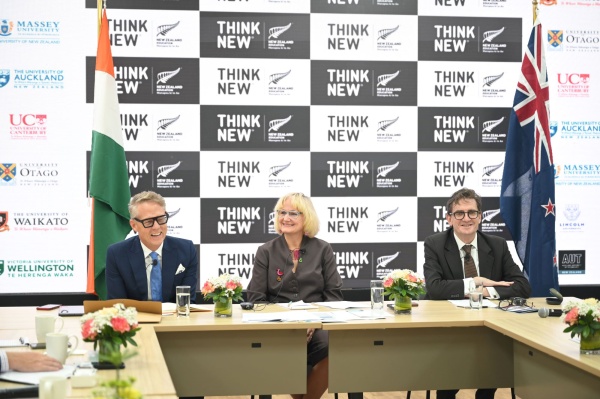
Media Roundtable at New Zealand High Commission in New Dehi, led by NZ High Commissioner to India, HE Mr David Pine, Lisa Futschek, GM International, ENZ and Brett Berquist, Assistant Vice-Chancellor Engagement University of Canterbury.
New Zealand universities also had a strong presence at QS India summit 2024, which coincided with the New Zealand – India Education Connect, helping delegates reflect their interest and achieve visibility in the Indian B2B space. ENZ was invited by QS to be a strategic partner at this summit.
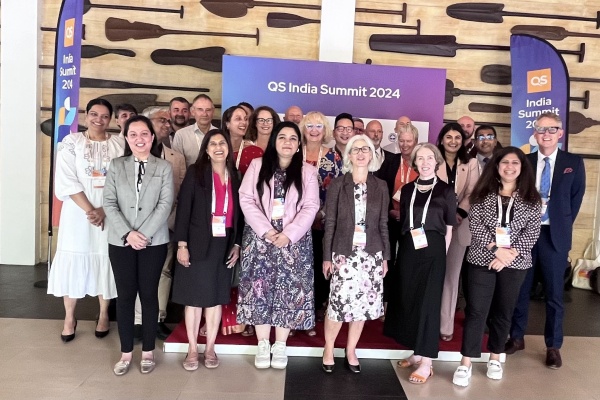
The delegation at the QS India Summit 2024.
-
ICEF ANZA returns to New Zealand
We’re pleased to announce that Tākina Wellington Convention and Exhibition Centre will host ANZA from March 4-6, 2026. ICEF ANZA will showcase New Zealand as a study destination to 160+ agents from all over the world, and is open to education providers from both Australia and New Zealand. ICEF ANZA was last in New Zealand in April 2024, where global agents and New Zealand and Australian education providers came together in Christchurch.
ICEF ANZA is an Australasia-focused event that gives education providers from Australia and New Zealand the opportunity to meet with top international student recruitment agents from around the world who have a focus on these key study destinations.
ENZ Group General Manager International and Sector Engagement, Sahinde Pala, said ENZ is excited to welcome ICEF ANZA back to New Zealand at a time when we are well positioned to attract more international students.“We encourage institutions to participate, as well as to invite agents to visit their regions before and after the event, to experience more of our beautiful country first hand," she said.
For more information please visit: https://www.icef.com/events/icef-anza/
Click here to register: https://www.icef.com/provider-registration-form/
-
New Zealand tops English-speaking countries in Educating for the Future ranking
 There were just 1.6 points between top-ranked Finland (80.9), second place-getter Switzerland (80.3) and New Zealand on 79.3 points.
The overall ranking was a small drop for New Zealand, which ranked first out of 35 economies in the first EIU report which came out in September 2017. However, the 2018 ranking involves 50 economies and additional indicators on which countries were evaluated.
"This is a very good result for New Zealand," said ENZ Chief Executive Grant McPherson.
"New Zealand retains its position as the number one English-speaking country in the ranking as well as its top ranking in the Asia-Pacific region.
"Along with Finland, New Zealand is the only country that has been in the top 3 two years in a row."
The index evaluates the way that countries approach future-focused education to encompass problem-based learning, innovative teaching methods and broader themes of global citizenship.
It has a focus on young people aged 15 to 24 in 50 economies, and measures three pillars of education systems – policy approaches, teaching conditions and broader gauges of societal freedom and openness – as a means of preparing young people to meet the challenges of work and society in future.
You can read the full report here.
The top 10 country rankings were:
Rank
Economy
Score
1
Finland
80.9
2
Switzerland
80.3
3
New Zealand
79.3
4
Sweden
78.1
5
Canada
77.9
6
Netherlands
76
7 =
Germany
74.8
7 =
Singapore
74.8
9
France
74.2
10
UK
74.1
-
Wellington embraces talents, culture, and passion of international students
While they love the great arts and culture vibe, fabulous food, and easy access to parks and hills, they choose Wellington principally for its world-class educational opportunities and diverse career prospects.
In a city where 23 percent of people are studying, international students quickly feel a sense of belonging as they are welcomed into a well-connected community of learners and achievers. As the capital city, Wellington offers sophisticated collaboration between education providers, research institutions, the business community, and Government.
Innovative programmes build long-term relationships with international students
Study in Wellington, a specialist team within economic development agency WellingtonNZ, promotes the region as a great place to study and enter the workforce, and recognises that international students have much to offer the city both during their stay, and after they have finished studying.
“International students bring their culture and their talents,” says programme lead Sarah Grant. “They bring determination, skill, and passion to our community. And they also bring a good work ethic with them.
Study in Wellington is focused on building-long-term relationships with students and alumni and has developed an innovative range of programmes tailored to each stage of an international student’s journey, and to provide channels for future collaboration.
Networking programmes key to “amazing” experience
For 25-year-old Shamanthi Jayawardena, leaving her home in Colombo, Sri Lanka, to study overseas in 2019 was a big decision and there were plenty of options. In the end she chose Wellington, saying the “cool city vibe” and reputation for safety attracted her, along with the quality of the courses available at Victoria University.
Returning home 15 months later, having completed her Master’s in Global Marketing, she reflects on an “amazing” experience in Wellington and says much of it was down to her involvement in the programmes offered by Study in Wellington, including Work Ready in Wellington, Alumni Connect and Employer Connect.
She says there’s no doubt a highlight was being involved in Employer Connect, which builds up the networking skills of graduating students and connects them with employers.
“As a project coordinator facilitator, I got the chance to meet people from diverse backgrounds, understand their needs and help design a programme that benefits both the international students and the community of local organisations.”
So successful was Shamanthi’s networking that she landed a contract role with Wellington design and digital agency Obvious and continues to work for them remotely from Sri Lanka.
The opportunity to succeed is there for all international students, Shamanthi says.
“You need to be open-minded, connect with the programmes available to you, and put yourself out there. It’s a great place to follow your passion.”

Wellington proud of its international student community
Grant is proud of the way Wellington embraces its international student community, even with closed borders.
“We are ready to welcome back students when we can and believe that we do provide a unique experience and the opportunity to really get connected with the local community, businesses, and institutions.
“In return, the students make Wellington a more dynamic and interesting city.”