Search

Showing 10 of 7337 results

  • Letter from the CE: We are keen to engage with new government

    We learned today that Chris Hipkins will be the new Minister of Education, with responsibility for tertiary education and skills including international education. In addition, the appointments of Kelvin Davis, Tracey Martin and Jenny Salesa as Associate Ministers of Education were announced.

    Our immediate priority at Education New Zealand is to ensure we are well positioned to advise our new Minister, and to ensure a smooth transition of administration.

    We are well advanced in this work. We are finalising a Briefing to the Incoming Minister (BIM) and working with other government agencies on other advice to safeguard New Zealand’s reputation as a high quality and desirable place to study.

    In particular, we are keen to engage with incoming Ministers on the long-term picture for international education and the broader benefits it delivers to New Zealand, in particular on delivering an education to be proud of and driving sustainable growth especially in the regions.

    2017 has already been a year of significant adjustment for the industry, particularly in the India market. There has also been considerable work around provider quality, student wellbeing and shifting the dial in student attraction from volume to higher value, particularly at university level.

    We will have a busy few months ahead. New Zealand must work hard to be a place that welcomes high quality international students and offers them a world-class education and a great experience.

    GDog


    Grant McPherson

    Chief Executive, Education New Zealand


  • Celebrating Dame Wendy Pye, a global education publishing success story

    New Zealand has a proud history of educational publishing success and Dame Wendy Pye DNZM MBE is the epitome of this, being one of New Zealand’s leading educational publishing exporters. Dame Wendy is sharing her story in her recently launched autobiography: Teaching the World to Read: My multi-million dollar story and podcast series.  

    From humble beginnings growing up in Western Australia, Dame Wendy moved to New Zealand to work as a journalist before embarking on her dream to teach the world to read. She founded Sunshine Books 40 years ago and has since sold 300 million books, positively influencing the lives of many children worldwide.  

    Dame Wendy with just some of the hundreds of Sunshine books that have helped young children learn to read.

    During her extraordinary journey Dame Wendy has gone from attending book fairs with just a handful of books, through providing resources to refugee camps in Lebanon, to working with world leaders. Her reputation for helping to develop young children’s literacy skills has earned her numerous awards including being awarded the Dame Companion of the New Zealand Order of Merit in 2013 for services to business and education.  

    Dame Wendy at the Bologna book fair in 1989.

    Throughout her publishing career, Dame Wendy has pioneered the development of new, exciting, engaging print and digital literacy materials. The Sunshine Online digital programme, for example, contains thousands of texts and activities and was recently included in the New South Wales Department of Education Online Learning Tools Marketplace, which provides quality online learning to all New South Wales schools.  

    Dame Wendy with school children using the Sunshine Online digital programme

    Dame Wendy’s export story is as much about selling New Zealand as a leader in education teaching and learning pedagogy, as it is about selling educational products and services. Her book and podcast series offer an honest and candid account of the highs, lows, and tough truths of a pioneering entrepreneurIn her book, Dame Wendy talks about some of the challenges she faced, what she learned and how she overcame barriers, while the podcasts include export market guides including hints and tips for success that she has learnt along the way when working in the United Kingdom, South Africa, China and Australia. 

    Dame Wendy hopes that her autobiography will inspire, educate and entertain.  

    “This is a story about what is possible. It is a story that I hope will inspire all young people who are planning to make a difference to follow their dreams, not to be afraid of failures along the way, and also to celebrate successes with the people who have made them possible,” said Dame Wendy.

    With New Zealand publishers and educators in such demand, our small country has made a large impact in the world of education publishing in more than 60 countries around the world.


    This thriving industry is represented by PANZ, Publishers Association of New Zealand Te Rau o Tākupu, and is showcased on the New Education Publishers website that was sponsored by Education New Zealand Manapou ki te Ao and Copyright Licensing New Zealand.

    You can learn more about New Zealand Publishers or get in touch with them via the New Zealand Educational Publishers (nzeducationalpublishers.org) website. 

  • International student speakers lay the wero at NZIEC KI TUA

    Sean Teow, Aria Ngārimu, Ibuki Nishida, and Albert Lu, each shared stories and insights with NZIEC KI TUA attendees that offered a reminder to those working in international education about why they do what they do 

    The students’ speeches laid a worthy wero for the international education sector to continue the good work and keep international students at the centre of our work long after they arrive in New Zealand.  

    In this context, a wero is a traditional Māori challenge, performed by Māori warriors at a pōwhiri to test the intentions of visitors – by wielding weapons and laying down the challenge, with a token, such as a small branch for visitors to pick up and show they come in peace. Wero can also be used to convey a 'challenge' in other settings besides the traditional usage. 

    President of the New Zealand International Students' Association (NZISA), Sean Teow (Malaysia), spoke candidly about the full range of his student experience – offering insights on how he came to choose New Zealand to what the international education sector could focus on to better the student experience further.  

    Sean Teow speaks at NZIEC KI TUA.

    Sean spoke about the need to focus on the “level of heart” that New Zealand exudes when interacting with prospective students alongside “bread and butter” attributes such as the high quality of education, lifestyle and beautiful natural environment. 

    Be proud of the quality of New Zealand education, but also you as people, there is a level of heart that exudes itself when talking to students. That intention can be felt by a prospective student who may be afraid and anxious to embark on that path, a simple feeling that these people know how to take care of me, and they mean well.  

    Don’t forget that the next time you recruit or interact with students for that could make the very difference with students remembering New Zealand and enjoying their time here. Embrace and embody manaakitanga,” Sean urged delegates.  

    Prime Minister’s Scholarship recipient Aria Ngārimu (Ngāti Porou, Ngāti Kahungunu ki Wairoa, Rongomaiwāhine, Te Whānau-ā-Apanui), a domestic student at Te Herenga Waka - Victoria University of Wellington visited India as part of her scholarship experience.  

    Aria Ngārimu at the Taj Mahal in Agra, India during her scholarship experience. Photo credit: Aria Ngārimu.

    In her address, Aria aptly used an Indian folk tale of five blind men attempting to describe an elephant that they had encountered for the first time to highlight how individual perspectives can be wildly different yet equally accurate. Her speech was a powerful reminder of the need to be open to points of view different from our own. 

    International representative of the University of Otago Students' Association, Ibuki Nishida (Japan), offered a challenge to the sector to remember that every international student has a story and the importance of staying connected to their experience and story while they were in the country 

    Ibuki Nishida laid a wero for the sector to remember that every student has a story.

    Don’t forget about those of us that are already here. I challenge you to not set a “finish line”, but instead learn from, and be a part of, each student’s ongoing story while we are here, that we can take to our loved ones to inspire them back home. 

    “Do not underestimate the power of word-of-mouth. When looking at growth, it might be one of the most important. And the way you tap into that, is to make sure students have a great experience while they’re here too. And remember that each international student is a story waiting to be told. So help us make it one for the books,” Ibuki said. 

    Albert Lu spoke about the differences in school life in his native Taiwan and New Zealand and what he likes about studying in Wellington.

    Albert Lu (Taiwan), a Year 11 student at Wellington High School, noted the differences in life in Taiwan and New Zealand as he spoke about his experience in New Zealand.  

    Albert spoke about the NCEA curriculum providing an opportunity to students to enjoy a good balanced lifestyle, how confidence was the key to settling into life in New Zealand and importantly, ‘another way to improve language faster is to hang out with friends whose first language is not my first language’. Albert does this through joining student groups, attending church and generally being proactive about life here in New Zealand.  

    “Everyone is friendly, I love it,” Albert said. 

    *Wero: In this context, a wero is a traditional Māori challenge, performed by Māori warriors at a pōwhiri to test the intentions of visitors – by wielding weapons and laying down the challenge, with a token, such as a small branch for visitors to pick up and show they come in peace. Wero can also be used to convey a 'challenge' in other settings besides the traditional usage. 

  • Brazil’s untapped potential

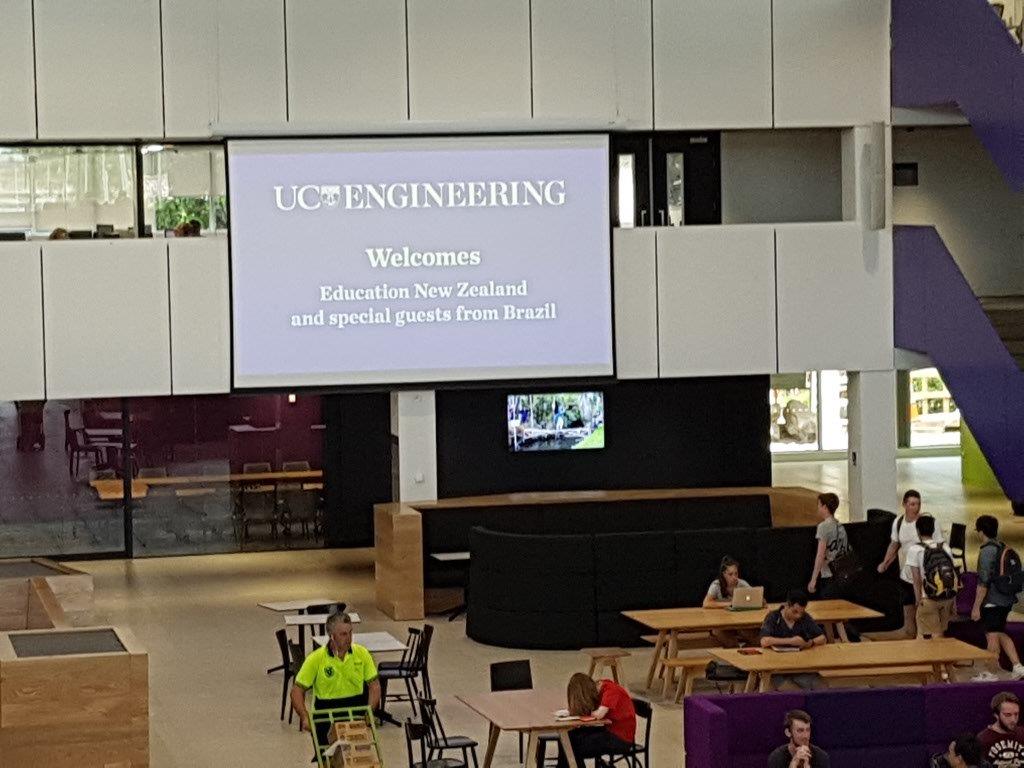
    Brazil is New Zealand’s largest source of international students in Latin America. Last year, almost 3,600 Brazilians studied in New Zealand and Ana Azevedo, ENZ’s Senior Market Development Manager for Brazil, says there is more room for growth. 

    For institutions seeking quality students and diversity, Brazil may be the answer. According to the Brazilian Educational and Language Travel Association, more than 300,000 Brazilians studied abroad in 2017, so there is huge untapped potential in this market to be explored,” said Ana. 

    As country of honour, Brazil featured in two NZIEC breakout sessions. 

    In From Zero to Hero: How to lead a successful education strategy in Latin America Professor Kerry Taylor from Massey University shared his experience in developing links with Brazilian universities, jumping from zero to 10 agreements in only three years. Taylor emphasised that “nothing substantial will come from one single visit” and highlighted the importance of a proposition that meets your partner institution’s needs, saying the best relations are mutually beneficial.”   

    The second session, Spotlight on Brazil: Finding your place in the sun, featured a panel of representatives from New Zealand secondary and tertiary institutions about their own success in the Brazilian market. Key recommendations included maintaining a consistent presence with the market, building and maintaining a personal relationship with local education agents and institutions and investing in digital marketing so Brazilian students can find you  Brazilians spend an average of three hours a day on social media platforms, mainly YouTube, Facebook and WhatsApp. 

    Delegates also  enjoyed delicious Brazilian appetizers, drinks and live Brazilian music at an energetic conference dinner. The Brazilian Ambassador to New Zealand, HE Mr Paulo Cesar de Camargo, also attended and spoke about bilateral relations between our countries in the education space.

    "Education is a very important aspect of the relationship between Brazil and New Zealand. As some 3,600 Brazilians choose New Zealand to study, we have also seen a growing interest in Kiwi students travelling to Brazil. This exchange builds foundations and pushes Brazil-New Zealand partnerships closer, and in future will create ties in various other fields.” 

    If you want to know more about the Brazilian market, check out the BELTA SEAL Market Survey 2018 here.  

     Brazil 4

    Brazil 2

  • ATEED launches new Auckland strategy to guide visitor economy

    ATEED General Manager Destination, Steve Armitage, says while more visitors are good news economically, the growth comes with challenges. 

    “People travel to Auckland to experience the many things our region has to offer. For some, it’s the world-class food and wine; for others, it’s the sporting, cultural and business events; or international students, who come from around the world to study at our learning institutions,” said Steve.

    “It’s important that we continue to attract visitors to support and create jobs and amenities that benefit locals and visitors…so that Auckland is better off not just economically, but also socially and environmentally.”

    The strategy outlines six strategic imperatives and key focus areas, and a comprehensive list of actions to deliver these, with two directly relating to international education:

    -   A Captivating Place: A region that entices visitors to stay longer and that locals love more than ever. Actions include developing an international student visitor plan. 

    -   A Skilled Place: A region where more young men and women are choosing globally relevant careers in the visitor economy. Actions include developing a visitor sector training and employment strategy for youth and enhancing standards across the service sector.

    Destination AKL 2025 was guided by an industry leadership group, and involved extensive consultation including interviews, workshops and discussions, as well as international benchmarking and surveys.

    ENZ Chief Executive Grant McPherson, who was part of the industry leadership group, says that ATEED is showing real leadership in the way it is looking at its visitor plan.

    He said this is evident in the way the strategy is based around destination management and not just attraction. This should ensure visitors are acknowledged as an asset to the Auckland region – a perspective that will reflect positively on the experience visitors go on to have in Auckland.

    “International students are an important part of the visitor community and we are delighted that the strategy reflects this through the inclusion of an international student visitor plan.”

    "The strategy has involved significant cross-industry collaboration to get to this point, and the plan is to keep this going. We are very optimistic about the direction Auckland is heading in and are looking forward to working with Auckland to bring it to life.”

    Click here to read or download Destination AKL 2025.

  • International students welcomed to the capital

    More than 300 students from over 20 countries attended the official welcome to New Zealand’s coolest little capital last week.

    The event was held at the Michael Fowler Centre and organised by WREDA (Wellington Regional Economic Development Agency).

    Wellington City Mayor Justin Lester was on hand to give the students a warm welcome alongside current international student Khang (Kyle) Phan from Massey University.

    The students learned about Kiwi culture through a series of interactive and fun activities. Students were introduced to Māori culture with a Kapa Haka performance from local Wellington group, Te Kapa Haka o Pukehuia. They also had a chance to cuddle puppies and bunnies with SPCA staff, learn juggling and tricks from the Circus Hub, try on police vests and hats and have a go at rugby alongside a few Hurricanes players.

    As well as celebrating Kiwi culture, the event was a chance to celebrate students’ own cultural backgrounds. Many prizes were given out on the day including a free helicopter tour to the student who was judged best dressed in the traditional clothes of their home country.

    Chloe Kincaid, WREDA Project Coordinator for the event said that international students are an important part of the Wellington community.

    “Each year, thousands of international students find a second home in Wellington, bringing a rich cultural diversity to our schools and community,” said Chloe.

    “This event is another way for Wellington to welcome and celebrate all of our wonderful international students.”

    Wellington student welcome

  • From the Chief Executive: Celebrating 2025 – A year of growth for international education

    Kia ora koutou, 

    As we wind down the year and get ready for a well-deserved Christmas and end-of-year break, I am reflecting on a year that has been transformative for international education in New Zealand. 

    This year, we moved from recovery to a focus on sustainable growth. The launch of the International Education Going for Growth Plan, set a bold vision for the next decade. On the back of this plan, we strengthened education partnerships across borders, showcased New Zealand’s unique education offering on the global stage, and saw international student enrolments and student satisfaction climb steadily. These achievements belong to all of us, education providers, education agents, educators, and the communities who make this sector vibrant and resilient. 

    What stands out most for me is the spirit of collaboration. From prime ministerial trade missions in Viet Nam, India and China, to global conferences, from regional engagement to innovative campaigns, the sector has shown what’s possible when we work together with purpose and ambition. International education is not just an export, it’s a bridge between cultures, ideas, and opportunities, and that bridge is stronger than ever. 

    Last week, it was with mixed emotions that that I shared my decision to step down as ENZ Chief Executive on 6 February 2026 to take up the role of Secretary for Children and Chief Executive of Oranga Tamariki. This decision comes from a deeply personal commitment to improving outcomes for tamariki and young people, a passion that has guided much of my career. While I am excited for this next chapter, leaving ENZ is bittersweet. Leading Manapou ki te Ao has been a privilege and a highlight of my professional life. 

    I want to reassure you: ENZ is in a strong position. The organisational reset we’ve achieved, the clarity of our strategy, and the capability of our people mean the sector is well placed to continue its upward trajectory. The Board has already begun the process to appoint a new Chief Executive, and I have every confidence that the transition will be seamless. 

    Thank you for your partnership, your trust, and your unwavering commitment to international education  here’s wishing you have a wonderful time with your whanau and friends over the holidays 

    I leave knowing that the future of this sector, and its contribution to New Zealand, is bright. 

    Kei ōu ringaringa te ao 

    The world is yours. 

    Ngā mihi nui, 
    Amanda Malu 
    Chief Executive 

  • You’re invited to Uiui: a market update on Latin America

    Entitled Uiui (a Te Reo Māori word meaning to investigate or examine), the series comprises two Zoom webinars with ENZ Regional Director Amy Rutherford as moderator.

    1. Uiui: LatAm Business

    When: 8:30am NZT, 30 June

    What: A conversational presentation by a panel including NZTE Regional Director Steve Jones and NZTE’s trade commissioners based in Brazil, Chile and Colombia. The panel will provide an economic overview of the region, including the challenges and opportunities presented by the COVID-19 pandemic, and then take questions.

    Register here

    2. Uiui: International education’s new landscape

    When: 8:30am NZT, 2 July

    What: Speakers from the main local education agent organizations, the Brazilian Educational & Language Travel Association (BELTA) and the Colombian National Association of Education Advisors (ANEX), as well as ICEF Latin America will talk on the LatAm education landscape in light of COVID-19, as well as the current trends, strategy for recovery, and feedback from students.

    Register here

  • International recognition for New Zealand educational robot KaiBot before official launch

    The AI-enabled robot, KaiBot, which has won the award two months before its official launch date, is designed to support 5 to 15-year-old children to develop coding skills.  

    The Smart Toys competition is coordinated by the Dubai Future Foundation in collaboration with the World Economic Forum to highlight the best-emerging AI toys in education. The competition attracts innovators, entrepreneurs, toy developers, and start-ups from 20 countries globally. 

    Education New Zealand Manapou ki te Ao (ENZ) has been offering wraparound support to Kai’s Education over the last year, including supporting them to participate at EduTech Australia in August, profiling them with a spotlight feature with EdTechNZ, and offering support and insights as they venture into the UAE region.  

    ENZ’s Business Development Manager Alana Pellow, who has been working with Kai’s Education, said this was a fantastic outcome for New Zealand’s edtech community.  

    “KaiBot is a great example of how innovative and fun technology can positively impact education outcomes for young learners. It’s wonderful to see the Kai’s Education team achieve international recognition for the transformative impact their edtech has on learners.” 

    Read more about EdTech company Kai’s Education and KaiBot on this link. 

  • Smart cities and AI technology key focus for KIWI Challenge 2023

    The competition is designed to inspire youth across Indonesia to be engaged in entrepreneurial activities that address societal issues.

    The 2023 theme is “Reforming Indonesia’s mobility and smart cities using AI technology”.

    Education New Zealand Manapou ki te Ao (ENZ) organises the competition in collaboration with a New Zealand university and Kopi Tuli (Deaf Cafe), a deaf community in Jakarta. This year, ENZ is partnering up with Auckland University of Technology (AUT) to co-host the initiative.

    School groups are required to submit video entries to a judging panel made up of AUT academics and ENZ representatives. Submissions are reviewed by the panel and finalists selected. The students will then be supported through a number of workshops and mentoring by the AUT academics.  

    The participating academic from AUT is Senior Lecturer International Business, Strategy and Entrepreneurship, Dr Taghreed Hikmet, who has expertise in smart cities and is passionate about mentoring and inspiring young future leaders. She has had close involvement in multiple programmes like YES, where she mentored young entrepreneurs pitching their business ideas. 

    Dr Hikmet says she is honoured to be involved this year.   

    “It is a delight to have the opportunity to inspire Indonesian students to think creatively about what the future can look like. The development of smart cities is about improving sustainability, creating opportunities for economic development and enhancing the quality of life for people, I’m looking forward to seeing the ideas students put forward,” she says. 

    ENZ Director Asia Ben Burrowes says that this initiative showcases New Zealand’s world-class education and academics in a meaningful way. 

    “Now entering its fourth year, KIWI Challenge has grown into a unique platform for New Zealand and our top academics to remain connected to Indonesian students in a way that is in touch with what matters to them. We continue to work with partners in Indonesia to identify the themes that resonate with students” he says.

    The winners of the competition will be announced on Saturday 25 November, the top three groups will be awarded vouchers worth IDR 2,000,000 – 10,000,000. 

    To date, the competition has attracted more than 1,000 Indonesian students through the programme and each year has showcased a New Zealand university and a particular theme. Previous university partners were Massey University (Tourism), Lincoln University (Agribusiness) and the University of Canterbury (Education Technology).  

What's in it for me?