Search
Showing 10 of 7355 results
- 14
-
Rebuilding New Zealand education’s visibility in China
Last month, Lillian spent three weeks in New Zealand in what was her first visit to the country as part of her role at Education New Zealand Manapou ki te Ao.
The two-pronged purpose of her trip was to provide refreshed marketing insights to education providers in New Zealand and hear from providers on their expectations and the challenges they face when marketing their offering in China.
Here are Lillian’s takeaways from her visits and interactions in New Zealand –
Need for storytelling that better highlights New Zealand education’s points of difference
- Engaging with education providers and visiting campuses highlighted to me several points of difference for New Zealand education, particularly how it is innovative, how it develops work-ready graduates, as well as how international students are welcomed and valued in New Zealand. Seeing these points of difference in real time made me realise how underrated the New Zealand education story is overseas, and the need to tell that story better. We need to focus on telling a New Zealand education story that is authentic and has concrete examples. A more visual storytelling format would be ideal to deliver the story.
- Tip: Demonstrate the teaching and student engagement practices your institution delivers using visuals (images or videos).
- Example: Take photos/videos in the lab, with robotics machines, with the 3D printer, the hands-on experience and student engagement (student hub), self-learning and learning from their peers.
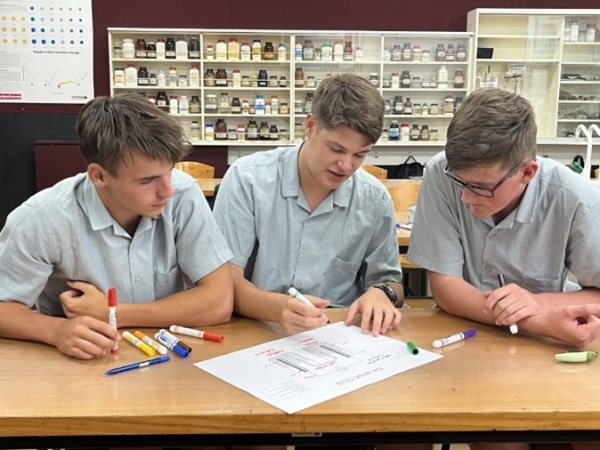
Visit to Middleton Grange Intermediate School to understand the differences between New Zealand and Chinese classrooms
Demonstrate outcomes of education programmes via successful alumni stories to promote offering
- Chinese parents and students are very outcome driven. Institution or programme rankings remain the key consideration, but other indicators and outcomes are becoming increasingly important, including employability, international recognition, and a life-changing experience.
Demonstrating the outcome of an education programme by leveraging successful student or alumni stories and testimonials can be a critical in activating ‘word-of-mouth’ promotion that influences the decision-making of prospective students and parents.
- Tip: Highlight successes or outcomes for students through stories. Degree + good experience = happy alumni story. Parents and students want to know if a qualification from a New Zealand institution will be recognised in China, the world or if it could be a pathway to further study.
- Example: A Chinese student studied a business degree with a New Zealand tertiary provider and then landed a job at a Fortune 500 company or became an industry leader. Or if a Chinese student studied virtual art in a New Zealand PTE, got a job in Weta Digital, which has worked on recent Chinese blockbuster films. We have seen Chinese media are very interested in interviewing and profiling such students in their publications.
Consider digital content in local language for marketing impact
- Research indicates that more Chinese students do their own research online and make their own decisions when choosing an overseas study destination and institution. So having a digital presence on China’s digital platforms is critical. Digital content in local languages also goes a long way in building brand awareness. If resources allow, exploring multiple channels and interacting with your audience in local languages will help you to gain a major advantage in optimising brand awareness and driving results in student recruitment.
- Tip: Host Chinese language and China specific channels such as an official WeChat account. We understand it isn’t easy to set one up. If you are unable to set up a WeChat account for any reason or don’t have Chinese-speaking staff, having a Chinese language website is the next best option. Having crucial information online in Chinese helps promote the institution as trustworthy. Parents and students will use the Chinese language website to confirm information, even if they rely heavily on agents or school counsellors.
- Example: ENZ has been working to optimise our digital presence in China, including with our Chinese language website: studywithnewzealand.cn. We recently revamped the storefront of SWNZ.cn to bolster its localisation, ensuring that from a Chinese user point of view, we can keep them interested and engaged in considering a New Zealand education provider. To ensure our digital presence continues to be fit for purpose, we undertake regular work to update and troubleshoot our platform and content.
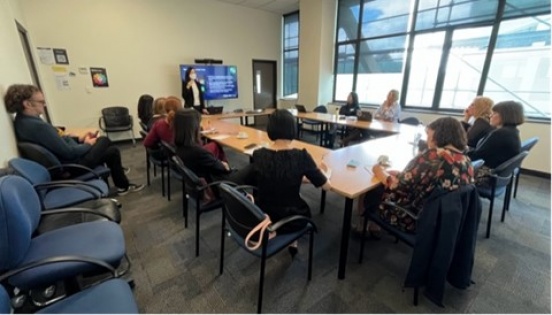
ENZ’s Lillian Zhang presents China Marketing Insights and Strategies session to members of Study Dunedin on 24 February
With China fully re-opening to the world in January, the tempo of in-person events in the country is at pace already.
ENZ’s Greater China team is looking forward to supporting New Zealand providers visiting the country for agent seminars in Guangzhou and Beijing in May and other events later in the year.
If you have any enquiries related to marketing in China, please contact: china@enz.govt.nz
- Engaging with education providers and visiting campuses highlighted to me several points of difference for New Zealand education, particularly how it is innovative, how it develops work-ready graduates, as well as how international students are welcomed and valued in New Zealand. Seeing these points of difference in real time made me realise how underrated the New Zealand education story is overseas, and the need to tell that story better. We need to focus on telling a New Zealand education story that is authentic and has concrete examples. A more visual storytelling format would be ideal to deliver the story.
- The Economic Impact of Export Education in 2011
- Sth20Canty201202
- welcome
-
Tune in to hear about the FY 2023 student enrolment data
The full year 2013 – 2023 international student enrolment data provided by the Ministry of Education is now available on ENZ’s Tableau Public site. Anyone can access this data and filters which is presented in interactive downloadable dashboards and data tables. ENZ’s media release on the data can be found on our website here.
Marie Clark, ENZ’s Director Insights will be running two sessions for anyone interested in learning more about these numbers. You will hear insights including how subsectors have grown, how recovery has been distributed and our top source countries for total international student enrolments and variation by subsector.
You can register for the webinar which best works for your time zone via the links below. Recordings will also be made available on Intellilab after the sessions.
-
Thursday 25 July 2024 – 8am NZT - https://enz.zoom.us/webinar/register/WN_-VZ_JKXIQh6PhmNNPNRVUw
-
Thursday 25 July 2024 – 7pm NZT - https://enz.zoom.us/webinar/register/WN_dUfHYlP5TzSpCVDJ2cWBdg
If you have anything that you would like covered, please get in touch via insights@enz.govt.nz
-
- IMG 2595
- January 2015 Scanning Report 0
- IEGF Successfull Applicants September 2013
-
From the CE: A celebration of energy, optimism and human spirit
Kia ora tātou,
NZIEC TI KUA – the pathway forward, was a celebration of the energy, optimism, and the human spirit of the international education sector in New Zealand.
It was great to see, and be among, more than 590 delegates reconnecting in person, sharing experiences, discussing the future, and listening to a remarkable range of quality speakers. All the presenters were inspiring and all clearly outlined some the challenges and the opportunities as we move forward.
First among these was the visiting Minister for Education in China, His Excellency Huai Jinpeng whose warm outgoing personality was clear to all who met him. It was enormously positive that Minister Huai emphasised China’s was willing to work together with New Zealand to “promote win-win cooperation” and “to unite for mutual benefit”. I hope many of us accept his open invitation to visit China. As he said “Better to see for oneself than to hear from others”.
From the New Zealand side it was a great to have Minister for Education, Hon Jan Tinetti, attend the Gala dinner, and reinforce that “education is one of the key pillars of the New Zealand-China relationship and a foundation for enduring links between our countries”. China was the Country of Honour for this year’s conference and is an important long-term partner.
After a break of four years since the last NZIEC was held in-person, the friendship and happiness amongst conference delegates was tangible.
Certainly, there are challenges ahead as we continue to rebuild the sector. Several of the conference presenters highlighted the changes in global demographics, workplace demand for skills and technological developments as key drivers for a different future in the next 30 years. But the progress achieved in the year since the borders reopened was also cause for celebration and highlighted the adaptability and resilience of education providers throughout the sector.
I’d like to thank officials from the Ministry of Education, New Zealand Qualifications Authority and Immigration New Zealand who attended the conference and gave insights and answering queries relating to the impact of policies and practice. International education is a team sport and it was great to see their commitment to the future of the sector. And a very special thanks must also go to the ENZ organising team and supporting cast who delivered a remarkable and uplifting event.
As the curtain came down at the outstanding Te Pae Christchurch Convention Centre, and delegates said final farewells before returning to their homes and communities, my lasting impression was that of an industry re-enlivened by the human contact we have all missed so much.
As our Chair, Tracey Bridges commented in her opening welcome, we have good cause to be optimistic about the future of the sector and the contribution it can make to all the people of Aotearoa and beyond.
It is now our responsibility to act on this optimism and to move forward. As Peter Drucker once said, “The best way to predict the future is to create it”.
Ngā mihi,
Grant