Search
Showing 10 of 7355 results
- ITP Snapshot Infographs Jan Aug 2013
-
Fermented flour a food waste breakthrough
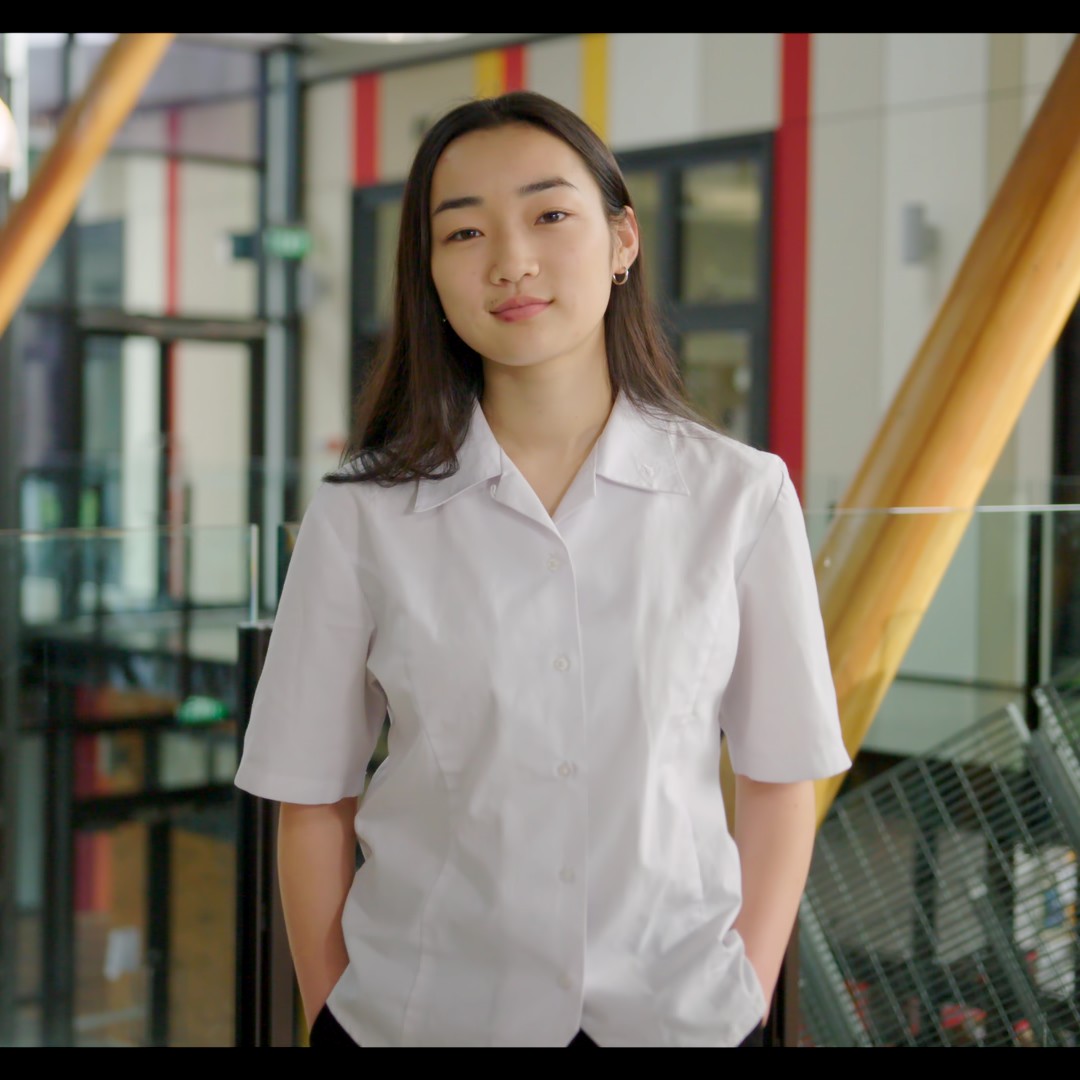
Ninna Granucci, a former University of Auckland international student, is part of a new generation of thinkers contributing solutions with out-of-the-box thinking.
Ninna grew up in Brazil and saw for herself the amount of food waste primary producers there generated. Learning about the scale of the problem globally, she resolved to apply her skills to help bring about change.
“I wanted to use science in an area which fascinates me –microbiology and specifically, fermentation – to try and find a solution to this huge problem.”
University of Auckland a great place for new ideas
Ninna chose to study for her PhD in Biological Sciences under Dr Silas Villas-Boas at the University of Auckland in 2014. “The university environment was a great place for new ideas, to promote the spark to find solutions to problems, with the scientific approach to support it.”
It clearly worked. After only 18 months, she had a breakthrough in the lab which she knew could make a real difference. She refined a fermentation process to successfully convert waste pulp and peel from selected fruit and vegetables into a nutritious flour. Widening the range of ingredients in her trial, she proved she was on to something.
Data from the UN’s Food and Agriculture Organisation (FAO)shows that almost 32 percent of plant-based product is wasted annually. Ninna’s technology has the potential to make substantial progress on this.
It turned out that the ingredients also tick all the boxes for health and sustainability-conscious consumers: high protein, high fibre, low calorie, gluten free, rich in vitamins, minerals and natural antioxidants. And the bonus is that they also have lowest CO2 footprint compared with other ingredients in the market today.
Entering her prototype into the University’s Velocity 100K Business Idea Challenge sparked media interest and a flurry of inquiries from supermarkets and other businesses wanting to buy the product. “That was when we realised it was not only an academic project but also something which could be much bigger and could help to address the problem of food waste,” Ninna says.
Green Spot Technologies has global plans
With support from Velocity, she and Silas co-founded sustainable food innovation company Green Spot Technologies, which has ambitious plans to go global. Ninna is now CEO and based in Toulouse, France, where the business is established in a start-up accelerator environment and employs 15 people.
But back in the early days, it was pretty nerve-wracking. “My plan was to complete my PhD first and then set up a company based around the project. But after the success in the Velocity Challenge, we decided the time was right to forge ahead with the start-up. It was quite challenging. My background is all scientific, I didn’t have any experience in business, and I had a lot to learn.”
She is grateful for the support she got at the University of Auckland and believes that her career path would never have progressed as quickly if she hadn’t chosen New Zealand as a study destination.
“I give a lot of credit to New Zealand for how things worked out”
“New Zealand was the catalyst,” she says. “I managed to secure a scholarship through Callaghan Innovation available to students looking to add value to waste streams. It allowed me to focus on the work and find opportunity. I give a lot of credit to New Zealand for how things worked out.”
Ninna worked in Auckland with other international students from around the world and says that, too, helped contribute to her success. “When you are in the same situation you can support each other and that was super important during my PhD.”
New Zealand education the right decision
Ninna remains passionate about sustainability and reducing food waste. It is at the heart of her business and is important to her personally. The mission of Green Spot Technologies is “challenging the food waste paradigm to feed the future”. The company has won multiple awards, both in New Zealand and in Europe, highlighting the unique nature of its technology and products.
With food insecurity spreading to hundreds of millions of people around the world, the UN has set a Sustainable Development Goal (SDG) to halve food waste by 2030. It is an ambitious target and needs innovative thinkers like Ninna to make it achievable.
“I think it is incredible that we waste so much food, knowing that we need more food in the world. It doesn’t make any sense, but it motivates me to work on solutions,” she says.
The decision to study in New Zealand was a critical part of Ninna’s journey from international student to international businesswoman and innovator. “I could not have imagined that it would lead to such huge changes in my life in such a short time,” she says.
“A New Zealand education provides a truly enriching experience. I really think I made the right decision.”
-
Following his own path – International student builds life, family, and community in New Zealand
Luke Qin has never been afraid of a challenge. Born in Sichuan, China, his childhood was a rich mix of classical Chinese literature, table tennis, badminton, basketball, football, and music.
Early intensive schooling means he can read, write, speak, think and dream in Chinese and draw on traditional Chinese virtues, but a desire to follow his own path, experience something new and explore education options overseas, led him to New Zealand as a high school student.
Selecting New Zealand was a relatively easy choice at the time – English-speaking, safe, ‘clean and green’ and affordable – it ticked all the necessary boxes. But his desire to test himself drew him to Christchurch because “fewer Chinese students there” meant he would have no choice but to fully immerse himself in the new environment.
And what an immersion it was. Luke credits his first years at Linwood High School as the perfect place to experience “an excellent introduction to the New Zealand way of life” and in his first year in New Zealand, he was playing on the wing for Linwood High School’s First XV rugby team!

“With a little help from All Black stars!” Luke tapped his rugby passion to enlist support for the Dragonboat Festival in Wellington from All Blacks Ardie Savea (left) and Dane Coles.
“I wasn’t very big and didn’t know the rules of the game when I arrived, but I had some wheels back then.” Luke explains. If it looked like trouble was coming my way, I’d just try to outrun it!” But he also knew he had to prove himself to his teammates. Once, while tackling his opposite wing, a strapping Samoan teammate joined in and sent them all to the ground. “I felt something hot dripping down my forehead but charged straight back into the ruck, only to be dragged off the field and sent to the hospital.” Three stitches later, he knew he had earned the respect of his teammates and become ‘one of the boys’.
Luke credits his school experience with developing his self-belief and preparing him for what was to come, through his university years and beyond.
After graduating with a Bachelor of Commerce from the University of Canterbury, he relocated to Wellington to join the banking industry, and completed a Master in Applied Finance from Victoria University of Wellington. He then continued on with his quest for lifelong learning and experience by achieving qualifications in Sustainable Finance, Te Reo Māori, Medical Co-Response, Citizen diplomacy and Urban Fire and Rescue, and volunteering for a number of causes.
His banking experience broadened, and several promotions later he joined Kiwibank in Auckland, leading the development of its International Strategy and Trade Finance offering, and working closely with NZ Inc partners to help New Zealand exporters and importers with risk mitigation and working capital funding.
Nowhere has his quest for a challenge been more evident than in his decision to become a volunteer firefighter 10 years ago.
“My younger self had been watching ‘Spiderman’ and saw Peter Parker leap into a burning building to save the day. At the time I thought, ‘I wonder if I could do that?’ Then I heard a call for volunteers from the NZ Fire Service on the radio while driving to work so decided to contact my local fire brigade in Seaview, Lower Hutt.”
“I thought I might be the first Asian volunteer in the station, but I was beaten to it by a Chinese lady.”
“The Fire Service is where you find the real New Zealand,” says Luke.
“Teachers, accountants, plumbers, builders, people from all walks of life - all bonded by the same commitment to serve their community. The camaraderie and environment was addictive.”
There, with the support of Fire and Emergency New Zealand, he completed the Sky Tower Stair Challenge with fellow firefighters from across the country to raise funds for Leukaemia and Blood Cancer New Zealand.
Scaling 1103 steps and 51 flights of stairs in full fire-fighting gear with a steel cylinder on his back was one of the most physical tests he has put himself through.
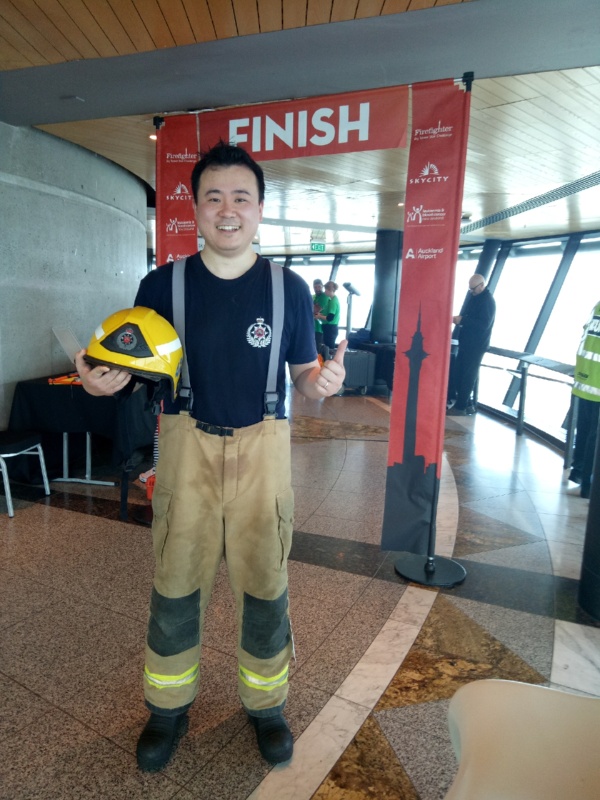
1,103 steps and 51 flights of stairs behind him, Luke was happy to complete the Sky Tower Stair Challenge - “Man of Steel” with other firefighters dressed in full gear with steel cylinders on their backs to raise funds for leukaemia and blood cancer in New Zealand.
“I have benefitted so much from all the opportunities and adventures since coming to New Zealand, especially from my volunteer roles. It’s a small way I could repay my second home for its kindness.”
“I hope I can encourage more international students and members of our diverse ethnic communities in New Zealand to become volunteers and join activities that benefit the community. There is so much we have to offer, and the reward in terms of friendships and life skills is amazing.”
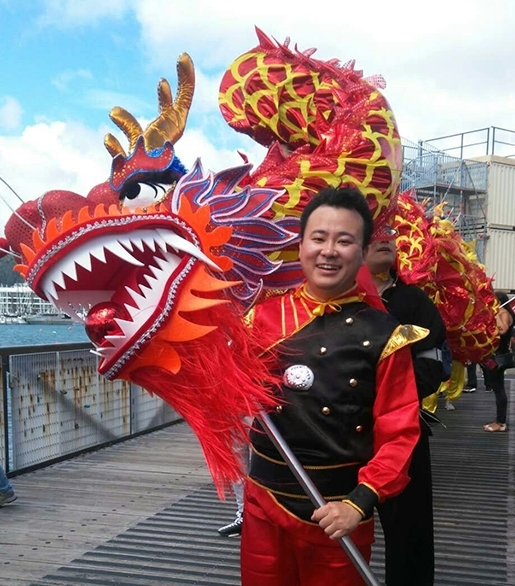
From Sichuan to Wellington waterfront, leading the Dragon Dance during Chinese New Year Parade.
Luke Qin’s journey as an international student began with a desire to immerse himself in a new environment. Grateful to his family, friends, colleagues, and mentors for the opportunities and adventures New Zealand has given him, he takes pride in being able to go home whichever way he travels between his ‘little shire’ in Sichuan and ‘Middle Earth’ New Zealand.
- z5137804457324 ea1f445f329c58f776e4124b0f15c939
- Lyn Provost 1
- Hawkes Bay Economic Impact Reports 2015 16
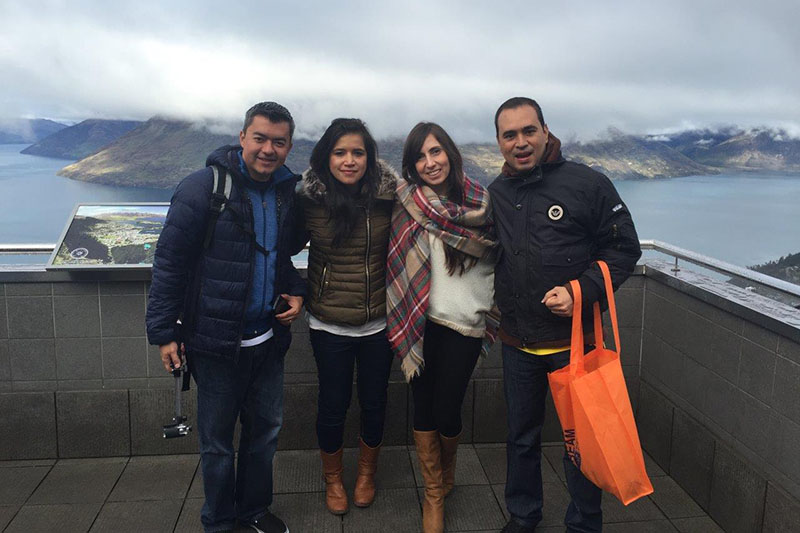
- News Card Colombian Agents in Queenstown
- Disclosure of Interest Policy and Declaration (2)
- nagisa japan school 5
-
International graduate helps strengthen New Zealand’s cyber-security
Qualified with a Bachelor of Business Administration from Taiwan and a Master of Science from the United States, Eric saw further international postgraduate study as a good opportunity to enhance his overseas life experience.
So, having spent many years working in the IT industry in Taiwan across a range of roles including systems engineering, information security, and personal data protection, he decided to move his family to New Zealand in 2018 to pursue a Master of Cyber Security at the University of Waikato.
“The University of Waikato is recognised among the world’s best in computer science and has the country’s first Master of Cyber Security focusing on malware analysis, penetration tests, cloud computing and legal compliance,” he says.
Master’s programme “challenging and complex”
Eric says he enjoyed the challenge of the master’s programme.
“Security in the IT field is challenging and complex, and covers many technical and non-technical aspects. Being a trusted IT security player is an intellectually and financially rewarding job, which can make our lives, communities and society better by ensuring IT is applied and managed securely.”
While at Waikato, Eric spent much of his time working on assignments in one of the computer labs. “I have many unforgettable memories that took place in the 24-hour computer areas where classmates and I would have countless discussions, exchanges of ideas, and even arguments.”
Since graduating in 2019,he has been working as a professional consultant at an audit firm in Auckland, putting his cybersecurity skills to good use implementing adequate security controls and incident management procedures to protect his clients.
Eric credits his international education experience at Waikato for putting him on a pathway to success. “The new literacy of cybersecurity risks, cloud computing technologies and legal compliance requirements I received from studying at Waikato has equipped me to make professional judgements on each security assessment, which has been extremely beneficial for my clients.”
New Zealand a great study destination
Based on his experience, Eric is keen to encourage any aspiring international student to seriously consider New Zealand as a study destination.
“Studying abroad is an exciting journey,” he says. “If you want to earn a qualification from a prestigious university, study new things in a multi-cultural environment, and have a laid-back and affordable lifestyle then New Zealand is the place for you.”