Search
Showing 10 of 7355 results
- danielwilson
- brazil market update 6
- NZIECGaladinner307of70
- ENZs
- ENZRA Application Form 2020
-
High satisfaction rates amongst valuable insights collected from NZIEC KI TUA 2023 post-event survey
As standard practice for our events, Education New Zealand Manapou ki te Ao (ENZ) sends out a post-event survey to help us in planning for future conferences and would like to extend a big thank you to all those who took the time to share their feedback with us.
Manager Global Events and Agents, Janine Huxford, said that the information we gather via these surveys is of huge value to her team as planning has already started for NZIEC KI TUA 2024.
“The feedback we received was overwhelmingly positive and 88% of attendees reported being satisfied or very satisfied with their experience at NZIEC KI TUA 2023. We also received a net promoter score of +27 which is well above the events industry’s benchmark of +10 which shows strong customer engagement and advocacy levels.
“While these satisfaction rates are helpful and show that we are hitting the mark with most attendees, we really like to delve a bit deeper into the areas which haven’t quite met the delegates’ expectations. For example, satisfaction was slightly higher for those attending from the universities vs the school sector so we will be reviewing aspects of future schedules including the relevance of the sessions and making sure this is more evenly spread for all areas of the sector”.
“Also, there was feedback from some delegates that the app did not work as well as it could have. We have fed that information back to the developers who have confirmed that development work is scheduled to improve the mobile app. A future release is expected later this year which we expect will improve next year’s conference app.” added Janine.
In summary, the key findings from the survey were:
-
Overall, 88% of attendees reported being satisfied or very satisfied with their experience at NZIEC KI TUA 2023. 3.5% reported not being satisfied with their experience.
-
There was some variation in overall satisfaction with NZIEC KI TUA within the sector: Those affiliated with a university were statistically more likely to be very/satisfied with their experience (95%) than those affiliated with a school (86%)
-
Despite evidence that those affiliated with a university were more likely than those with a school to report overall satisfaction with NZIEC KI TUA, the NPS for schools (+25) was higher than that for universities (14%).
-
All keynote sessions were perceived to be of high quality by most respondents, with few responding negatively. A small proportion of attendees rated the sessions by Dr Hinemoa Elder (18%), Yemi Penn (13%), and Kaila Colbin (7%) as ‘fair’.
-
Among networking opportunities at the conference delegates were most satisfied with opportunities to reconnect with sector colleagues (88% very/completely satisfied), followed by opportunities to meet new people (84%) and engage with partners (70%).
-
Among experiences of the conference, delegates were most satisfied with the helpfulness of the organising staff (98% very/completely satisfied), followed by the organisation of the event (87%), quality of the sessions (74%), and relevance of the sessions (65%)
-
The relevance of the sessions (30%), quality of the sessions (22%), and the event organisation (18%) contributed the most to people’s response to the Net Promoter Score question. This means that they are the most important factors in people’s experiences for their likelihood to recommend NZIEC KI TUA to others.
-
Around half of the respondents felt more or much more confident that the New Zealand international education sector is ‘moving in the right direction’ (54%) and that it is resilient (53%). Only 7% felt less confident in either.
ENZ looks forward to welcoming you to another outstanding experience at NZIEC KI TUA 2024 in Te Whanganui-a-Tara Wellington from 6 - 8 August 2024 at Tākina Convention Centre. See you there!

-
-
Join us for the Latin America Study with New Zealand Virtual Fair
“The fair will be a great opportunity for providers to connect with prospective students in the Latin American market, using an interactive digital platform,” says Javiera Visedo, Director of Engagement Latin America for Education New Zealand Manapou ki te Ao (ENZ).
“ENZ is seeking expressions of interest in the fair, which we are hosting in collaboration with FPP. If you are interested in participating, please fill out the Expression of Interest form by 9 December 2022.”
Invitations to register will follow in the new year.
Find out more about Latin America
Key areas of focus for ENZ in Latin America include Brazil, Colombia and Chile, and we have staff based in São Paulo and Santiago.
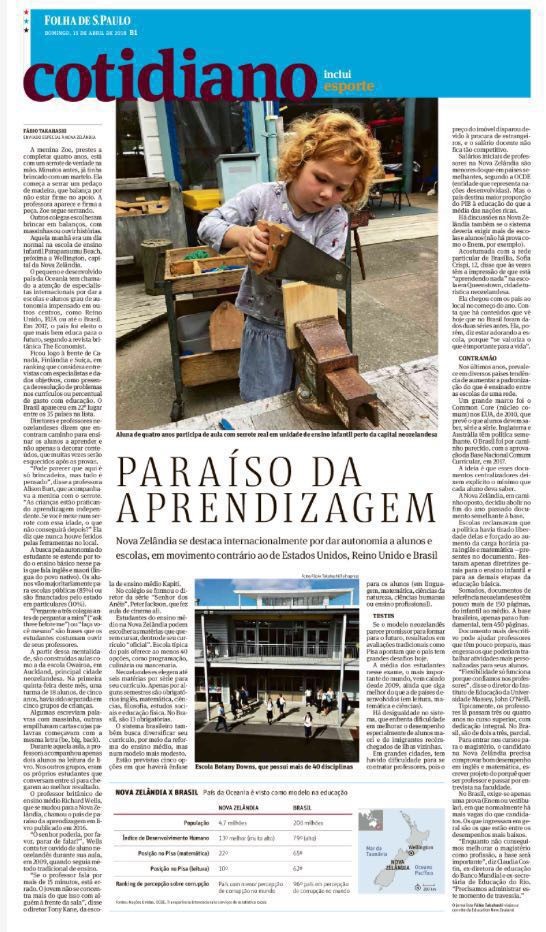
Close to 6,000 international students came to New Zealand from Latin America in 2019, and Brazil is our eighth largest market. Since the pandemic there has been intense activity from our competitors with many of them establishing in-country representatives, which demonstrates the importance of this region in international student recruitment.
Beyond student recruitment, ENZ also values the government and education connections with the region.
ENZ recently hosted a series of Latin America Masterclasses, which saw participants from around Latin America tuning in to watch live lectures delivered by New Zealand academics.
In June this year, Education Minister Chris Hipkins created great buzz with his visit to Brazil and Chile, part of his first international trip since the beginning of the pandemic.
Group recipients of the Prime Ministers’ Scholarships for Latin America have recently started making their way to Brazil, Colombia and Chile to participate in short study exchanges. These include several Māori led groups, supporting connections with indigenous nations in the region.
In September, ENZ attended the FPP Virtual Fair in Colombia. The fair had more than 800 visitors, with over 100 visiting the ENZ booth. There was strong interest in tertiary programmes and language studies. The virtual fair was a great opportunity to promote New Zealand as a study destination within the Latin American market.
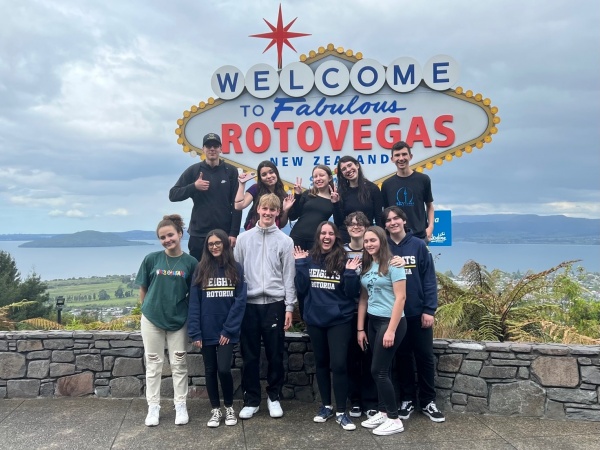
A group of 100 high school students from Paraná State in southern Brazil had a three-month study experience this year with schools in Auckland, Rotorua, Hawkes Bay, Palmerston North, Wellington, Canterbury and Invercargill.
Brazil
In 2019, there were 3,324 Brazilian students studying in New Zealand. Being from non-English speaking countries, the majority of Latin American students will start their education experience in New Zealand studying English. Scholarships offered by the local state governments have also contributed to the presence of Brazilian students in New Zealand and in 2022, 100 students from the state of Parana in Brazil travelled to New Zealand on a 3-month exchange. The students were placed at high schools across the country and gave positive feedback about their time here.
Colombia
Colombia is New Zealand’s second largest market in Latin America, second only to Brazil. In 2019, there were 1,360 Colombian students studying in New Zealand.
In 2023, 22 students from Bogotá, Colombia, will travel to New Zealand to study during terms one and two. Most of the students will be based at schools across the North Island, with one group heading down to Nelson.
On 23 November 2022, ENZ launched the I AM NEW campaign in Spanish at an event in Bogotá, to promote a New Zealand education.
Chile
The recent CAPE LatAm ‘Celebrating 50 years of diplomatic relations with Chile’ event, hosted at Parliament, was a great example of the rich history of connections between New Zealand and Chile.
Chile is New Zealand’s third largest market in Latin America. In 2019, there were 1,193 Chilean students studying in New Zealand. The majority of Chilean students come to New Zealand to study English Language, but enrolment in schools has also been consistent, with 17% of students studying at New Zealand schools in 2019.
Flights
Latam will be resuming their daily flights to Sydney via Auckland from mid-December and Qantas is flying three times per week from Santiago direct to Sydney. Although the cost of flights is high, in line with worldwide trends, the resumption of regular flights demonstrates the high demand for the Latin America to Oceania route.
Expressions of interest in the Latin America Study with New Zealand Virtual Fair are due by 9 December 2022. You can access the online form here.
If you have any questions about the event, please contact latinamerica@enz.govt.nz
-
Indigenous Malyasian students learn about Te Ao Māori
Scholastica Philip, who is of Kadazan descent, together with Diana Bah Said and Norazah Din, both of Semai ethnicity, have been studying the Te Ao Māori and Sustainability course on the Mission New Zealand online platform.
All three say they gained a great deal from the short course, which included an introduction to biculturalism, and the five stages of the design thinking process.
“Biculturalism in Aotearoa New Zealand is fascinating,” Norazah said. “We learned about Māori settling in New Zealand, and I really want to experience their culture and daily life if I have the chance in the future.”
Scholastica noticed some common themes around sustainability in Te Ao Māori, and the importance of nature and food in her Kadazan culture, which is from East Malaysia.
“We take care of nature as we take care of humans - we need to take care of all living things.
“There is an ancient story for Kadazan people about Huminodun, a very beautiful woman who sacrificed herself to create food and bring rain to stop the cursed drought season for her people. This story is about how closely we are connected with nature.
“We learned on the course that Māori and non-Māori are working together in New Zealand to achieve a sustainable ecological system – I love the concept,” Scholastica said.
Norazah and Diana also noted how important trees and rivers are in their distinctive Semai culture, which is based in North Malaysia.
“We have a very strong connection with nature - as much as we respect each other,” Diana said.
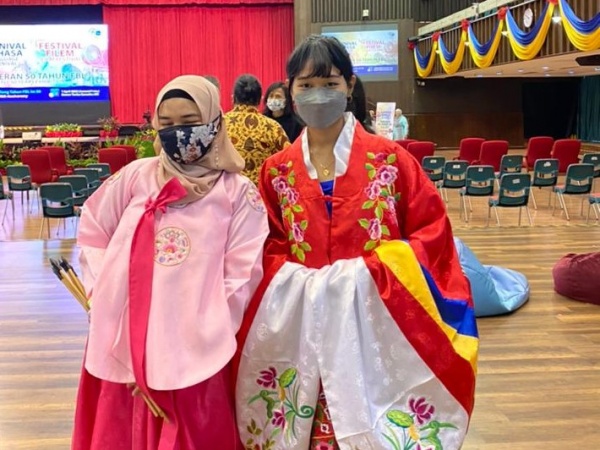
Norazah with a friend at the Festival of Langauge
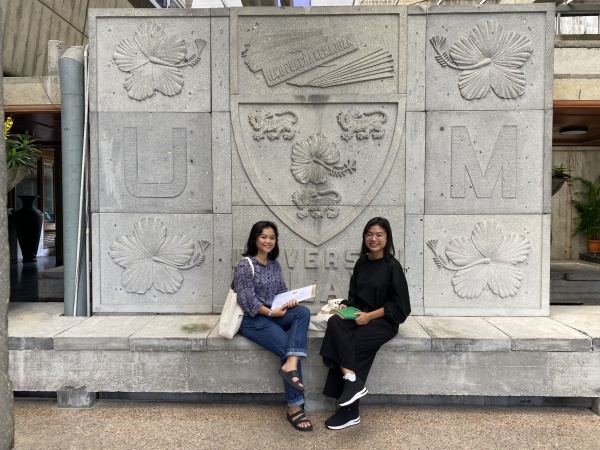
Scholastica and Diana at university in Kuala Lumpur
Norazah and Diana are in their second year of study at Universiti Malaya, and Scholastica is in her third year.
Scholastica has also completed an introductory course in te Reo Māori, and you can hear her pepeha here.
Ben Burrowes, Regional Director Asia for Education New Zealand Manapou ki te Ao (ENZ) says the Whakatipu Scholarships are funded by ENZ and Universiti Malaya.
“We are aiming to empower talented young indigenous students, support them with learning and exchange opportunities, and encourage knowledge sharing.

Scholastica at the Sabah Fiesta with a group of Thai buddies
“This is the first year of the scholarship, and it’s great to see these students making the most of this opportunity.”
Read more about the Whakatipu Scholarships on the ENZ website here.
Read more about Mission New Zealand on ENZ’s New Products and Services website here
- japanadvertising
- VH 44 1