Search
Showing 10 of 7355 results
- bright
- Korea photo edit2
- India20fashion201
- WellingtonStaff (73)
-
Around the world in five
GLOBAL
Survey highlights growing “engagement gap” between international student expectations and institutional response
One in three prospective students say they abandoned an application to a university because of communication issues. In an increasingly competitive marketplace, institutions must quickly and meaningfully engage with students across a widening field of channels.
ASIA
Why Asian universities can no longer overlook trade deals
As trade negotiations increasingly shift away from goods and tariffs to encompass talent mobility, ecosystems of innovation and skills creation, universities are quietly finding themselves at the nexus of economic policy and labour change.
GLOBAL
How business schools can produce globally minded graduates
Make internationalisation a core part of the student experience, rather than an optional extra, by embedding it into the curriculum.
CHINA
China seniors pursue overseas education after retirement to realise unfulfilled dreams
Increasing demand from retirees leaves country facing challenge of finding ‘deeper’ learning strategies, not just ‘hobby’ courses.
GLOBAL
The greatest risk of AI in higher education isn't cheating - it's the erosion of learning itself
Public debate about artificial intelligence in higher education has largely orbited a familiar worry: cheating. But focusing so much on cheating misses the larger transformation already underway, one that extends far beyond student misconduct and even the classroom.
-
Philippines roadshow showcases New Zealand’s premier ITP and PTE offering
The roadshow showcased the strength and diversity of New Zealand’s Institutes of Technology and Polytechnics (ITP) and Private Training Establishments (PTE) sub-sectors.
The roadshow brought together eleven New Zealand education providers: academyEX, NZSEG, Te Rito Maioha Early Childhood New Zealand, Ara Institute of Canterbury, Eastern Institute of Technology, NMIT, Southern Institute of Technology (SIT), Wintec, Future Skills, Auckland Institute of Studies and Otago Polytechnic.
A wide range of activities were held throughout the two-week programme, which included a media roundtable, agent seminars, school guidance counsellor workshops, and New Zealand Study Fairs.
These engagements helped to deepen education ties and raise awareness of New Zealand’s high-quality, hands-on tertiary education opportunities among Filipino students, parents, agents, and school representatives.
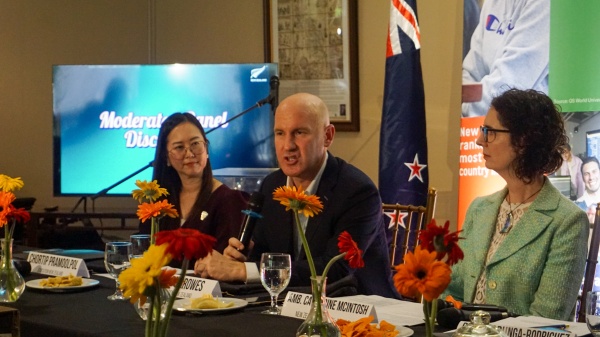
ENZ Market Manager Chortip Pramoolpol, ENZ Regional Director Asia Ben Burrowes and New Zealand Ambassador to the Philippines, H.E. Dr. Catherine McIntosh at the media roundtable in Manilla.
The media roundtable was held in collaboration with the New Zealand Embassy in Manilla and attracted 10 journalists.
The session highlighted the growing number of Filipino students choosing New Zealand and the shared values that underpin our education system – particularly in inclusive learning and vocational, work-ready training.
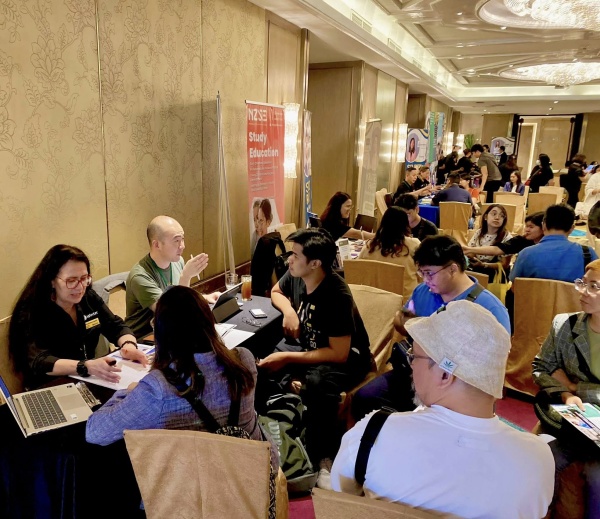
The New Zealand Study Fair in Manila.
The New Zealand Study Fairs across the three cities were buzzing, with 160 attendees in Manila, 165 in Bacolod, and 157 in Cebu.
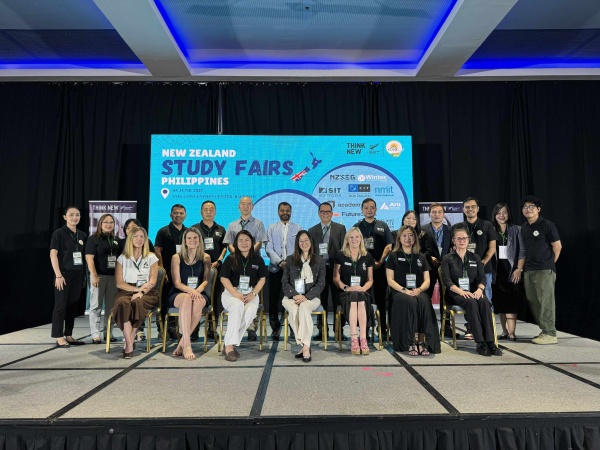
The New Zealand Study Fair in Baclod.

Providers talking to prospective students at the New Zealand Study Fair in Cebu.

Attendees of the Manila agent seminar.
The agent seminars in Manila and Chebu brought together agents who are eager to promote tertiary education in New Zealand to build connections with providers.
ENZ representatives provided a presentation on the latest official information on studying in New Zealand and resources for agents to promote New Zealand education. Immigration New Zealand (INZ) provided a recorded presentation on the latest visa information for the Philippines market.
In Manila, the education agent seminar attracted 37 attendees, while 11 agents participated in Cebu.
School engagement in the roadshow was also notable, with eight schools attending the school guidance counsellor workshop in Manila and 10 in Cebu.
ENZ Regional Director for Asia (excluding China), Ben Burrowes said this roadshow marks another exciting step in strengthening the education relationship between New Zealand and the Philippines.
“The strong turnout across all events and the enthusiastic engagement from agents, students, and school counsellors show there is a growing appetite for the quality education New Zealand offers,” he said.
“We’re proud to support our PTE and ITP partners in connecting with this key market, ENZ looks forward to building on this momentum in the coming months,” Ben added.
-
Update from Immigration New Zealand
New Immigration New Zealand website now live
The new Immigration New Zealand (INZ) website is now live, with clearer information and guidance to help INZ customers navigate their immigration journey more easily.
The new visual design and structure makes it easier for customers to know what the visa process means for them and how to apply for a visa and comply with their visa conditions.
Visit the new INZ website.Apply early to get ahead of the student visa peak
Applying for a student visa at least three months before intended travel date gives students the best chance to have a decision made in time for their study.
The processing of student visas is a priority for INZ, particularly as it gets closer to peak times.
Immigration New Zealand is in the mid-year student visa processing peak, which is between May and August each year.
Applications take longer to be decided during this peak period, so it is important that students apply early if they want to come to New Zealand to study.
Wait times for international student visa applications are published in our visa wait times section.
Help us process applications faster
To help INZ process applications quicker and avoid unnecessary delays, students should provide full and complete applications, including all necessary documentation.
Students can use our student visa information sheets to make sure their application has all the information and documentation required.
Student visa information sheet – first-time international students
Student visa information sheet – continuing international students
If students apply late, their application may not be processed in time for their study in New Zealand.
Due to the high volume of visa applications expected, we will not contact students if documents are missing from their application. If the missing information is key to the assessment, then the application may be declined.
Student visas moving to enhanced Immigration Online
From 18 August 2025, international student visa applications are moving to Immigration New Zealand’s enhanced Immigration Online system.
The aim is a simpler, faster and more user-friendly visa application process to reduce waiting times, provide clear communication on application statuses, and increase self-service capabilities so everyone feels more informed and better supported.
How applications during this transition will be managed
As we are in a peak period for student visa applications, we encourage applicants to submit applications when they are ready, and at least 3 months ahead of the intended travel date to help avoid delays that may impact them starting their study on time.
There are some important things applicants need to know if they are submitting an international student visa application around August 2025.
If applicants start a new draft application on or before 17 August, they will be applying in our current system. They will need to submit the application by 17 September, otherwise the draft application will expire.
If they start an application on or after 18 August, they will be automatically directed to our new system.
Please read our news item for more detailed information on the visas affected and the transition process.
- Asia trip 4
- icecap
- Korea photo edit