Search
Showing 10 of 7355 results
- Test file
-
New Zealand and Viet Nam sign Arrangement, strengthening education ties
This arrangement was signed by New Zealand Minister for Tertiary Education and Skills, Hon Penny Simmonds and Viet Nam’s Minister of Education and Training, Nguyen Kim Son during the Prime Minister of the Socialist Republic of Viet Nam His Excellency Phạm Minh Chính’s visit to New Zealand from 9 – 11 March. Prime Minister Pham and Prime Minister Luxon witnessed the signing of this arrangement, which covers the period 2023 – 2026.
The EEA, which will replace the Strategic Engagement Plan on Education (SEP) 2020 – 2023, identifies areas of engagement and sets new targets over the next three years.
Specific areas covered in the arrangement include collaboration and information exchange in English language training, short courses and executive education programmes that New Zealand provides in Viet Nam.
The arrangement will also explore opportunities to build mutual value in English language literacy, early childhood education and science, technology, engineering, and mathematics (STEM) disciplines. Sharing and publicising scholarship programmes in both countries will be undertaken while institutions will also be encouraged to increase research engagement as well as student, lecturer and research exchange activities.
Both countries have also agreed to actively support the activities of alumni groups in both Viet Nam and New Zealand, and celebrate the lifelong connections generated through these networks.
The signing of this arrangement with Viet Nam aligns with the New Zealand Government’s priority to revive international education, lift its contribution to New Zealand’s economy, and diversify international education markets. Concerted effort is going into deepening and broadening our overall bilateral relationship with countries in Southeast Asia including Viet Nam, including our trade and economic interests.
ENZ’s Acting Chief Executive, Linda Sissons, said the Education Engagement Arrangement provides an important opportunity to build on the longstanding education partnership between New Zealand and Viet Nam.
“Viet Nam is a multi-sectored market for New Zealand’s international education industry and an important source country for international students.”
“This arrangement demonstrates to prospective students and their families that New Zealand is a partner of choice for the Vietnamese Government in the field of education, which aligns with the New Zealand Government’s priority to build a more resilient and sustainable sector.”
“With its strong focus on partnerships, the arrangement also lays an excellent foundation for further growth by New Zealand’s tertiary sector. It presents real opportunities for our EdTech sector to continue to build on the recently completed market familiarisation trip, with further development of opportunities that support Viet Nam’s digital transformation strategy.
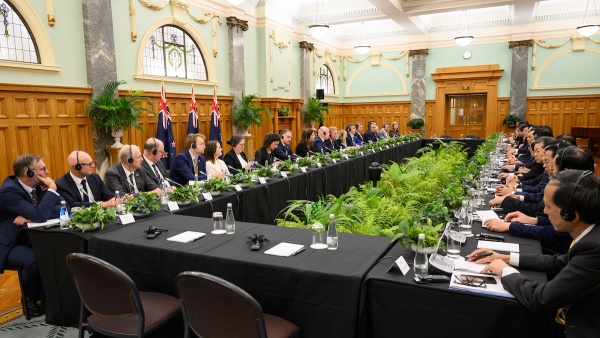
Bilateral meeting between New Zealand and Vietnam during the Prime Minister of Vietnam, His Excellency Mr Pham Minh Chính's visit to New Zealand. March 11, 2024 in Wellington, New Zealand. Photo by Mark Tantrum.
The first Strategic Engagement Plan on education (SEP) was signed in 2015, laying the foundation for a strategic education partnership between New Zealand and Viet Nam. The SEP sits under our overarching bilateral Education Cooperation Arrangement between the Ministries of Education, which was refreshed in 2022. The SEP was renewed in 2018 and again for the period 2020 – 2023, between Education New Zealand and Viet Nam’s Ministry of Education and Training (MoET) and was signed during the year we marked the 45th anniversary of diplomatic relations with Viet Nam (2020). This built on existing education initiatives and identified new opportunities to be co-developed and delivered for the mutual benefit of both countries. You can read about the last signing of the Strategic Engagement Plan in 2020 signing here.
Following the signing of the EEA, both education ministers participated in a bilateral meeting to discuss the education relationship between the two nations, current priorities and the development of activities under the new arrangement. This discussion touched specific areas of collaboration such as early childhood education, institutional partnerships and vocational training.
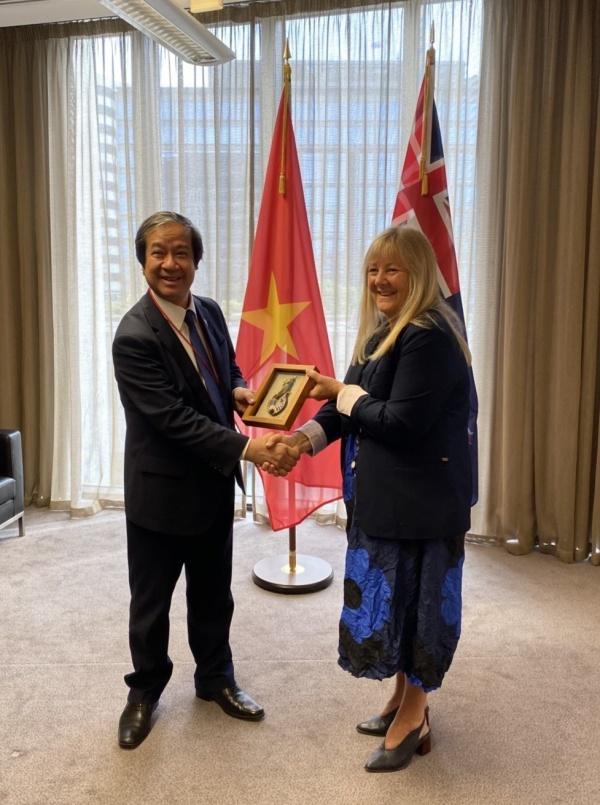
Minister Penny Simmonds present Minister Nguyen Kim Son a gift following the bilateral education ministers meeting.
New Zealand is offering Vietnamese students two government scholarship programmes for secondary school study (the New Zealand Schools Scholarships – NZSS) and for postgraduate study (the Manaaki New Zealand Scholarships). In view of increasing demand for study with New Zealand, ENZ has implemented a wide range of initiatives to equip Vietnamese learners with the 21st century skills, and support families in obtaining up-to-date information to plan for their study journey in New Zealand.
The New Zealand Education Day, ENZ’s flagship event, is scheduled on 19 and 20 October. It has been held annually since 2017 and attracts hundreds of visitors.
- Japan
-
What’s next for ENZ events?
The trial of the EventsAIR OnAIR platform began in September with the Japan New Zealand Education Virtual Showcase and Agent Seminar, and will continue over the next few months for events like agent seminars in-market, the Viet Nam Student Showcase, and the Summer Retention Showcase.
Over and above a video-conferencing application like Zoom, the EventsAIR OnAIR platform has functions like a virtual exhibition, live Q & A, and gamification features, where users can compete to win points.
ENZ recently hosted our inaugural India New Zealand Education Week on the EventsAIR OnAIR platform. To have a look at the platform and how it works, you can register and view recordings of the event here.
ENZ has an established relationship with EventsAIR, having previously partnered with them for lead capture at in-person events.
ENZ Director – Channel Services and Partnerships, Dan Smidt, says what really clinched this new collaboration was the wide range of functionality EventsAIR had developed.
“We didn’t want a platform that would simply recreate what you’d expect from an in-person event. We wanted something that would use digital features in a creative way, to really capture the attention and imagination of our attendees.”
Participants are currently limited to providers who registered with ENZ for in-person events in-market before they were cancelled due to COVID-19. At the moment, ENZ is able to offer participation in these events at no cost to the sector.
“In the results of a survey out to New Zealand providers earlier this year, the cost of developing or participating in digital events was one of the most important factors for those considering their event options,” Dan says.
Even before COVID-19 caused global travel disruption and the widespread cancellation of in-person events, ENZ was looking into ways to host more events virtually.
“We know that education providers and students are becoming more conscious of the sustainability of long-haul air travel,” Dan says. “COVID-19 simply accelerated our work in the online event space.”
“This dynamic virtual events platform is the next logical step in the growth of the ENZ digital eco-system. We’re now able to think about how we do events in a whole new way.”
Dan and the ENZ Events Team hope to develop a virtual and hybrid calendar of events for 2021 with OnAIR. Please watch out for more updates on our events work in E-News on our website.
-
Register for ENZ’s market intelligence webinar
New Zealand education providers are invited to sign up for the industry webinar hosted by the ENZ team in Viet Nam.
The ENZ team in Viet Nam has organised an industry webinar to offer local market updates and insights, competitors analysis, external expert views as well as updates on ENZ’s upcoming promotional events and activities in the country.
ENZ’s Director - Asia, John Laxon, said the industry webinar is a great opportunity for New Zealand education providers to receive local in-market intelligence from ENZ staff and independent in-market experts.
“This will help education providers in ensuring their in-market recruitment efforts are well targeted. Our 2019 webinar series is providing market insights and updates from across the Asia region, taking into account the strong industry interest in the 2018 series.”
Vietnam Industry Webinar
Thursday, 15 August, 10am Viet Nam time/3pm New Zealand time
-
E-News content refresh coming soon
The E-News content refresh is the outcome of ENZ’s review of analytics over the past year. This has demonstrated our readers’ strong preference for forward-looking market insights and intelligence updates.
By tailoring the newsletter content to audience preferences, ENZ will be able to deliver a sharper, more insightful E-News to the international education sector.
ENZ’s General Manager – Stakeholders and Communications, John Goulter, said that ENZ is keen to offer more value through E-News, which is ENZ’s main industry-focused channel.
“We want to ensure we’re using E-News to truly help international education thinking and deliver better value to industry,” John said.
“With the new format, we will aim to share more market insights and updates from our International team and other sources, and articles on trends, new initiatives, research findings and other intelligence to help industry make informed decisions on marketing, student experience and adapting to the rapid pace of change in international education globally.”
The changes mean that from August onwards, we will publish E-News monthly instead of fortnightly.
The final fortnightly E-News issue will be published on 31 July, followed by a monthly issue starting the week of 19 August.
- Shipping Label Thailand
- Graduation
- ExportEd2014
-
Successful New Zealand – India Education Connect Initiative held in India
New Zealand – India Education Connect took place from 8 to 14 February, involving a high-level sector delegation made up of Vice Chancellors, Deputy Vice Chancellors, International Directors, academic heads, and regional recruitment staff from all eight New Zealand universities.
Led by Lisa Futschek, ENZ’s General Manager International, the delegation visited Bengaluru, Chennai, New Delhi, and Ahmedabad. During the visit, ENZ signed two Education Cooperation Arrangements (ECAs) and one Memorandum of Understanding (MoU), with the Higher Education Department, Government of Karnataka; Indian Institute of Management Ahmedabad (IIMA); and Gujarat International Finance Tech City (GIFT City) respectively. The ECAs and MoU provide a high-level umbrella arrangement for New Zealand universities to explore potential collaborations with each of the partners.
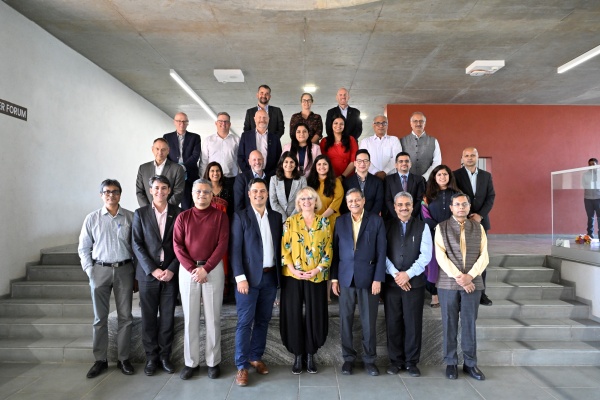
The New Zealand delegation with IIM Ahmedabad officials on 14 February.
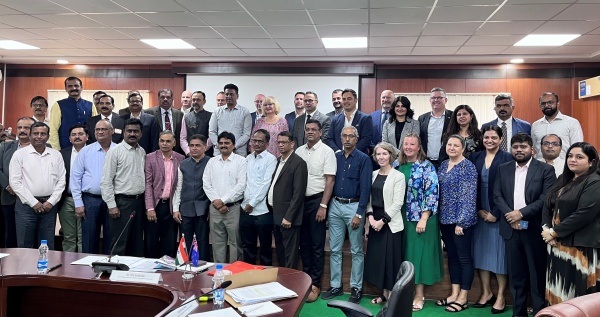
New Zealand universities delegation with Hon Dr. M C Sudhakar, Minister, Karnataka Higher Education Minister and officials of Karnataka Higher Education Council, Bengaluru on 8 February
Ms Futschek acknowledged the special relationship India and New Zealand have, noting that this year marks the 72nd anniversary of diplomatic relations between the two countries.
“India consistently holds the position of the second-largest international student market for New Zealand. The dynamic growth in the education partnerships between our two countries is attributed to strategic investments by universities, marked by heightened levels of internationalisation and strengthened commitments through the establishment of in-country representatives/offices by all eight.
“There is certainly much to be said for having power in numbers. Engaging as a group is a very good way to leverage connections with key government and private stakeholders that would otherwise be difficult on an individual institution basis,” said Ms Futschek.
The delegation visit to the New Zealand Centre at IIT Delhi (IITD) was one of the highlights of the programme as it facilitated discussions on resource mobilisation for long-term sustainability of the centre. The New Zealand Centre at IITD was established in February 2020 as a focal point for joint academic activity between New Zealand's eight universities and IITD. The centre is a research-focused hub that fosters collaborative, sustainable, self-supporting research programmes in areas of shared national interest such as climate change, disaster management, urban planning, and the environment. The first big engagement at the New Zealand Centre included 10 joint research projects between NZ universities and IITD academics in 2022. Subsequently, a fellowship programme with a joint funding of NZ$ 100,000 was announced in 2023, and as part of this programme four New Zealand Fellows will be spending time working with IITD in 2023/24 and two IITD Fellows with New Zealand universities.
Ms Futschek noted that the New Zealand Centre at IITD is a great example of how the cohesion between our eight universities and IITD has led to a flagship project growing in scale and sustainably.
“This success has all happened while building our reputation for quality education and a commitment to bilateral relations between our two countries,” added Ms Futschek.
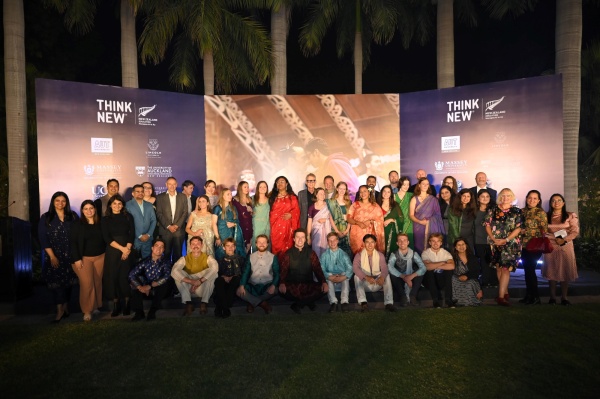
The networking reception organised by ENZ in Delhi during the ENZ Connect series, was attended by a group of 24 students from University of Auckland, University of Waikato, Massey University and Victoria University of Wellington, who were in India as part of the PMSA India immersion programme. They not only engaged with the ‘friends of NZ’ attendee, but also performed a Bollywood dance they had learnt during their six weeks in India, much to the delight of the audience.
Other activities conducted during the week included a media roundtable, led by H.E. Ambassador David Pine at the New Zealand High Commission in New Delhi. The roundtable reached over 984 million people with a PR value of over NZD 624,000, further increasing the brand awareness of New Zealand’s world class education across India.
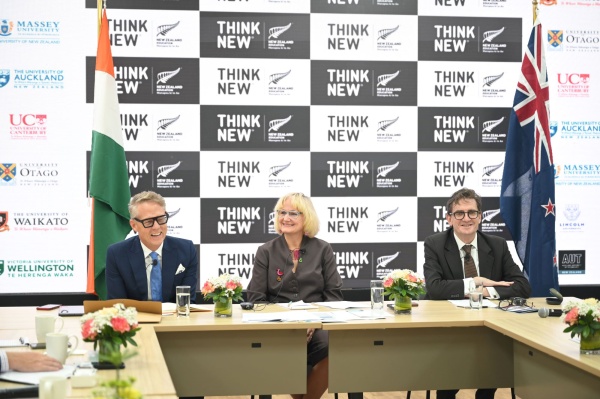
Media Roundtable at New Zealand High Commission in New Dehi, led by NZ High Commissioner to India, HE Mr David Pine, Lisa Futschek, GM International, ENZ and Brett Berquist, Assistant Vice-Chancellor Engagement University of Canterbury.
New Zealand universities also had a strong presence at QS India summit 2024, which coincided with the New Zealand – India Education Connect, helping delegates reflect their interest and achieve visibility in the Indian B2B space. ENZ was invited by QS to be a strategic partner at this summit.
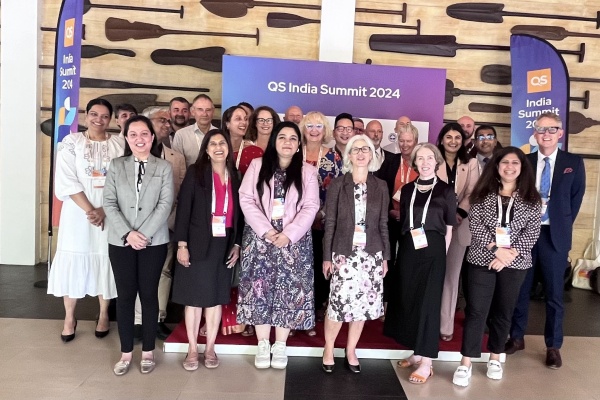
The delegation at the QS India Summit 2024.